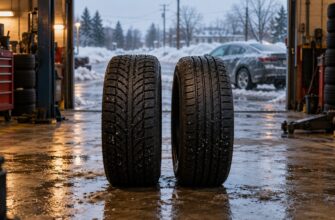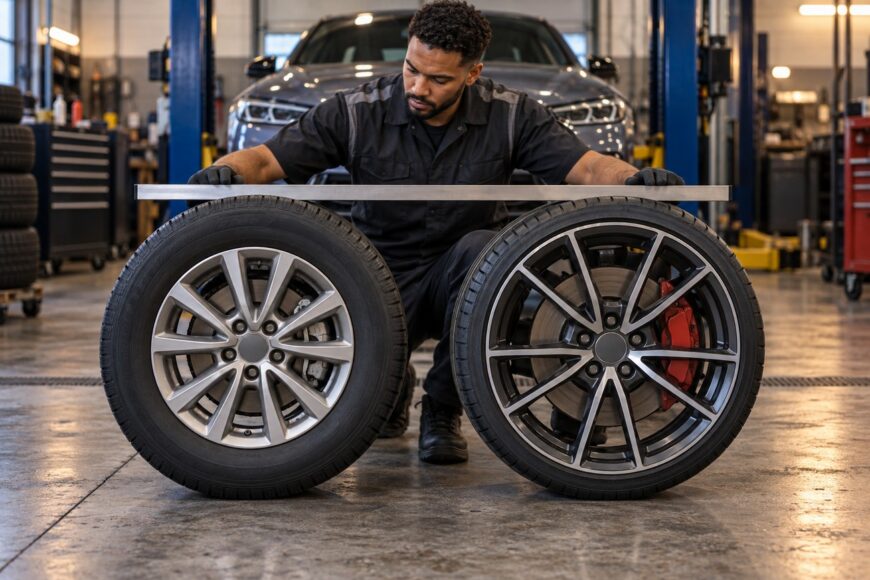
A larger rim can sharpen a car’s appearance, yet the tire fitted around it can change your actual speed, odometer readings, ride comfort, and clearance around the wheel. A size that looks close on paper may still rub when the car is loaded or make the speedometer read differently from before.
Plus sizing works only when the complete tire-and-wheel package suits the vehicle. Gaining an inch or two of rim diameter is the visible change; preserving a suitable tire outside diameter, load capacity, and physical fit makes the change usable.
- What Plus Sizing Changes—and What It Must Preserve
- Calculate Outside Diameter and Speedometer Error
- Choose a Compatible Tire-and-Wheel Package
- Check Clearances Before and After Installation
- The Trade-Offs Hidden Behind a Larger Rim
- Verify Electronics, AWD Behavior, and Speed Accuracy
- Frequently asked questions
- How do I recalibrate a speedometer after changing wheel size?
- What is the 3% rule for tire size?
What Plus Sizing Changes—and What It Must Preserve
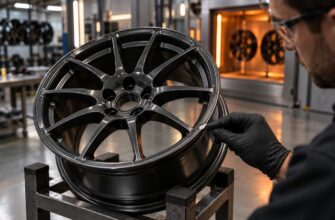
Plus sizing pairs a larger rim diameter with a lower-profile tire while aiming to keep the tire’s overall outside diameter close to stock. As the rim grows, the sidewall must generally become shorter to keep the tire’s outside diameter roughly the same. That relationship, rather than rim size alone, is the starting point for a speedometer-conscious choice.
The tire bead diameter and wheel rim diameter must match: an R18 tire requires an 18-inch wheel. The tire also needs an approved rim width, and the wheel must seat and fasten correctly on the vehicle. A tire that fits the rim can still be unsuitable for the car.
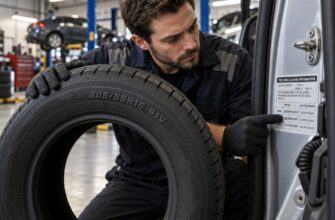
Replacement tire load index and speed rating must be no lower than the vehicle manufacturer’s specified values. Check the vehicle placard or other manufacturer fitment information before comparing alternatives. A close outside-diameter match does not make a tire with insufficient capacity acceptable.
A shorter sidewall may change steering response, but a larger rim is not an automatic handling upgrade. Tire construction, inflation pressure, wheel weight, and road surface all influence the result. Treat the change as a package decision with trade-offs, including how the vehicle’s systems interpret wheel speed.
Calculate Outside Diameter and Speedometer Error
Start by comparing the stock tire size with a proposed replacement using a tire-size calculator or manufacturer dimensions. The result is a useful screening estimate, not an exact measurement of the tire on your car. Actual installed outside diameter depends on the tire model, pressure, tread wear, and load, so the sidewall marking alone cannot settle a close comparison.
The basic relationship is: Approximate actual speed = indicated speed × D_new ÷ D_stock. At an indicated 100 km/h, actual speed is approximately 100 × D_new ÷ D_stock. Here, D_new and D_stock are comparable outside diameters for the new and stock tires; comparing their circumferences gives the same ratio.
A smaller new outside diameter makes the speedometer read high relative to the stock setup: the car travels less distance per wheel revolution, and the odometer can accumulate distance faster. A larger new outside diameter makes the speedometer read low relative to the stock setup. This calculation describes the change from the original tire; it does not correct any error already present in the factory instrument.
About ±3% is a commonly used industry rule of thumb for outside-diameter comparison, but it is not a universal official standard or guarantee. The vehicle manufacturer’s specified outside-diameter tolerance takes priority. Use the calculation to reject poor candidates, then check the selected tire and vehicle-specific guidance rather than assuming a percentage makes the package safe.
Choose a Compatible Tire-and-Wheel Package
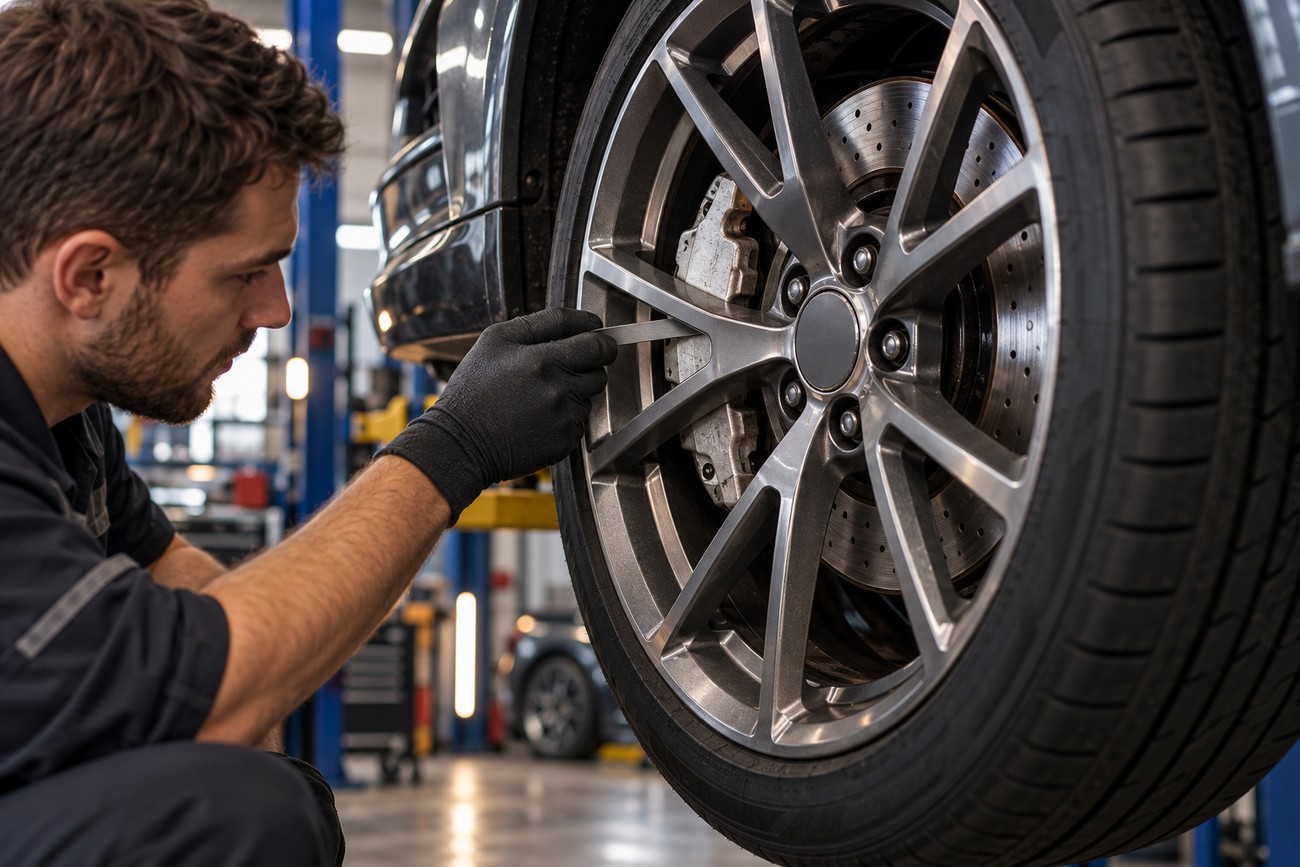
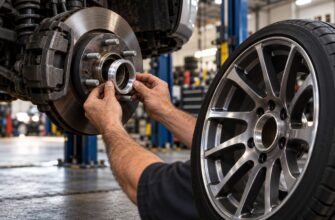
Once a tire size looks close in diameter, confirm the exact tire and wheel specifications before ordering. Check the tire’s approved rim-width range, the wheel’s width and offset, the center bore, and the mounting requirements. Spoke shape and clearance to the brake assembly matter too: two wheels with the same diameter and offset can leave different space around a caliper.
Keep load index and speed rating at or above the vehicle manufacturer’s specified values, and confirm that the wheel itself is suitable for the vehicle’s load and mounting arrangement. A wider tire may require a different wheel width or offset, which can move its inner shoulder toward a strut or its outer shoulder toward the fender. Matching rim diameter alone answers none of those questions.
USTMA recommends keeping the outside diameter of all four tires within the vehicle manufacturer’s specified tolerance. On an AWD vehicle, different actual outside diameters between axles can create continuous differences in rotational speed. Do not assume that matching sidewall labels, especially on tires with different wear or construction, guarantees a matched set.
Give the vehicle, tire, and wheel manufacturers’ fitment guidance priority over a generic calculator result. A proposed size can satisfy a diameter rule of thumb yet still conflict with clearance requirements or vehicle-system limits. If the available guidance does not establish a sound fit, resolve that uncertainty before buying rather than relying on the first test drive to expose it.
Check Clearances Before and After Installation
A parked, unloaded car provides only a static clearance check. The wheel and tire must also clear the fender liner, strut, suspension components, and brake hardware at full steering lock and through suspension travel. Loading the vehicle changes ride height, while cornering and road impacts change where the tire and wheel sit relative to nearby parts.
Before final installation, confirm brake-caliper clearance and check the inner and outer gaps with the steering straight and at full lock in both directions. Then inspect the fitted package under a representative load and consider the clearance available as the suspension compresses. Follow the vehicle and wheel manufacturers’ installation requirements; a visible gap while parked is not proof of clearance in motion.
Dynamic clearance includes sidewall flex and wheel movement, not only the space you can see beside a stationary tire. Look for contact or fresh rub marks around the liner and suspension after a careful initial drive, including low-speed turns. Any rubbing needs a fitment correction before normal use; it should not be dismissed because it happens only occasionally.
Wheel width and offset can also change how the car behaves without causing obvious contact. A wider setup may increase tramlining or steering effort and may add stress or wear to suspension components. Those effects are another reason to keep the complete package within fitment guidance rather than choosing the widest tire that appears to fit.
The Trade-Offs Hidden Behind a Larger Rim
A lower-profile tire generally has less sidewall available to cushion a pothole impact before the rim is exposed to damage. On uneven roads, that can mean a harsher ride and greater concern about bent wheels. More road noise and reduced comfort are possible even if the tire’s overall diameter stays close to stock.
Wheel weight deserves attention alongside size. A heavier wheel adds unstrung mass, which can worsen suspension response and affect acceleration and braking. A larger rim does not necessarily weigh more in every available combination, so compare the actual packages rather than treating diameter as a weight specification.
Handling is similarly dependent on the full package. A change in sidewall stiffness may alter steering feel, while tire design, pressure, and road conditions can alter grip and comfort in other ways. The result is a compromise to assess for your driving conditions, not a guaranteed improvement from a shorter sidewall.
Even a familiar tire-size marking can hide a small dimensional difference. Brands, tread designs, and carcass construction can produce different actual installed diameters, and tread wear changes diameter over time. If a replacement appears to match the old size exactly yet changes the car’s readings or behavior, compare the fitted tires themselves before assuming the instruments are at fault.
Verify Electronics, AWD Behavior, and Speed Accuracy
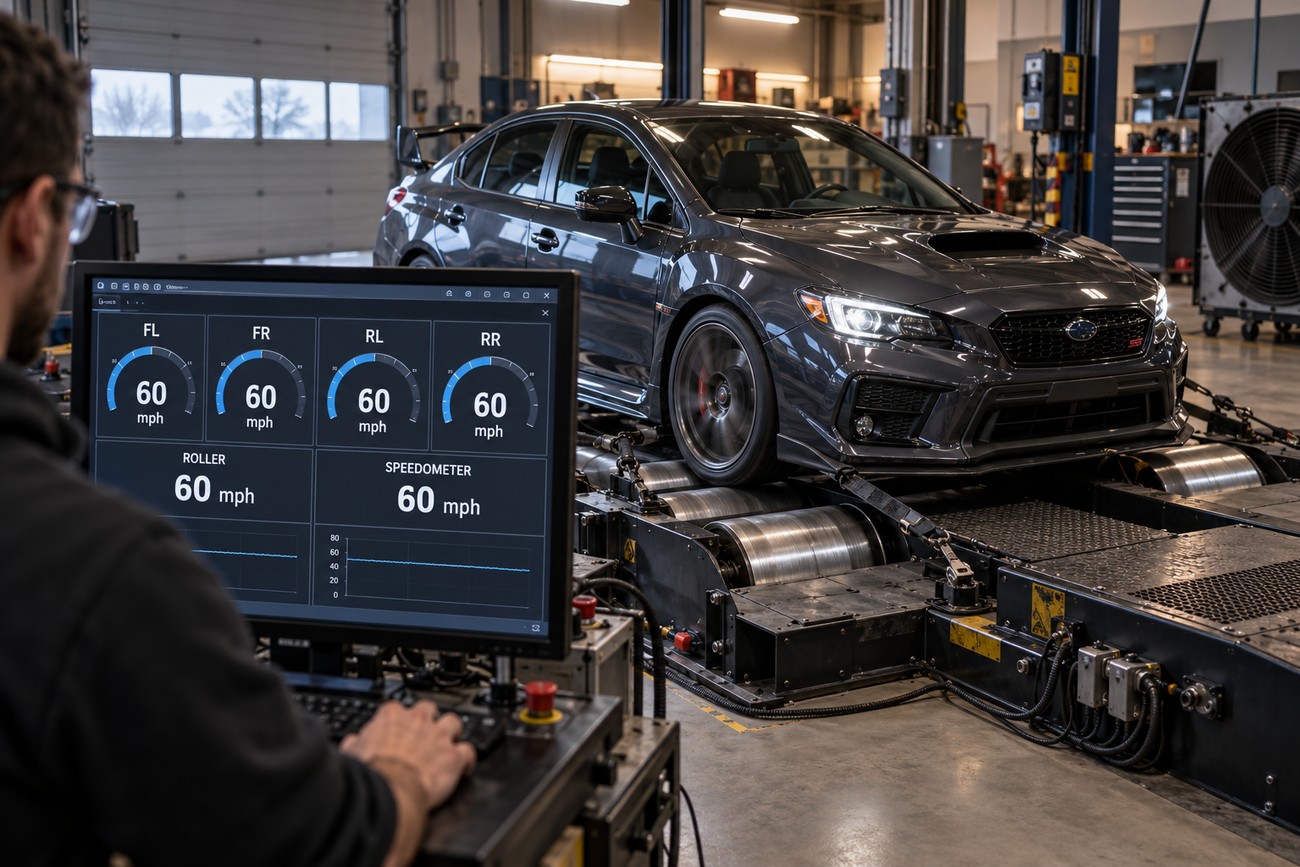
Wheel-speed changes reach beyond the dashboard. ABS, ESC, traction control, TPMS, and transmission logic can respond to how fast the wheels rotate, so an outside-diameter guideline does not automatically guarantee correct operation. Check vehicle-specific requirements for replacement tire sizes and any relevant setup procedure.
AWD systems warrant particular care with all four tires. Even a small front-to-rear circumference difference can create a continuous rotational-speed mismatch, including when the sidewalls carry the same nominal size. Account for tire model and tread wear as well as the size printed on the tire.
For a close comparison, mark the tire and ground, roll the installed wheel through one full revolution, and measure the distance traveled. Use the recommended pressure and equal load conditions for each tire; catalog dimensions cannot show a mismatch in the fitted set.
Compare the measured circumference with the stock setup and check speed and distance readings independently under suitable, safe conditions. Keeping the outside diameter close to stock does not guarantee a perfectly accurate speedometer because the original instrument may already have built-in error. If the readings change enough to require action, follow the vehicle manufacturer’s calibration guidance or seek qualified service rather than assuming a generic adjustment will suit the car.
Frequently asked questions
The answers below address the final checks that matter once you have selected a candidate package. Vehicle-specific instructions remain the deciding reference for setup and calibration.
How do I recalibrate a speedometer after changing wheel size?
First, establish whether recalibration is needed by comparing the new tires’ measured rolling circumference and checking the vehicle’s speed reading independently. If an adjustment is required, use the vehicle manufacturer’s procedure or qualified service guidance; some vehicles may need compatible diagnostic equipment. Avoid entering a guessed tire diameter, since pressure, load, and the particular tire can affect rolling circumference. Afterward, check the speed reading independently, confirm that distance readings are plausible, and complete any TPMS relearn or reset required by the vehicle.
What is the 3% rule for tire size?
The ±3% figure is a commonly used industry guideline for comparing tire outside diameters, not a universal official allowance. The vehicle manufacturer’s specified tolerance takes priority, and falling within the guideline does not prove that ABS, ESC, TPMS, AWD, or physical clearance will work correctly. Confirm the actual package against the vehicle’s fitment requirements.