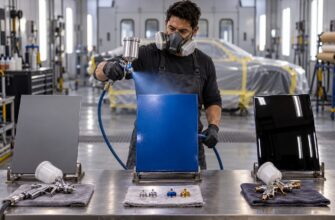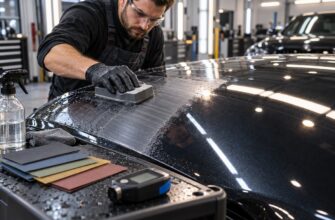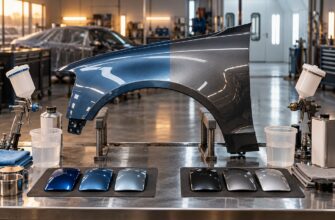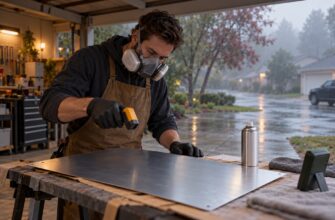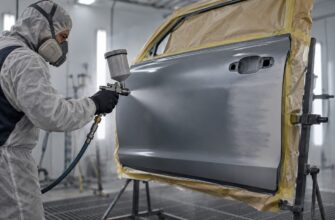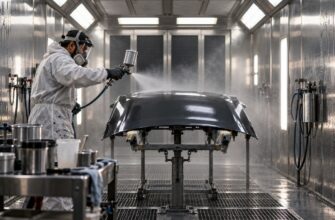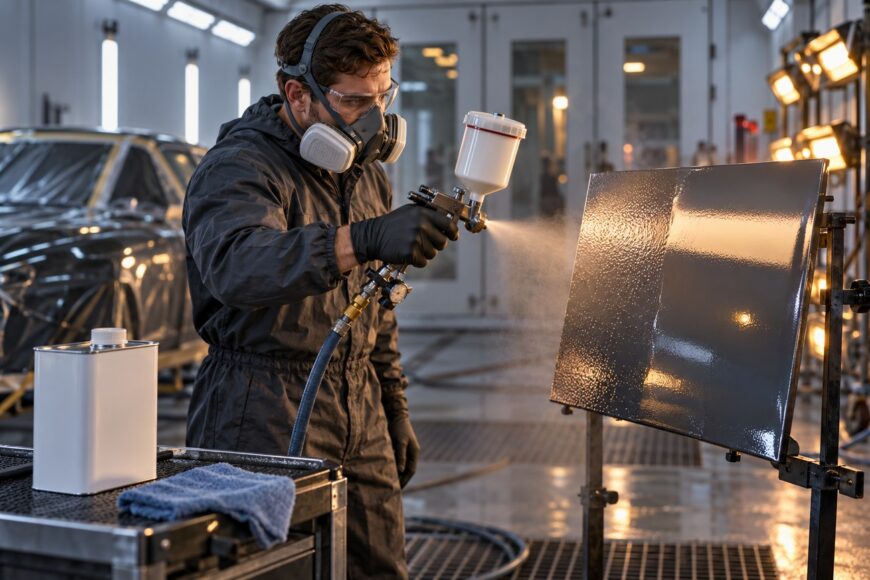
Cold application produces thick mixtures, rough spray, spitting, and slow leveling. Heat creates the opposite failure: volatile components leave the film before it can flow, so the spray turns dry, open time collapses, and brush marks or bubbles remain visible.
Reducer selection depends on the temperature of the coating and substrate, humidity, ventilation, equipment, film thickness, and coating chemistry. Air temperature alone can give false confidence, especially when the paint is cold in the cup or the substrate is warmer than the surrounding air. The coating TDS remains the final authority, including the approved reducer, mixing ratio, and application conditions.
Labels may describe a reducer as suitable across a broad temperature range. Professional systems commonly separate fast, standard, and slow options because evaporation and flow change with the conditions. A universal reducer can work in a middle range while giving poor results at temperature extremes.
- What a Paint Reducer Actually Controls
- Temperature, Material Condition, and Dew Point
- Fast, Standard, or Slow Reducer: How to Choose
- Reducer Choices by Temperature and Application Conditions
- Cold-Weather Application: Why the Gun Spits
- Hot-Weather Application: Avoiding Dry Spray and Short Open Time
- Common Reducer Mistakes and a Safer Troubleshooting Sequence
- Frequently Asked Questions
- What is the ideal temperature range for a slow reducer?
- What happens if you add too much reducer to your paint?
- When should you use a paint reducer?
What a Paint Reducer Actually Controls
A paint reducer changes more than viscosity. It also affects evaporation speed, flow, open time, atomization, and the way the wet film joins together after application. The correct product helps the coating leave the gun in a usable pattern and remain open long enough to level.
Cold material becomes more viscous, so the gun may spit, the spray pattern may become coarse, and the film may fail to flow into a uniform surface. In warm conditions, a fast reducer can evaporate before the droplets coalesce. The visible result may be dry spray, poor leveling, matting, or brush marks.
Adding reducer for easier spraying can create a second problem. Excess solvent lowers dry-film thickness and hiding power, and it can change drying, sag resistance, and final performance. A coating that looks smoother while wet may provide less coverage and a weaker finished film.
The approved reducer and reduction ratio come from the coating TDS, rather than from the reducer label alone. Broad chemistry descriptions do not establish compatibility. The resin, hardener, additives, and intended application method all influence the result, so a reducer that works in one brand or product line may cause defects in another.
Temperature, Material Condition, and Dew Point
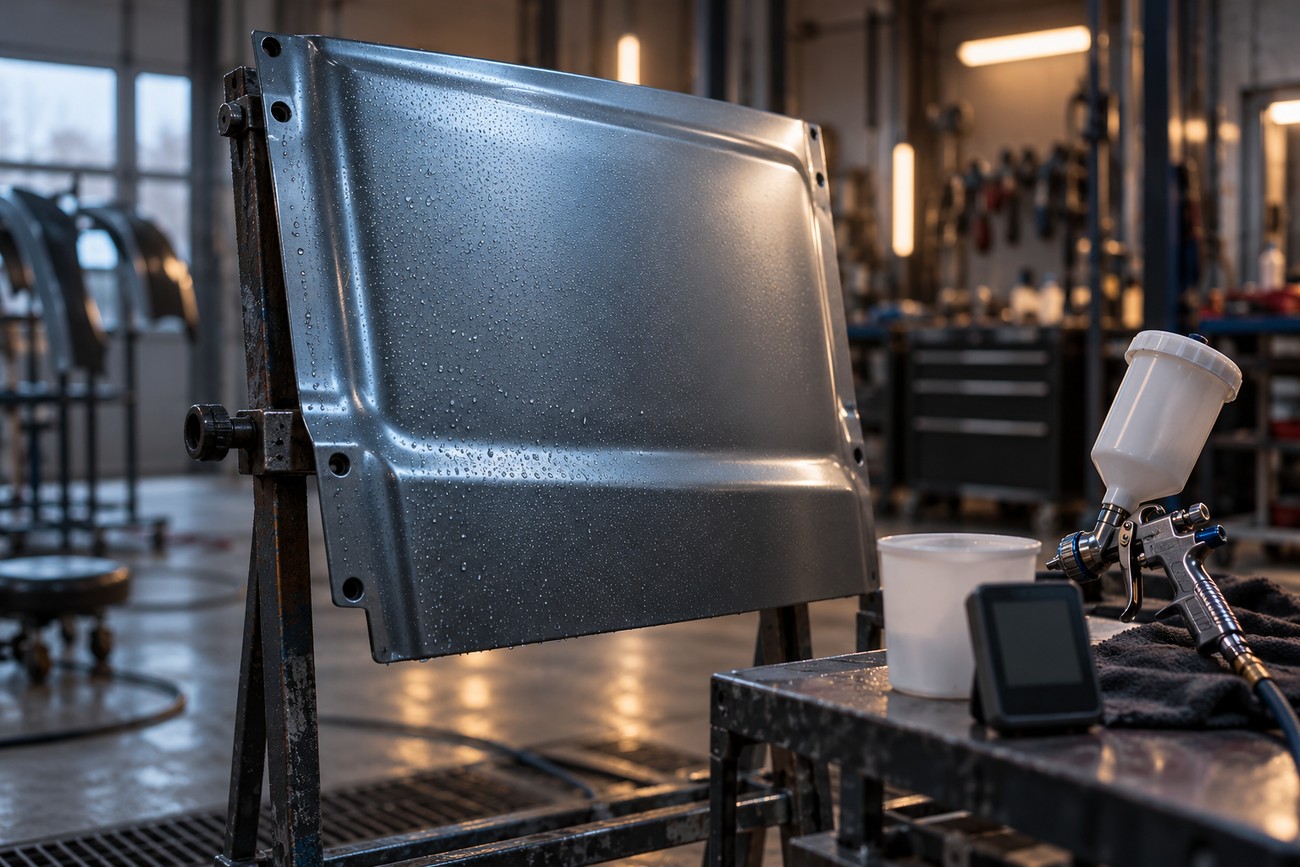
Many coating systems are prepared and applied at approximately +18 to +25 °C, subject to the coating TDS. This is a practical working target rather than a universal application limit. Professional documents may specify separate temperatures for ambient air, the coating material, and the substrate because those values can differ substantially.
A cold substrate can remain a problem even when the air feels comfortable. It can cool the coating at the surface, slow leveling, and promote condensation. The surface should generally be at least 3 °C above the dew point; otherwise, moisture may form invisibly and reduce adhesion.
Temperature can also change during the route from the mixing cup to the workpiece. The container, hose, and spray gun may be colder than the room, while a sun-warmed panel may be hotter than the air. These differences alter viscosity and evaporation, which explains why a viscosity-cup reading may fail to predict the actual spray pattern.
Humidity, air movement, and surface temperature belong in the same check. Strong ventilation can accelerate solvent loss, while high humidity can affect drying and surface appearance in systems sensitive to moisture. Record the material and substrate condition before changing the reducer ratio; the TDS should define the acceptable limits.
Fast, Standard, or Slow Reducer: How to Choose
Fast reducers evaporate quickly, standard reducers provide a middle rate, and slow reducers extend flow and open time. Professional systems commonly select among these categories according to the conditions specified in the TDS. The choice controls how long the wet film can level before it becomes too dry to move.
A slow reducer may preserve flow in warmer or more demanding conditions, particularly where the substrate, airflow, or spray distance causes rapid solvent loss. A fast reducer can be useful where evaporation is slow, provided the product documentation allows it. Using a fast product while evaporation is already rapid can increase dry spray and shorten mixture life.
Reducer speed is only one part of the process. Nozzle size, pressure, gun distance, humidity, ventilation, pass thickness, and the temperature of the material all change the result. A slow reducer cannot compensate for excessive atomization, an overheated panel, or a layer applied too thinly.
Claims of universal temperature usability should be read as conditional. A broad-range product may be a workable compromise in ordinary conditions, while a system-specific fast, standard, or slow reducer may provide better control near the limits stated by the TDS.
Reducer Choices by Temperature and Application Conditions
Use the table as a diagnostic guide, then confirm the exact reducer and limits in the coating TDS. The conditions are descriptive rather than universal temperature bands.
| Condition | Material behavior | Likely visible defect | Reducer strategy | Process checks |
|---|---|---|---|---|
| Cooler than the system’s stated working conditions | Higher viscosity; slower dissolution and leveling; poorer atomization | Spitting, clogging, coarse texture, dry spray, poor flow | Use only the reducer and ratio permitted by the TDS; correct material temperature before adding more solvent | Measure coating and substrate temperature; check container, hose, gun, nozzle, pressure, and dew point |
| Typical working conditions | More predictable viscosity, evaporation, and open time | Defects usually point to mixing, equipment, surface, or technique | Use the standard option and specified ratio when the TDS identifies it for those conditions | Confirm humidity, ventilation, pot life, film thickness, and viscosity-cup temperature |
| Warmer, sunnier, or strongly ventilated conditions | Faster evaporation; shorter open time or mixture life | Dry spray, bubbles, brush marks, edge marks, poor coalescence, loss of gloss | Consider the slower option only when the TDS allows it; avoid assuming that extra reducer will restore flow | Check substrate temperature, direct sun, airflow, pass thickness, spray distance, and humidity |
The table separates symptoms from causes. A coarse finish in cool conditions may reflect viscosity and atomization, while the same visual roughness in heat may result from droplets drying before they reach the surface. The correction therefore begins with temperature and evaporation, rather than with an automatic increase in reducer.
The same reducer can behave differently between brands because resin composition, solids content, hardener, additives, and recommended film thickness differ. Even products described under the same broad chemistry may have different solvent balance and compatibility requirements. The TDS identifies the approved combination.
Temperature also changes how a viscosity cup behaves. A reading taken without recording material temperature can lead to an incorrect adjustment, especially when the mixture cools in a hose or gun. A consistent procedure requires the same cup, temperature context, mixing method, and equipment settings used by the product documentation.
Cold-Weather Application: Why the Gun Spits
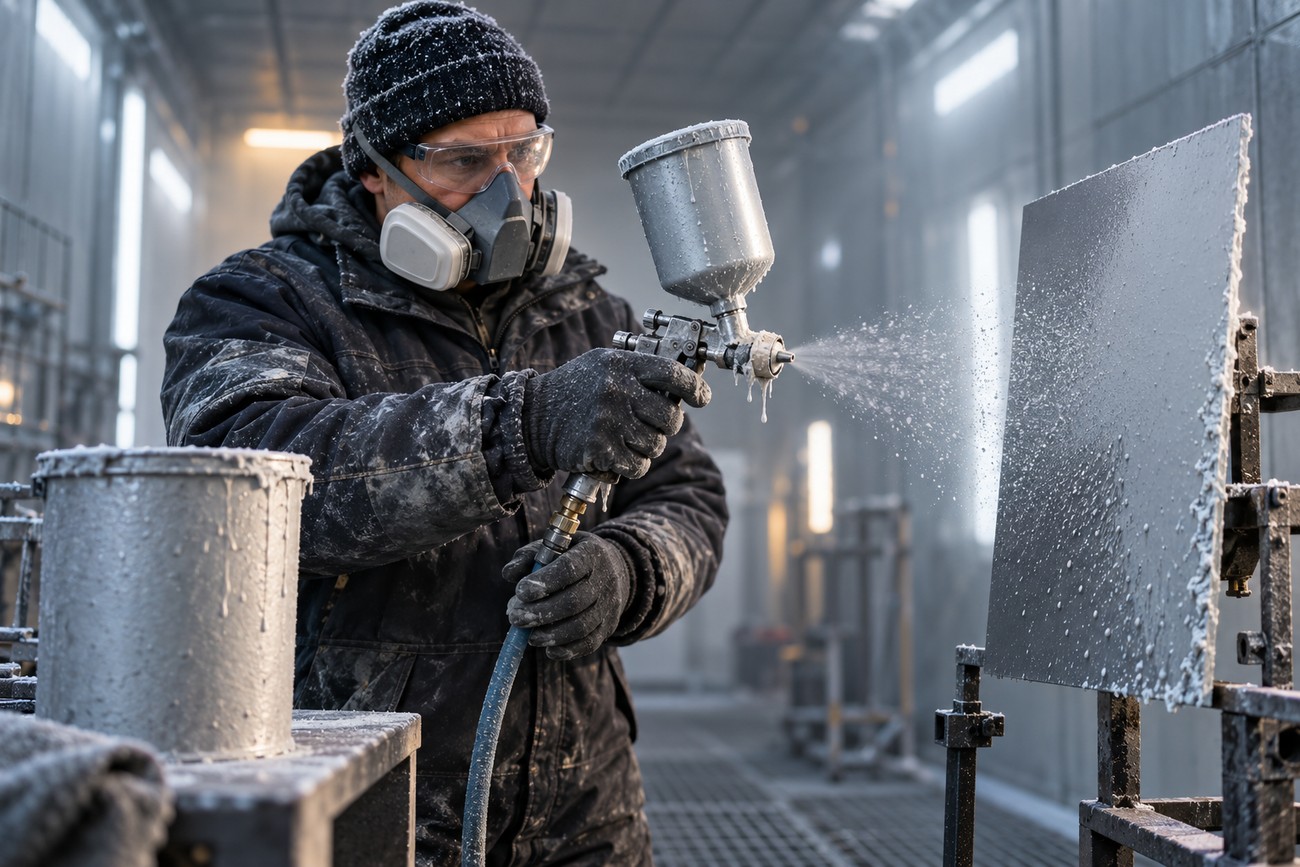
Low temperature raises mixture viscosity and slows the dissolution of pigments and resins. The gun then needs more effort to atomize the material, and the spray may pulse, spit, or clog after several minutes. Once deposited, the coating levels slowly and may retain coarse texture or dry edges.
Extra reducer is not a universal fix. It may improve the immediate spray while lowering dry-film thickness and hiding power, and it can alter the cure balance. The first check should be the temperature of the coating, container, substrate, and equipment against the TDS requirements.
Warming the material within the approved process can be more useful than judging the air temperature. A cold cup, hose, or gun can return the mixture to a higher viscosity during application. Any heating method must follow the product and safety documentation; indiscriminate heating of flammable materials creates its own hazards.
Check the temperature of the paint in the cup and at the gun before changing the reducer ratio or spray settings. The material can cool along the delivery path even when the room appears suitable.
Cold application can also delay curing and expose adhesion problems later. If the substrate is near the dew point, condensation may form between the surface and coating. Allowing the surface and material to reach stable conditions, then confirming the specified reducer and pot life, gives a more reliable correction than chasing the spray symptom.
Hot-Weather Application: Avoiding Dry Spray and Short Open Time
Heat accelerates evaporation, and the effect becomes stronger in direct sun, strong ventilation, or with excessive atomization. The mixture may lose open time before it has leveled, producing dry spray, edge marks, or a rough surface. A hot substrate can intensify the effect even when the surrounding air is within the nominal working range.
Brush application can show the same mechanism as spray application. The surface dries before brush marks disappear, or bubbles remain because the film loses solvent too quickly. Thin passes, excessive gun distance, and a fast reducer can all increase the rate at which droplets become dry.
The suitable response may involve a slower reducer, a different application window, reduced airflow, or a change in pass thickness, but only where the TDS permits it. Adding solvent without checking the specified ratio can reduce film build and coverage while leaving the evaporation problem unresolved.
Early appearance is an unreliable quality test. A film may initially look acceptable and later show changes in gloss, hardness, adhesion, or solvent resistance. Fast evaporation can interfere with coalescence and curing, so inspection should include the documented cure interval rather than the wet or freshly dried appearance alone.
Common Reducer Mistakes and a Safer Troubleshooting Sequence
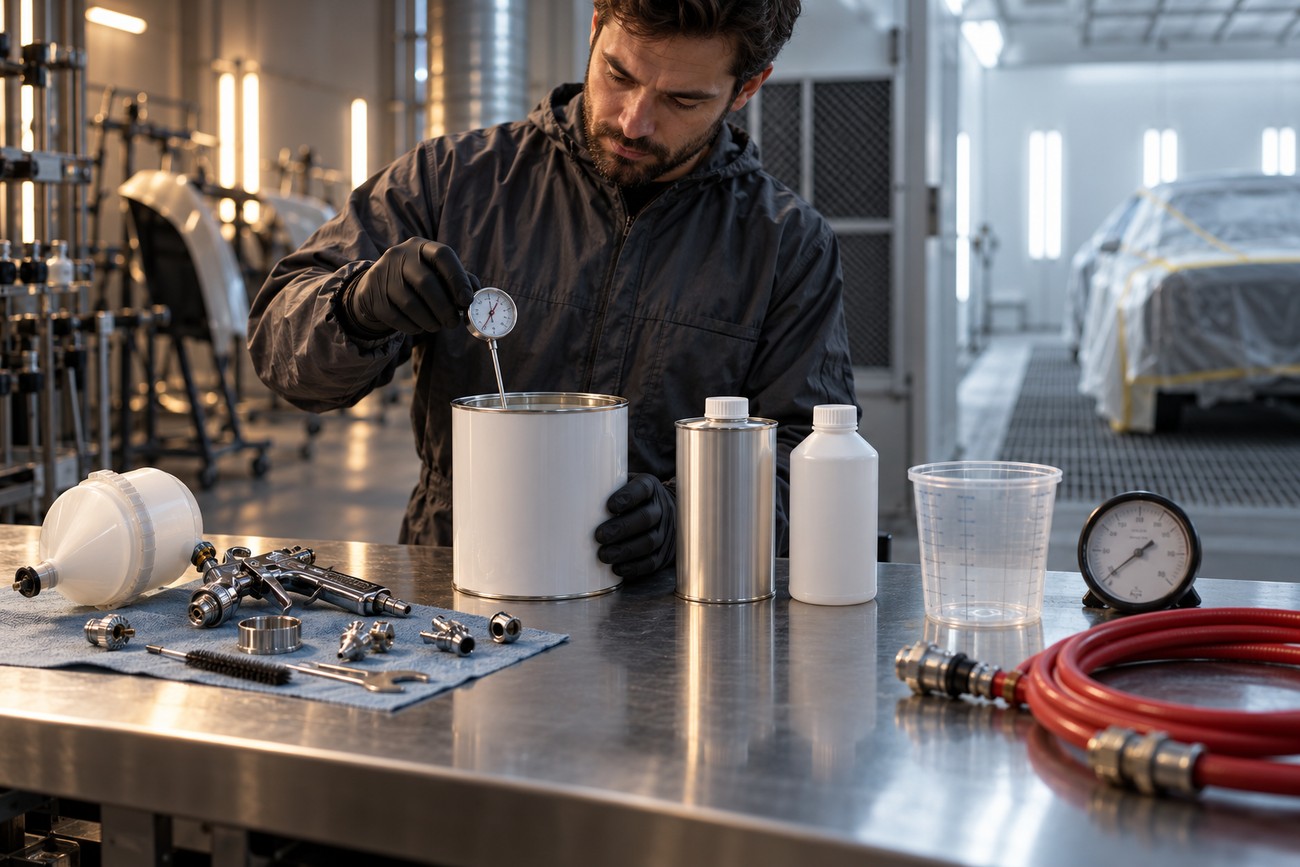
Begin with product identity and documentation. Confirm the coating, hardener, reducer, batch information, mixing ratio, pot life, and application method. Mineral spirits are common for alkyd and oil systems, while nitrocellulose, epoxy, and many two-component systems require their specified solvents.
Next, measure the temperature of the coating and substrate, then check ambient humidity, ventilation, and dew point. The surface should generally be at least 3 °C above the dew point. Inspect the container, hose, and gun as separate temperature points, because a cold delivery path can change viscosity after the mixture has been measured.
Viscosity-cup results only make sense with material-temperature context. A number recorded from a warm cup cannot be transferred directly to a colder mixture at the gun.
Review the reducer ratio and mixture life before changing equipment settings. Guessing by eye can conceal over-reduction, while an incompatible solvent can disrupt resin or hardener compatibility even when the broad coating chemistry appears similar. Mixing old and new batches also requires a compatibility and pot-life check; a fresh addition does not reset an aging mixture.
Inspect nozzle condition, pressure, spray distance, gun cleanliness, pass thickness, and ventilation after the material checks. Storage conditions are a separate issue from application conditions, and reducer storage temperature limits may appear in the SDS or TDS rather than in a product listing. If the symptoms remain, stop adjusting several variables at once and return to the coating manufacturer’s documented process.
Frequently Asked Questions
What is the ideal temperature range for a slow reducer?
There is no universal slow-reducer temperature range independent of the coating TDS. Suitability depends on the coating, substrate temperature, humidity, ventilation, layer thickness, and the open time required for the application.
Use the slow option only where the product documentation identifies it for those conditions. A slow reducer can preserve flow when evaporation is rapid, while excessive slowing in a cool or poorly ventilated environment can delay drying and alter the final film.
What happens if you add too much reducer to your paint?
Over-reduction can lower dry-film build and hiding power even when spraying becomes easier. It can also change drying behavior, cure balance, sag resistance, and the final performance of the coating.
The defect may appear later as reduced hardness, gloss change, weaker solvent resistance, or inadequate coverage. Correct the cause of poor atomization or flow first, then keep the mixture within the TDS ratio.
When should you use a paint reducer?
Use a reducer when the coating TDS directs it for viscosity adjustment, evaporation control, or the specified application method. The correct product and ratio must match the coating system and its working conditions.
Reducer is not a reliable rescue for a contaminated, partially cured, incorrectly mixed, or incompatible coating. Such material may need to be rejected or handled according to the manufacturer’s instructions rather than diluted into apparent workability.