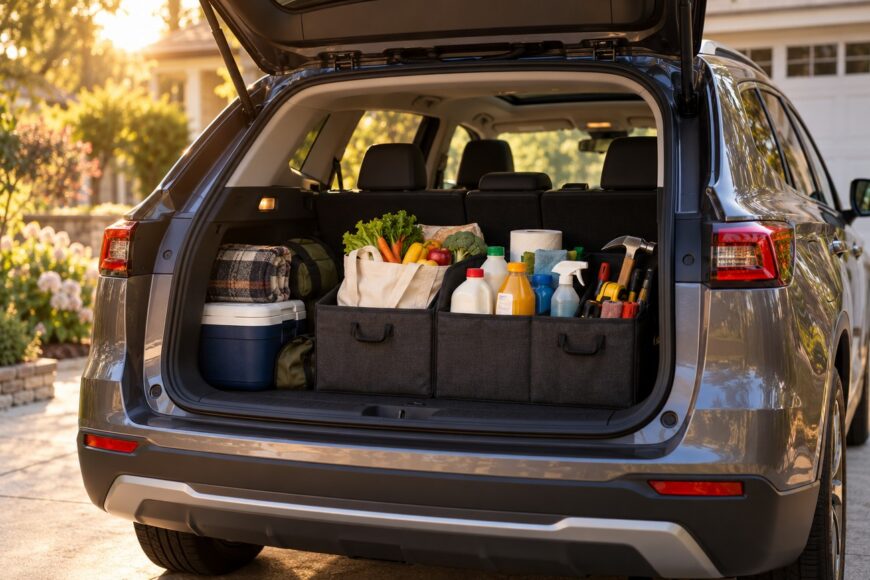
Grocery bags tip, bottles roll, and small pieces of gear disappear behind larger bags during a drive. A trunk organizer can give those items a place to stay, making them easier to find when you arrive.
The wrong organizer can create a different kind of clutter. A box that fills the cargo floor leaves little room for shopping, while a soft base may sag and a loose organizer may slide. The useful choice is one that fits the space you can spare, supports what you carry, and stays in place on your trunk’s lining.
- Start With What You Actually Carry
- Measure the Trunk, the Opening, and the Space You Need to Keep
- Choose a Base That Handles the Load
- Stop Sliding Before It Starts
- Trunk Organizer Styles: The Trade-Offs at a Glance
- Look Past the Fabric and Capacity Claims
- Set It Up So the Trunk Stays Usable
- Frequently asked questions
- How do I clean a trunk organizer after a spill?
- Where should I store a trunk organizer when I need the full cargo area?
- How can I keep emergency supplies accessible in an organized trunk?
Start With What You Actually Carry
Begin with the items that routinely end up loose. A compact organizer can gather reusable bags, cleaning supplies, and small essentials without claiming the whole trunk. If groceries are the main concern, look for compartments that keep bottles upright and smaller items separate from heavier bags.
Tools and filled bottles place different demands on the structure. Their weight can pull a soft base out of shape, and loose items can knock against one another. For mixed cargo, adjustable dividers let you change the layout; compartments may also be fixed, and common configurations have 2, 3, or 4 sections.
A lid can keep small items contained and out of sight, provided you can still reach what you use often. Exterior pockets are useful for light, flat items, though they can protrude into space you expected to leave free. They do not replace a compartment large enough to hold the cargo you intend to pack.
Advertised capacities of roughly 45–95 L are not directly comparable without checking interior dimensions and compartment shape. A tall compartment may add to the stated volume while making small objects harder to see at the bottom. Choose around the shape and frequency of your usual cargo rather than the largest number on a listing.
Measure the Trunk, the Opening, and the Space You Need to Keep
Measure the width between the wheel wells first, then the usable depth from the trunk edge toward the rear seat. If your vehicle has a cargo cover, measure the height beneath it. Note where the organizer would sit so your measurements reflect the space you are willing to give it, rather than the entire cargo area.
Next, check the trunk opening or liftgate clearance along the path the organizer will take when you load it. A trunk organizer can fit inside the cargo area yet fail to pass comfortably through its opening. That matters particularly if you expect to carry it in and out while filled.
Example exterior dimensions in listings vary from about 16 × 10 × 22 to 24 × 15 × 10 inches; there is no universal fit. Check which measurement represents width, depth, and height, and whether the seller includes pockets, handles, or outward-leaning walls. In a sedan, a sloping rear seatback can limit depth even when the floor measurement looks generous.
Leave room for the cargo and vehicle features you still need. An oversize box can cover built-in storage or crowd out bags that were easier to carry beside a smaller one. Keep access to the spare-wheel area or other equipment in mind before deciding where the organizer will live.
Choose a Base That Handles the Load
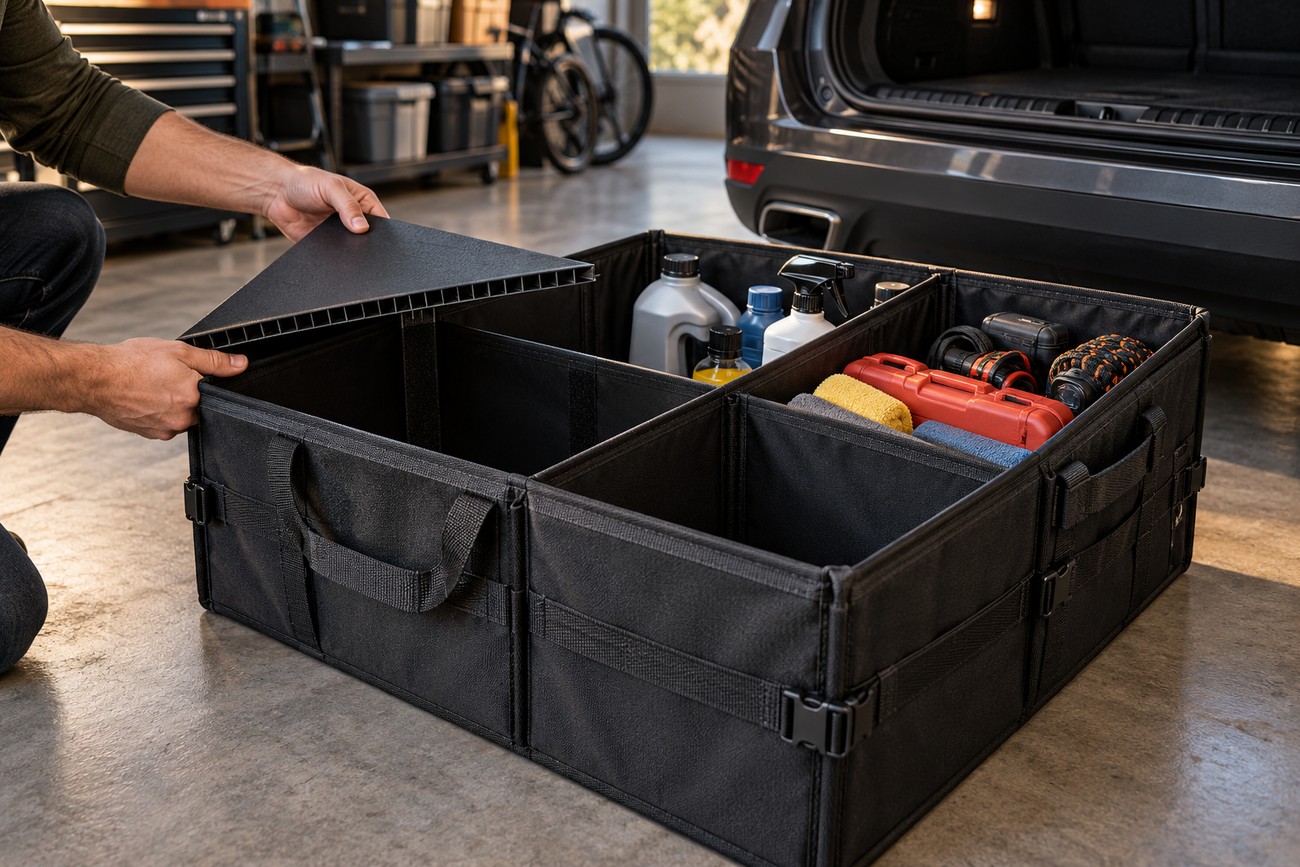
Base construction—such as corrugated plastic, PP panels, thin inserts, or a soft bottom—matters more to rigidity than fabric naming alone. A soft bottom can gather lightweight essentials on the trunk floor, but it may bow when lifted with heavier contents. Thin inserts add some shape, though support depends on how they sit beneath the compartments.
A reinforced panel can help the floor stay flatter and the dividers retain their shape. Check whether the dividers meet the base securely; a stiff floor offers less benefit if filled sections pull apart. Removable panels can make cleaning and folding easier, as long as they stay correctly positioned when the organizer is opened again.
Check whether a removable bottom panel reaches beneath the full compartment you plan to load. A supportive-looking fabric shell cannot make up for a panel that leaves the weight resting on unsupported corners.
Some sellers claim 60–75 lb; reviews of soft organizers with thin inserts estimate noticeable sag at around 15–30 lb. Neither figure is a universal tested safe limit. A stated load may not tell you how weight was distributed or whether the base, handles, and dividers were assessed together. Keep heavy objects low, and do not assume the handles make a loaded organizer safe to carry.
Rigid panels bring their own compromises. They can make an organizer harder to fold flat, and exposed stiff edges may rub against nearby trim if the box moves. If you carry heavy tools, secure those items appropriately in the vehicle rather than relying on the organizer’s compartments to restrain them.
Stop Sliding Before It Starts
Foldable organizers may use straps, hook-and-loop fasteners, or nonslip elements; without effective attachment, a tall or partly empty organizer may shift. Each method depends on its surroundings. Hook-and-loop material needs a compatible lining, a strap needs a suitable anchor point, and a grippy base needs reliable contact with the floor.
Test the setup with the amount of cargo you normally carry, including days when the organizer is only partly filled. Check whether it rocks, folds inward, or slips when you push it firmly by hand while the vehicle is parked. If a divider pulls free or an attachment does not hold on your trunk lining, change the setup before driving.
A low center of gravity and snug placement of items help limit movement; a partly filled organizer may rattle more than a well-packed one. Put heavier items in lower sections and use dividers to stop smaller objects knocking together. A lid or soft separation can help with noise, but it will not correct an organizer that slides across the floor.
Keep the organizer’s role in perspective. It can contain everyday loose items, but it does not replace proper restraint for heavy cargo during a sudden stop. Use the vehicle’s appropriate cargo anchors or restraint provisions where needed.
Trunk Organizer Styles: The Trade-Offs at a Glance
These features often appear together; use the table to compare the checks each one adds.
| Feature combination | Suitable cargo | Fit or stability check | Main compromise |
|---|---|---|---|
| Compact foldable | Reusable bags and small essentials | Check its footprint and whether straps, hook-and-loop fasteners, or nonslip elements work with your trunk. | A soft bottom may sag under heavier contents. |
| Reinforced-base | Mixed items needing a flatter floor | Check panel coverage, divider support, and clearance through the opening. | Rigid panels can hinder folding or rub against trim if the organizer moves. |
| Adjustable-compartment | Cargo that changes shape from trip to trip | Check how securely dividers hold; compartments may be fixed or adjustable, with common configurations of 2, 3, or 4 sections. | Movable dividers can shift if their fasteners do not hold. |
| Lidded | Small items you want contained and out of sight | Check height beneath a cargo cover and access to frequently used items. | The lid can slow access and add height without adding useful floor space. |
Look Past the Fabric and Capacity Claims
A water-resistant fabric label tells you little about a complete organizer after a spill. Water-resistant fabric does not establish that seams, zippers, and the base are watertight; most organizers lack a shared verified waterproof rating. If you carry liquids, plan to clean a leak promptly rather than treating the box as a sealed tray.
Listing photos can also hide access problems. Tall walls make small items harder to spot, while exterior pockets may give the impression of more storage without enlarging the main compartments. Check the usable space inside, not just the advertised capacity.
Look closely at how dividers attach, especially if you want them to keep bottles or supplies separated. Weak hook-and-loop fasteners may let a divider move when the vehicle stops sharply. Reviews may also flag a noticeable odor after unpacking; check the seller’s return terms if that would make the organizer unsuitable for your car.
Fabric labels and load claims cannot stand in for construction details. Check how the base, handles, and dividers work together under the cargo you expect to carry. Temperature durability for plastic inserts is also often undocumented, so inspect panels for damage if they have been stored in cold conditions.
Set It Up So the Trunk Stays Usable
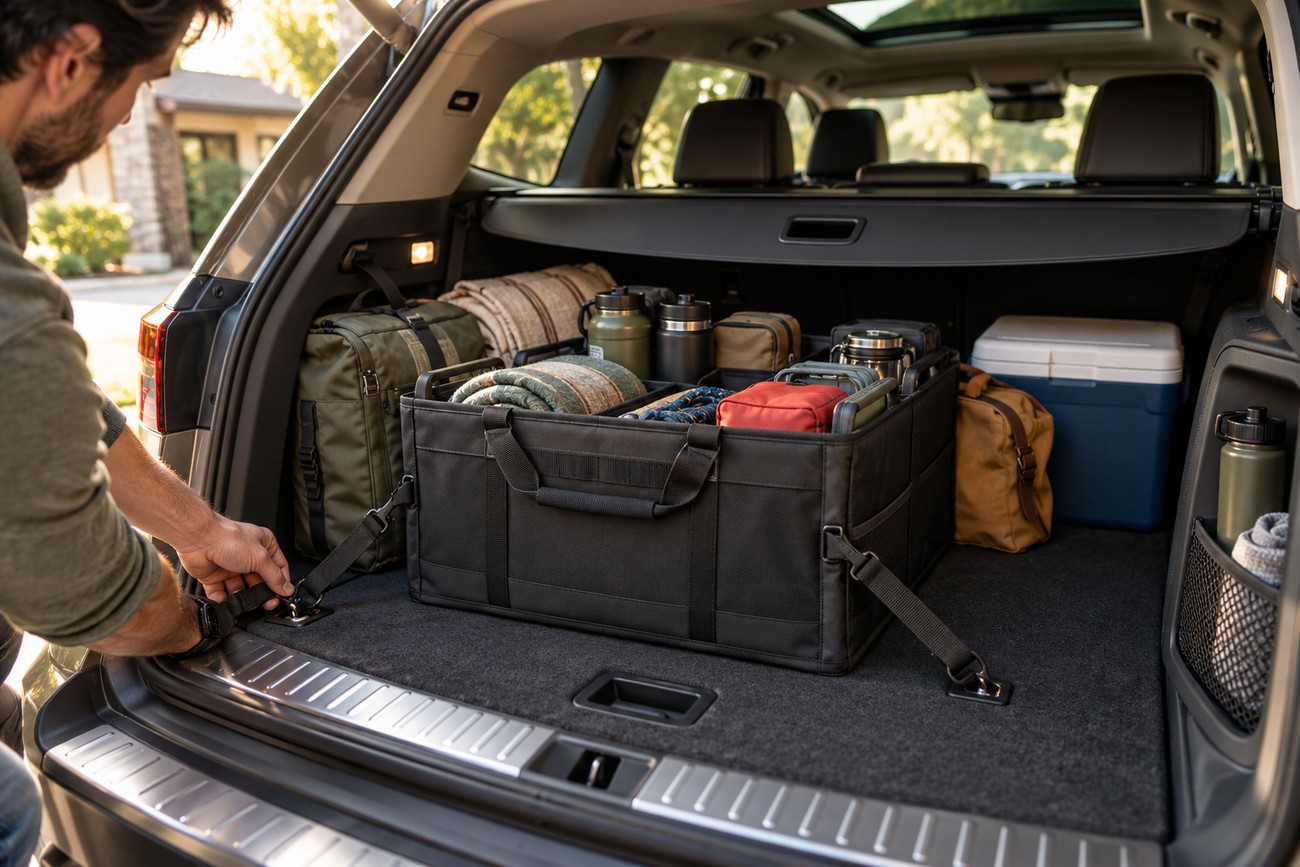
Place the empty organizer where it leaves built-in compartments and vehicle equipment accessible. Open it fully, check that any removable base panels lie flat, and confirm the lid or cargo cover can close without pressing on the contents. This first placement should leave a practical area for the bags or larger items that do not belong inside it.
Secure the organizer using the attachment method that works with your trunk’s lining or suitable anchors. Check the attachment again after loading, because a box can sit differently once its compartments contain cargo.
Put heavier items low and group smaller ones with dividers so they cannot roll into empty sections. Pack items snugly to limit movement, especially if the organizer is partly filled. Leave enough room to remove the items you use regularly without unloading the whole trunk.
On trips that require the full floor, empty and fold the organizer instead of working around it. For everyday use, choose the smallest footprint that holds your usual loose cargo. The deciding checks are fit, base support, and secure placement—not maximum advertised volume.
Frequently asked questions
Care and storage matter after you have found a layout that works. These checks help keep the organizer usable without making vehicle equipment or essential supplies harder to reach.
How do I clean a trunk organizer after a spill?
Check the maker’s care instructions before washing it. Empty the compartments, remove detachable inserts where possible, and clean the fabric and panels using the methods specified for their materials. Avoid soaking panels if you cannot identify what is inside them.
Dry every component thoroughly before reassembling and folding the organizer, paying attention to seams and pockets where moisture can remain. Check the trunk lining beneath it as well, since a spill may have passed through the base.
Where should I store a trunk organizer when I need the full cargo area?
Empty and dry a foldable organizer before collapsing it. Keep loose dividers and bottom panels together so they are available when you set it up again, and avoid placing weight on panels that could bend in storage.
Stow it where it will not obstruct access to the spare wheel, tools, or other vehicle equipment. If there is no suitable onboard space, keeping it outside the vehicle may be more useful than letting the folded box occupy the cargo area you need.
How can I keep emergency supplies accessible in an organized trunk?
Identify which supplies you may need to reach promptly, then give them a consistent location you can access without unpacking shopping bags. Check that the organizer itself does not sit on top of a vehicle kit or block the compartment that holds it.
After loading the trunk for a trip, open it and confirm that those supplies are still reachable. Everyday cargo can gradually bury a well-placed kit, so an occasional access check is more useful than relying on where you originally put it.