You pay for a nitrogen fill, then find a tire low a few weeks later. That is frustrating, especially if the service was sold as a way to stop pressure loss. Nitrogen may offer a modest benefit, but an everyday driver still has to decide whether that benefit is worth the charge and the trouble of finding a refill.
A tire can lose pressure through its rubber, valve, rim seal, or a puncture, regardless of the gas inside. Temperature changes also affect the gauge reading. Keeping tires at the right pressure depends more on regular checks and fixing leaks than on the type of gas used to fill them.
- Is nitrogen worth it for everyday driving?
- What nitrogen changes inside a tire—and what it does not
- The pressure, fuel-economy, and tire-life claims
- The hidden costs of keeping a nitrogen fill
- What to do when a tire keeps losing pressure
- Frequently asked questions
- How much does it cost to fill four tires with nitrogen?
- What should I do if the tire-pressure warning comes on after a nitrogen fill?
- What is the disadvantage of nitrogen-filled tires?
Is nitrogen worth it for everyday driving?
For most passenger cars, paying extra for nitrogen is unlikely to produce a noticeable advantage over properly maintained air-filled tires. Correct pressure has a much clearer effect on how a tire wears and performs. Nitrogen does not remove the need to check it.
If a shop includes nitrogen at no extra cost and refills are easy to obtain, there is little reason to avoid it. A paid service is a different decision: consider whether future top-ups are included and whether you can get one where you normally drive. A benefit that depends on a special trip to a tire shop may be hard to justify.
Dry nitrogen can offer useful consistency in aviation, motorsport, and other demanding high-heat applications. Those operating conditions place different demands on tires and inflation equipment. Their use of nitrogen does not imply a substantial benefit for an ordinary commute.
What nitrogen changes inside a tire—and what it does not
Ordinary air already contains mostly nitrogen; a nitrogen-fill service supplies nitrogen-enriched gas. The difference is therefore a change in the mixture, not a switch to a wholly unfamiliar substance. How dry that fill is depends on the gas supply and filling procedure.
A dry fill can be useful where moisture and repeated heating are important concerns. On a passenger car, however, the value of that dryness depends on what actually reaches the tire. A nitrogen machine alone does not establish how much moisture or ordinary air remains inside.
Both nitrogen- and air-filled tires respond to temperature. A rough guide is about 1 psi per 10°F, or about 0.07 bar per 5–6°C, of temperature change. A lower reading on a cold morning is therefore possible even if no new leak has developed.
Pressure can also escape through tire rubber, the valve, a rim seal, or a puncture regardless of the inflation gas. If one tire repeatedly drops while the others remain steady, changing the gas will not repair the cause. The tire and wheel need inspection.
The pressure, fuel-economy, and tire-life claims
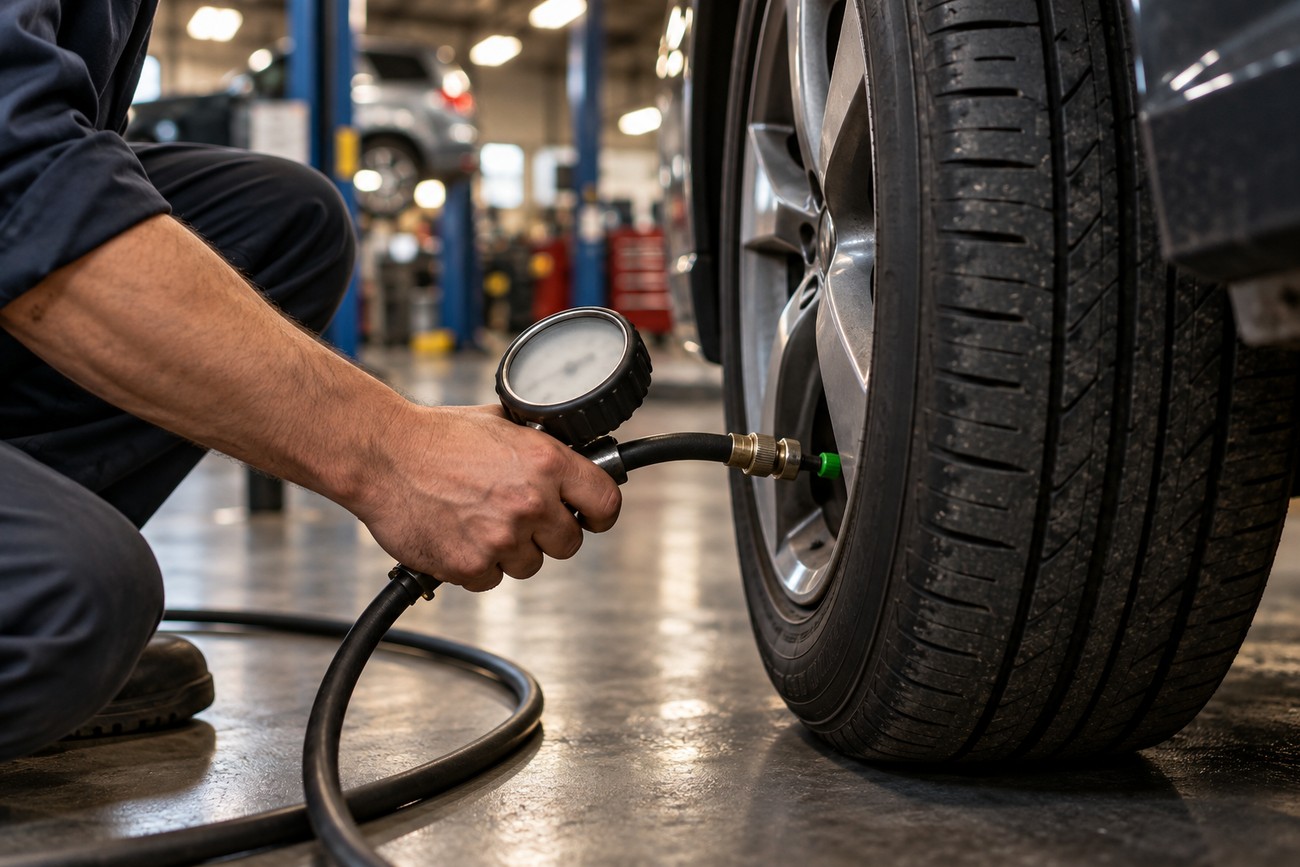
Some services promise substantially slower pressure loss with nitrogen. In ordinary passenger-car use, the measured difference versus air is often small, while leaks and maintenance can dominate the result. A sound valve or repaired puncture may matter far more than the choice of inflation gas.
Fuel-economy claims need the same scrutiny. Driving on underinflated tires can increase rolling resistance, so restoring the specified pressure can help. If that correction happens during a nitrogen service, it is easy to credit the gas for a benefit that came from the pressure adjustment.
Tire life also depends heavily on correct pressure, appropriate loading, and wheel alignment. Nitrogen will not prevent wear caused by an overloaded vehicle or an alignment problem. Any small pressure-retention advantage is useful only if it helps the tire stay near its specified pressure between checks.
Compare readings under similar conditions before judging a fill. Temperature changes affect both nitrogen and ordinary air, and a reading taken after driving is not directly comparable with one taken when the tires are cold. Otherwise, an apparent improvement or decline may say little about the gas.
The hidden costs of keeping a nitrogen fill
The initial charge may be only part of the expense. A puncture repair, seasonal tire change, or later top-up can send you back to a shop that offers nitrogen. For most passenger-car drivers, those repeat costs and the limited availability of refills can outweigh a small practical benefit.
Adding ordinary air is preferable to driving underinflated, even though it reduces the nitrogen share. You can make that top-up wherever suitable air is available, then return to a nitrogen service later if you choose. There is no reason to leave a low tire untreated to preserve the mixture.
Filling a tire from a nitrogen machine does not remove the air already inside it. Without adequate purging, a substantial share of that original air can remain after the service.
Gas purity and moisture level depend on the equipment and the filling procedure, so shops may deliver different results under the same service name. Ask whether the quoted service includes purging and what happens when the tire needs a later top-up. Those details are more useful than a claim that the fill is simply “pure nitrogen.”
What to do when a tire keeps losing pressure

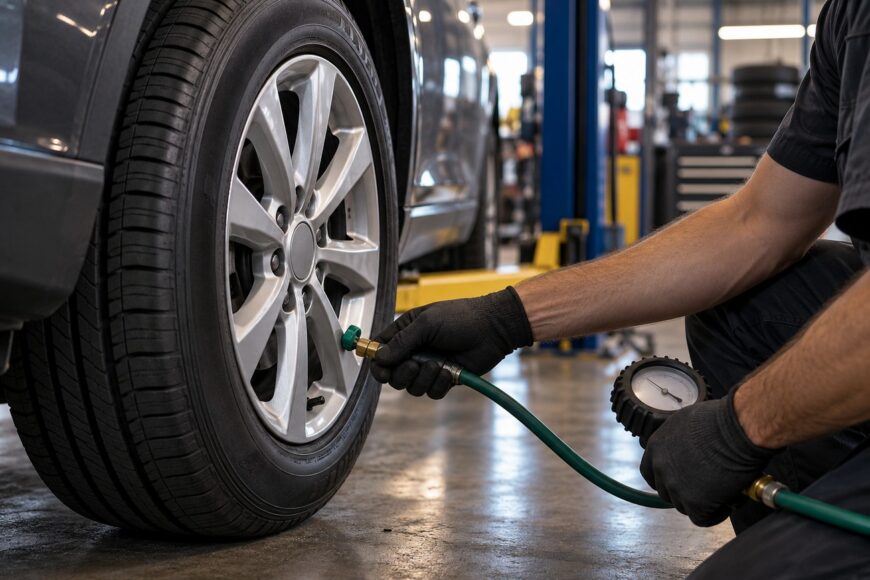
Start with a reliable gauge and check the tires when they are cold, before driving has warmed them. Compare each reading with the vehicle’s specified cold-tire pressure, usually shown on its tire placard, rather than the maximum pressure printed on the tire. Keep the conditions consistent from one check to the next.
Allow for the season when interpreting a change. A rough guide is about 1 psi per 10°F, or about 0.07 bar per 5–6°C, of temperature change; both nitrogen- and air-filled tires are affected. Adjust pressure to the vehicle specification when needed instead of assuming a colder-day warning means the tire needs a different gas.
If the same tire repeatedly loses pressure, have its valve, rim seal, and tread inspected. Air can escape through a puncture or a poor seal, and pressure also passes gradually through tire rubber. Another nitrogen fill will not fix a damaged valve or a puncture.
A dashboard without a tire-pressure warning is no substitute for gauge checks. The system can alert you to a problem, but it does not maintain the specified pressure for you. For most passenger cars, that routine matters more than choosing nitrogen over air.
Frequently asked questions
Nitrogen service raises a few practical questions once you need a quote or see a warning light. The answers depend partly on what the shop includes and partly on the condition of the tire. These points can help you decide what to do next.
How much does it cost to fill four tires with nitrogen?
There is no reliable universal price for a four-tire nitrogen fill; charges vary by shop and by what the service includes. Ask for a quote covering all four tires, and confirm whether it includes purging the existing air rather than only adding nitrogen-enriched gas. Check whether later top-ups are included or charged separately.
What should I do if the tire-pressure warning comes on after a nitrogen fill?
Check all tire pressures when the tires are cold and compare them with the vehicle’s specified cold-tire pressure. If a tire is low, add air if nitrogen is unavailable; correcting the pressure matters more than preserving the mixture. Follow the vehicle’s instructions for clearing or resetting the warning, if applicable.
If the warning returns or the same tire keeps losing pressure, have it inspected for a puncture or a valve or rim-seal leak. A nitrogen fill does not make a recurring warning harmless.
What is the disadvantage of nitrogen-filled tires?
The main disadvantage for an everyday driver is the extra effort or cost of maintaining a fill whose benefit may be hard to notice. Nitrogen may be unavailable when you need a top-up, and repairs can change the gas mixture. A colored valve cap may identify what a shop intended to put in the tire, but it cannot verify the gas composition inside it.