A new set of lug nuts may thread onto the studs and still be wrong for the wheel. If the contact surface does not match, the wheel can vibrate, its mounting holes can become damaged, and retained clamping force can fall as the joint settles.
The seat is the shaped area where the fastener presses against the wheel. Its geometry controls how the load reaches the wheel, so it deserves priority over a vehicle-model fitment listing, a decorative finish, or an attractive material claim.
- Why the seat matters more than matching threads
- Conical, ball, and flat lug nut seats at a glance
- How to identify the seat your wheel requires
- Check the whole fastener, not just its seat
- Install and torque without masking a bad fit
- Warning signs after a wheel or hardware change
- Frequently asked questions
- What are the different types of lug nut seats?
- What is the lug nut rule?
- What is the difference between conical and ball seat lug nuts?
- How do I tell what kind of lug nuts I have?
Why the seat matters more than matching threads
The threads pull the fastener toward the hub, while the seat transfers that clamping force into the wheel. A correct thread therefore forms only one part of a compatible connection. The wheel and fastener seats must also match in shape and contact area.
A mismatched fastener can feel tight because the threads engage and the nut reaches the wheel. Its contact may still be concentrated along an edge or a narrow section of the mounting hole. That condition can leave the wheel poorly supported, reduce retained clamping force, and damage the hole as the assembly moves under load.
Seat geometry also affects centering when the wheel design relies on the fasteners for that function. Some wheels locate primarily on the hub, while others depend more heavily on accurately matched seats. The correct approach is to establish how the particular wheel is designed rather than assuming every wheel centers in the same way.
Decorative length, a special key pattern, and fastener material come later in the selection process. A steel, titanium, or lightweight tuning nut cannot make an incorrect seat safe. The first check is always the specified seat profile, followed by thread size, pitch, engagement, and clearance.
Conical, ball, and flat lug nut seats at a glance
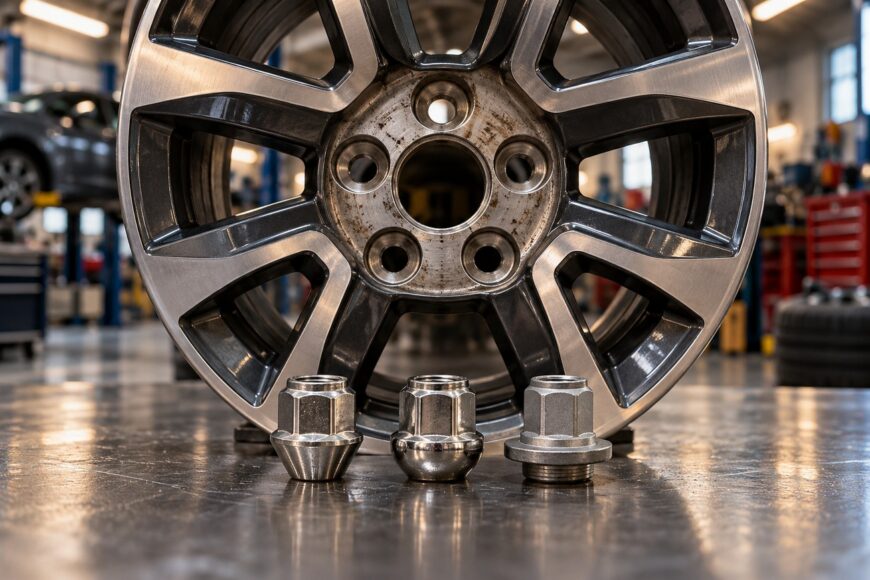
The principal seat types are conical or tapered, ball or spherical, and flat or mag. Their visual appearance can be misleading, so use the wheel specification to confirm the profile and its dimensions.
| Seat type | Shape and visual clue | Typical application | Matching check |
|---|---|---|---|
| Conical or tapered | Angled seat that narrows into the wheel hole; 60° is a common taper. | Many alloy wheels and stamped steel wheels. | Confirm the specified taper and contact dimensions. A common 60° cone is not a universal specification. |
| Ball or spherical | Rounded seat that contacts the wheel on a spherical profile. | Selected original-equipment wheels and some European or Japanese applications. | Match the required ball profile and radius. A ball seat and a conical seat are not interchangeable. |
| Flat or mag | Flat shoulder, commonly working with a washer; some designs use a shank. | Wheels specified for mag-style hardware. | Match the washer, shank diameter, shank depth, and shoulder dimensions. |
How to identify the seat your wheel requires
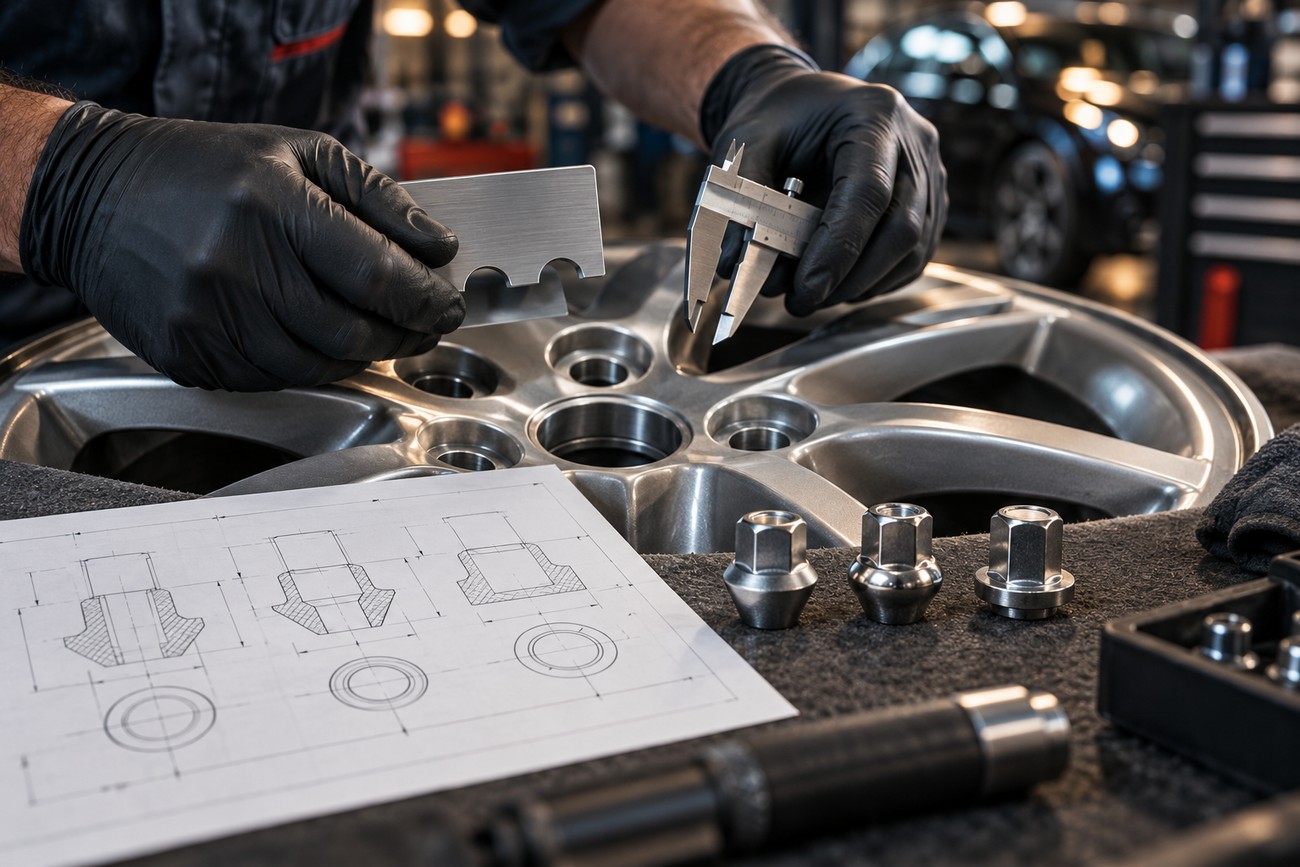
Start with the wheel maker’s documentation, part number, or technical drawing. The required seat comes from the wheel, not solely from the vehicle model or the thread stamped on the original fastener. A vehicle may have different wheel designs across model years, trim levels, or replacement-wheel options.
Next, inspect an undamaged mounting hole and the existing fastener. Remove dirt and loose corrosion before examining the contact area, then compare the fastener’s shape with the wheel’s specified profile. A worn, painted, burred, or previously damaged hole can show the marks left by an incorrect fastener, so its contact pattern is weak evidence by itself.
The wheel maker’s seat specification carries more weight than a contact mark left by a previously misfitted fastener. Damage can make a conical seat look rounded or create a false line that resembles proper contact.
Ball-seat hardware deserves particular care because ball-seat radii can differ even when two fasteners look almost identical. Visual similarity does not establish a match. If the documentation is unclear, provide the wheel part number, photographs of an undamaged hole, and the original hardware to the supplier or a qualified wheel service shop.
Online listings that say “fits” a vehicle can help narrow the search, yet they should not settle the question alone. Confirm the seat type, profile, thread, and engagement against the wheel and vehicle specifications before installing the set. A conical seat and a ball seat remain different even when the fastener threads on smoothly.
Check the whole fastener, not just its seat
Compatibility includes thread diameter and pitch, suitable thread engagement, and enough clearance for the wheel and brake hardware. A fastener with the correct seat can still be unsuitable if its threaded length is inadequate, if it bottoms in a blind hole, or if it interferes with the hub or brake components.
Flat or mag-seat hardware commonly uses a washer and may require a specified shank diameter and depth. The washer must sit squarely on the wheel, and the shank must enter the wheel by the specified amount. Dirt, corrosion, or a wrong washer can alter the contact just as surely as a wrong seat profile.
Hub-centric wheels locate through the hub bore and a matching hub register. A hub-centric ring addresses that hub-bore location; it cannot correct mismatched fastener-seat contact. Lug-centric designs may use correctly matched fastener seats to center the wheel, making profile accuracy and even tightening especially important.
Narrow spline or tuner nuts add a service consideration. They require the matching removal key, and a damaged key pattern can leave the wheel difficult to remove at the roadside. Store the key with the vehicle and verify that the socket clears the wheel before choosing a compact or decorative fastener.
Install and torque without masking a bad fit
Before installation, clean the hub face, wheel mounting surface, seat areas, and threads as directed by the vehicle and wheel manufacturers. Remove loose rust and debris, then check for cracks, burrs, deformed holes, or damage around the seats. A clean surface allows the fastener to reveal a fit problem instead of hiding it.
Start every fastener by hand so the threads can align without cross-threading. Seat the wheel evenly, then tighten the fasteners in the specified sequence in stages. This helps the wheel settle squarely against the hub and reduces the chance that one fastener draws the wheel sideways before the others contact properly.
Finish with a calibrated torque wrench using the torque specified for the particular vehicle and wheel or fastener combination. No single torque figure applies to every passenger-car installation. Lubricant, coating, washer design, thread condition, and seat type can change the relationship between applied torque and actual clamping force, so follow the applicable instructions on lubrication as well as torque.
Extra torque cannot make an incorrect seat safe. It can crush the wheel’s mounting surface, distort a washer, stretch the fastener, or damage the threads while leaving the underlying geometry wrong. A recheck after 50–100 km may be specified for a new wheel or hardware installation; follow the applicable manufacturer’s instructions rather than treating that distance as a universal requirement.
Warning signs after a wheel or hardware change
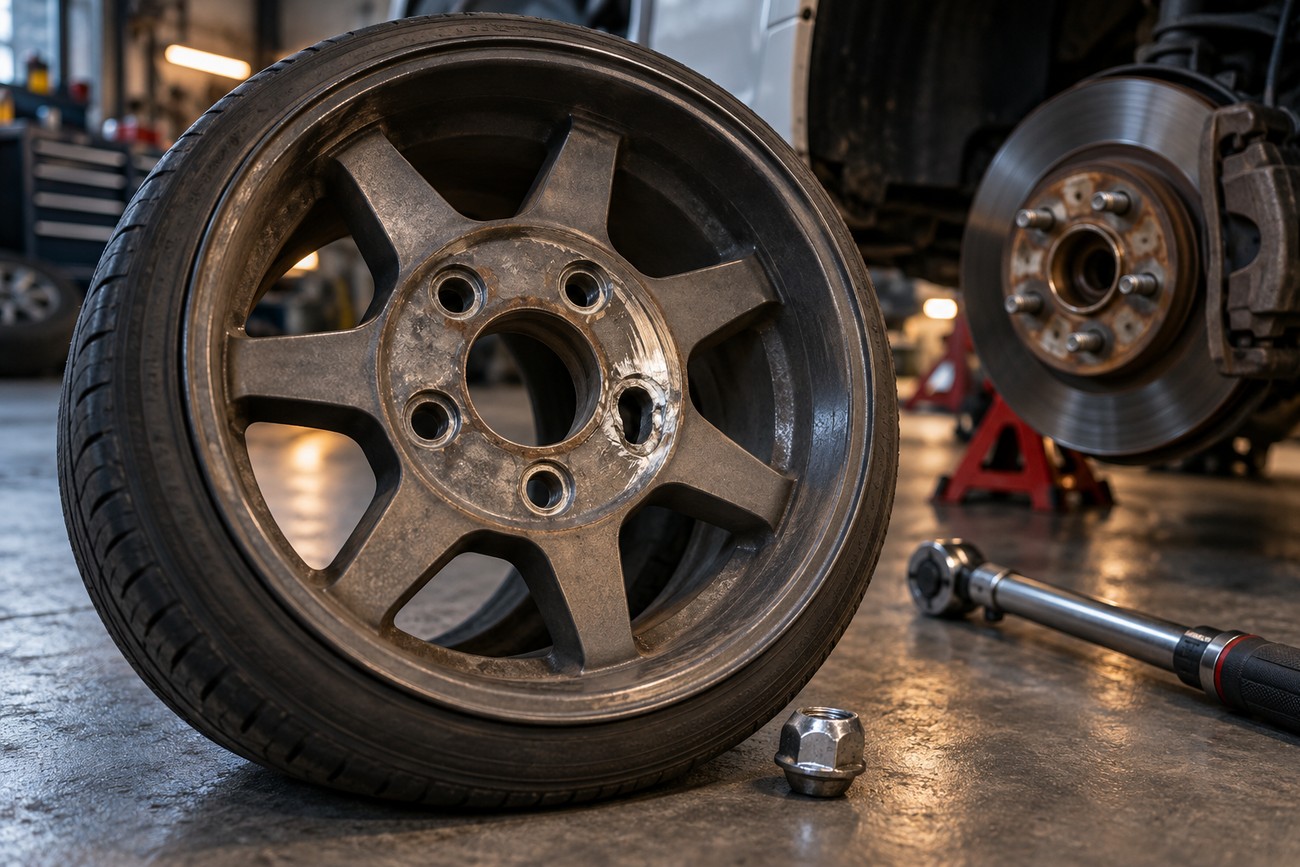
New vibration, repeated loss of torque, uneven contact marks, or movement around a mounting hole deserves an inspection. These symptoms can also result from wheel imbalance, a bent wheel, hub-face corrosion, incorrect runout, or another installation fault, so they do not prove a seat mismatch by themselves.
Stop relying on repeated tightening if the symptoms began after changing wheels or hardware. Remove the wheel when safe and inspect the seats, washers, threads, hub face, and mounting holes. Look for polished contact on only one edge, crushed material, oval or “egg-shaped” holes, and marks showing that the washer has not sat flat.
An incorrect seat can damage the wheel mounting holes and compromise retained clamping force. Once a hole or seat has deformed, tightening the same fastener again cannot restore its original geometry. The affected wheel, fasteners, and related components should be assessed by a qualified professional and replaced as needed.
Keep the complete installation together during diagnosis: wheel, fasteners, washers, spacers, hub rings, and torque information. Changing only the nuts may remove one symptom while leaving a wrong shank, poor engagement, or damaged wheel in service.
Frequently asked questions
What are the different types of lug nut seats?
The main types are conical or tapered, ball or spherical, and flat or mag. Conical seats use an angled contact surface, ball seats use a specified spherical profile, and flat seats commonly use a washer and may include a shank.
These categories describe the contact geometry rather than the nut’s finish or material. The correct choice comes from the wheel specification, including any required taper, ball radius, washer, or shank dimensions.
What is the lug nut rule?
The practical rule is to match the fastener to the complete wheel and vehicle specification. Check the seat geometry, thread diameter and pitch, thread engagement, clearance, and the manufacturer’s torque and lubrication instructions.
Fasteners should start by hand and be tightened evenly with a calibrated torque wrench. A hub ring, decorative design, or “universal” fitment claim does not override an incorrect seat.
What is the difference between conical and ball seat lug nuts?
A conical fastener contacts an angled taper, while a ball fastener contacts a rounded spherical surface. Their load paths and contact areas differ, so they cannot be exchanged simply because the thread fits.
Ball-seat profiles also require the correct radius. If the wheel calls for a ball seat, identify that radius from the wheel or hardware specification instead of selecting a rounded-looking fastener by sight.
How do I tell what kind of lug nuts I have?
Inspect the fastener’s contact end after removing it and compare it with the wheel’s documented seat. An angled surface suggests a conical design, a rounded surface suggests a ball design, and a flat shoulder with a washer points to mag-style hardware.
That visual check is an initial clue, not final proof. Worn or damaged seats can disguise the original profile, and similar ball seats may have different radii. Use the wheel part number or obtain confirmation from the manufacturer or a qualified shop when the match is uncertain.