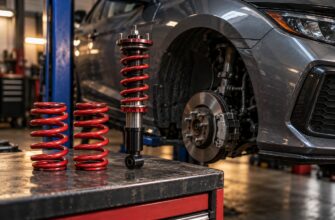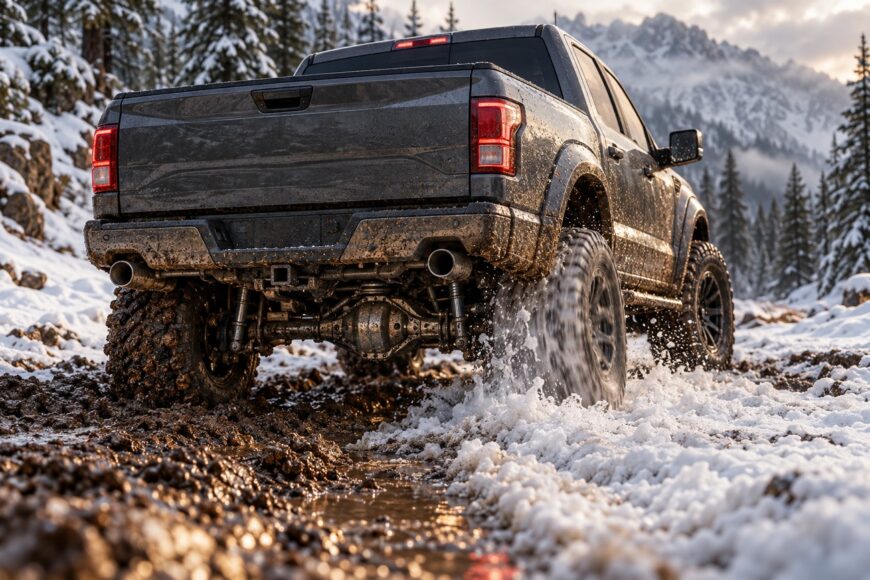
One drive wheel spins on snow, mud, or a loose shoulder while the vehicle barely moves. An open differential allows the drive wheels to turn at different speeds, yet when one tire has almost no grip, the available useful drive effort can become limited by that wheel. The result feels like a complete loss of traction even though the other tire may still be on a usable surface.
A limited-slip differential (LSD) addresses that situation by limiting the speed difference between the drive wheels and directing more torque toward the wheel with better grip. It still allows the wheels to rotate at different speeds in a turn, so it does not behave like a rigid axle lock. The improvement depends on the design, tire grip, and the amount of difference between the two contact patches.
Choosing one is therefore a trade-off rather than a simple traction upgrade. You must weigh useful grip against cornering behavior, noise, maintenance, electronic-system calibration, and fitment risk. A unit with the wrong spline count, housing, spacer arrangement, or axle compatibility can create expensive drivetrain problems before its traction benefits matter.
- What a Limited-Slip Differential Actually Does
- Why an LSD Can Improve Traction—and Where It Cannot
- LSD Types: Clutch, Viscous, and Geared Designs
- LSD vs Open Differential vs Full Locker
- Choosing an LSD Without Creating a Fitment Problem
- The Downsides: Noise, Wear, Heat, and Cornering Feel
- Installation Checks and Real-World Setup
- Frequently asked questions
- How can I tell whether an LSD is working after installation?
- Why is a limited-slip differential better?
- What is the best type of limited-slip differential?
- What are the downsides of having a limited-slip differential?
What a Limited-Slip Differential Actually Does
An open differential is designed to let the drive wheels rotate at different speeds. That function is essential in a corner because the outside wheel travels farther than the inside wheel. On a straight road with similar grip at both tires, the arrangement works smoothly and efficiently.
Trouble begins when one wheel loses most of its grip. The differential continues allowing a speed difference, and the wheel with little resistance can spin rapidly while the vehicle receives very little useful propulsion. Saying that all torque literally goes to the spinning wheel is a popular simplification; more precise wording is that the available useful torque can be constrained by the wheel with the least grip.
An LSD limits the speed difference between the drive wheels. Depending on its design, it uses friction clutches, a viscous coupling, or a self-locking mechanism to resist excessive speed separation and transfer torque toward the wheel with better grip.
The limitation is deliberate rather than absolute. In a turn, the LSD should still permit different wheel speeds, although some designs add resistance, preload, or engagement force that you can feel at low speed. That balance separates an LSD from a full locker and explains why different units produce noticeably different road manners.
Why an LSD Can Improve Traction—and Where It Cannot
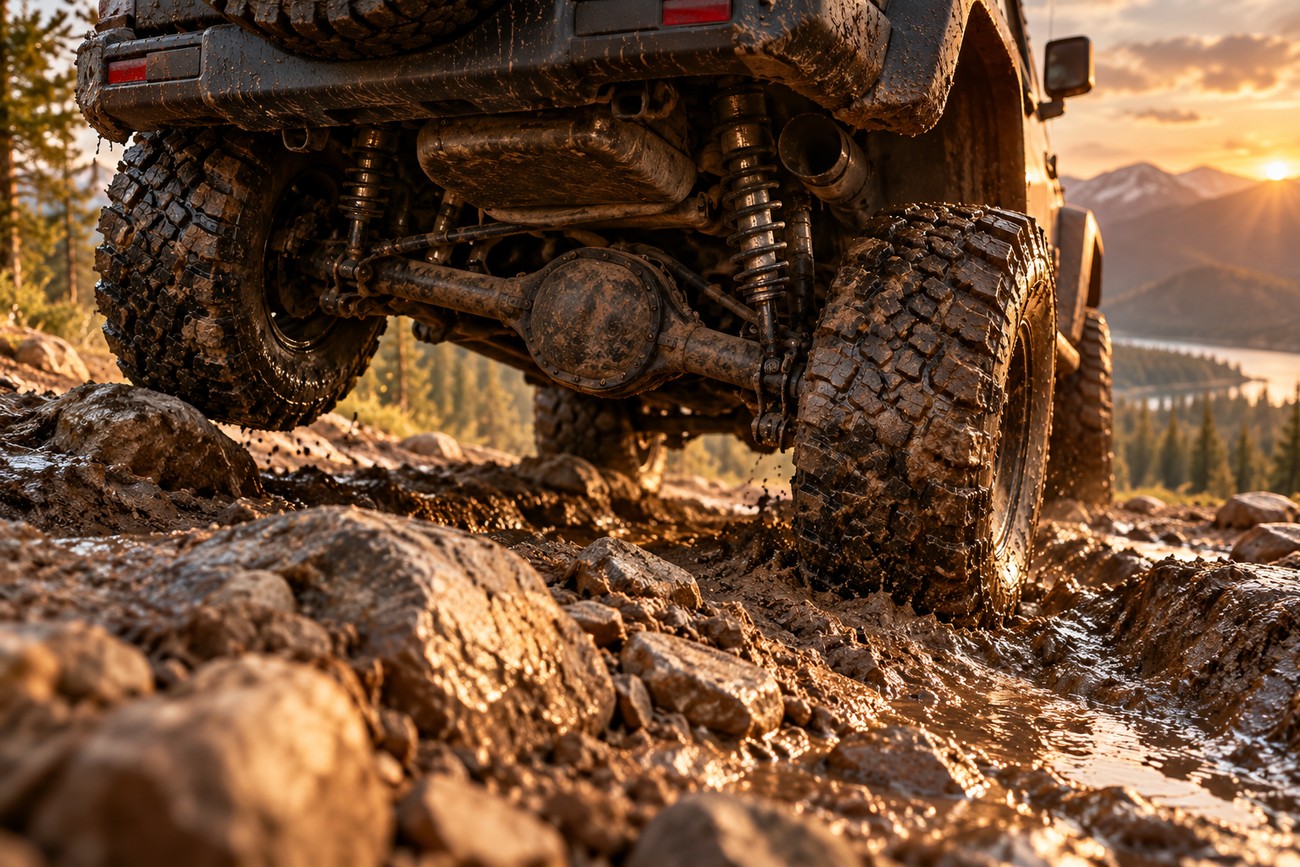
An LSD is most useful when the two drive wheels face unequal or changing grip. Snow-covered roads, muddy tracks, ruts, and uneven rocky surfaces can leave one tire lightly loaded or on a much more slippery surface than the other. Limiting wheel-speed difference helps preserve drive effort at the tire that still has a usable contact patch.
The result depends heavily on the tires. A suitable tread pattern, adequate tire condition, and appropriate pressure can determine whether the available torque reaches the ground. An LSD cannot replace tire grip, and a poorly matched tire setup can make a capable differential seem ineffective.
There is also a hard physical limit. If both wheels are on ice, both have very little grip, or both are effectively unloaded, the differential has little usable traction to distribute. An LSD can manage a difference in grip; it cannot create friction where the road and tires provide almost none.
On dry, even pavement, the benefit may be difficult to notice during ordinary driving because both tires already have similar grip. The differential becomes more apparent during acceleration out of a low-grip corner, on a split-friction surface, or where one wheel repeatedly unloads. Electronic traction-control and stability systems can further change the result through braking and torque management.
LSD Types: Clutch, Viscous, and Geared Designs
Common LSD designs use friction clutches, a viscous coupling, or a self-locking or geared mechanism. They all limit excessive wheel-speed difference, yet they respond to slip in different ways. The choice should follow the vehicle’s use, tire setup, electronic controls, and the desired cornering feel.
| Design | Operating principle | Typical behavior | Maintenance considerations | Suitable use cases |
|---|---|---|---|---|
| Friction-clutch LSD | Clutch packs resist relative movement between the axle outputs. | Can provide a direct, adjustable response, with behavior affected by preload and clutch condition. | May require suitable oil and attention to friction-material wear. Noise, shuddering, or binding can appear when setup or lubrication is unsuitable. | Road, winter, performance, and off-road applications where controlled torque bias is useful. |
| Viscous LSD | A viscous coupling uses fluid resistance as the output speeds diverge. | Usually progressive and smooth, with response influenced by temperature and the condition of the coupling. | Serviceability and long-term response depend on the coupling design. A worn unit may provide less effective slip control. | Road and winter use where smooth engagement is more important than an aggressive response. |
| Geared or self-locking LSD | Internal gears create a self-locking effect as torque and speed differences develop. | Often responsive under load, while cornering behavior depends on the mechanism and calibration. | Requires correct lubrication and precise mechanical compatibility. It may behave differently when one wheel is nearly unloaded. | Road, performance, and selected off-road applications matched to the manufacturer’s operating range. |
Friction-clutch units can offer strong control because their engagement is influenced by clutch-pack design and preload. That same feature can bring more noticeable resistance in tight turns, particularly if the setup is aggressive or the fluid is incorrect. Clutch wear gradually changes the unit’s behavior, so service requirements matter during long-term ownership.
Viscous designs generally produce a smoother response because fluid shear builds resistance progressively. Their effectiveness can vary with operating temperature and internal condition, and they may respond less sharply than a strongly preloaded clutch design. That can suit a daily-driven vehicle where predictable manners matter more than maximum intervention.
Geared or self-locking designs use internal mechanical action rather than a conventional clutch pack to create resistance to speed difference. They can be effective under acceleration and often have distinct load-sensitive behavior. Their performance still depends on the amount of torque available and on whether one wheel is so lightly loaded that the mechanism has little reaction force to work against.
No type is universally best. The most aggressive LSD can make a daily driver less comfortable and less maneuverable in tight turns, while a milder unit may be easier to live with. Electronic traction-control calibration and tire grip can be as important as the differential’s advertised locking characteristics.
LSD vs Open Differential vs Full Locker
These three solutions manage wheel-speed difference in different ways. An open differential prioritizes free differentiation, an LSD restricts excessive differentiation, and a full locker provides a more rigid coupling when engaged. Their traction performance and cornering behavior follow directly from those operating principles.
| Solution | Wheel-speed difference | Traction behavior | Cornering behavior | Typical limitations |
|---|---|---|---|---|
| Open differential | Allows wheel speeds to differ freely. | May provide very little useful propulsion when one wheel has much less grip. | Usually smooth and predictable in normal turns. | Can struggle on split-friction surfaces, in ruts, or when one wheel unloads. |
| Limited-slip differential | Restricts the speed difference while retaining differentiation. | Can transfer useful torque toward the wheel with better grip within the limits of its design. | Generally permits normal cornering, though some setups add resistance, noise, or shuddering. | Cannot create traction when both wheels have little grip or are unloaded. Response and service needs vary by type. |
| Full locker | Can impose a much more rigid relationship between the axle outputs when engaged. | Offers strong traction potential when wheel-speed difference is the main problem. | Can increase driveline stress and make tight turns less natural, depending on the system and surface. | Requires appropriate use and may be unsuitable for normal road cornering when engaged. |
An LSD is therefore not a trophy-truck-style rigid lock. It allows some wheel slip and limits torque bias according to its construction, preload, available reaction force, and tire grip. A vehicle can still move slowly or spin a tire if the traction difference exceeds what the unit can manage.
A full locker is a different solution with more rigid coupling and different driveline implications. It can be valuable for demanding off-road work, yet its effect on turning, tire scrub, and component loading requires a compatible vehicle and operating method.
The practical choice depends on how often you encounter unequal grip and how much road refinement you expect. An open differential usually provides the smoothest everyday behavior, an LSD adds controlled traction support, and a locker favors maximum coupling in situations where cornering compromises are acceptable.
Choosing an LSD Without Creating a Fitment Problem
Start with the axle and differential identification rather than the vehicle’s general model name. The same vehicle range can use different housings, axle shafts, gear sets, or production configurations. A unit that promises the desired traction behavior can still be mechanically unsuitable for the specific axle.
Verify the spline count, differential housing, spacer requirements, and axle-shaft compatibility before purchase. Check how the carrier fits the housing, whether the original components are retained, and whether the axle shafts engage the new unit correctly. These details determine whether the installation is straightforward, requires additional parts, or risks improper engagement.
Consider the intended driving mode at the same time. Road, winter, off-road, and track use can require different response rates, preload, noise tolerance, and service expectations. A setup chosen for loose surfaces may feel unnecessarily aggressive in daily urban driving, while a mild road-oriented unit may not meet demanding off-road needs.
Tires and electronic systems belong in the same decision. Matching tire sizes and comparable tread condition help the LSD work predictably, while traction-control and stability systems may influence how quickly wheel spin is reduced. The differential should complement those systems rather than be selected as though it operates in isolation.
Incorrect fitment can cause installation difficulty, non-function, abnormal noise, seal problems, or drivetrain damage. Confirm the complete specification with the axle identification and installation requirements before committing to the part. A lower purchase price has little value if compatibility gaps lead to machining, replacement shafts, or damaged transmission components.
The Downsides: Noise, Wear, Heat, and Cornering Feel
Every LSD adds a particular set of operating trade-offs. Friction-clutch designs can wear and may require specific oil or service procedures. Other designs can also lose effectiveness as components age, so a traction symptom that appears gradually deserves inspection rather than an assumption that the differential is still working as intended.
Noise, shuddering, or binding can occur in turns or at low speeds, depending on the design and setup. A small amount of resistance may be part of the intended operating character, especially with a preloaded unit. A new or worsening vibration, harsh grabbing action, or repeated tire scrub calls for checks of fluid, installation, tire matching, and internal condition.
An overly aggressive setup can reduce comfort and maneuverability during parking or tight cornering. It may also make the vehicle feel less natural on high-grip surfaces, where the tires already provide enough traction for an open differential to operate smoothly. The strongest locking action is therefore not automatically the best daily-driving choice.
Marketing descriptions often emphasize traction while giving less attention to oil requirements, clutch wear, heat, or compatibility. The LSD also cannot compensate for unsuitable tires or an incorrect application. Its value is greatest when its response matches the vehicle, the surface, and the driver’s tolerance for maintenance and cornering effects.
Installation Checks and Real-World Setup
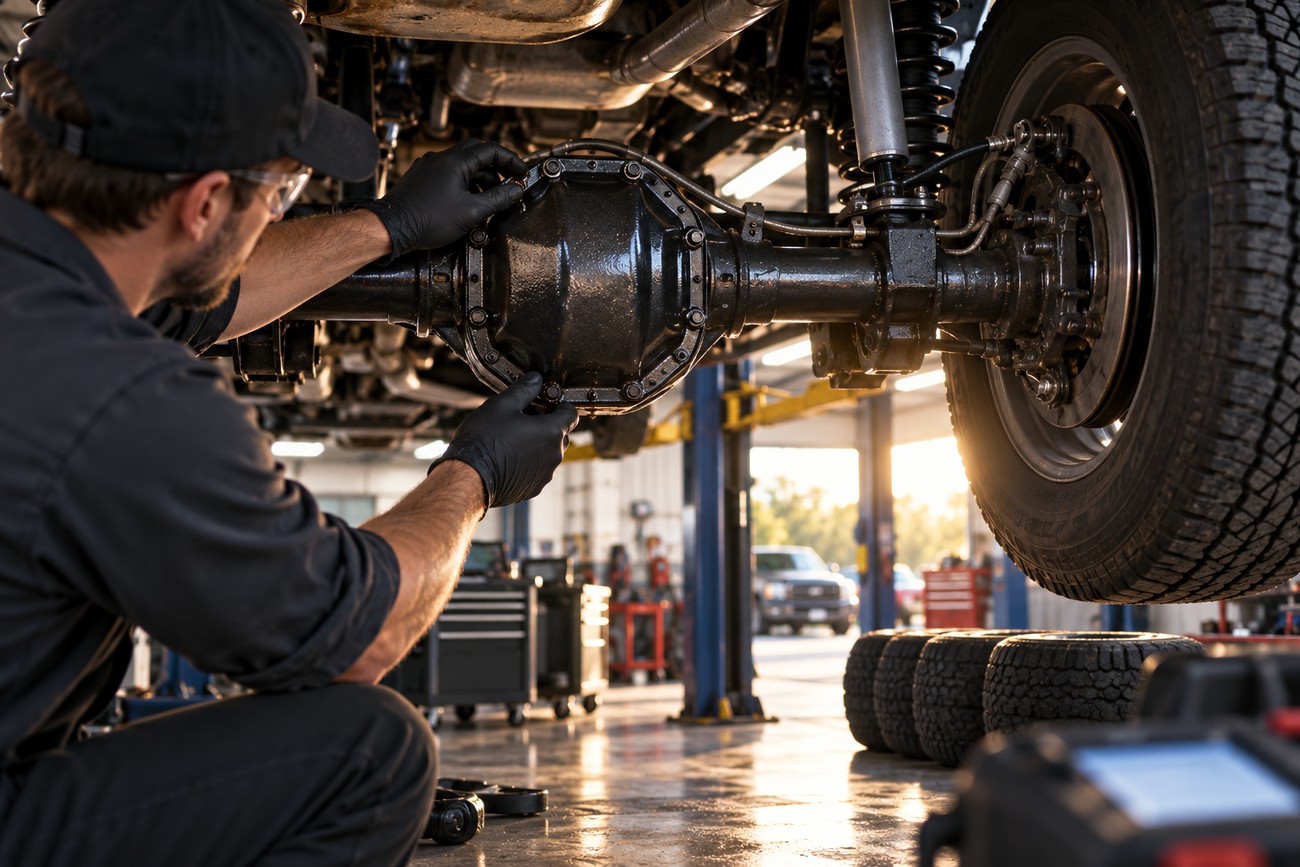
After installation, confirm that the unit behaves in a way consistent with its design. Test it in a suitable, controlled environment rather than judging it from one wheel-spin event. A wheel spinning briefly does not automatically prove failure, because an LSD has limited torque-bias capability and may require the right load and traction conditions to respond.
Check that the tires are correctly matched and that electronic traction-control or stability systems are functioning as intended. These systems can work alongside an LSD, sometimes using selective braking or torque reduction to control wheel spin. Incorrect calibration, mismatched tires, or a disabled system can change the result enough to conceal the differential’s intended benefit.
After the first outings, check differential temperature and inspect the axle seals for leaks. Early excess heat or fresh leakage can point to incorrect setup, excessive load, or a sealing problem before the issue causes wider drivetrain damage.
Also listen for new noise and monitor vibration, shuddering, or unusual resistance in turns. Some operating sounds may be characteristic of the selected design, while a sharp change from the expected behavior deserves investigation. Confirm fluid level and specification according to the installation requirements, especially for a friction-clutch unit.
Use the first drives to establish a baseline rather than forcing the vehicle into severe conditions immediately. Gradual checks make it easier to separate normal engagement from a fitment or lubrication problem. If temperature, leakage, noise, or vibration is abnormal, stop treating the symptom as proof that the LSD is working and inspect the installation.
Frequently asked questions
These answers focus on practical diagnosis and selection. An LSD’s results always depend on its design, the vehicle’s compatibility, available tire grip, and the conditions in which it is used.
How can I tell whether an LSD is working after installation?
Compare the vehicle’s behavior with the expected design rather than using a single wheel-spin test. Under suitable conditions, an LSD should reduce excessive wheel-speed difference and help preserve drive effort at the tire with better grip, while still allowing differentiation in turns. Some designs respond progressively, and a wheel may still spin briefly without indicating a fault.
Check for abnormal heat, noise, vibration, shuddering, binding, and axle-seal leakage after the first outings. Confirm the correct fluid, tire matching, electronic-system operation, and mechanical fitment. A temperature rise or fresh leak is a reason to inspect the installation, not evidence that the unit is successfully locking.
Why is a limited-slip differential better?
An LSD can be better than an open differential when one drive wheel regularly loses grip. By limiting the speed difference, it can keep more useful torque available at the wheel that still has traction, which helps on snow, mud, ruts, uneven rock, and split-friction surfaces.
It is not automatically better for every driver or surface. On even dry pavement, the improvement may be subtle, while an aggressive setup can add noise, resistance, or maintenance. The benefit is strongest when the LSD’s behavior, tires, electronic controls, and intended use are properly matched.
What is the best type of limited-slip differential?
There is no universally best type. Friction-clutch, viscous, and geared or self-locking designs differ in response, maintenance, cornering feel, and suitability for road, winter, off-road, or track use.
Choose according to the vehicle’s axle, tire setup, electronic systems, and driving conditions. A daily-driven vehicle may favor smooth and predictable engagement, while a performance or off-road application may justify a more assertive response. Compatibility and correct setup matter as much as the internal design.
What are the downsides of having a limited-slip differential?
Depending on the design and setup, an LSD can require specific oil, clutch or internal-component service, and attention to wear. Noise, shuddering, binding, or increased resistance in low-speed turns are possible, especially when the unit is aggressive, incorrectly lubricated, or poorly matched to the vehicle.
An LSD also cannot create traction when both wheels have very little grip or are effectively unloaded. Incorrect spline, housing, spacer, or axle-shaft compatibility can cause installation problems or drivetrain damage. Tire quality remains critical, and a unit selected without regard to the application can deliver more compromise than benefit.