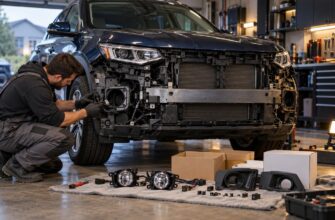
Unlocking an older car without putting a key in the door can make daily use easier, especially when your hands are full. An aftermarket keyless entry kit can add that function without replacing the car.
A poor match, though, may unlock inconsistently, drain the vehicle battery, or control fewer functions than you expected. The key decision is which entry functions your specific car can support reliably, and what will still work if the add-on fails.
- What an add-on keyless entry system actually does
- Remote fob or passive entry: which add-on fits the job?
- Check vehicle compatibility before buying a kit
- Installation details that decide range and battery life
- Security trade-offs: rolling codes are not enough
- Plan for misfires, dead batteries, and loss of access
- Frequently asked questions
- How much does it cost to install an aftermarket keyless entry system?
- What should I do if an add-on keyless entry fob is lost?
- Can an aftermarket keyless entry system be removed when I sell the car?
What an add-on keyless entry system actually does
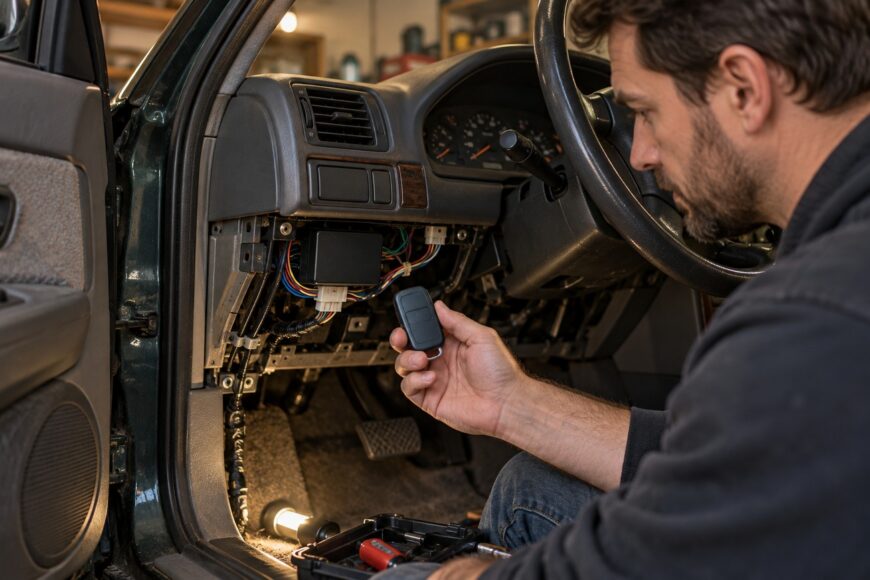
An aftermarket kit typically adds a control module, a fob or proximity tag, and connections to the car’s existing central locking system. The module receives a signal and requests a lock or unlock action through the vehicle’s wiring or a compatible interface. Cars without powered locks may need additional actuators.
Button-operated remote entry requires you to press the fob. Passive proximity entry detects a nearby credential and, depending on the kit, unlocks when you approach or operate a door handle. Neither arrangement necessarily authorizes the engine to start: door entry and start authorization are separate functions.
Common automotive remote frequencies include 315, 433, 868, and 915 MHz; the applicable frequency depends on the product and market. A replacement fob must match the installed system, rather than merely look similar or use a familiar frequency.
Rolling code or challenge-response helps prevent simple fixed-code copying. Those measures do not, by themselves, stop a relay attack against passive entry. Treat keyless entry primarily as a way to use the locks more easily, not as a standalone anti-theft system.
Remote fob or passive entry: which add-on fits the job?
Choose by the action you want at the door and the integration your car can support. Neither type should be assumed to authorize engine start.
| Kit type | How it unlocks | Integration demands | Main trade-off and suitable use |
|---|---|---|---|
| Button-operated remote | You press the fob deliberately. | Connects to compatible lock controls; extra functions need verification. | A simpler choice if you want remote locking without automatic detection. |
| Passive proximity entry | The car detects a nearby credential. | Needs suitable detection hardware and careful placement. | Useful for hands-free entry, with added relay exposure if the credential remains responsive. |
Check vehicle compatibility before buying a kit
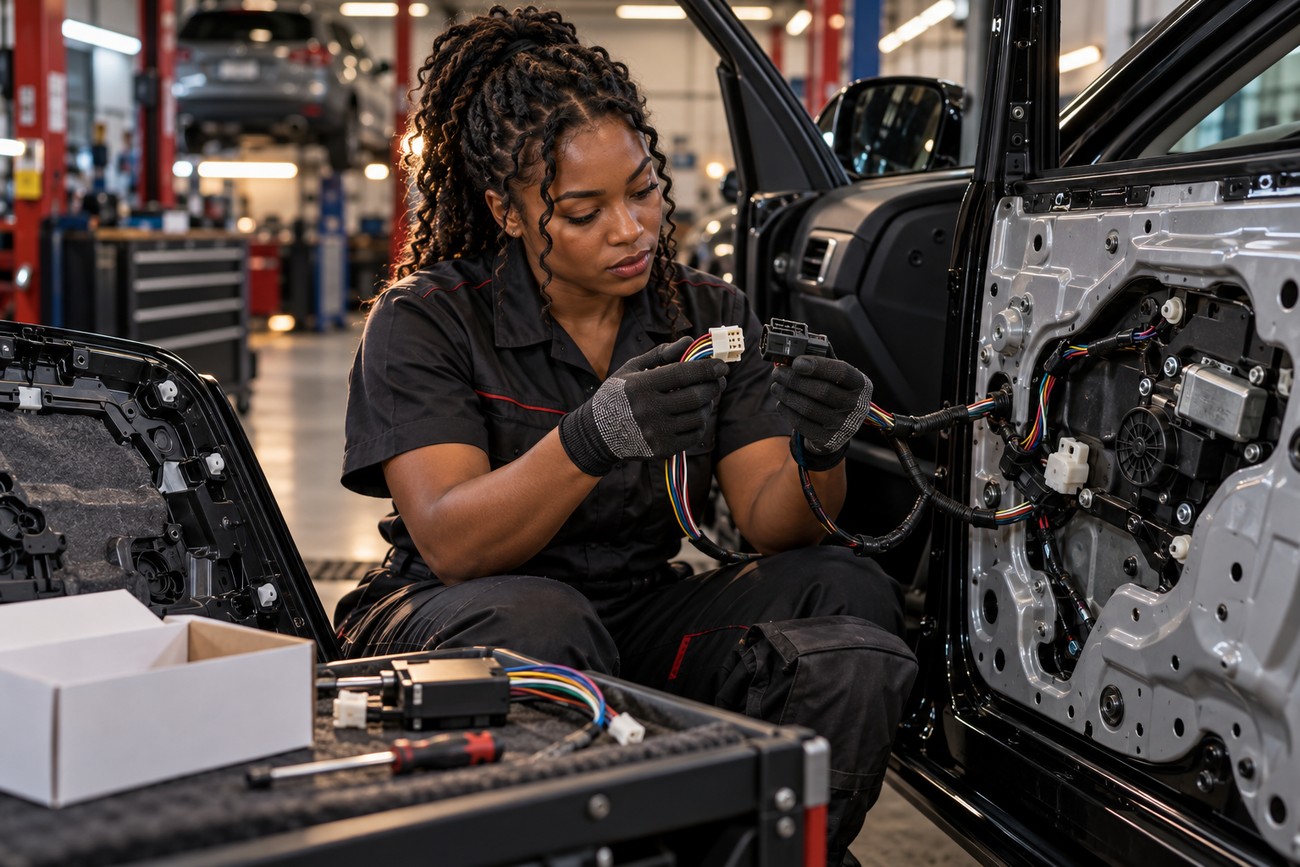
Start with the exact make, model, and year, then confirm whether the doors already have powered locks. Ask how the car accepts lock commands: through dedicated wiring, a vehicle-specific interface, or communication on CAN or LIN. A kit described as universal still needs a connection plan for that particular vehicle.
List the equipment you already use, including the factory immobilizer, alarm, trunk release, comfort-access features, and remote start. Ask the seller or installer to state which functions the proposed kit will operate and which will remain under their original controls. A system can unlock the doors yet do nothing for the trunk or factory alarm.
Remote start deserves a separate discussion because it involves start authorization as well as entry. Some integration may call for a second key or a bypass arrangement; that is not a requirement of every keyless entry kit. If one is proposed, ask what will be kept in the vehicle and how that choice affects your existing security setup.
Get the vehicle-specific parts and intended connections identified before ordering. This makes it easier to spot a plan that depends on unsupported functions or conflicts with installed equipment. If the car already has factory keyless entry, repairing that system may avoid adding another module and another potential point of failure.
Installation details that decide range and battery life
A receiver hidden behind metal may work at one parking spot and struggle at another. Antenna position, body shielding, and metallic window tint can reduce reception; placement near electrically noisy wiring can also make performance less predictable. The installer should follow the kit’s mounting instructions and test the result before closing the trim.
Some products advertise ranges of 100–200 m or more under favorable conditions. Usable range is often shorter and varies with interference, fob battery condition, and antenna placement. Test from ordinary approach distances in several parking environments rather than judging the installation by one long-range demonstration.
Measure resting current only after both the vehicle and add-on module have entered sleep mode. A reading taken immediately after locking can reflect temporary activity and mislead the diagnosis.
Lock connections need to be secure and correctly matched to the car’s control method. Incorrect wiring or CAN/LIN integration can produce false triggers, interfere with sleep mode, or increase battery drain. If the vehicle battery weakens after installation, ask for a sleep-state current check rather than assuming the fob radio is solely responsible.
Before accepting the work, try repeated locking and unlocking with the engine off, after the car has been parked, and around other vehicles. Note whether the doors respond consistently and whether the factory alarm behaves as expected. Those checks help separate a reception problem from an integration fault.
Security trade-offs: rolling codes are not enough
Rolling code or challenge-response makes simple copying of a fixed radio code harder. A relay attack works differently: it extends communication between a passive-entry vehicle and its credential, making a distant credential appear reachable. Code protection alone does not prevent that form of attack.
For a passive kit, ask whether its credential stops responding while stationary, for example through a sleep or motion-sensing function, and how that behavior is documented. The value of such a feature depends on the kit and how it is used. A button-operated fob avoids automatic proximity detection, although its deliberate press does not make the car theft-proof.
Confirm what prevents an unauthorized start independently of what unlocks the doors. The factory immobilizer may continue to handle that job, but an installation involving remote start or a bypass changes what needs to be checked. Keyless entry itself is primarily a convenience feature, not a guarantee against unauthorized starting.
Adding a module also adds wiring, credentials, and software behavior that can fail or need maintenance. Where a car already offers keyless entry, an extra system may bring little benefit. Where it has basic central locking, a targeted remote-locking add-on may meet the need without the demands of full passive entry.
Plan for misfires, dead batteries, and loss of access
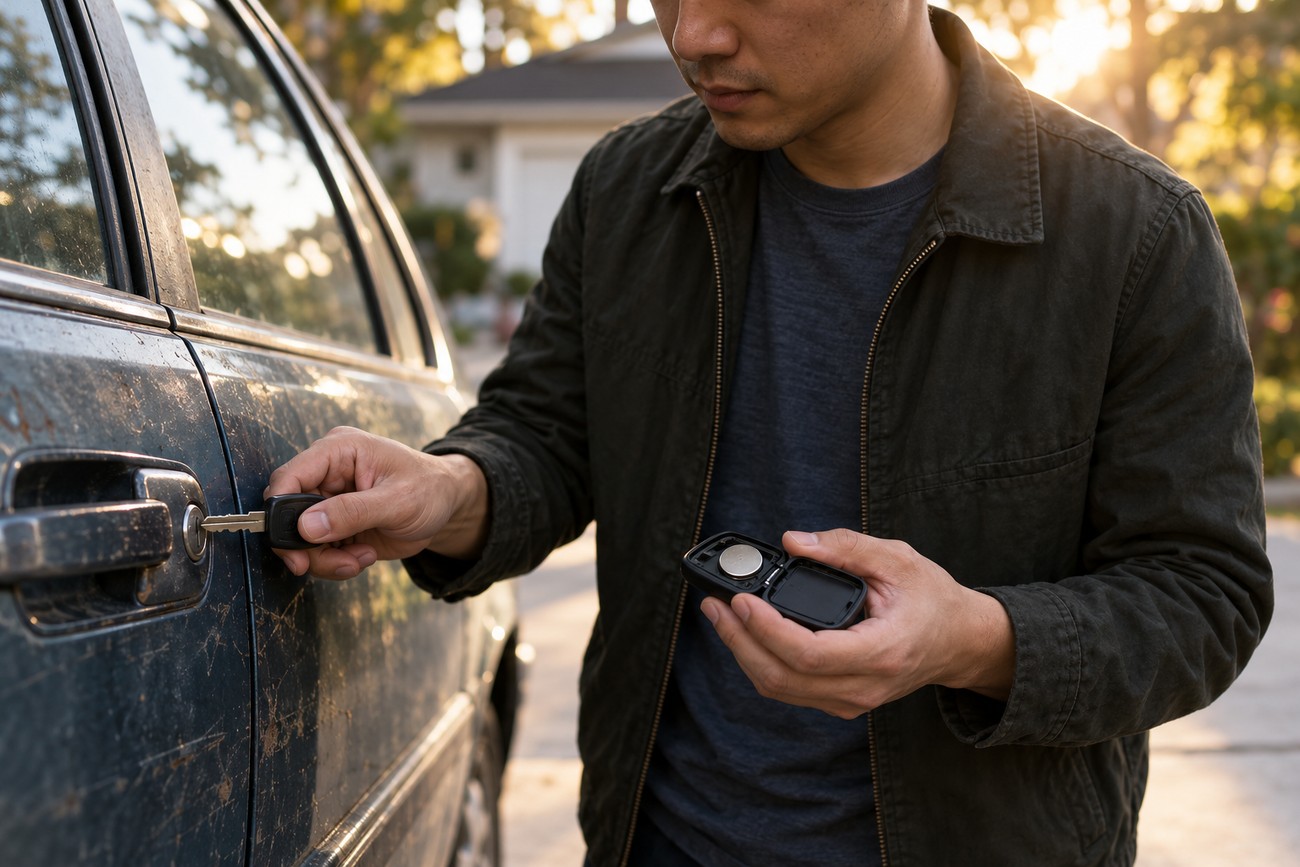
Intermittent unlocking can point to interference, a weak fob battery, or antenna placement, particularly if it varies by location. Accidental presses in a pocket are a different problem; repeated unlocking or an alarm that behaves oddly may indicate control or integration faults. Record when the symptom occurs so the installer can test the likely cause.
Before purchase, confirm the documented fallback if the fob battery dies, the vehicle battery is flat, or the add-on module fails. Check whether a mechanical key still opens a door and what is required to operate the car afterward. Fallback access differs by vehicle and kit, so keep the relevant key or instructions available outside the locked car.
Have the installer demonstrate the complete sequence after fitting: lock, unlock, trunk release if promised, factory alarm behavior, and remote start if present. Repeat the checks after the vehicle has entered sleep mode. This can reveal a module that works during handover but later stops responding; a separate sleep-state current check can detect unwanted wake-ups.
Replace a weakening fob battery before it becomes an access problem, and learn how replacement credentials are enrolled. Keep the kit identification and installation paperwork; they make diagnosis and future replacement easier. If a fault appears, those records also help distinguish a failed add-on from a problem in the original locks.
Frequently asked questions
The buying decision includes costs and ownership tasks that may arise well after installation. Get the kit and vehicle-specific work documented, then keep those details with the car’s records. They will help if you need another fob or decide to remove the system.
How much does it cost to install an aftermarket keyless entry system?
There is no reliable standard price: cost depends on the kit, the vehicle, and the integration work. Request an itemized quote covering the module and fobs, any vehicle-specific interface, labor, extra lock actuators if needed, and follow-up support. Ask whether testing, additional fob enrollment, and corrections to installation-related faults are included.
What should I do if an add-on keyless entry fob is lost?
Identify the installed kit from its paperwork or module details, then ask the installer whether the missing credential can be deleted and a replacement enrolled. Secure the car using its existing locks and any separate security measures while you arrange this. If the fob is still in your possession and has simply stopped responding, check its battery and the kit’s documented fallback before treating it as lost.
Can an aftermarket keyless entry system be removed when I sell the car?
Usually it can be removed, but the work depends on how it was connected. An installer should restore the original wiring or interfaces and test the locks, alarm, and any affected start functions afterward. Retain the installation and removal records for the buyer, along with all remaining keys and fobs, so the car’s access arrangements are clear.