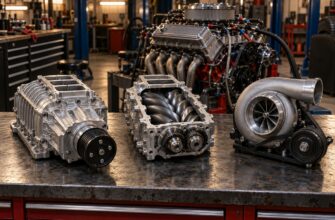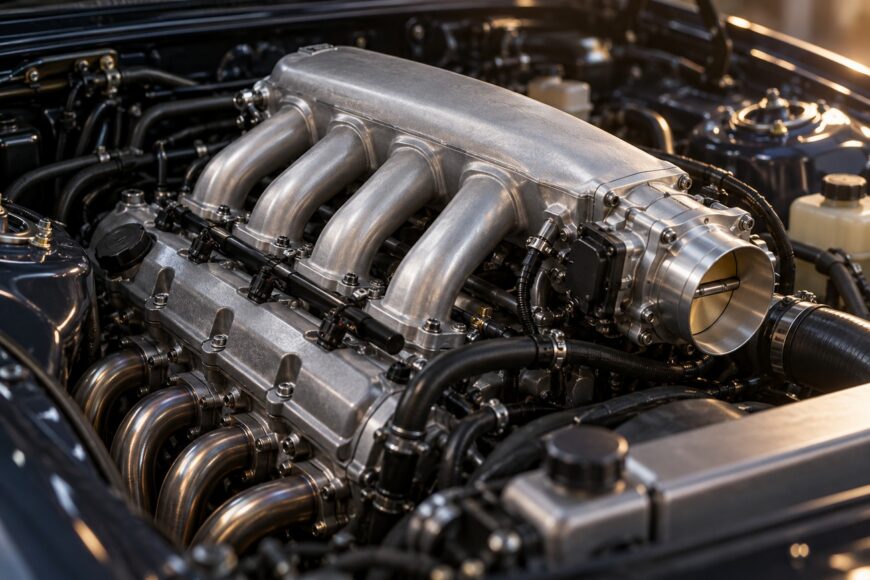
An intake manifold can move a naturally aspirated engine’s power higher in the rev range while making a street car weaker below that band. The change is therefore a trade-off in cylinder filling, airflow speed, throttle response, and torque placement, rather than a guaranteed peak-power upgrade.
Because a naturally aspirated engine draws air into the cylinders at normal atmospheric pressure without forced induction, every restriction and pressure-wave effect matters. Judge the manifold by the complete torque curve, usable rpm range, drivability, and calibration quality instead of a vendor’s claimed peak horsepower figure.
- What an Intake Manifold Changes on a Naturally Aspirated Engine
- Runner Length and Manifold Layout: What Actually Moves the Power Band
- Choose the Manifold for the Car’s Real Operating Range
- Match the Manifold to the Throttle Body, Head, Exhaust, and ECU
- Installation Problems That Can Erase the Upgrade
- How to Measure Real Gains Without Falling for Peak-HP Marketing
- Frequently asked questions
- How can I make a naturally aspirated engine more powerful beyond an intake manifold?
- How much horsepower does an upgraded intake manifold add?
- How can I make my naturally aspirated engine more powerful?
- How much HP does an upgraded intake manifold add?
What an Intake Manifold Changes on a Naturally Aspirated Engine
A naturally aspirated engine fills its cylinders using the pressure difference created as the piston moves down the bore. The manifold affects how efficiently air reaches the intake ports during that short opening period. Its runner length, cross-sectional area, taper, plenum volume, and connection to the cylinder head all influence the result.
This is commonly discussed through volumetric efficiency, or VE: the engine’s ability to fill its theoretical cylinder volume with fresh air. A well-matched manifold may improve VE by 10–15%, based on manufacturer and test claims, but that possibility depends on the complete engine combination. The same manifold can produce a different result on an engine with another displacement, cylinder head, camshaft, compression ratio, or exhaust system.
More air can support more power only when the engine can use it. Airflow speed affects throttle response and mixture behavior, while runner geometry changes the rpm range in which the cylinders fill most effectively. On a 400 hp engine, a 10% VE improvement corresponds theoretically to up to 40 hp before real-world limitations and calibration effects; it is not a guaranteed manifold-only gain.
The useful result is often a reshaped torque curve rather than a dramatic increase at the top of the dyno graph. A manifold that adds power above the normal shift point may be slower in everyday driving if it gives away torque during launches, corner exits, or passing. That is why the intended operating range must be defined before selecting the part.
Runner Length and Manifold Layout: What Actually Moves the Power Band
Runner length changes both airflow behavior and the rpm zone in which intake pressure waves can help cylinder filling. The comparison below shows the usual direction of the trade-off; exact results depend on the engine and the rest of the intake system.
| Approach | Typical rpm emphasis | Torque and response | Street suitability | Likely compromise | Appropriate use |
|---|---|---|---|---|---|
| Long runners | Low to mid range | Stronger response and useful mid-range torque | Usually well suited to daily driving | Can limit high-rpm airflow and peak output | Street cars, heavy vehicles, and broad torque builds |
| Short runners | Mid to high range | Can support stronger upper-rpm airflow | Best when the engine is regularly operated at high rpm | May reduce low-end torque and make the car feel soft below the power band | Track, race, and high-revving combinations |
| Aggressive single-plane layout | High-rpm emphasis | Potentially strong at the top, with less low-speed signal | Often a compromise for stop-and-go use | Reduced city response, drivability, or torque below the main operating range | Competition-oriented engines with suitable gearing and rpm |
Longer runners generally favor low- and mid-range torque, response, and street drivability. Shorter runners generally shift the useful airflow effect toward higher rpm and may sacrifice low-end torque. The best design matches the engine’s intended operating range rather than simply having the shortest or most open passages.
Intake resonance is the plain-language description of pressure waves moving through the runners and plenum. When runner length and valve timing align with engine speed, those waves can help push more air into the cylinder. The effect moves across the rpm range as the runner length, engine size, and cam timing change, so a design that works well on a high-revving race engine may feel disappointing on a street engine.
Choose the Manifold for the Car’s Real Operating Range
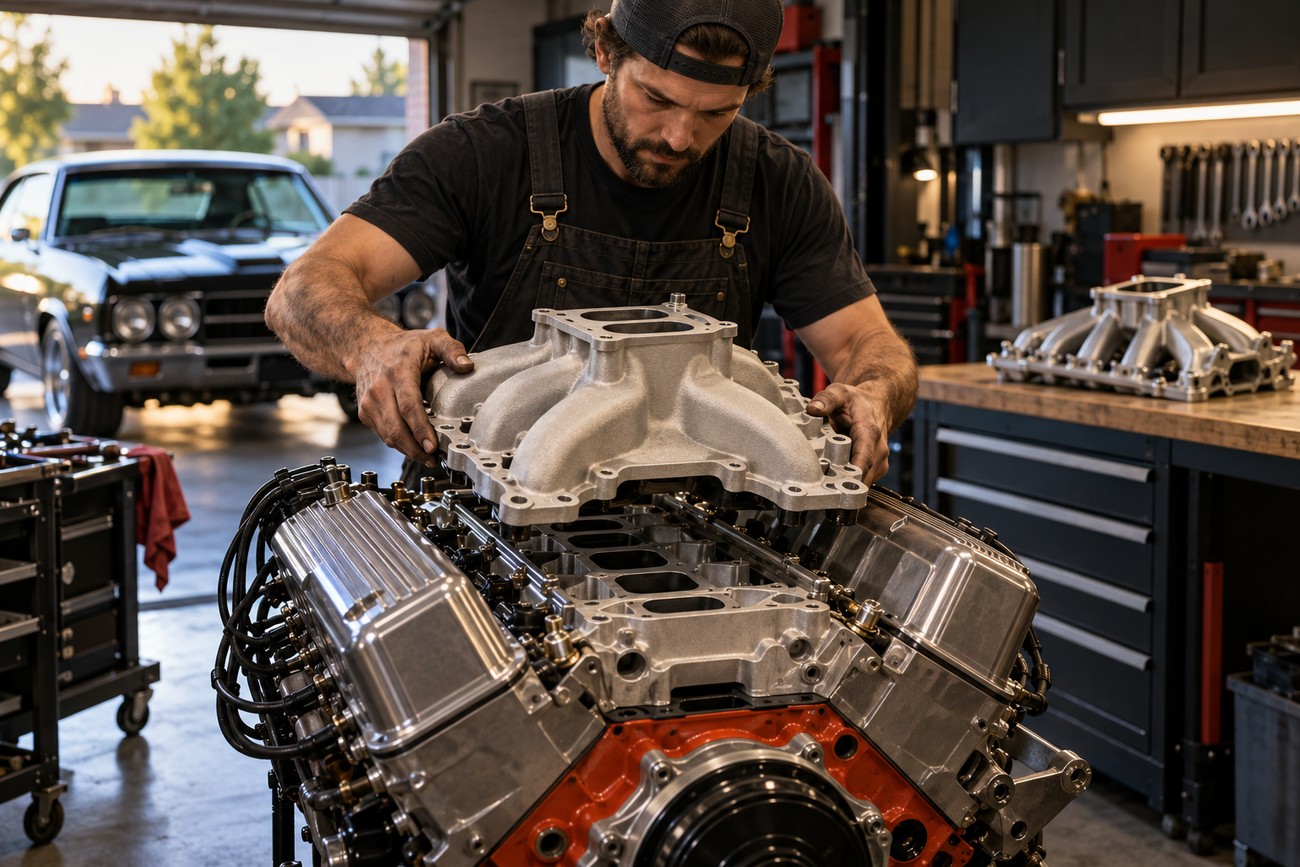
A daily street car usually benefits from a broad torque curve and predictable response. A moderate manifold that preserves airflow speed can outperform an aggressive single-plane design during normal driving, even if the latter produces a higher peak number at the top of the dyno run. This matters during low-speed turns, hill climbs, traffic, and gear changes, when the engine spends much of its time below maximum rpm.
A mixed street-and-track build can accept a narrower power band when its gearing, tire choice, and driving style support it. The selection should follow the actual shift points and the rpm range used on track. If the engine falls below the manifold’s effective range after every corner, the theoretical high-rpm advantage may never become useful lap-time performance.
Displacement, cylinder-head flow, compression, cam timing, exhaust design, and rev limit must be considered together. The same manifold design can behave differently on engines with different displacement and levels of tune because the airflow demand and pressure-wave timing change. Port size also deserves restraint: a large passage can reduce airspeed and weaken response when the engine lacks the airflow demand to use it.
Highly developed naturally aspirated engines can reach up to 134 hp per litre, but that level of output requires coordinated intake, exhaust, cylinder-head, and cam-timing work. A manifold alone cannot reproduce the result. The more highly tuned the engine, the more important it becomes to match every component to the target rpm range.
Match the Manifold to the Throttle Body, Head, Exhaust, and ECU
An intake manifold is one part of an airflow system. The throttle body must suit the manifold opening and the engine’s demand, while the ports should align with the cylinder head without creating a step that disrupts flow. The exhaust also matters because a restrictive outlet can limit the benefit of additional intake capacity.
Fuel delivery assumptions need the same scrutiny. When airflow changes materially, fuel and ignition calibration should be checked; otherwise, lean operation, hesitation, or unstable idle may occur. A stock ECU may correct part of the change in closed-loop cruising, yet that does not confirm safe or optimal fueling at wide throttle and high load.
Fuel-trim behavior after the hardware swap reveals whether the engine is actually receiving the airflow the calibration expects. Checking trims, wide-open-throttle mixture, and ignition response is safer than assuming the stock maps will follow a different manifold.
For naturally aspirated gasoline engines, common tuning estimates are 5–12% more power and 8–15% more torque for a calibrated combination. Those figures apply to the complete calibrated combination, not automatically to an intake manifold alone. A short intake element can produce a measurable gain in a racing application, although the effect depends strongly on the engine class and regulations.
Calibration should follow the mechanical baseline. Verify fuel pressure, injector capacity, sensor operation, and ignition health before attributing a gain or problem to the manifold. A well-matched part with a suitable tune can improve the curve; an unmatched part can expose limitations elsewhere in the system.
Installation Problems That Can Erase the Upgrade
Fitment is part of performance. A replacement manifold may require different gaskets, throttle-body hardware, fuel-rail parts, vacuum fittings, brackets, or spacers. Clearance around the hood, fuel rail, distributor or ignition components, wiring, and accessories should be checked before purchase rather than discovered during assembly.
Port alignment and gasket sealing deserve close inspection. A vacuum leak can create an unstable idle, lean operation, and hesitation at small throttle openings, while a sensor or throttle-body incompatibility can produce similar symptoms. Confirm that every unused port is properly sealed and that the throttle plate reaches its intended position without cable or electronic-control interference.
Vendor fitment claims should be treated as specifications to verify against the exact vehicle and engine, not as a substitute for checking. Engines that share a family name can use different heads, accessory layouts, sensors, or mounting details. Required modifications may also alter the final cost and installation time.
Real vehicle packaging can make a dyno-proven design perform worse in the car. High intake temperature, restricted air entry, heat from nearby components, and noise limits can reduce the advantage seen in controlled testing. After installation, inspect for leaks, confirm sensor readings, and evaluate idle and small-throttle behavior before making full-load pulls.
How to Measure Real Gains Without Falling for Peak-HP Marketing
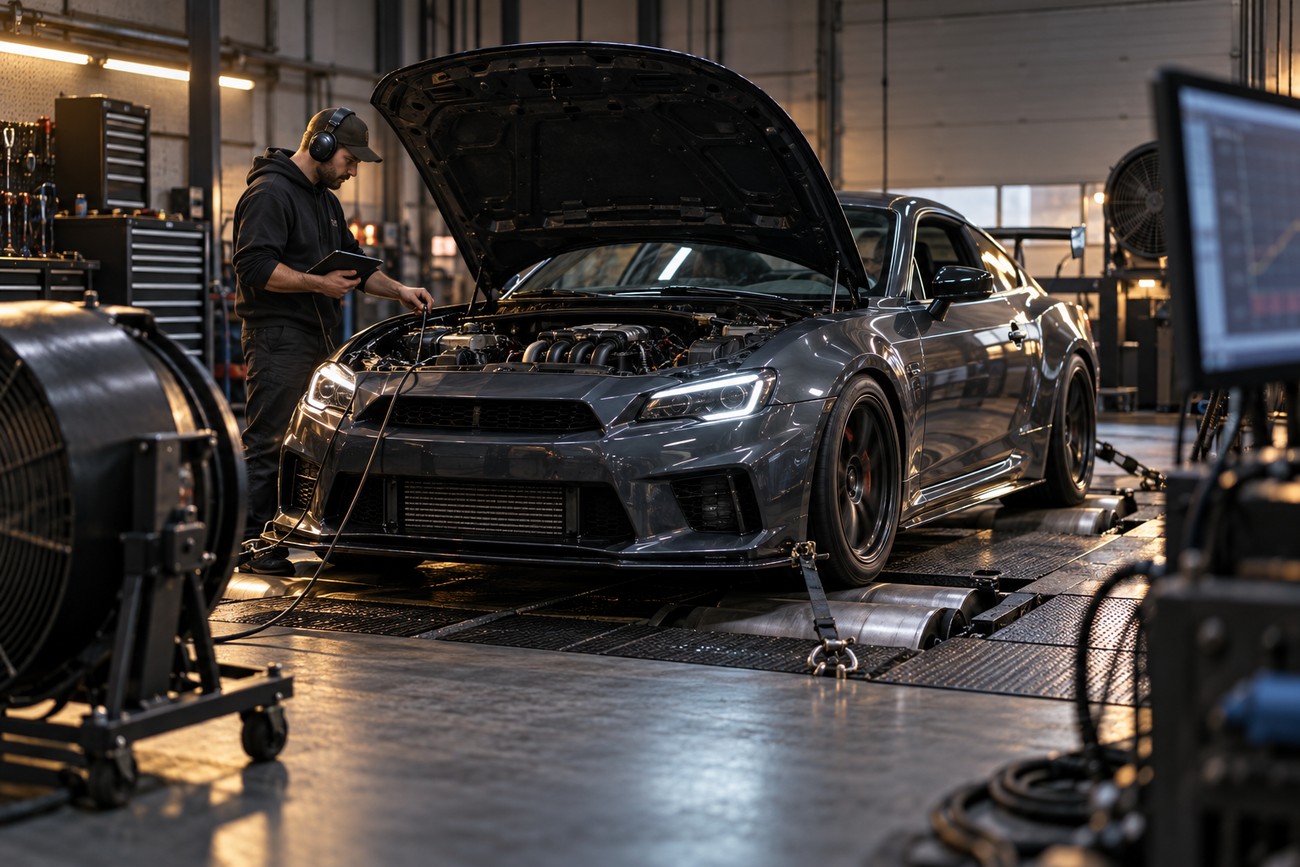
A fair comparison uses the same fuel, engine condition, dyno procedure, and correction method before and after the change. Keep the intake temperature and operating conditions as consistent as possible, and record the calibration used for each run. A single best pull is weak evidence if the surrounding conditions or tune are different.
The most useful comparison is the full torque curve and the VE trend, not peak horsepower alone. Record where the engine gains and loses torque, how quickly it responds, and whether the useful range has moved beyond the normal shift point. A small peak increase with a broad improvement can be more valuable than a larger number that exists only at an impractical rpm.
Supporting modifications and ECU calibration strongly influence the measured result. Temperature, packaging, air-filter placement, exhaust restrictions, and noise limits can change how the manifold works in the vehicle. A design that performs well on an open dyno setup may lose some of that advantage once installed under a hood with limited air volume and higher heat.
There is no universal +30 hp gain for naturally aspirated intake manifolds. Make the decision using the complete torque graph, drivability, intended rpm range, fitment requirements, and total project value. If the car is used mainly on the street, preserving response and mid-range torque is often the more effective performance choice.
Frequently asked questions
How can I make a naturally aspirated engine more powerful beyond an intake manifold?
Start by establishing engine health: compression, leak-down condition, fuel pressure, ignition, and sensor accuracy should be known before adding parts. Then match the airflow path as a system, including the cylinder head, exhaust, cam timing, compression, throttle body, and intake manifold.
Make changes in an order that allows each result to be measured. Once the hardware is selected, calibrate fuel and ignition and verify the result on the full torque curve. This sequence avoids using a manifold to compensate for a weak engine or an incompatible cam and exhaust combination.
How much horsepower does an upgraded intake manifold add?
There is no fixed horsepower figure because the result depends on engine size, baseline specification, cylinder-head flow, cam timing, rpm range, supporting parts, and dyno method. A claimed 10–15% VE improvement is a conditional manufacturer- or test-based possibility for a well-matched combination, not a guaranteed wheel-horsepower result.
For example, a 10% VE improvement on a 400 hp engine corresponds theoretically to up to 40 hp before real-world limitations and calibration effects. That calculation describes potential airflow scaling; it does not predict the gain from one manifold on every engine.
How can I make my naturally aspirated engine more powerful?
Build around the engine’s intended rpm range. Improve airflow with compatible cylinder-head, intake, exhaust, and cam-timing choices, then use compression and calibration to support the combination. A street engine generally needs a broad torque curve, while a competition engine can justify a narrower high-rpm focus if the gearing and operating conditions keep it in that range.
Measure each stage under consistent conditions and keep the engine’s reliability limits in view. The strongest result is usually a coordinated package with verified fueling and ignition, rather than the most aggressive individual component.
How much HP does an upgraded intake manifold add?
Use the manufacturer’s number as a test result from a particular engine and configuration, not as a universal promise. Check whether the test used the same fuel, calibration, exhaust, temperature, and dyno method as your vehicle.
A useful upgrade should improve the part of the torque curve you can use. If peak power rises while low-rpm torque and response fall, the manifold may be a poor choice for a street car even when the headline number looks attractive.