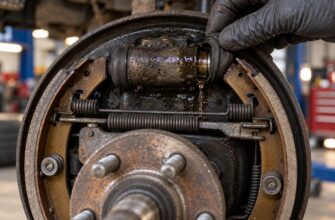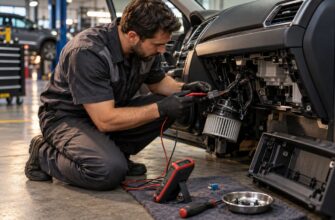
An air conditioner that blows warm air is frustrating, especially when it cools on the highway but warms up at idle, or works briefly after a recharge and then fails again. Those patterns provide useful clues, but they do not identify one guaranteed cause.
Warm air does not automatically mean low refrigerant. The fault may involve condenser airflow, a fan, fuse, compressor, restriction, electrical control, or heater blend door. Adding refrigerant without diagnosis can create an overcharge, introduce the wrong refrigerant, or hide a leak until the system fails again.
You can safely begin with external checks, controls, airflow, fuses, the belt, and the condenser fan. Refrigerant recovery, leak repair, evacuation, and charging require suitable equipment and protective measures. Leave that work to a properly equipped professional.
- Start With Safe Checks Before Touching the Refrigerant
- Car AC Symptoms: What They Suggest
- The Most Common Causes of Warm Air
- Why Recharging Often Does Not Fix the Problem
- How a Professional AC Diagnosis and Repair Works
- Common Mistakes That Make the AC Worse
- When to Stop DIY Troubleshooting and Get Service
- Frequently asked questions
- How do I know whether my car AC needs refrigerant or has an electrical fault?
- Why does my car AC go from cold to hot while I am driving?
- How long should a car AC recharge last?
Start With Safe Checks Before Touching the Refrigerant
Test the system under consistent conditions. Start the engine, select maximum cooling, choose recirculation, and note the blower speed and air-distribution setting. Check whether the air from the vents is merely cool or genuinely cold, and compare both airflow strength and outlet temperature at idle and while driving.
Cooling that improves once the vehicle is moving often points toward inadequate airflow across the condenser or a weak refrigerant charge. At speed, outside air can compensate for a failed condenser fan or restricted condenser airflow. If performance is equally poor at idle and while driving, the problem may involve charge, compressor output, a restriction, electrical control, or a blend-door fault.
With the engine off, inspect the serpentine belt for damage, looseness, or obvious contamination. Check the relevant fuses according to the vehicle’s information, inspect the condenser for heavy dirt or blocked fins, and look for wiring damage. Do not place your hands near a fan that may start automatically.
With the engine running and the AC commanded on, observe whether the condenser fan operates when the system calls for it. Listen for unusual compressor or belt noise, and check whether the selected air direction matches the vents being used. If the temperature changes when you move the controls, or warm air continues despite normal AC operation, a heater blend-door or air-distribution problem may be involved.
Do not intentionally release refrigerant, puncture a disposable can, or connect a can when the refrigerant type is unknown. Opening the refrigerant circuit without suitable recovery equipment and eye and skin protection can cause injury, contamination, and equipment damage.
Car AC Symptoms: What They Suggest
The patterns below are diagnostic clues rather than proof. A reliable diagnosis combines the symptom with refrigerant mass, operating pressures, vent temperature, airflow, and component operation.
| Symptom | Likely areas to inspect | Safest next diagnostic step |
|---|---|---|
| Warm at idle, colder while driving | Condenser fan, condenser cleanliness, airflow, refrigerant charge | Check fan operation and condenser condition before considering refrigerant service. |
| Cooling cycles from cold to hot | Clutch control, low charge, pressure protection, electrical control, blend door | Record when the change occurs and inspect system control and temperature behavior. |
| Less cooling at high blower speed | Low charge, restricted airflow, evaporator performance, or excessive air volume for the available cooling | Compare outlet temperature and airflow at different blower settings; avoid adding refrigerant by guesswork. |
| Compressor clutch engages without real cooling | Weak compressor, incorrect charge, refrigerant-flow restriction, or poor heat transfer | Measure vent temperature, operating pressures, and component performance together. |
| Cooling disappears days after a recharge | Refrigerant leak or another unresolved system fault | Request leak diagnosis and confirmation of the specified refrigerant and charge mass. |
A clutch that engages only confirms that an electrical command reached the clutch. It does not prove that the compressor is producing an adequate pressure difference, that the charge is correct, or that refrigerant is moving through the system.
Similarly, one pressure reading cannot confirm that the entire system is healthy. Static pressure may look reasonable while the system has an incorrect charge, a restricted expansion device, a weak compressor, or a problem transferring heat through the condenser.
The Most Common Causes of Warm Air

Low refrigerant is a common cause, but refrigerant is not normally consumed during ordinary operation. A low charge usually indicates a leak. Common leak areas include seals, service ports, the condenser, and the evaporator, and an obvious oil mark may be absent. Recharging without repairing the leak is therefore a temporary measure.
Overcharging creates a different problem. Excess refrigerant raises pressure, reduces cooling efficiency, and may damage components. The system can also perform poorly when air or moisture has entered the circuit, or when the refrigerant is contaminated. Air temperature depends on pressure and heat transfer, so pressure alone cannot describe the system’s condition.
Condenser airflow is especially important at low vehicle speed. Dirt blocking the condenser, damaged fins, a failed fan, or a control fault can prevent heat from leaving the refrigerant. The result may be warm air at idle, excessive system pressure, and better cooling once driving speed supplies additional airflow.
The compressor and its controls need separate evaluation. A clutch may engage while the compressor has weak output, or the system may disengage the clutch because of pressure protection or an electrical fault. Fuses, relays, wiring, sensors, and control modules can interrupt operation even when the compressor itself is mechanically sound.
A restriction in the expansion device can disrupt refrigerant flow and produce abnormal temperatures or pressures. A heater blend-door fault creates a different symptom: the refrigeration circuit may be cooling correctly, while the HVAC case directs air across the heater or allows warm air to mix with cooled air. In that case, more refrigerant will not correct the cabin temperature.
Why Recharging Often Does Not Fix the Problem
Universal recharge cans create a strong temptation to repair the problem by feel. The vehicle information must first confirm the correct refrigerant type and specified charge mass. R-134a and R-1234yf are different refrigerants; they must not be mixed, and adapter-based conversions should not be used.
The correct charge is determined by the vehicle specification and measured by mass after proper recovery and evacuation. A cold can, the pressure in a can, or one low-side gauge cannot establish the correct amount. Adding refrigerant to an unknown system can cause an overcharge or leave air and moisture in the circuit.
If the system is low, the next step should generally be leak diagnosis. Leaks may be small, intermittent, or located where they leave no obvious residue. A recharge can restore cooling temporarily, but the refrigerant may escape again and the same symptom will return.
Unknown or contaminated refrigerant should be identified before service equipment is connected. At the federal level in the United States, EPA rules may allow recharge without an automatically required prior leak repair in some circumstances. Manufacturers and experienced technicians generally favor finding and repairing the cause first because recharge-only repairs often fail.
How a Professional AC Diagnosis and Repair Works
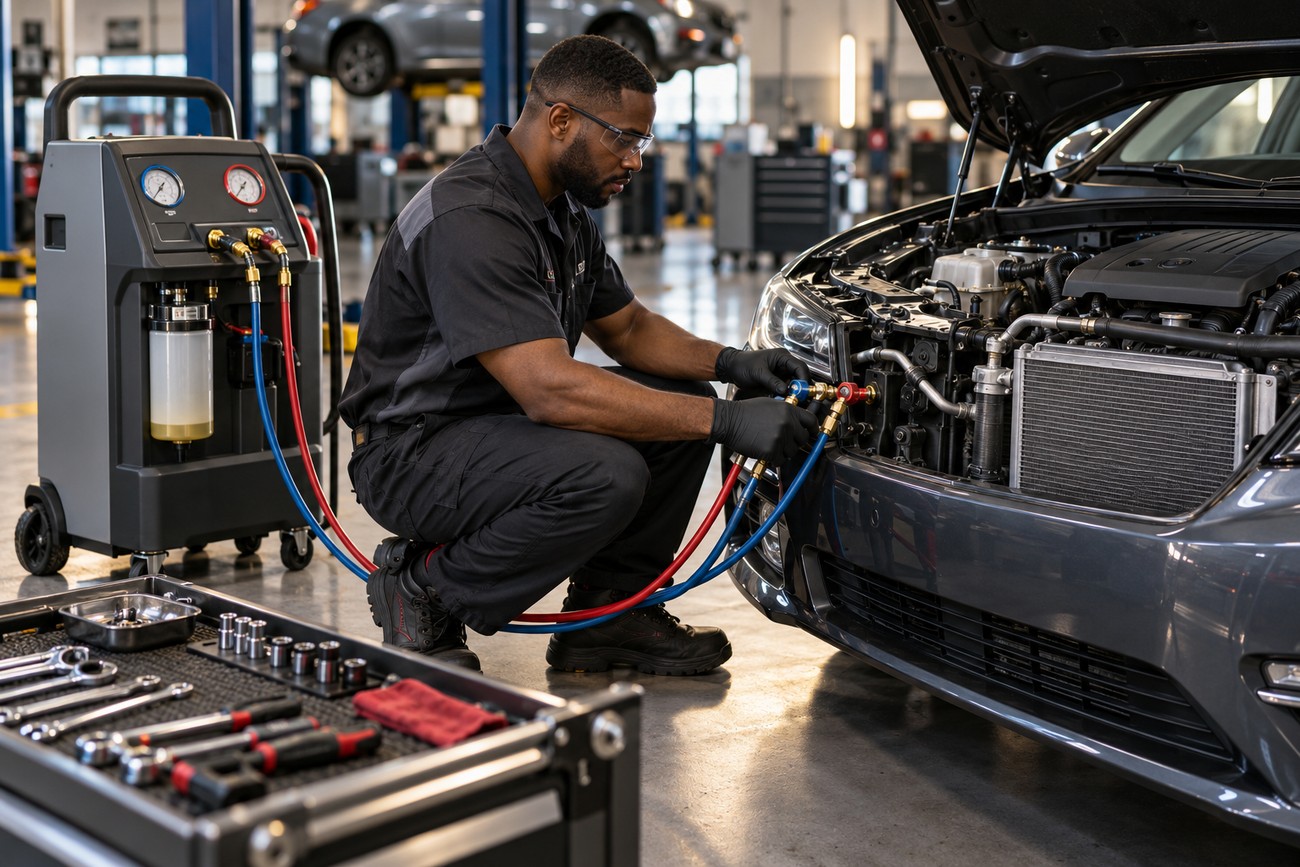
A professional begins by identifying the refrigerant, especially if the vehicle’s service history is uncertain. The system is then evaluated through its controls, airflow, temperatures, pressures, and visible condition. This prevents a guessed recharge from replacing an actual diagnosis.
Before a repair that requires opening the circuit, the refrigerant is recovered with approved equipment. The fault may involve a leak, condenser airflow, electrical control, compressor output, or refrigerant flow. The technician also checks whether the compressor is commanded on, whether the fan operates, and whether the HVAC doors direct air correctly.
Vent temperature, airflow, operating pressures, and condenser-fan behavior have to agree before the system can be called healthy. An engaging clutch or one reassuring gauge reading is only one piece of that evidence.
After the circuit is opened and the repair is complete, the system must be evacuated correctly and charged by the vehicle’s specified mass. Refrigerant should be recovered before repair and recycled or reclaimed afterward. Intentional release of automotive refrigerant into the atmosphere is prohibited.
In the United States, paid automotive AC refrigerant work requires an EPA Section 609-certified technician and approved recovery equipment. A proper diagnosis uses refrigerant mass, operating pressures, vent temperature, airflow, and component operation together. Normal-looking static pressure does not rule out an incorrect charge, a restricted expansion device, or a weak compressor.
Common Mistakes That Make the AC Worse
The first mistake is assuming every warm-air complaint needs more refrigerant. Low refrigerant is only one possibility, and it usually indicates a leak. A dead condenser fan, blocked condenser, fuse problem, compressor fault, restriction, or blend-door problem will remain after a recharge.
More refrigerant does not mean more cooling. Overcharging raises pressure, reduces efficiency, and may damage the system. Correct charging requires the specified refrigerant and charge mass after recovery and evacuation, rather than a guess based on a low-side gauge or a cold can.
An engaged compressor clutch also proves less than many people assume. The clutch may engage while the compressor has weak output, the charge is incorrect, refrigerant flow is restricted, or the system is losing heat-transfer capacity. A normal pressure reading has similar limits because one reading does not verify the complete system.
Wrong refrigerant, air, moisture, and overfilling can impair diagnosis and damage components or service equipment. Continuing to operate with a nonworking condenser fan can also create poor idle cooling and excessive system pressure. Repeatedly recharging a leak provides temporary cooling rather than a complete repair.
When to Stop DIY Troubleshooting and Get Service
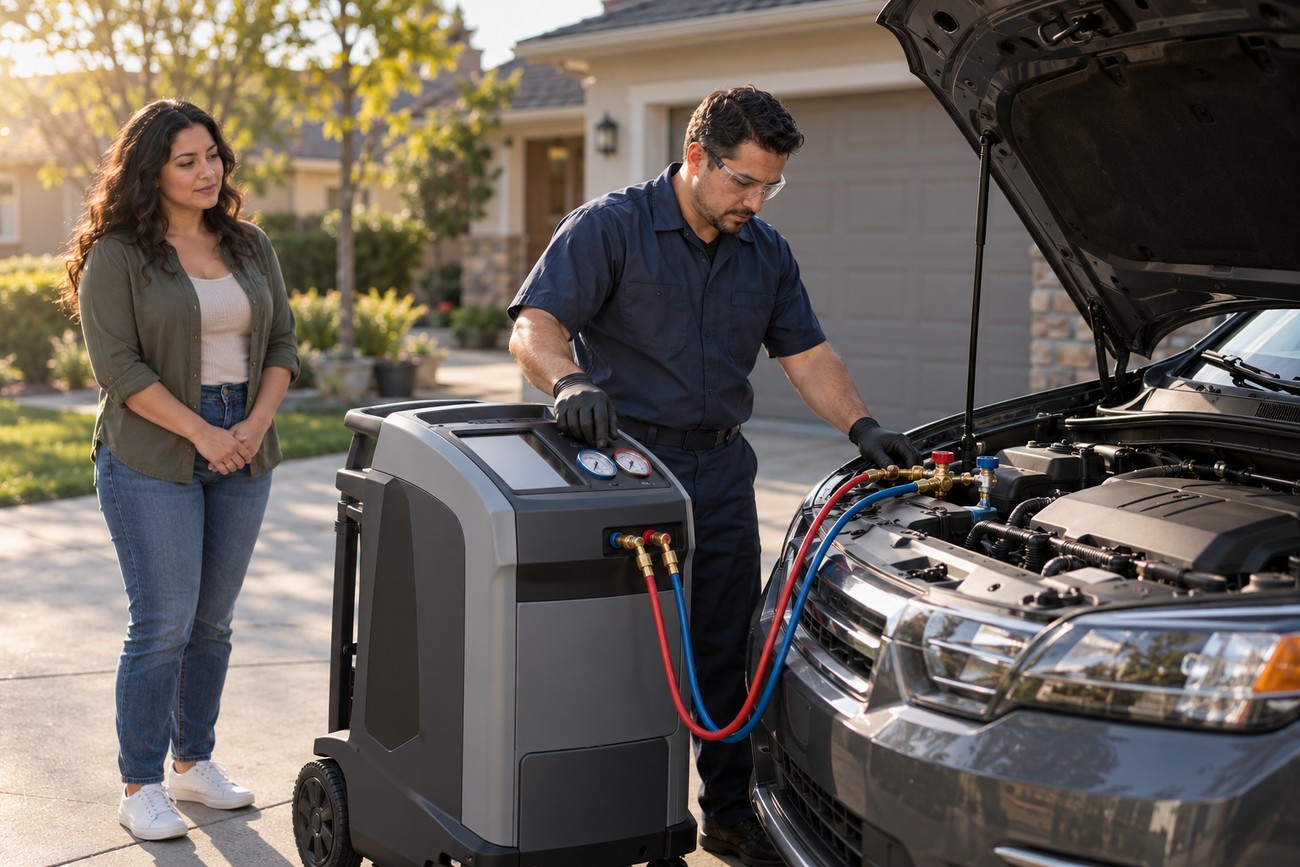
External inspection and basic control checks are reasonable for most vehicle owners. You can check the selected mode, recirculation, airflow direction, fuses, belt condition, condenser cleanliness, and visible fan operation while keeping clear of moving parts.
Stop before connecting a recharge can or opening a line. Refrigerant identification, recovery, evacuation, leak repair, and charging should be handled by an appropriately equipped professional. In the United States, leave refrigerant-circuit work to an EPA Section 609-certified professional using approved equipment.
Arrange service promptly if the condenser fan does not operate, the system produces hissing, oil residue appears, cooling repeatedly disappears, or performance worsens after a recharge. A nonworking condenser fan can cause poor cooling at idle and excessive system pressure. Suspected contamination also requires identification before service equipment is connected.
Do not vent refrigerant, puncture disposable cans, or open the circuit without proper recovery equipment and eye and skin protection. Repeated loss of cooling after service is evidence that the underlying fault needs further diagnosis, even if the system became cold immediately after the previous recharge.
Frequently asked questions
How do I know whether my car AC needs refrigerant or has an electrical fault?
Start with the simplest controls and electrical checks. Confirm that maximum cooling and recirculation are selected, inspect the relevant fuse, observe whether the system commands the compressor and condenser fan, and note whether the symptom is constant or intermittent. A complete lack of compressor command may point toward a fuse, control, sensor, wiring, or pressure-protection issue.
If the compressor is commanded on but the vent temperature does not change, refrigerant charge, compressor output, airflow, and refrigerant flow still need evaluation. Clutch operation does not prove that refrigerant is present in the correct mass. A qualified diagnosis combines temperature, airflow, pressure, and component operation rather than choosing between “electrical” and “low refrigerant” from the symptom alone.
Why does my car AC go from cold to hot while I am driving?
Intermittent cold-to-hot behavior can result from clutch cycling, low charge, pressure protection, unstable electrical control, or a blend-door movement. A condenser fan or airflow problem may also change system behavior as vehicle speed and heat load change. The pattern should be recorded along with blower setting, outside conditions, engine speed, and whether airflow itself changes.
If airflow remains strong while temperature changes, control, refrigerant, compressor, or blend-door operation deserves attention. If airflow falls at the same time, the evaporator or HVAC airflow path may be involved. The symptom is a diagnostic clue, not confirmation that the system only needs refrigerant.
How long should a car AC recharge last?
Refrigerant is not normally consumed, so a correctly charged and healthy system should not need routine topping-up. Cooling that disappears after a short period points toward a leak or another unresolved fault, rather than a normal recharge interval.
A credible recharge service should identify the refrigerant, recover the existing charge, investigate the cause of low charge, evacuate the system after opening it, and recharge by the vehicle’s specified mass. If a service only adds an unspecified amount without confirming the refrigerant type or checking for a leak, it has not established why the AC stopped cooling.