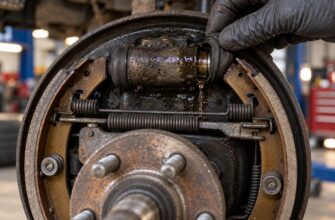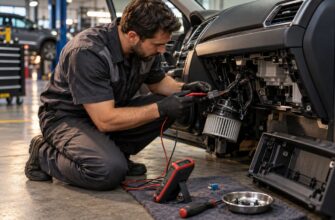
Engine RPM rises while vehicle speed lags, especially under load or after the transmission warms up. That is the basic pattern of slipping: the engine gains speed without a proportional increase in vehicle acceleration. You may notice it during a hill climb, a passing maneuver, or a gear change.
The same sensation can come from low fluid, a control fault, torque-converter clutch behavior, or internal clutch wear. Delayed engagement, incorrect sensor data, engine misfire, and driveline problems can also confuse the diagnosis. Do not recommend a fluid change or transmission rebuild before collecting basic evidence.
Begin with the fluid level, leaks, fluid specification, diagnostic codes, and a controlled road test. If the symptom remains, scan data and hydraulic pressure testing can show whether the transmission is losing the commanded gear ratio or suffering from a control problem.
- What Transmission Slipping Feels Like—and What It Is Not
- Start With the Checks That Prevent a Wrong Diagnosis
- A Diagnostic Sequence: Codes, Road Test, Scan Data, and Pressure
- Use the Symptom Pattern to Narrow the Fault
- Why a Fluid Change, Solenoid, or Rebuild Is Not Automatically the Fix
- When to Stop Driving and What Evidence Justifies Major Repair
- Frequently Asked Questions
- How do I diagnose a slipping automatic transmission in a Chevy?
- What can be mistaken for a slipping transmission besides torque-converter shudder?
- How do I test if my transmission is slipping?
- How can I fix a slipping transmission without replacing it?
What Transmission Slipping Feels Like—and What It Is Not
True transmission slipping occurs when engine RPM increases without proportional vehicle acceleration. The engine may flare between shifts, or RPM may rise while climbing a hill and then fall as the transmission regains hold. Repeated slipping creates heat and can damage friction material.
Torque-converter clutch slip is different. It often appears as small RPM fluctuations at steady throttle and road speed, sometimes with a light shudder. The transmission may still be holding its selected gear, so this pattern should not automatically be treated as a slipping clutch pack.
Delayed engagement means the vehicle takes time to move after you select D or R. Limp mode may restrict the transmission to a limited range of gears without proving that the internal clutches are destroyed. Engine misfire, incorrect speed-sensor data, traction-control intervention, or driveline lash can also feel like an interruption in power.
A transmission-related diagnostic code shows that a system has detected an abnormal condition; it does not prove mechanical destruction. Sensors, wiring, connectors, and power-supply faults can produce codes or incorrect shift decisions. The code must be compared with live data and the actual driving symptom.
Start With the Checks That Prevent a Wrong Diagnosis
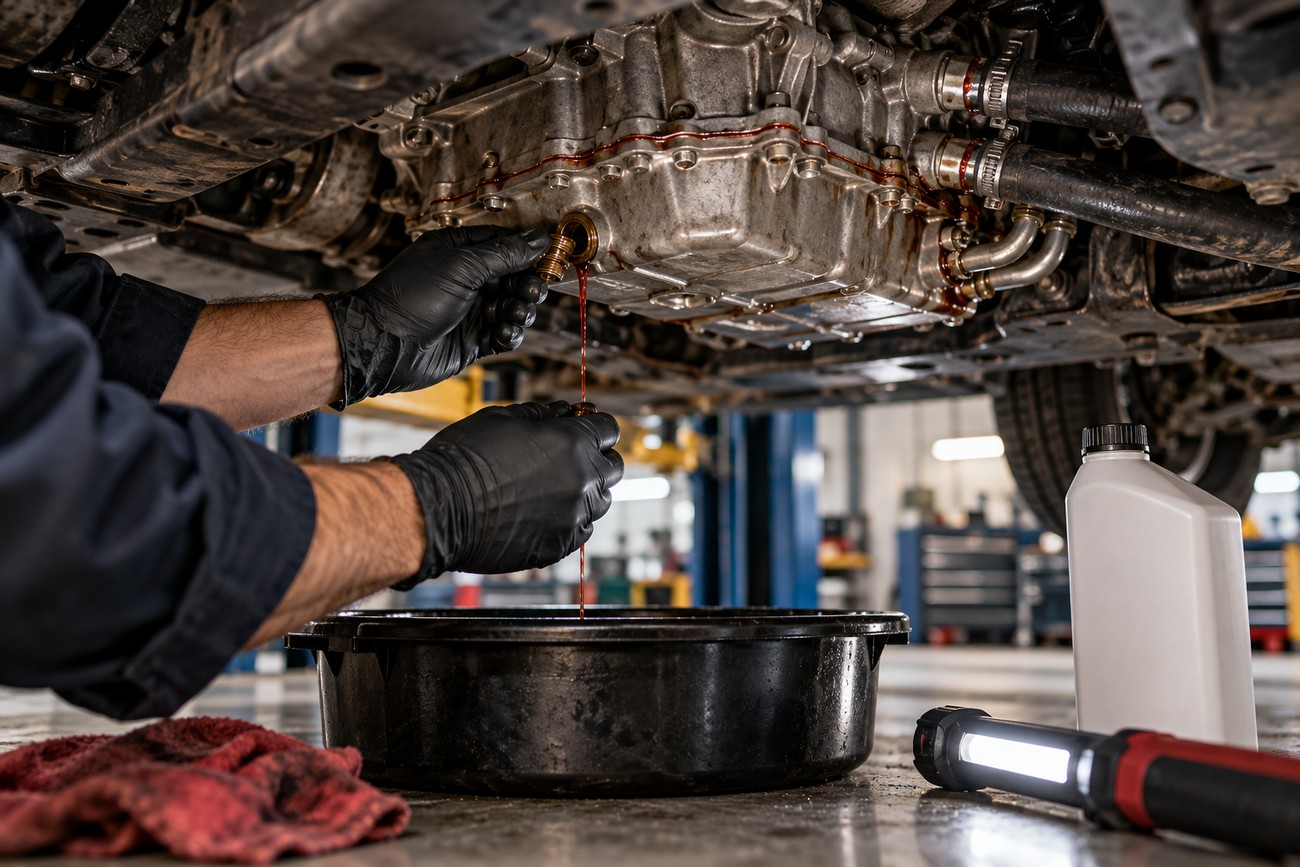
Inspect for leaks around the transmission, cooler lines, axle seals, and pan area. Confirm the exact ATF specification for the vehicle before adding anything. A similar color or a label such as “universal” does not establish compatibility with the transmission.
The correct ATF level is model-specific. The required temperature, vehicle position, selector position, and engine state may differ by manufacturer. Some vehicles require the engine to run during the check, while others use a service opening rather than a dipstick.
For a range of Kia models, the specified check is 70–80 °C, on a level surface, after moving the selector through all positions. Some Ford models require ATF to be added in increments of about 250 mL, followed by a recheck according to the service procedure. These examples show why a generic dipstick routine is unsafe advice.
Low and excessive ATF levels can impair hydraulic pressure, lubrication, shift quality, and component life. Overfilling can cause foaming and reduced working pressure. On a transmission without a dipstick, the level may require a temperature-controlled check through a control opening, often with the vehicle safely elevated.
Fluid color alone does not prove transmission failure. Burnt odor, friction dust, metallic debris, fluid condition, diagnostic codes, and test results provide more useful evidence. Dark fluid may reflect heat and service history, while clean-looking fluid does not rule out pressure loss or internal wear.
A Diagnostic Sequence: Codes, Road Test, Scan Data, and Pressure
Start by recording diagnostic trouble codes and freeze-frame information, then inspect wiring, connectors, grounds, and visible leaks. Confirm the ATF level and specification before interpreting shift data. A code related to gear ratio, speed, or solenoid operation should be checked against the conditions under which it was set.
Perform a controlled road test only when the vehicle can be operated safely. Reproduce the symptom under a known load, temperature, gear, and range condition. Record whether RPM rises during an upshift, under acceleration in a fixed gear, or at steady speed with the torque-converter clutch commanded on.
Commanded gear, input speed, output speed, and hydraulic pressure must be compared under the same hot or cold condition in which the symptom occurs. A generic scan-code diagnosis can miss a temperature-sensitive pressure loss or confuse an incorrect shift with true ratio loss.
Compare input and output speed data with the commanded gear. The actual gear ratio can help distinguish clutch-pack slip from an incorrect shift caused by a solenoid, sensor, or control decision. If input speed rises while output speed fails to follow the expected ratio, the result supports further transmission testing.
Hydraulic pressure testing is useful only when performed at specified test points, operating ranges, temperatures, and engine speeds, and compared with factory data. A statement such as “the pressure is normal” has little diagnostic value without those conditions. Low pressure may involve a pump, filter, air ingestion, internal leakage, valve body, or worn seals.
Test results should be combined rather than viewed separately. A pressure result, scan reading, road-test symptom, and fluid inspection that point in the same direction provide a stronger basis for repair than any single code or visual observation.
Use the Symptom Pattern to Narrow the Fault
Use the complaint to select the next test rather than to name a failed part. The patterns below help organize the evidence.
| Complaint | What it may indicate | Next diagnostic check |
|---|---|---|
| Slips only after warm-up | Temperature-sensitive pressure loss, sealing trouble, pump or valve-body problems, fluid issues, or internal wear | Reproduce the fault hot and compare scan data and pressure with factory specifications |
| Delayed engagement in D or R | Fluid-level, hydraulic, sealing, or control problem | Verify level and specification, check for leaks and codes, then test engagement pressure and delay |
| Problem begins after ATF service | Incorrect fluid, incorrect level, procedural error, or missing adaptation/relearn | Confirm the fluid approval, temperature and level procedure, service work, and required relearn |
| Small RPM fluctuations at highway speed | Torque-converter clutch behavior, engine operation, or speed-signal error | Check converter-clutch command, input and output speeds, engine misfire data, and road-speed signals |
| Limp mode with no obvious slipping | Sensor, wiring, power-supply, solenoid, or control fault, as well as possible mechanical trouble | Read codes and live data, inspect electrical circuits, and verify actual gear ratio and pressure |
A transmission that works cold but slips hot may lose pressure as the fluid thins or as a seal, pump, or valve-body fault changes with temperature. The pattern narrows the testing conditions; it does not identify one failed component.
Delayed D or R engagement deserves attention even if the vehicle eventually moves normally. Repeatedly attempting to engage a range can add heat and clutch wear while the system struggles to build or retain pressure.
After ATF, valve-body, or transmission service, verify the fluid specification, level, procedure, and any required adaptation or relearn. A mechanically sound transmission can shift poorly if its control module has not completed the required learning process.
Why a Fluid Change, Solenoid, or Rebuild Is Not Automatically the Fix
Adding ATF can improve operation when the level is genuinely low, but it cannot restore worn friction clutches, a worn pump, damaged seals, or a defective valve body. A temporary improvement after adding fluid does not prove that the underlying fault has been repaired.
Do not add universal ATF without confirming the manufacturer approval. Incorrect fluid can alter friction characteristics and shift quality. Both underfilling and overfilling are harmful, and overfilling can cause foaming and reduced working pressure.
A partial ATF change may temporarily alter symptoms while leaving contamination in the transmission. It does not restore worn friction material, a worn pump, or a damaged valve body. Judge the result against scan data, pressure, and driving behavior rather than by the fluid’s appearance alone.
A correct fluid level also does not rule out a restricted filter, air ingestion, pump wear, hydraulic leaks, or damaged seals. Replace solenoids only after assessing their electrical operation, commanded behavior, wiring, and the surrounding hydraulic system.
When to Stop Driving and What Evidence Justifies Major Repair
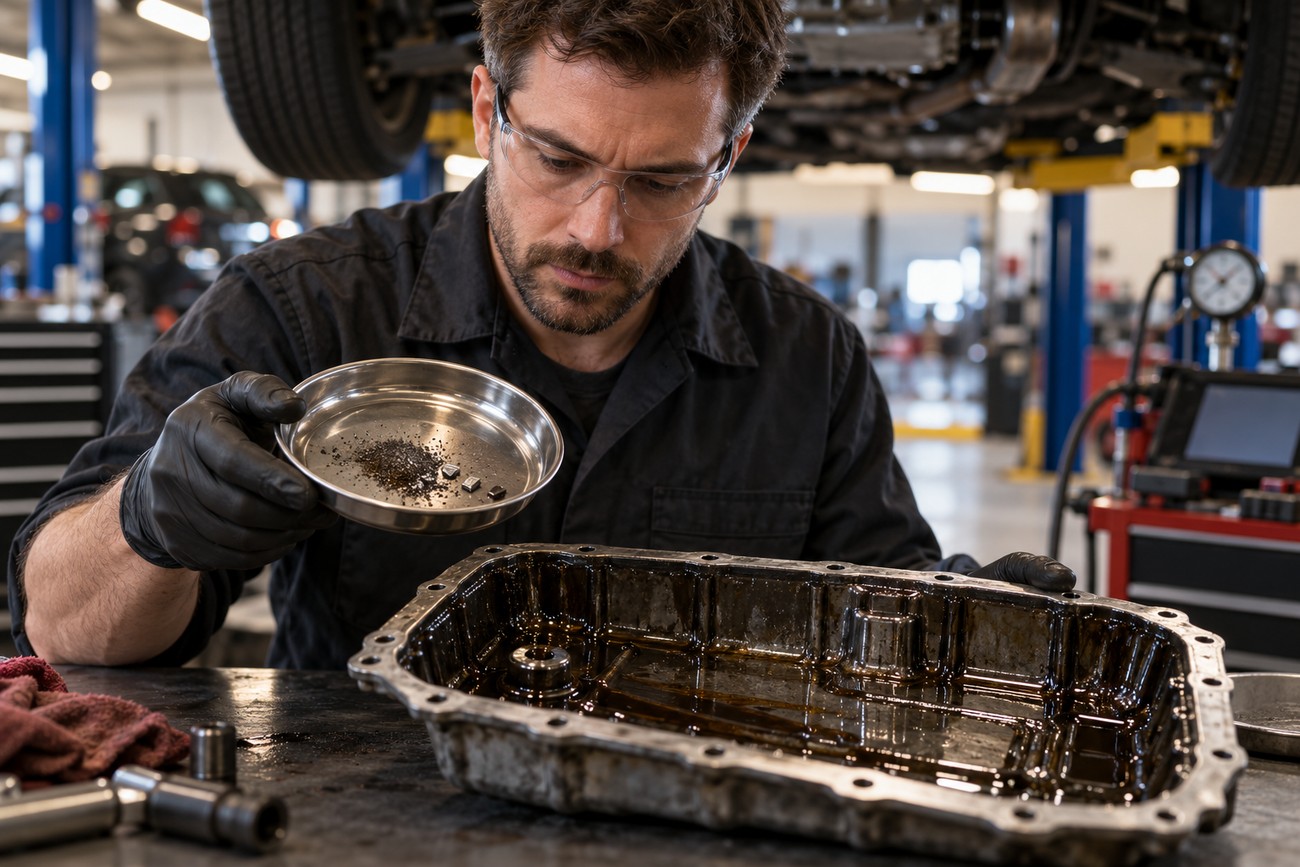
Confirmed slipping can increase heat and accelerate friction-material damage. Avoid towing, steep climbs, hard acceleration, and unnecessary driving until the cause is established. If the vehicle cannot maintain movement safely, arrange transport rather than relying on repeated fluid additions.
After the relevant tests, pan and magnet inspection can add useful evidence. Friction dust and larger metallic debris have different diagnostic significance, but neither finding should be interpreted without the symptom, codes, scan data, and pressure results.
A credible rebuild recommendation should connect repeatable symptoms with evidence from diagnostic codes, fluid condition, pan inspection, scan data, pressure testing, or internal inspection. It should also explain which findings cannot be corrected by fluid, electrical repair, adjustment, or valve-body service.
Be cautious if a shop recommends a major repair without reading codes, checking the fluid specification and level, inspecting for leaks, or measuring relevant data. A second assessment is reasonable when the proposed repair is based only on a road-test impression or a dark fluid sample.
Frequently Asked Questions
How do I diagnose a slipping automatic transmission in a Chevy?
Start with the exact model year, engine, transmission code, and Chevrolet service procedure. Confirm the approved ATF, the required level-check temperature, the vehicle position, selector position, and engine state. Chevrolet models do not all use the same fluid or level-check method.
Then scan for codes and live data, reproduce the symptom under controlled load, compare commanded gear with input and output speeds, and use the factory pressure specifications for that transmission. Avoid applying a generic “Chevy transmission” procedure across different models.
What can be mistaken for a slipping transmission besides torque-converter shudder?
Engine misfire, incorrect speed-sensor data, driveline lash, and traction-control intervention can all make acceleration feel interrupted. A failing sensor or wiring circuit may also cause an incorrect shift without actual clutch-pack slip.
Check misfire counters, wheel-speed and transmission-speed signals, traction-control activity, and the relationship between input and output speed. True ratio loss should be evaluated alongside the commanded gear and, when required, hydraulic pressure.
How do I test if my transmission is slipping?
Record the conditions that trigger the symptom, including temperature, load, speed, and selected range. During a controlled test, compare engine RPM with vehicle acceleration and use scan data to compare commanded gear, input speed, and output speed.
If the data indicates ratio loss, confirm it with pressure testing at the specified test point and operating conditions. Do not use a free-revving engine test or a generic pressure reading as proof of transmission health.
How can I fix a slipping transmission without replacing it?
Some causes can be corrected without replacement, including an externally leaking system, an incorrect fluid level, unsuitable ATF, an electrical fault, a sensor problem, or a valve-body and solenoid issue. The repair depends on test results and may also require an adaptation or relearn procedure.
Fluid service cannot restore worn friction material, a worn pump, damaged seals, or a damaged valve body. Avoid continued driving while the transmission is actively slipping, because added heat can turn a limited fault into broader internal damage.