A 400 hp dyno sheet can look convincing until the car sits in traffic, loses power on the next acceleration, or starts slipping its clutch a few weeks after the tune. The number records what the car produced under particular conditions. It says little about how it starts on a cold morning, responds in a higher gear, or copes with a hot commute.
For a daily driver, the useful target is repeatable, comfortable performance. That means choosing a sensible starting car, keeping fuel and temperatures under control, and making sure the driveline can live with the torque you actually use. Set that goal before choosing a turbo or asking a tuner for a peak figure: it gives every parts decision a practical test.
- Define What 400 Horsepower Must Do Every Day
- Choose a Platform Before Choosing Parts
- Prove the Car Is Healthy Before Adding Power
- Size the Air and Fuel System for a Conservative Torque Curve
- Tune for Hot-Day Repeatability, Not One Dyno Pull
- Make the Driveline, Grip, and Brakes Match the Engine
- Validate the Build on a Commute, Then Set Service Rules
- Budget for the Daily-Driver Compromises People Miss
- Frequently asked questions
- Which cars are good starting points for a 400 hp daily?
- How fast is a 400 hp car?
- What proof should I ask for when buying a 400 hp daily?
- What changes if the car must be driven through winter?
Define What 400 Horsepower Must Do Every Day
First, agree on where power is measured. 400 hp at the crankshaft is approximately 298 kW; wheel horsepower is lower because of drivetrain losses, but no fixed loss percentage applies to every car. A claimed 400 hp at the wheels is therefore a different, more demanding target. Ask for the measurement point whenever you compare builds, parts ratings, or dyno results.
Next, describe the driving the car must handle. A daily should pull predictably through the midrange, retain thermal headroom in slow traffic, and deliver similar performance after repeated acceleration. A brief peak at the top of the rev range may win a dyno comparison while leaving the car hesitant on the road.
Vehicle mass, gearing, and driven wheels change the result as much as the headline output changes your expectations. The same crankshaft power can feel accessible in one car and difficult to deploy in another, especially where traction or a slow-shifting transmission interrupts acceleration. Define acceptable response, noise, fuel requirements, and hot-weather behavior alongside the power target; there is no honest universal acceleration figure for a 400 hp car.
Choose a Platform Before Choosing Parts
Start with the car’s factory hardware and available space, since engine strength alone cannot settle the transmission, cooling, and packaging work.
| Starting point | Likely path to 400 hp | Main reliability constraint | Daily-driving trade-off |
|---|---|---|---|
| Factory-near-target performance platform | Confirm its actual factory output, then address condition and any modest shortfall. | Prior wear, neglected maintenance, and the cost of keeping performance hardware healthy. | Often a simpler power path, though tires, fluids, and repairs may still demand more attention. |
| Modestly upgraded turbo platform | Match responsive airflow, fuel delivery, cooling, and an individual calibration to the target. | Fuel quality, knock control, heat, and driveline torque capacity. | Good midrange potential, with greater dependence on the tune and thermal management. |
| Low-output naturally aspirated starting point | Expect substantial engine and supporting-system changes to reach the target. | High mechanical and thermal demands on hardware designed for much less output. | More downtime and compromise may follow, even if the finished car meets the number. |
A platform closer to the target usually offers a shorter route, though its condition and exact specification still decide the risk. Mass, transmission design, and engine-bay space can change the work substantially within the same model family. A larger turbo is no automatic reliability upgrade: if it delays response and concentrates power in a narrow band, it may make the street car worse.
Prove the Car Is Healthy Before Adding Power
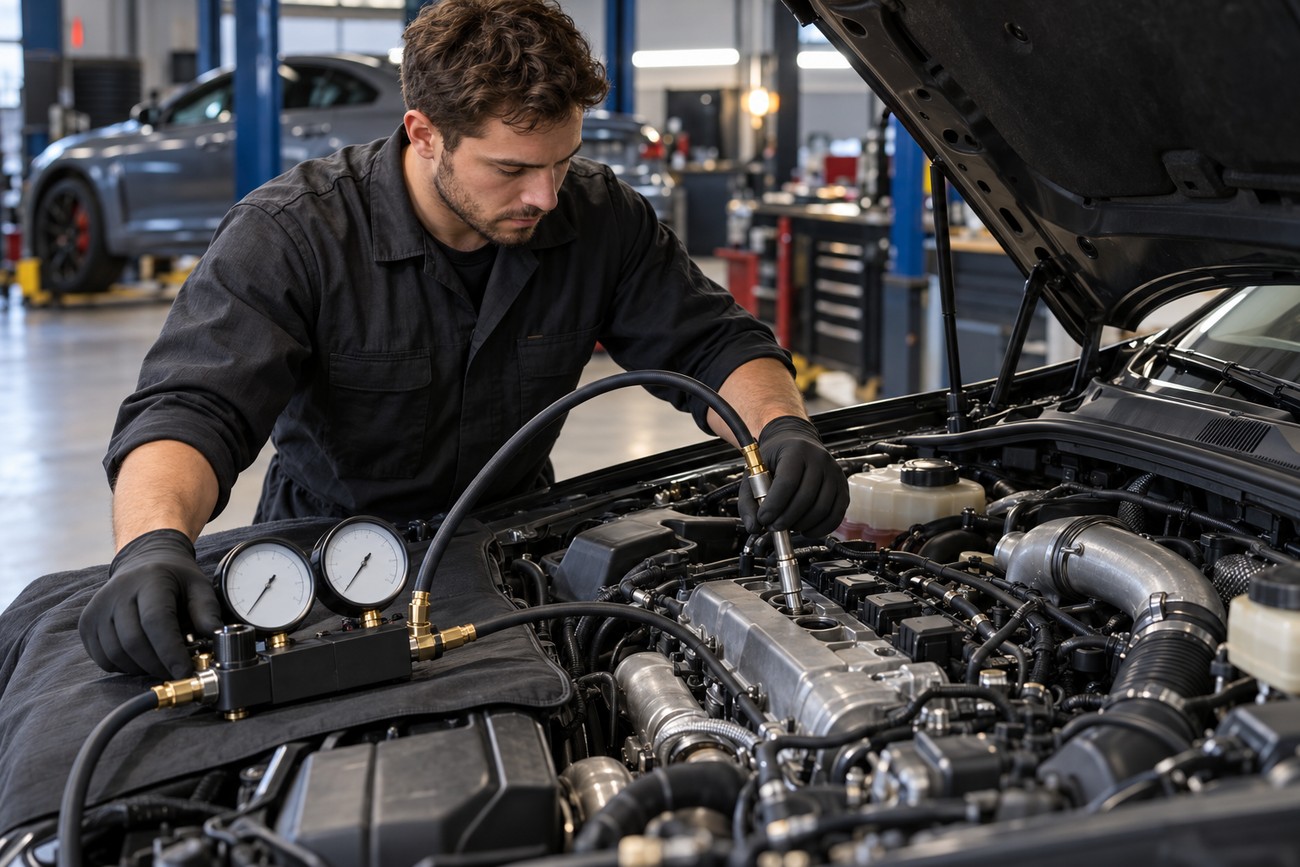
Begin with the engine’s current behavior, not its advertised strength. Review maintenance records and fault codes, check for fluid loss or contamination, and investigate rough running, smoke, or unexplained oil consumption. Compression or leak-down testing can help where symptoms or engine history warrant it, but one reassuring result cannot predict the life of a modified engine.
Verify oil pressure using an appropriate method for the vehicle, and inspect the cooling system for leaks, weak components, and evidence of past overheating. Crankcase ventilation deserves attention as well: a fault there can complicate oil control and make a new power problem appear to be caused by the tune. Repair known defects before adding heat and cylinder pressure to the same system.
Drive the car in its current form and note clutch slip, delayed shifts, harsh engagement, axle noise, and differential behavior. A transmission that already misbehaves under standard torque has little reason to improve after a power increase. Prior service records help distinguish a maintained car from one that has merely been cleaned up for a dyno appointment.
Some healthy stock engines can operate at 400 hp with conservative calibration and suitable fuel; unchanged longevity cannot be guaranteed across platforms or usage. Treat published stock-engine examples as evidence that a route may be possible, then assess the particular engine, its history, and how often you intend to use full load. Buying parts before resolving those questions is an efficient way to turn a daily into a repair project.
Size the Air and Fuel System for a Conservative Torque Curve
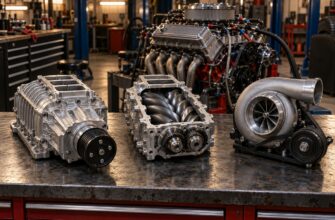
For a turbo build, select the compressor and supporting hardware around usable response rather than the largest advertised flow figure. A linear midrange torque curve is generally more useful in traffic and on ordinary roads than a narrow peak-power window. Conservative boost also leaves the calibration more room to manage varying air temperature and fuel quality.
That does not mean demanding maximum torque as soon as the engine reaches low rpm. A hard early surge can overwhelm the tires and load the clutch or gearbox heavily, while an oversize turbo chosen to avoid that surge may leave the car flat until high engine speed. The sensible shape depends on displacement, gearing, traction, and the transmission’s known constraints.
Check injector and pump capacity for the fuel the car will actually use, including the fuel available on trips away from home. A 15–25% margin is a common community rule of thumb for appropriately rated components, not a guaranteed requirement or a substitute for logged fuel delivery and temperature checks. A comfortable parts rating on paper does not prove that pressure remains stable at the required load.
Fuel quality, knock, intake temperature, and ignition calibration often constrain turbo-engine durability; the engine block is not always the first limiting part. Specify the fuel requirement clearly and leave a sensible response for fuel that falls short of it. Strong internal parts cannot restore knock margin lost to poor fuel or an unsuitable ignition map.
Tune for Hot-Day Repeatability, Not One Dyno Pull
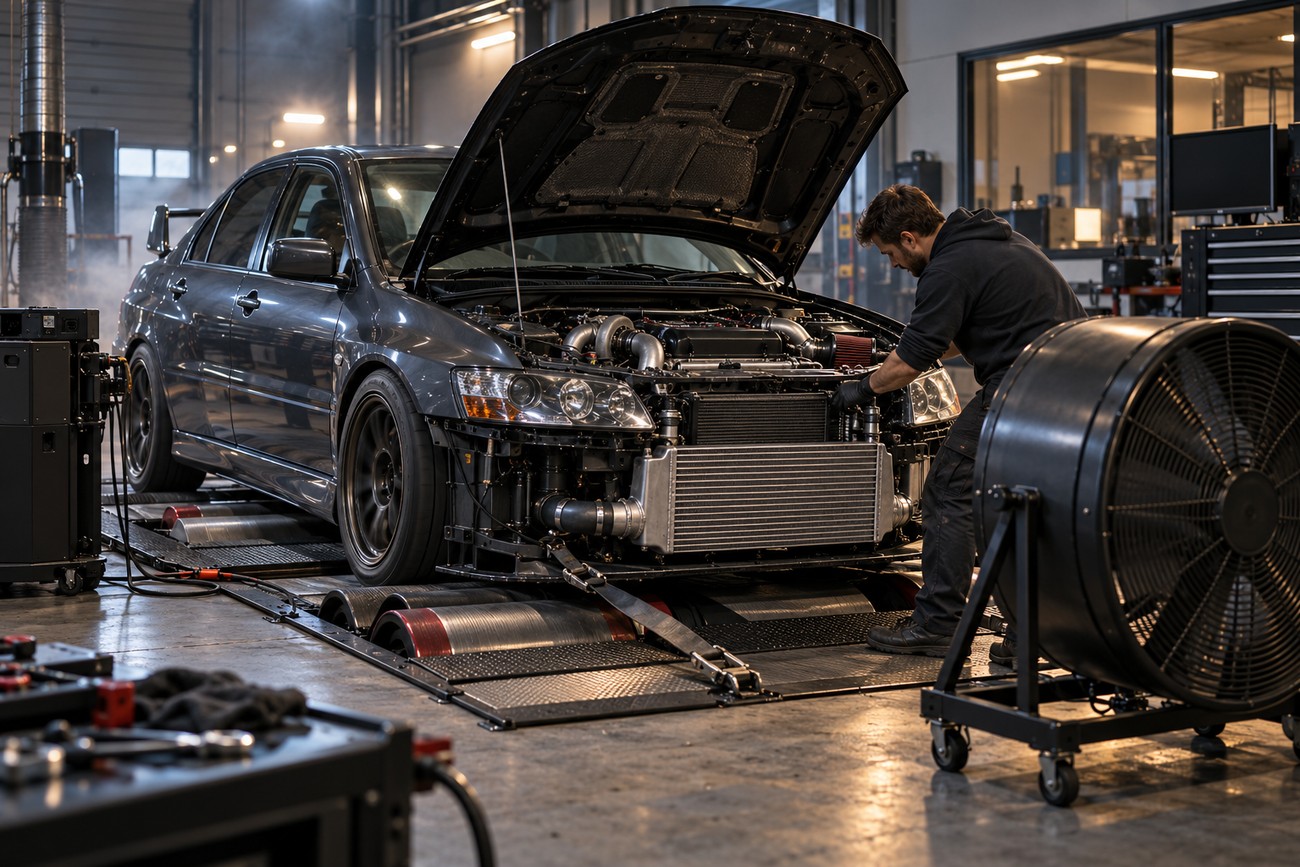
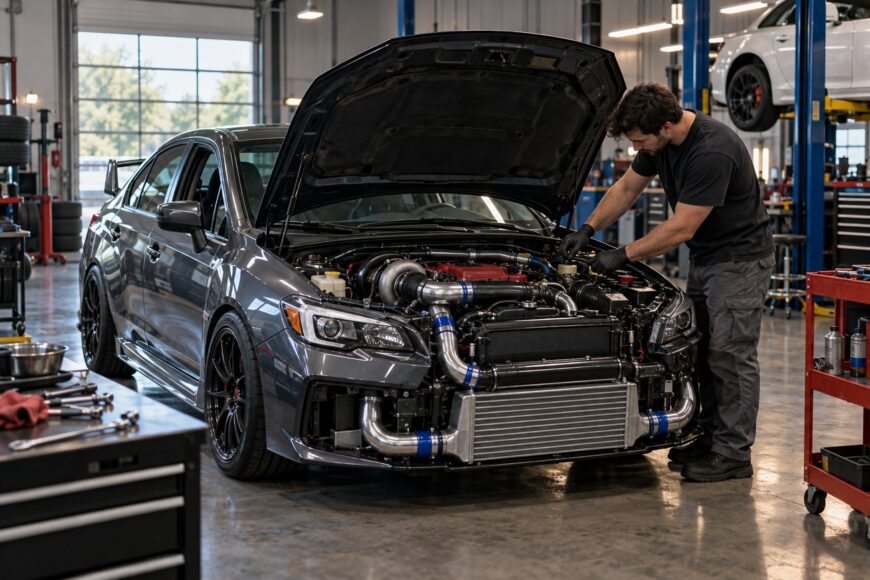
The cooling package needs to manage both the air entering the engine and the heat the engine sheds. Assess intercooler performance, radiator condition and capacity, airflow through the cooling stack, and the vehicle’s existing heat-management limits. A cool first pull tells you less than intake and coolant temperature trends after traffic or successive accelerations.
Calibration should be built around the fuel the owner can reliably obtain. The tuner needs to review ignition behavior, knock response, boost control, and fueling as temperatures change, rather than copying settings from a similar car. There is no single intake- or coolant-temperature threshold that suits every platform; the concern is whether the system remains controlled within that engine’s operating strategy.
A peak dyno result does not demonstrate consistent operation in traffic, hot weather, or repeated acceleration. Road validation should include the conditions the owner actually encounters, with testing conducted safely and legally. If power falls away after a heat-soaked commute, investigate what the logs show before treating the first dyno number as proof that the calibration is finished.
Excessive enrichment is a poor substitute for controlling heat and knock. It can bring rough running, fouled plugs, and unwanted fuel consumption without fixing the reason the car struggles when hot. Cooling capacity and stable temperatures may be more useful to a daily than an additional 20–30 hp from more aggressive boost; that comparison is a priority check, not a prescribed upgrade target.
Make the Driveline, Grip, and Brakes Match the Engine
Torque reaches the road through parts that may have been adequate only at the car’s original output. Inspect clutch condition and behavior before assuming an uprated unit is required; a clutch that begins to slip after tuning needs diagnosis, not another power run. Check axles or driveshafts, mounts, and differential condition against the way the car will be driven.
Automatic and dual-clutch transmissions need particular attention to heat management and shift behavior. Low-rpm torque and repeated launches can be a greater concern than peak horsepower, even where a published power rating looks reassuring. Fluid condition, cooling provision, and the transmission calibration all matter; a firm shift alone does not establish durability.
Grip decides how much of the output is useful. On a front-wheel-drive car, wheelspin and steering disturbance may become the daily limitation before engine strength does. Tire choice, alignment, differential behavior, and a progressive torque request can make more difference on a damp road than another increase in peak power.
Bring the braking system back to sound condition before asking the car to accelerate harder more often. Inspect tires and brakes as complete systems, including their condition and suitability for the vehicle’s mass and use, rather than prescribing one universal specification. Plan these costs with the engine work; deferring them can leave an otherwise successful build frustrating to drive.
Validate the Build on a Commute, Then Set Service Rules

Record a healthy baseline before modification so later logs have context. Once calibrated, confirm fuel delivery and relevant temperatures under load, then compare repeat runs after heat soak. Include ordinary traffic, part-throttle transitions, and cold starts in the assessment: a daily spends far more time there than at peak output.
Look for patterns instead of celebrating a single clean graph. Power reduction, knock intervention, slipping, or steadily rising temperatures call for diagnosis before any boost increase. Check whether the cause lies in fuel supply, cooling, a sensor or control response, or the driveline; changing the tune to hide a symptom can make the underlying fault harder to find.
Use the results to set an evidence-based service plan. Monitor oil condition and consumption, inspect spark plugs for abnormal deposits or wear, and review engine and transmission fluid condition against the vehicle’s use. Modified cars may need closer monitoring and shorter oil or plug intervals, but an invented fixed interval is less useful than records that show how this particular car is aging.
Keep the logs, calibration details, fuel requirement, and maintenance notes together. They make a gradual change in behavior easier to spot and give a technician something more useful than “it feels slower when hot.” Repeatability after a commute is the continuing test; the dyno sheet remains one measurement from one set of conditions.
Budget for the Daily-Driver Compromises People Miss
Engine hardware is only one line in the build plan. Allow for calibration revisions, possible transmission work, suitable tires, brake maintenance, and more attentive servicing. Leave room to repair weaknesses found during inspection or logging, since those findings should change the parts plan rather than be worked around.
A car can be mechanically sound and still become tiresome. Exhaust noise on a long drive, added cabin vibration, heat around the engine bay, persistent smells, and abrupt throttle mapping all affect the daily journey. Evaluate those changes as carefully as peak output, particularly if the car also has to carry passengers or sit in traffic.
Bolt-on parts and a generic tune do not automatically preserve stock-like longevity. Differences in vehicle condition, installed hardware, and local fuel can produce inconsistent results even between apparently similar cars. Some healthy stock engines can operate at 400 hp with conservative calibration and suitable fuel, but that possibility is a reason to verify the finished car, not a warranty for every build.
Frequently asked questions
A suitable starting point depends on the exact model and its condition. Speed claims need context, while a used build needs records and an independent inspection. Winter use adds another set of practical checks.
Which cars are good starting points for a 400 hp daily?
Factory performance models already near or above the target are often worth considering; certain BMW M3 and Chevrolet Camaro SS model years are examples. Their factory output does not make a worn example a safe purchase or mean that every version has the same hardware. Check the exact engine, transmission, model year, cooling arrangement, and maintenance history before treating the badge as an advantage.
How fast is a 400 hp car?
There is no single honest acceleration or top-speed answer from horsepower alone. Vehicle weight, gearing, traction, aerodynamics, and the shape of the torque curve all affect speed; 400 hp at the crankshaft is also different from 400 hp at the wheels. Compare tested cars with similar specifications and measurement methods rather than converting a power claim into a promised time.
What proof should I ask for when buying a 400 hp daily?
Ask for parts invoices, the calibration record and required fuel specification, maintenance history, and diagnostic or performance logs that include operation when hot. Verify that the installed parts match the documents, and arrange an independent inspection that covers engine health, cooling, transmission behavior, brakes, and signs of poor installation. A dyno sheet supports a power claim at the time of the test; it cannot replace those checks.
What changes if the car must be driven through winter?
Winter makes cold-start calibration, battery health, fluid condition, and suitable winter tires central to whether the car remains usable. Check that the chosen exhaust, intake, intercooler placement, and other modifications tolerate the weather and remain practical to inspect and clean where roads are salted. Confirm that the car’s tires, equipment, noise, and emissions compliance also meet the rules where it will be driven.