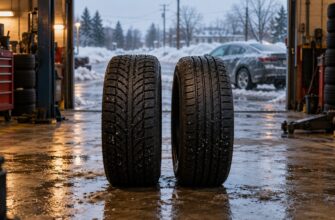
A tire can have plenty of tread and still be years old. That is common on a lightly driven car or a used set offered for sale: the grooves look reassuring, but the manufacture date raises doubts. Deep tread alone cannot show how the rubber or internal structure has held up.
A tire’s birthday does not settle the question either. Storage, climate, mileage, and load all affect deterioration, so two tires made at the same time can be in different condition. The useful decision is whether the tire’s age, condition, and history support continued use—not whether it has crossed a single birthday.
- At what age do tires become unsafe?
- Why deep tread cannot guarantee grip or integrity
- A tire’s date code tells only part of the story
- What to inspect—and when to seek a tire specialist
- When to replace a tire before its tread wears out
- Buying older stock or used tires without a surprise
- Frequently asked questions
- Does rotating tires extend how long they can safely be used?
At what age do tires become unsafe?
No single age makes every tire automatically unsafe. A tire may develop damage that calls for replacement while relatively young, while another may remain serviceable for years with appropriate care. Age is a reason to look more closely, alongside condition, storage, and use.
Some manufacturer guidance recommends an inspection by a tire professional at least annually after five years in service. “In service” refers to the period since the tire began being used on a vehicle, which may differ substantially from its age since manufacture. This inspection guidance is not an automatic replacement deadline.
A commonly cited manufacturer recommendation is to replace tires by 10 years from the date of manufacture, even if tread remains and the tires have seen little use. It is a conservative replacement recommendation, not a universal legal limit. Local roadworthiness rules may set separate requirements, so do not treat a warranty period or a manufacturer recommendation as a statement of the law where you drive.
Use those time points to plan checks and replacement rather than to excuse a visible problem. A bulge, serious cracking, or other concerning damage deserves attention immediately, regardless of the date code. Equally, passing a quick inspection does not make an aging tire risk-free for the rest of its life.
Why deep tread cannot guarantee grip or integrity
Tread grooves help a tire manage water, but their depth tells you little about the condition of the surrounding rubber. As rubber ages, changes in elasticity can reduce its ability to grip the road, particularly in the wet. The effect varies with the tire and its conditions of use, so tread depth cannot predict an individual tire’s braking performance.
Sidewall cracks can make deterioration easier to spot, yet damage is not always obvious from a glance at a mounted tire. Rubber layers and internal components may also deteriorate while the tread still looks substantial. That is why a low-mileage tire should not automatically be treated as a nearly new one.
Winter traction needs particular care because cold, snow, and ice place demands on the rubber as well as the tread pattern. A winter tire with deep grooves may still have lost some of the flexibility it needs to grip in those conditions. This does not mean every winter tire ages faster than every summer tire; it means remaining tread is only part of a winter-safety assessment.
A tire’s date code tells only part of the story
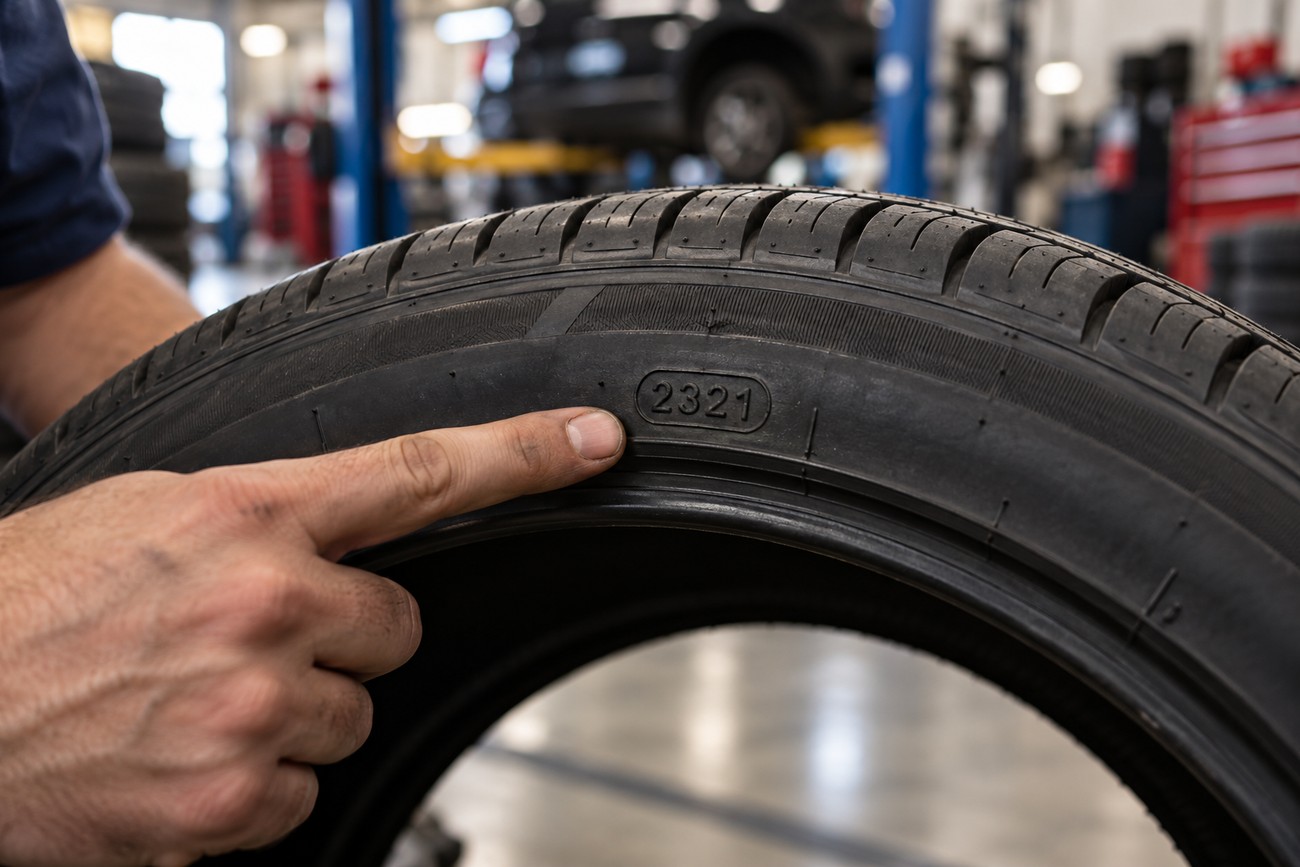
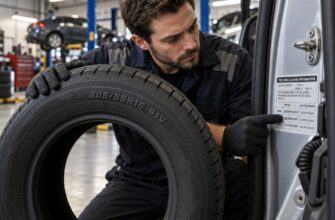
Look on the sidewall for the tire identification marking and its date code. On tires using the common four-digit format, the last four digits give the week and year of manufacture: for example, 2321 means the 23rd week of 2021. The full code may appear on only one sidewall, so you may need to check the side facing inward or ask a tire shop to locate it.
That code records when the tire was made, not when it was installed or how long it has been in service. A tire manufactured several years ago may have spent much of that time in storage; another of the same age may have carried a heavily loaded vehicle through hot summers. The dates match, but the exposure does not.
Heat and UV exposure can hasten deterioration, while oxygen and ozone also contribute to rubber aging. Storage conditions, climate, mileage, and load add to the picture. A cool, dark storage space is generally kinder to a tire than prolonged heat and sunlight, although good storage does not stop aging altogether.
For a car driven only occasionally, calendar age can advance while tread wear barely changes. Checking the code helps you identify that gap; asking how the tire was stored and used helps explain it. Neither the date nor the appearance can establish the whole history on its own.
What to inspect—and when to seek a tire specialist
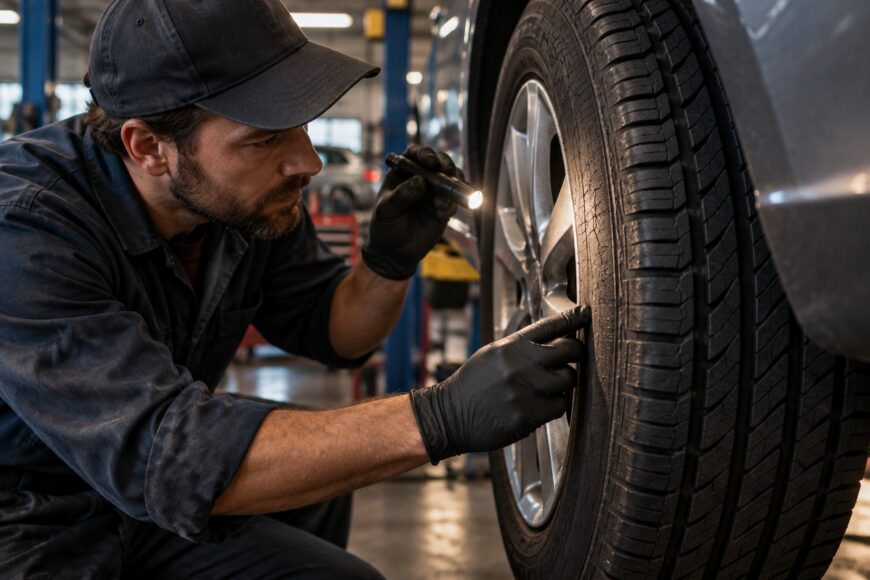
Start with the tread across its width, rather than judging the deepest-looking groove. Look for uneven wear, cuts, or embedded damage, then check the sidewalls for cracks, bulges, and deformation. Include the areas near the wheel rim and, where accessible, the inward-facing sidewall that is easy to miss.
An apparent bulge or serious damage calls for prompt assessment; do not continue driving on the tire while waiting for an age milestone. If you cannot see the full tire or are unsure whether a crack or distortion matters, have a tire specialist examine it before relying on it. A specialist can inspect less accessible areas and assess whether visible signs warrant removal or replacement.
Some manufacturer guidance recommends a professional inspection at least annually after five years in service. Tell the specialist about any vibration, pressure loss, impact, or unusual wear, since those details may direct a closer examination. Inspection informs a safety decision; it cannot guarantee that a tire will remain sound indefinitely.
When to replace a tire before its tread wears out
Condition can make replacement necessary well before the grooves are worn out. A bulge, significant cracking, deformation, or damage that a specialist judges unsafe takes priority over the tire’s age and remaining tread. Avoid using a questionable tire simply because its date code seems recent.
For tires without an obvious defect, age supports a planned decision. A commonly cited manufacturer recommendation is replacement by 10 years from manufacture, even if tread remains. Professional inspections along the way help identify problems, but they do not make continued use of an old tire risk-free.
Lightly driven vehicles deserve particular attention because their tires can reach an advanced age with little visible tread loss. Before a sustained highway trip, check their manufacture dates and condition rather than assuming low mileage is protective. If their history is unclear or you notice deterioration, arrange an assessment before the trip.
Buying older stock or used tires without a surprise
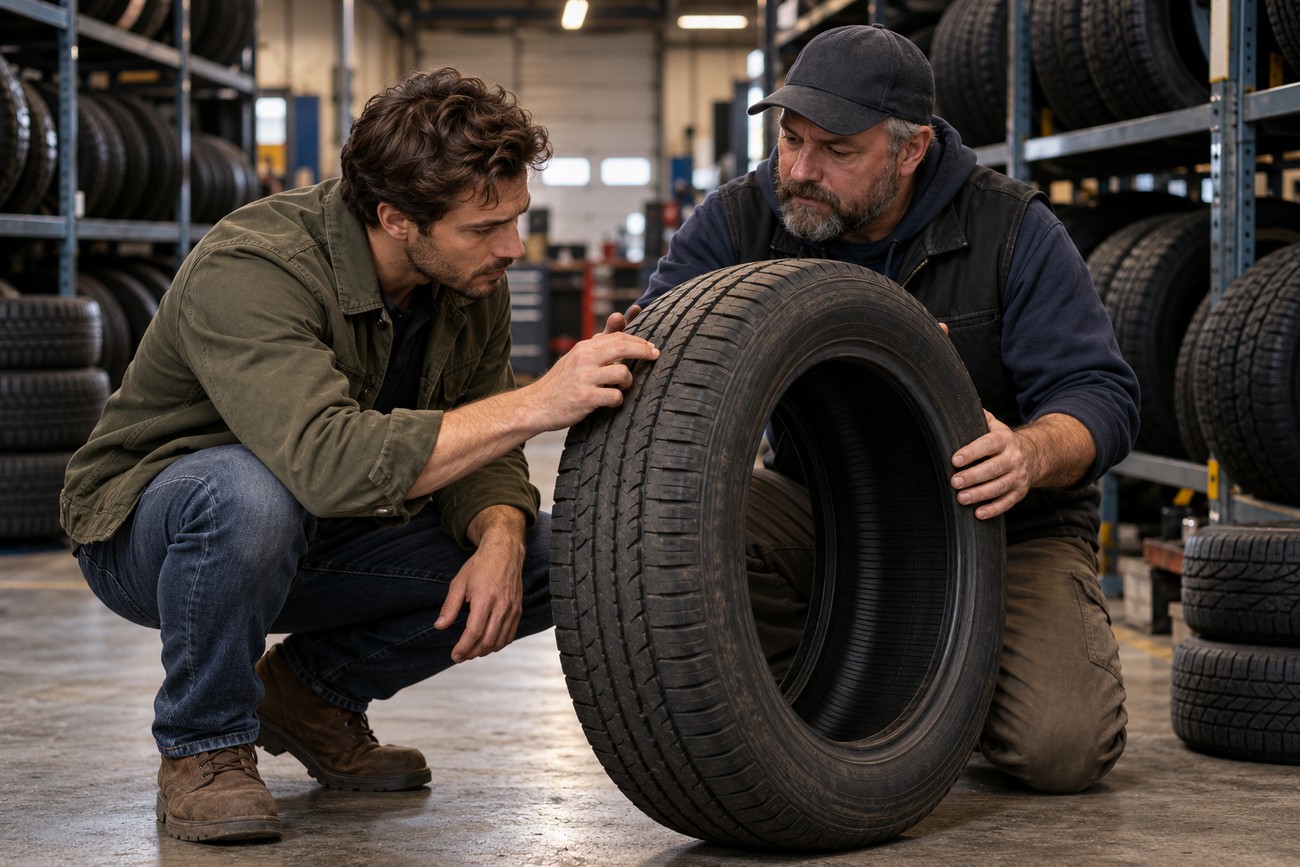
Check the sidewall date code before paying for tires described as new or lightly used. A tire manufactured three to five years ago is not automatically expired if it has been stored properly. Its condition and storage history still matter, and the manufacture date tells you how much of its age has passed before installation.
Ask a seller where older stock was kept and whether it was exposed to heat or sunlight. Examine the sidewalls and tread, including surfaces that may be hidden once the tire is mounted. If the storage account is vague or the tire shows deterioration, a low price does not resolve the safety concern.
Used tires require another question: how were they treated on the previous vehicle? Tread depth and manufacture date cannot reveal every impact, overload, or period of poor storage. Where prior use is uncertain, arrange a tire specialist’s assessment before buying rather than treating deep grooves as proof of a sound tire.
Frequently asked questions
Routine tire care can improve wear, but each maintenance task has limits. Rotation is a useful example: it addresses how tread wears across the vehicle, while aging continues independently.
Does rotating tires extend how long they can safely be used?
Rotation can help tires wear more evenly, which may preserve usable tread when it is done according to the vehicle and tire guidance. It cannot reverse chemical aging, restore lost rubber elasticity, or repair damage. Keep rotating tires as recommended, but assess their age and condition separately before deciding to continue using them.