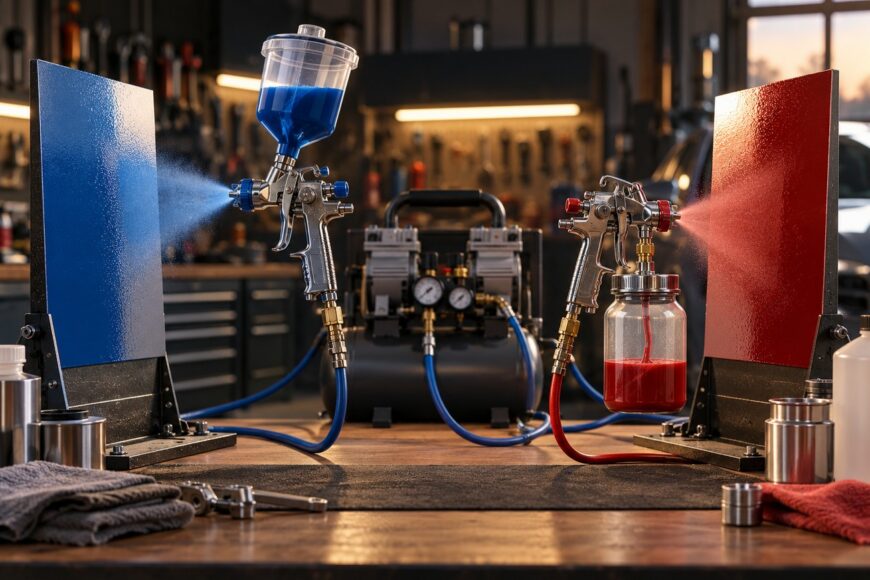
A small compressor and frequent color changes point toward a different spray setup than a long, uninterrupted run across large panels. A gravity-feed gun can make small batches easier to handle; a siphon-feed gun may offer a larger bottle and fewer stops. Those are useful starting points, but neither cup position tells you whether the compressor can keep up or whether the gun will fit inside a cabinet.
Finish quality is harder to predict from the cup alone. The coating, nozzle, air cap, settings, and your spray technique all affect the result. To choose sensibly, start with the paint path: one gun lets paint descend toward the nozzle, while the other uses moving air to pull it up.
- How gravity and siphon feed actually move paint
- Gravity vs. siphon-feed spray guns at a glance
- Compressor capacity: pressure is only half the check
- Viscous coatings, atomization, and the finish-quality myth
- Cup clearance, sightlines, and awkward spray angles
- Batch size, leftover paint, and the real cost of color changes
- Common setup mistakes and what their symptoms mean
- Which feed type fits your work?
- Frequently asked questions
- Which gravity-feed spray gun is best for my work?
- Which is better, a gravity- or siphon-feed paint sprayer?
- What are the disadvantages of using a gravity-feed spray gun?
- Which gravity-feed spray gun is the best?
How gravity and siphon feed actually move paint
A gravity-feed gun carries its cup above the body. Gravity delivers paint toward the nozzle, reducing the work required to supply material at the tip. Atomization still depends on the gun’s specified air supply: paint reaching the nozzle does not become a controlled spray on its own.
A siphon-feed gun draws paint from a lower container through a pickup tube. Airflow creates suction that lifts the paint to the nozzle, so the gun needs enough suction to maintain that climb throughout a pass. If the supply becomes irregular, the spray can pulse or spit even though the bottle still contains paint.
Feed method and atomization method describe different parts of the process. Either feed arrangement may be found on guns with different air-cap designs, including HVLP or conventional designs. A gravity cup does not, by itself, produce finer droplets or a smoother finish; a well-matched siphon gun can produce a high-quality finish too.
The paint path also affects what remains after spraying. A siphon pickup typically leaves some material beneath its intake, while a gravity cup usually lets you start with less paint and leaves less behind. Neither arrangement empties perfectly, and the usable amount changes with cup shape and the angle at which you hold the gun.
Gravity vs. siphon-feed spray guns at a glance
These are buying comparisons, not operating settings. Check the specifications of the gun you intend to use.
| Consideration | Gravity feed | Siphon feed |
|---|---|---|
| Paint path | Top cup supplies paint toward the nozzle. | Air-driven suction lifts paint from a lower container. |
| Pressure examples | Many operate around 15–25 PSI. | Many operate around 25–40 PSI. |
| Compressor check | Match the gun’s specified airflow and inlet pressure. | Match its specified airflow and inlet pressure; suction must remain reliable. |
| Container size | Often compact, though larger cups exist. | Often larger; some hold up to 1 qt. |
| Paint left behind | Usually less; small starting amounts are practical. | Some typically remains below the pickup intake. |
| Access | Top cup may block your view. | Lower bottle may catch on nearby surfaces. |
| Refill rhythm | Small cups interrupt long runs more often. | Larger bottles can extend a run. |
| Cleaning | Short cup-to-nozzle path is often simpler to rinse. | Bottle and pickup passages need attention. |
Compressor capacity: pressure is only half the check
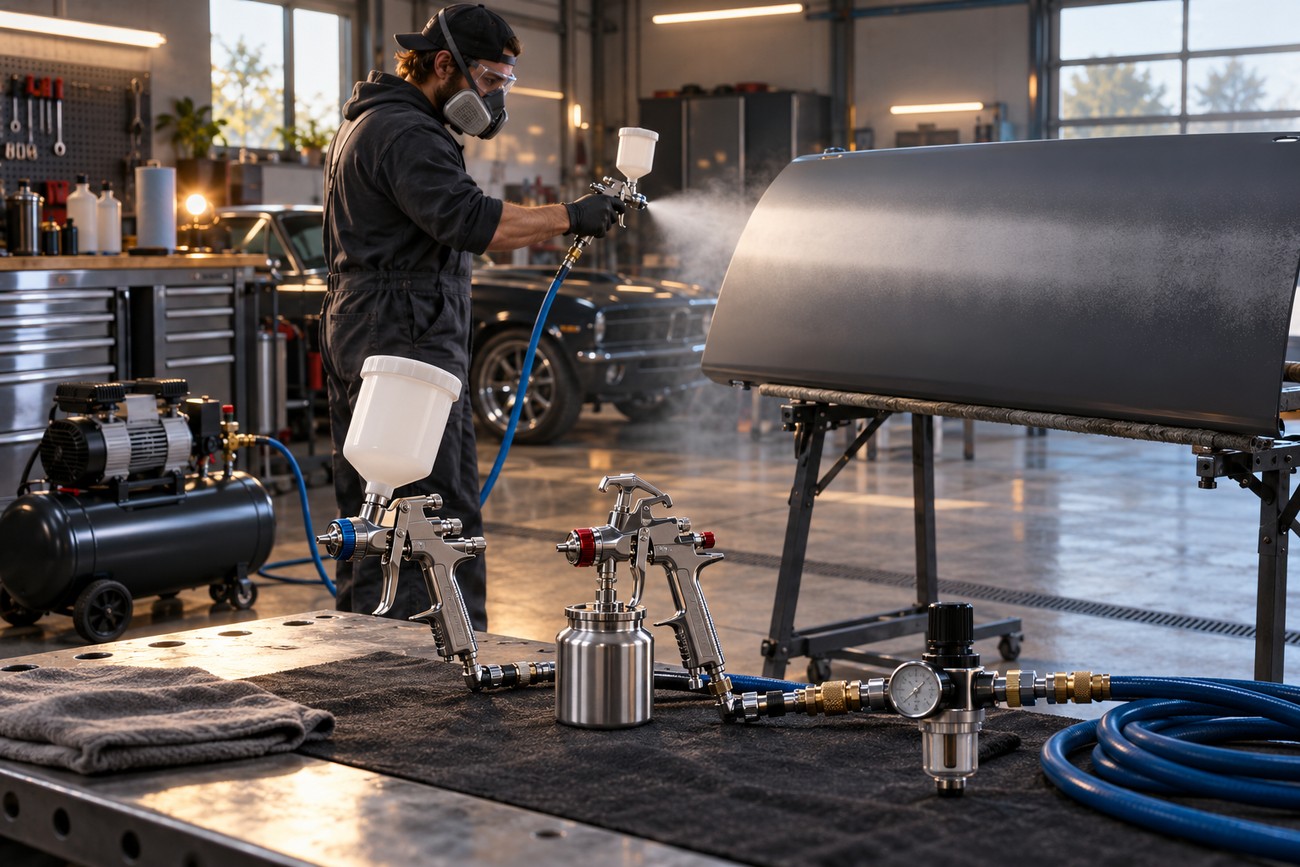
A gun may spray well for a moment on a small compressor, then lose its pattern halfway across a panel. The stored air in the tank can mask a shortfall in sustained output. Once delivery falls behind the gun’s demand, pressure at the gun drops and atomization becomes inconsistent.
Pressure and airflow answer different questions. PSI describes pressure at a stated point; CFM describes how much air the compressor can deliver. Siphon feed needs sufficient suction to lift paint, but neither feed type has a universal CFM requirement. The complete gun and air-cap design determine its specified demand.
If the pattern fades during a full pass after starting cleanly, compare sustained compressor delivery with the gun’s CFM requirement before turning up the regulator. A higher initial reading cannot replace air the compressor cannot supply.
Rough examples put many gravity-feed guns around 15–25 PSI and many siphon-feed guns around 25–40 PSI. Those ranges are not settings to copy. Follow the specific gun’s inlet-pressure specification, and compare its required CFM with the compressor’s delivered output at the relevant pressure.
Set and check inlet pressure with the trigger pulled, when air is flowing, rather than relying on a static regulator reading. Allow for losses through the hose, fittings, and filters. If the compressor cannot sustain the specified supply, a different gun or air cap is a sounder purchase than repeated pressure adjustments.
Viscous coatings, atomization, and the finish-quality myth
Gravity assistance can help feed a thicker compatible coating because the gun does not have to lift it from a bottle. That advantage has limits. The coating still needs a suitable viscosity, an appropriate nozzle, and preparation that follows its manufacturer’s instructions; gravity cannot make an unsuitable material spray correctly.
A siphon gun may sputter when a thick material does not rise steadily through its pickup tube. Before treating that as a reason to abandon the feed type, check the coating instructions, nozzle choice, pickup passage, and available air supply. Indiscriminate thinning or pressure increases can introduce a different set of finish problems.
A smooth coat depends on consistent material delivery and effective atomization at a suitable spray distance and speed. If the droplets remain coarse, changing feed type alone may leave the result unchanged. Test the prepared coating with the intended nozzle and air settings on a sample before judging how it will lay down on the workpiece.
Claims that gravity always gives a finer finish, or that siphon always wastes more paint, overstate the difference. Extra pressure used to compensate for a poor siphon setup can increase mist, but overspray and transfer also depend strongly on gun design, settings, coating, and technique. Either system can finish well when those factors are matched.
Cup clearance, sightlines, and awkward spray angles
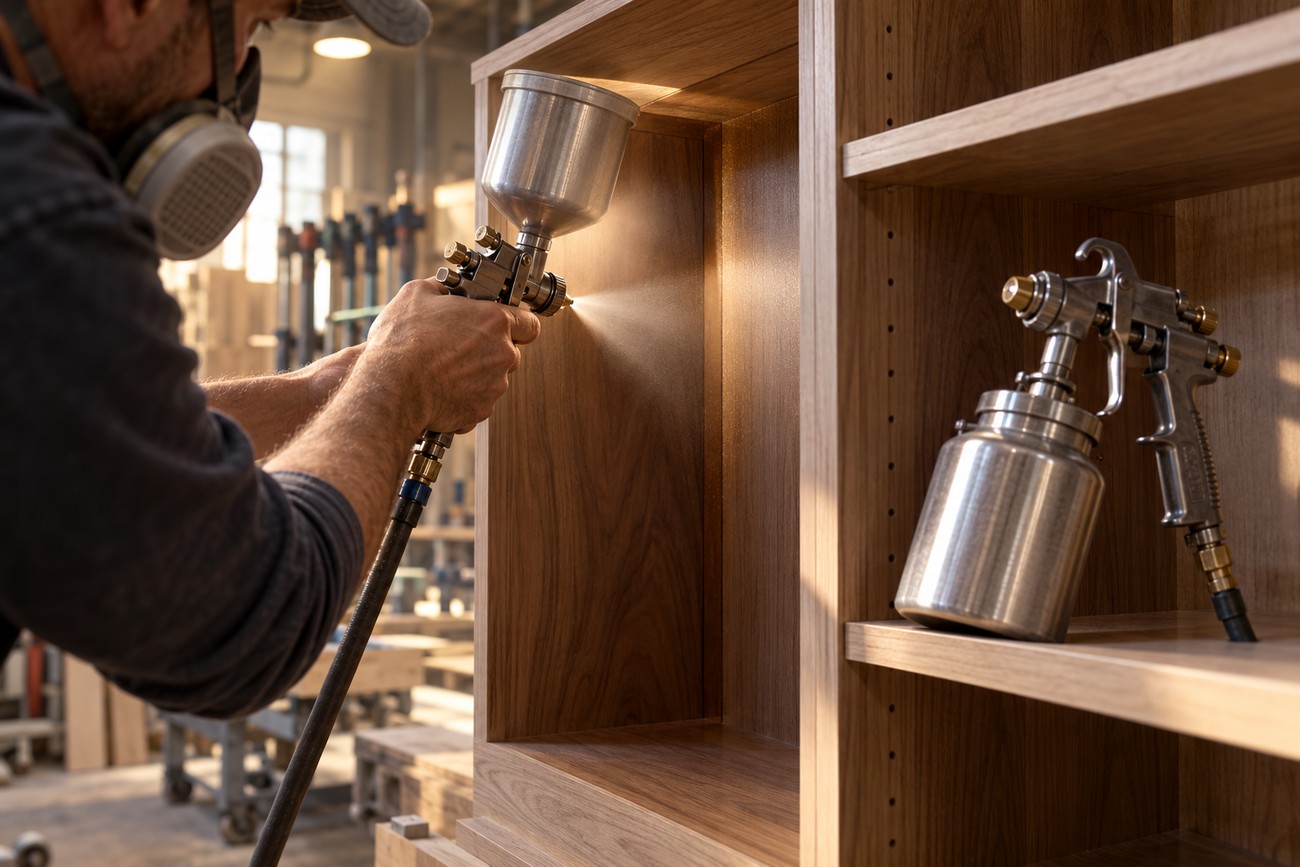
A lower siphon bottle adds bulk beneath the grip. It can catch on a shelf while you spray the back of a cabinet, or prevent the nozzle from reaching a recessed edge at a workable angle. Container capacity offers little benefit if you cannot keep the gun positioned correctly through the pass.
A top-mounted gravity cup solves some clearance problems and creates others. On small parts, it may sit directly in your sightline to the edge you are following. Cup shape, gun angle, and which hand you use can matter more here than a broad claim that one feed type is better for detail work.
Strong tilt can expose a gravity gun’s outlet to air as paint moves away from it. A siphon pickup can also lose contact with the paint when its bottle is tipped sharply. Neither standard arrangement should be assumed to spray reliably upside down; confirm the allowed working angles for the particular gun and container.
Before buying for tight work, hold a gun of similar shape near the actual opening, with enough space for your hand and hose. Check whether its nose reaches the surface while the cup stays within its usable angle. A side-mounted cup may improve access or visibility, but its position alone does not establish whether the gun is gravity- or siphon-fed.
Batch size, leftover paint, and the real cost of color changes
A gravity cup can take a very small amount of paint for a shade test, a chip repair, or a trial pattern. That keeps the starting quantity modest when the coating is expensive. On a long run, however, a small cup means frequent refills and more chances to pause between adjoining passes.
Siphon containers are often larger, sometimes up to 1 qt, although larger gravity cups are available. Their pickup tubes typically leave paint below the intake, so a nearly empty bottle may stop feeding before all the coating is used. Count that remainder when planning a small batch; it does not mean every siphon job uses more paint overall.
Color changes reveal a second cost: the bottle and pickup passages need cleaning, often with more rinsing than a simple gravity cup. There is a useful exception for repeated production colors. Prepared, compatible swap-in bottles can shorten the changeover, provided the gun’s shared paint passages are cleaned appropriately between materials.
Small-cup refills deserve extra care with two-component coatings. Repeatedly mixing tiny batches creates more opportunities to miss the specified ratio, while mixing a large batch solely to avoid refills can leave paint beyond its usable pot life. Measure each mix as instructed, and plan cup capacity around the coating’s working time.
Common setup mistakes and what their symptoms mean
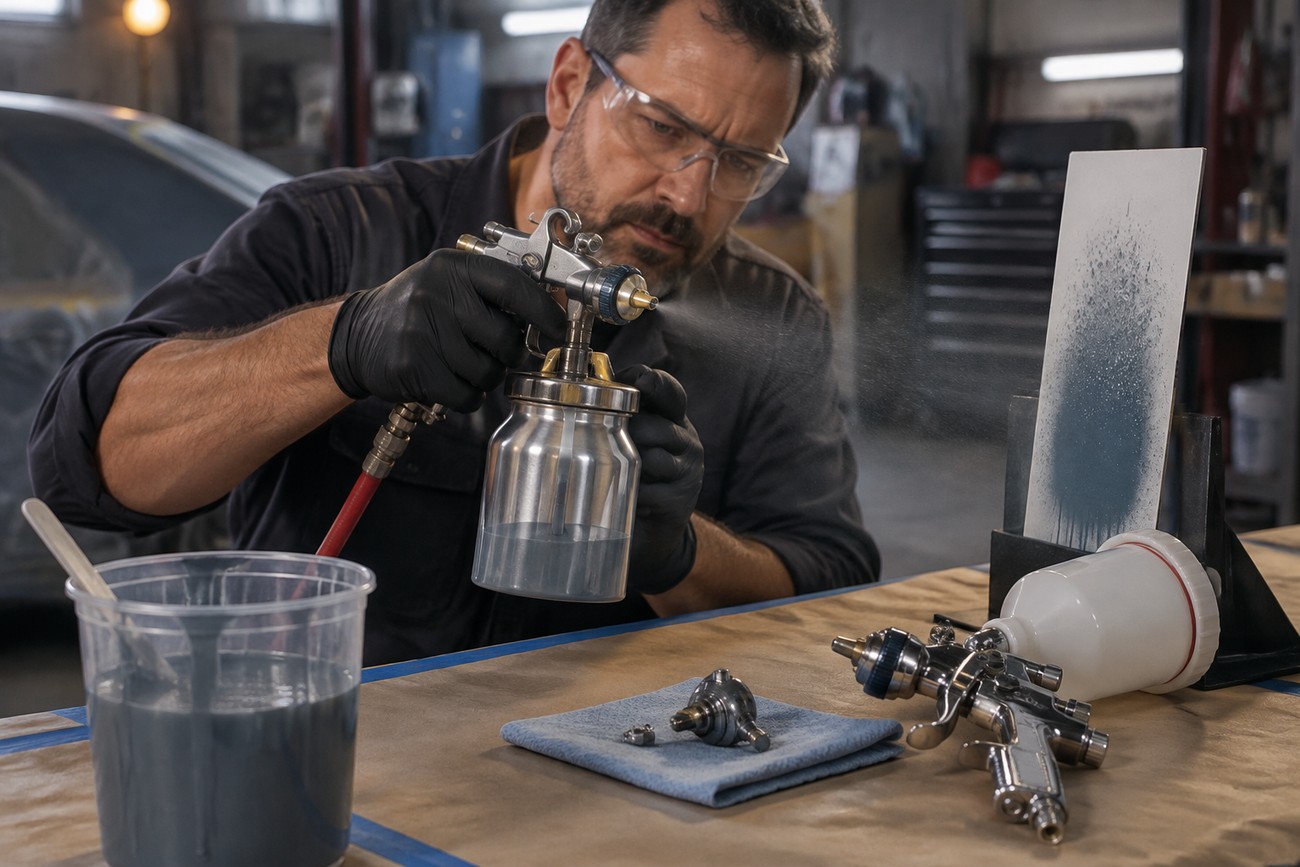
Siphon sputtering may mean the gun cannot lift a coating that is too viscous for its pickup and setup. First check that the pickup remains submerged and its passage is clear. Then confirm the coating’s preparation, nozzle suitability, and air supply against the relevant instructions before considering a permitted adjustment.
A gravity gun that struggles with thick paint is not necessarily starved for pressure. Gravity helps deliver material, but a nozzle that is too small or a coating outside its recommended viscosity can still produce an uneven pattern. Check those specifications first, then test the approved setup on scrap rather than forcing the material through.
Excess mist after increasing pressure is a reason to reassess, not to assume the feed system is inherently wasteful. Verify pressure at the gun with the trigger pulled and compare it with the gun’s specification. Pattern width, material flow, spray distance, and overlap can all contribute to overspray when they are poorly matched.
A pass that cuts out only near an edge may point to cup angle rather than compressor capacity. Reposition the work or adjust your approach while keeping the pickup supplied; do not assume either standard cup will tolerate extreme tilt. If frequent refills instead break your rhythm, choose a suitable larger container for the next run.
Which feed type fits your work?
Start with compressor compatibility. Compare each candidate gun’s specified CFM and inlet pressure with the air your compressor can sustain, then confirm the gun and nozzle support your coating. A feed preference has little value if the air supply fades during a pass or the material cannot be prepared as specified.
For samples, small repairs, and frequent one-off color changes, a gravity cup’s modest starting quantity and shorter cleaning path may save material and bench time. For furniture panels or automotive work, either arrangement can be suitable. Choose cup size to match the length of a pass and check that the cup clears the surrounding work.
Larger repeat jobs may favor a siphon setup with a substantial bottle, particularly where prepared bottles support recurring colors. A larger gravity cup may serve the same run-length need. Include the filled gun’s weight and your ability to hold a steady angle over a long session in that comparison.
Finally, check visibility and reach with the actual gun geometry, rather than deciding from a picture of cup position. A suitable gun, air supply, coating preparation, and setup matter more than declaring a universal winner. Both feed types can produce a high-quality finish under the right conditions.
Frequently asked questions
The answers below focus on matching a gun to your coating, compressor, and batch size. Cup position also affects visibility and access. Compare the specifications and handling of individual guns before choosing.
Which gravity-feed spray gun is best for my work?
Choose a model that supports your coating and offers an appropriate nozzle option, then verify its specified airflow against your compressor’s delivered output. Compare cup sizes for your usual batch, the availability of serviceable parts, and how the filled gun feels in your hand. A comfortable trigger and accessible adjustments matter during a full pass more than an impressive feature list.
Which is better, a gravity- or siphon-feed paint sprayer?
Neither is better for every job: gravity feed is often easier to use with small quantities, while a suitable siphon setup can reduce refills on longer runs. If two guns meet your coating and air-supply requirements, make the final choice by testing whether each cup clears the work and allows an uninterrupted pass.
What are the disadvantages of using a gravity-feed spray gun?
The top cup can obscure small details, a compact cup may need frequent refilling, and steep tilt can interrupt feed. Check the view from your normal spraying position and the gun’s permitted working angles. For two-component paint, plan refills so every small mix follows the specified ratio and remains within its usable working time.
Which gravity-feed spray gun is the best?
There is no single best gravity-feed gun across coatings and compressors. If you are comparing otherwise compatible models, favor the one whose nozzle and air-cap options cover your actual materials and whose seals, cup, and other wear parts can be obtained when needed. Confirm that you can clean and reassemble it according to the manufacturer’s instructions before relying on it for frequent color changes.