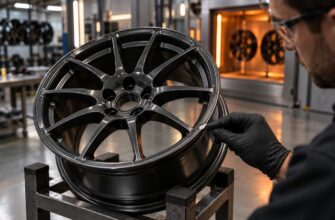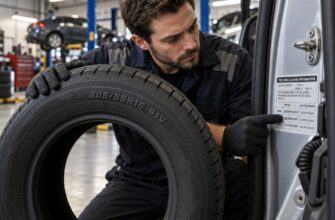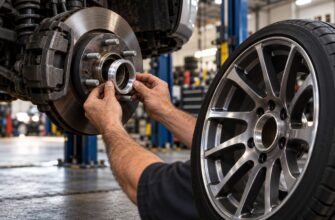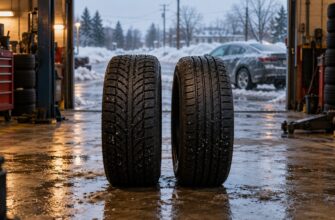
An affordable cast wheel and a costly forged alternative can look much the same in a product listing. The forged option may offer a useful weight saving, but its price can be hard to justify if your driving rarely tests that advantage. A pothole can damage either wheel, and the cost of dealing with that damage matters as much as the initial purchase.
Fitment complicates the choice further. A wheel can have the right diameter and still lack the load rating or brake clearance your vehicle needs. The useful comparison is between specific wheels that fit the same car, rather than between the words “cast” and “forged” on their own.
- How casting and forging change a wheel
- Forged vs. cast wheels at a glance
- Does a lighter wheel make a noticeable difference?
- Potholes, cracks, and the limits of wheel repair
- Fitment and load rating matter more than the label
- What forged, flow-formed, and replica labels conceal
- Which wheel is worth buying for your driving?
How casting and forging change a wheel
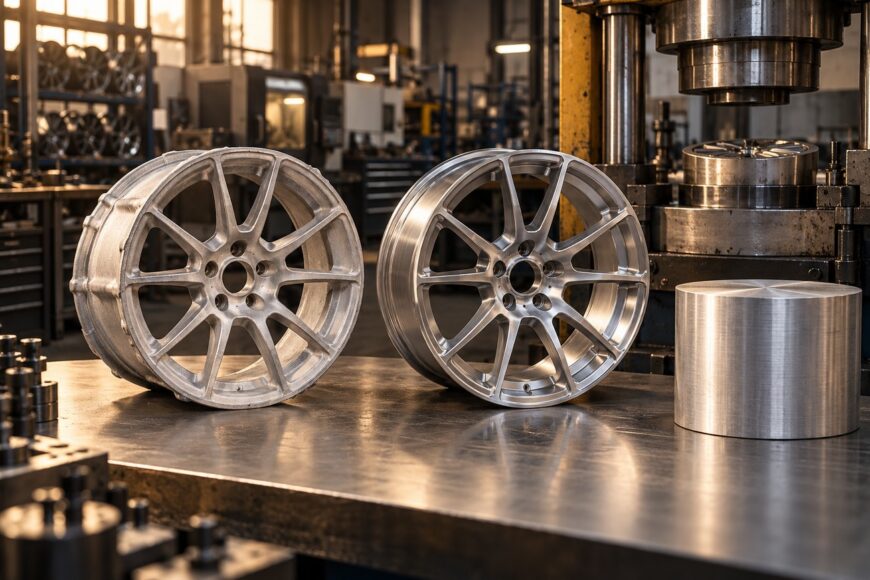
A cast alloy wheel begins with molten metal poured into a mold. Casting can produce complex shapes efficiently, which helps explain why cast wheels generally cost less to make and buy. The process can also leave variations in the metal that designers must account for when setting spoke and rim dimensions.
Forging shapes a solid metal blank under substantial pressure, deforming and consolidating the material before the wheel is finished by machining. A well-designed forged wheel can provide greater strength at lower mass than a comparable cast wheel. The additional processing and machining generally bring a higher purchase price.
That strength-to-weight potential is a design opportunity, not a property every forged wheel delivers. A maker might use it to reduce mass, support a demanding load requirement, or create a particular spoke shape. A forged wheel with a wide barrel and substantial styling features can still weigh more than a simpler cast alternative.
Alloy selection, heat treatment, spoke geometry, and manufacturing control influence both methods. Two cast wheels can differ considerably in quality, as can two forged wheels. Judge the finished product by its specifications and evidence of suitable testing; the manufacturing label alone cannot establish whether it belongs on your vehicle.
Forged vs. cast wheels at a glance
These are typical tendencies, not rankings of every wheel on sale. Compare specific models with suitable load ratings and the same dimensions before drawing a conclusion.
| Consideration | Cast alloy | Forged alloy |
|---|---|---|
| Method | Molten alloy is shaped in a mold. | A solid blank is deformed, then finished. |
| Price | Generally lower. | Generally higher. |
| Weight | Depends on design and load rating. | Can be lower in a comparable design; check actual weight. |
| Severe impact | May crack or deform. | May deform or crack; neither type is indestructible. |
| Selection | Often a broader range at lower prices. | A suitable size and offset may be harder to find. |
| After damage | Repair depends on damage and maker guidance. | The same applies; replacement can be costly. |
Does a lighter wheel make a noticeable difference?
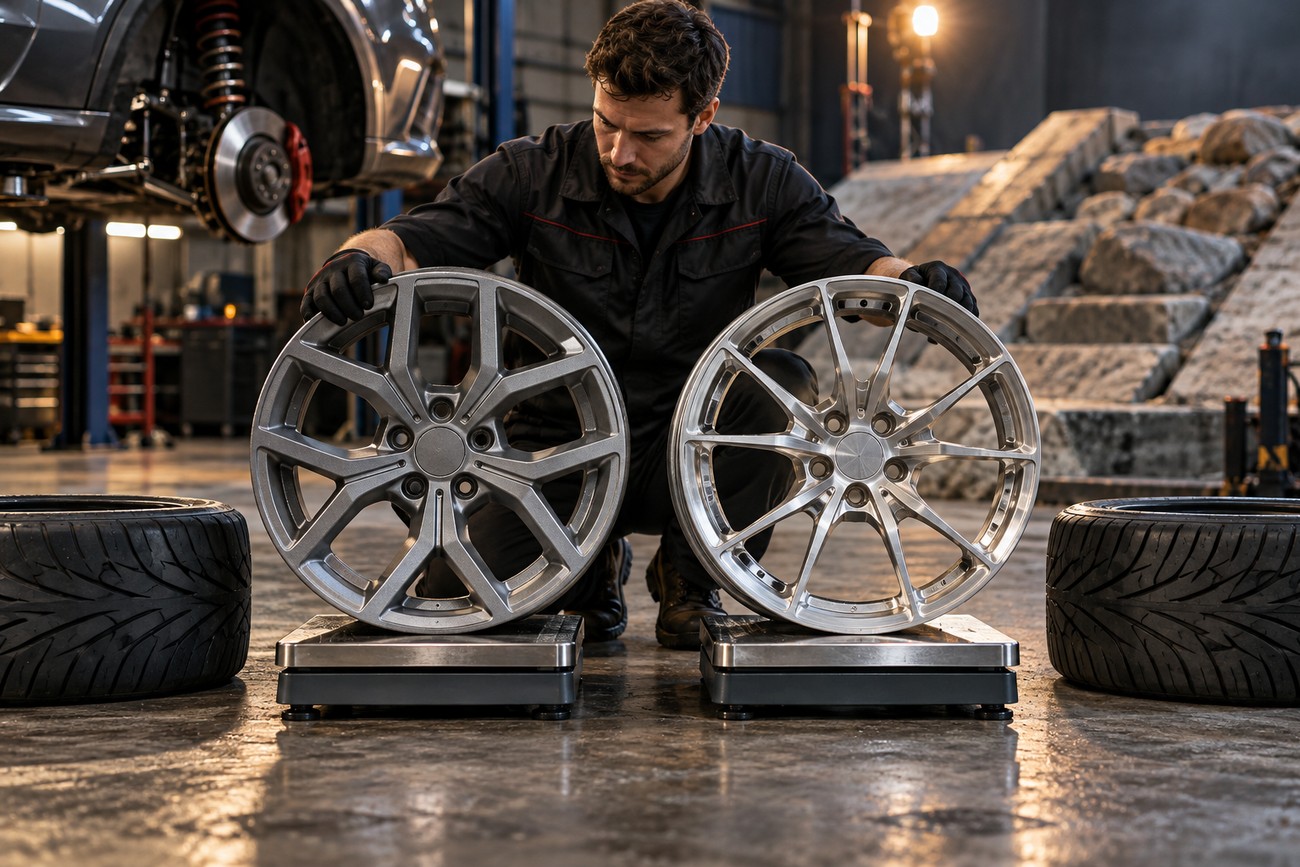
Wheels and tires form part of a vehicle’s unstrung mass: components the suspension must control as it follows the road. Reducing wheel mass may help the suspension respond to uneven surfaces, particularly where bumps arrive in quick succession. Whether you notice a change depends on the vehicle, tires, suspension, and size of the actual weight difference.
Advertised forged-wheel savings of 20–50% are not a dependable figure for a specific comparison. Check the listed or verified weight of each wheel at the same diameter and width, with a suitable load rating for the vehicle. A claim based on a different size or a lighter-duty wheel tells you little about the pair you can actually buy.
Diameter and width can outweigh the effect of the manufacturing label. Moving to a larger wheel may add enough mass to erase the saving you expected from forging. It may also require a lower-profile tire, leaving less tire sidewall between the rim and a pothole and changing how the car rides on broken pavement.
A lighter wheel does not guarantee quicker acceleration, better fuel economy, or greater comfort. Tire choice and overall wheel-and-tire size also affect how the car behaves. If weight is your reason for paying more, compare complete, correctly specified setups rather than relying on a claimed saving for the bare wheel.
Potholes, cracks, and the limits of wheel repair
A severe pothole strike can bend a rim, create a crack, or damage a tire without making the wheel’s condition obvious from outside. Forged wheels may tend to deform under a severe impact, while cast wheels may tend to crack. Either type can deform or crack, however, so a bent forged rim and a cracked cast rim are possibilities rather than rules.
The result depends on the force and direction of the strike, tire protection, wheel geometry, alloy, and heat treatment. A strong wheel is not immune to damage, and a sound cast wheel is not destined to crack on rough roads. Keeping tires correctly inflated helps them do their job, though pressure cannot make a hard impact harmless.
After a significant strike, check for air loss, visible damage, new vibration, or a change in steering feel. Damage can occur on the inner rim, where it is easy to miss while the wheel is fitted. Have the wheel and tire inspected, including a check for runout if a vibration or suspected bend remains; continuing to drive on a damaged assembly may worsen the problem.
Do not assume a wheel is repairable because a shop can make it look round again. Ask whether the manufacturer permits repair of that type and location of damage, then have the individual wheel assessed. A crack, substantial deformation, or damage near a critical area may make replacement necessary even if a cosmetic repair appears possible.
Cost belongs in that decision too. Inspection and a permitted repair can make sense for limited damage, but repeated work on a costly wheel may be less attractive than replacement. Before buying an uncommon forged model, consider whether you could obtain a matching replacement if one wheel were damaged.
Fitment and load rating matter more than the label
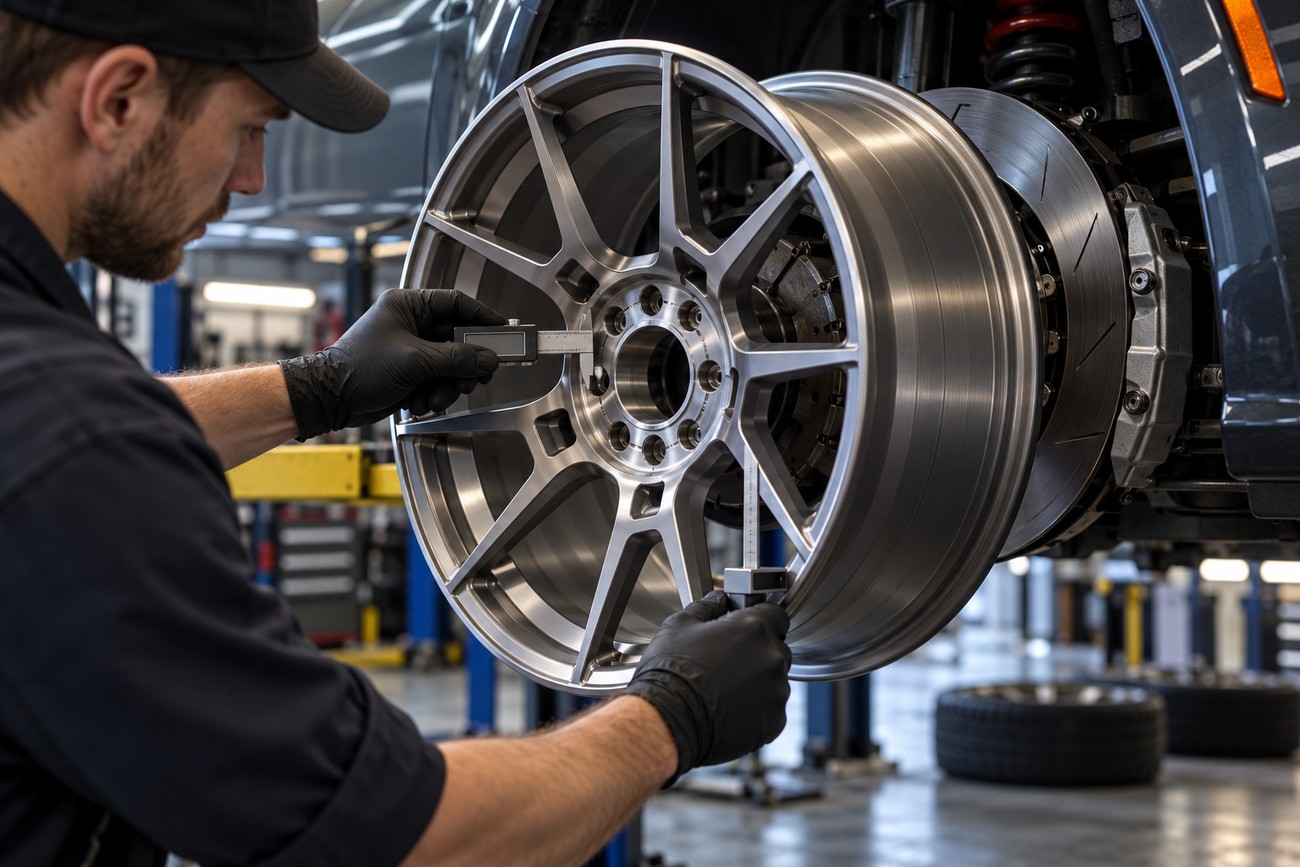
Start with the requirements for your specific vehicle and axle. Confirm that the wheel’s load rating is appropriate, then check diameter and width against the permitted tire sizes and available space. A forged label cannot compensate for inadequate load capacity, while a properly specified cast wheel can serve ordinary driving well.
Next verify the pitch circle diameter (PCD), center bore, and offset. The PCD must match the hub’s bolt pattern, and the center bore needs a suitable centering arrangement. Offset changes where the wheel sits relative to the hub; an unsuitable value can reduce clearance to the suspension or body even when the wheel bolts on.
Matching diameter, PCD, and offset still does not prove brake clearance. A spoke profile can meet a caliper even when the wheel’s basic dimensions appear correct.
Check brake clearance with vehicle-specific fitment information or a reliable physical test, accounting for the specified mounting hardware. Also confirm clearance at the inner barrel, suspension, and body through steering and suspension movement. A listing that says a wheel “fits” is less useful than a specification that identifies the vehicle configuration it was checked against.
Upsizing deserves its own cost check. A larger diameter often pairs with a lower-profile tire, which can leave the wheel more exposed to impacts and make replacement tires more expensive. The visual change may be worthwhile to you, but it should be weighed against road conditions, tire availability, and the car’s approved fitment range.
What forged, flow-formed, and replica labels conceal
“Forged” can describe a wheel made from a forged blank and subsequently machined, including a one-piece design. Product descriptions may also refer to forged components in a multi-piece construction. Those details matter: a term used for one component does not necessarily describe how the entire wheel was made.
Flow forming is a different process. It starts with a cast wheel or preform and works the barrel as it rotates; the center does not thereby become fully forged. “Rotary forged” is sometimes used in marketing for this approach, so ask which parts were cast, worked, or forged instead of treating the phrase as proof of full-wheel forging.
An OEM-like appearance offers even less evidence. A replica can resemble an original wheel while differing in weight, load rating, balance, or manufacturing quality. Look for traceable specifications for the exact model and size, including load rating, fitment details, and actual weight, rather than assuming the familiar shape carries familiar properties.
Wheel evaluation commonly includes fatigue, impact, and dimensional checks, but applicable requirements vary by market and vehicle category. Ask for relevant product-specific documentation and confirm that it covers the wheel you intend to buy. Consistent dimensions and quality control matter whether the wheel is cast, flow-formed, or forged.
Which wheel is worth buying for your driving?
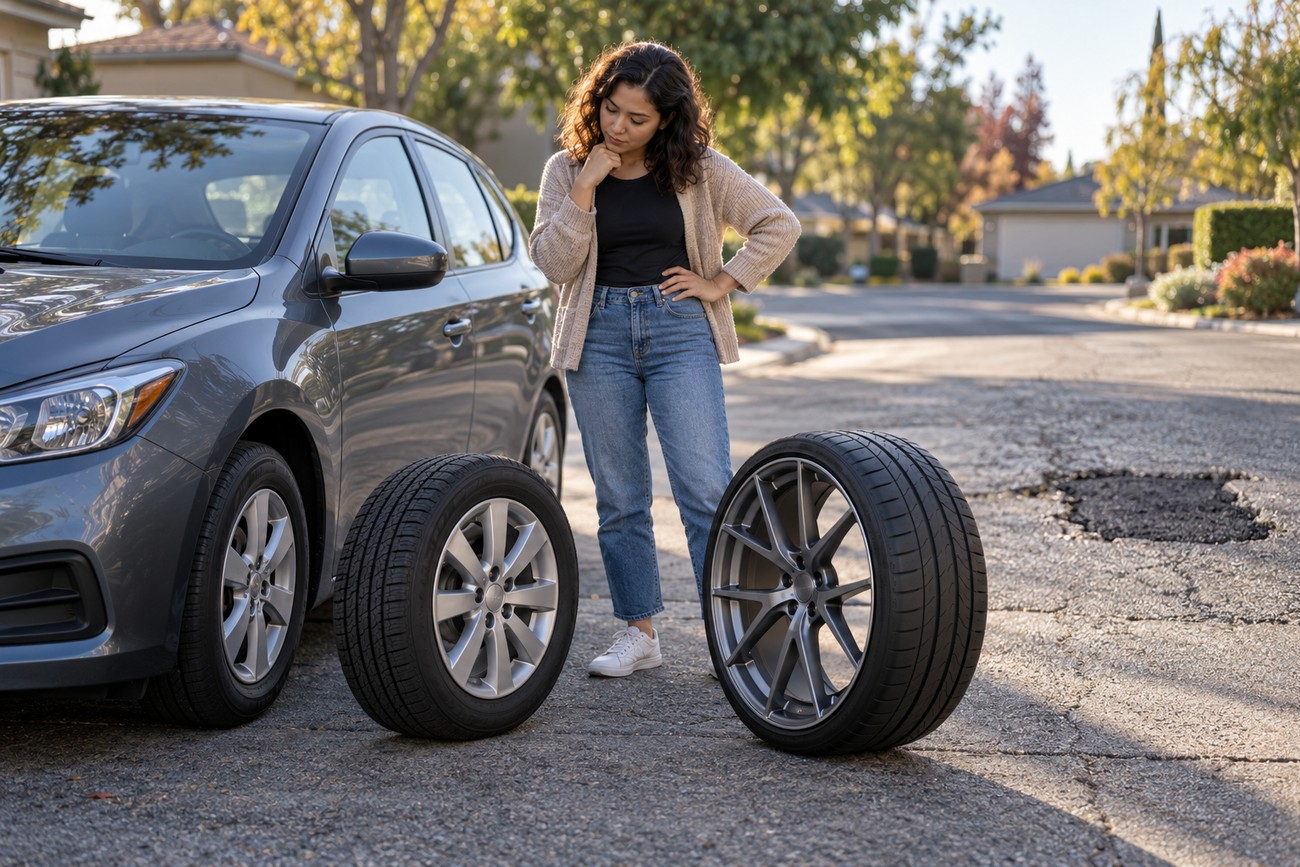
For ordinary commuting, a quality cast wheel with the correct load rating and fitment is often the practical purchase. Its lower typical price may leave more room in the budget for suitable tires and replacement if road damage occurs. Paying for forging offers little value if the particular forged wheel is no lighter or better suited to your needs.
On rough roads, compare tire sidewall and wheel diameter before chasing the lightest bare wheel. A suitable lighter wheel may improve suspension response over uneven surfaces, but a larger rim and lower-profile tire can work against the benefit you wanted. Check the weight and cost of the complete wheel-and-tire setup.
Heavy vehicles and track days place different demands on a wheel. Load capacity, fatigue performance, clearance, and suitability for the intended use deserve attention alongside mass. A suitable lighter forged wheel may justify its premium where those priorities matter, provided its specifications and documentation support the choice.
Availability is a less visible ownership cost. The forged wheel you prefer may come in fewer suitable offsets or have a costly matching replacement after a pothole strike. A heavy forged design is not automatically a better buy than a lighter cast wheel that meets the same vehicle requirements.
Choose a properly specified, documented wheel first. Once load rating, fitment, and intended use are settled, compare verified weight, tire options, purchase price, and replacement cost. That gives you a sounder reason to pay a forging premium than the process name or badge alone.