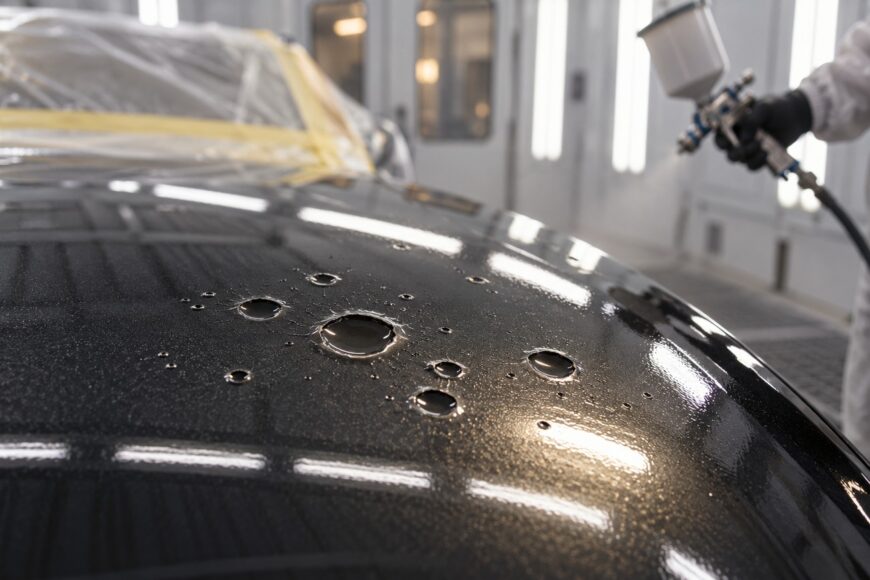
Few paint defects are more frustrating than seeing fisheyes appear seconds after spraying a panel that looked clean. These small circular craters form when the fresh film pulls away from isolated spots instead of wetting them evenly.
A fisheye is a crater caused by localized failure of the fresh coating to wet the surface. Oil, wax, silicone, grease, and incompatible chemicals can repel the coating, while problems in the coating or application process can create a similar result.
The repair depends on the film’s condition and the source of the contamination. A wet coating may need solvent removal, a fresh basecoat may require flash-off and a light mist coat, and a cured film generally requires sanding below the crater level. An additive or another heavy wet coat cannot solve every case.
- What Causes Fisheyes in Fresh Paint?
- Diagnose the Contamination Before You Repaint
- How to Fix Fisheyes in a Wet Coating
- How to Repair Fisheyes After the Paint Dries
- Mistakes That Make Fisheyes Worse
- Prevent Fisheyes on the Next Paint Job
- Frequently Asked Questions
- What should I do if fisheyes appear in a fresh basecoat?
- Why can a fisheye remain after light sanding?
- Which parts of a spray setup should I inspect when fisheyes keep returning?
What Causes Fisheyes in Fresh Paint?
Fisheyes are craters caused by a localized loss of wetting. The coating initially flows across the panel, then retreats from a contaminated spot and leaves a circular depression with a raised edge. The same defect can occur with different coating systems and on different substrates.
Common repellents include oil, wax, silicone, grease, and incompatible chemicals. These materials may come from detailing products, repair products, the coating itself, or the spray process. A problem in the coating, the surface, or the application process can produce the same visible symptom.
A panel can look clean while carrying a thin molecular film that affects wetting. Silicone polish, wax, or a care product may leave little visible residue, yet the fresh paint can still react immediately after spraying. This is why a visual inspection alone cannot confirm that the surface is ready.
Fisheyes are not a normal or unavoidable result of fresh painting. Their appearance should prompt a search for contamination, material incompatibility, or an application problem before more paint is applied.
Diagnose the Contamination Before You Repaint
Diagnosis should begin with source tracing rather than cosmetic repair. Review products recently used on the panel, including silicone products, waxes, polishes, and cleaning chemicals. Also consider whether the substrate, primer, or paint materials are compatible with the next layer.
Repeated fisheyes usually indicate an unresolved contamination source. Repainting the panel without finding that source can produce the same craters again, even when the second preparation appears careful. A clean-looking surface does not prove that silicone, oil, or wax is absent.
Recurring fisheyes should trigger a process-source investigation. Check recently used silicone or wax products and the complete air path before changing paint or adding an eliminator.
Inspect the spray equipment as part of the panel preparation. The compressor, hoses, filters, oil contamination, and moisture can introduce contaminants into otherwise clean air. The defect may therefore come from the air delivery system rather than from the panel or the paint mix.
How to Fix Fisheyes in a Wet Coating
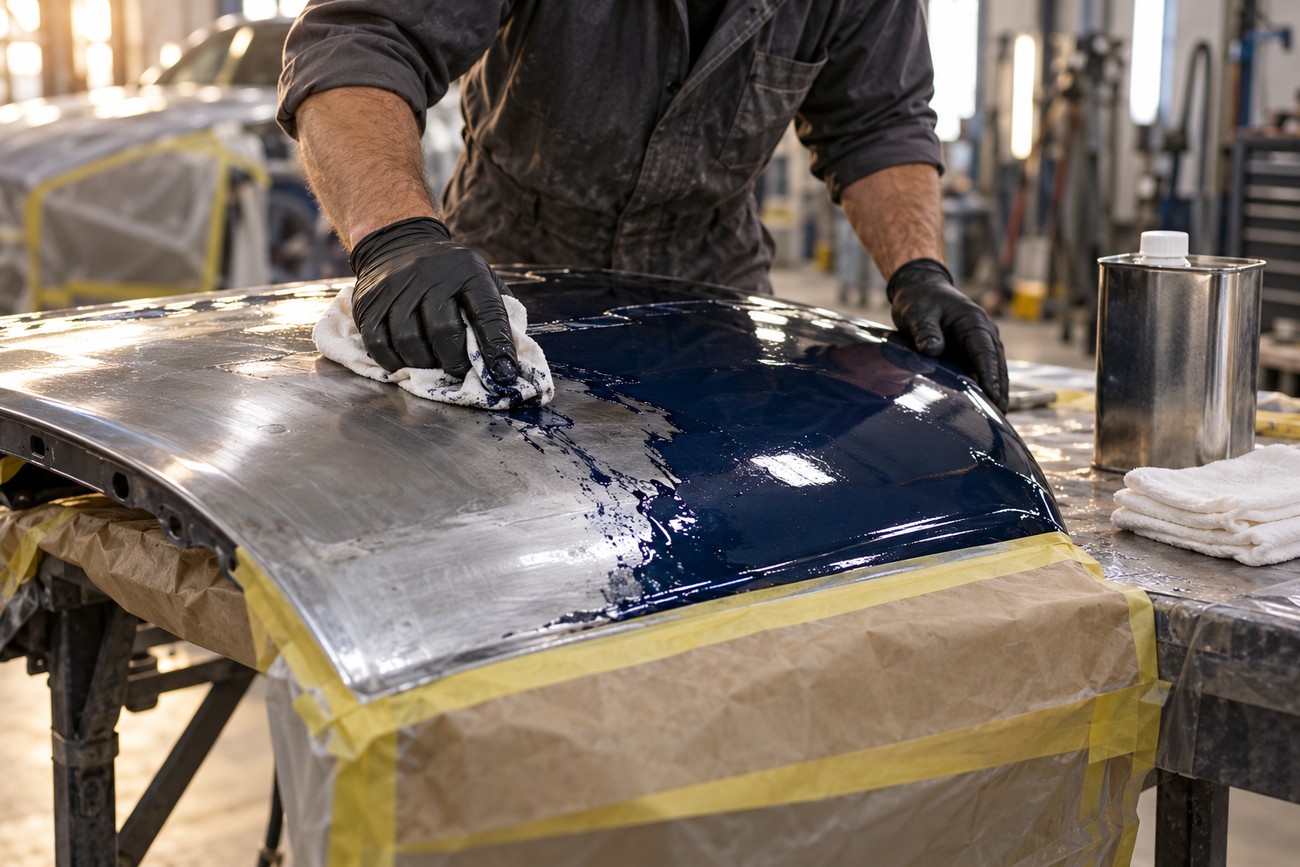
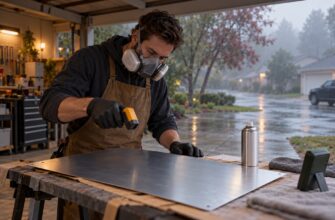
For a still-wet coating, the basic repair sequence is to remove the coating with the appropriate solvent, clean the surface, dry it with clean rags, and reapply. Removing the wet film gives you a chance to remove the contaminant instead of burying it beneath another layer.
Thinner or reducer is not a substitute for a compatible solvent cleaner. Reducer is intended to adjust the coating’s application properties, while a designated solvent cleaner is selected for surface preparation. Using the wrong product can spread contamination, leave residue, or contribute to another wetting failure.
Simply flooding the craters with another wet coat can seal in the problem and create more visible defects. If the contaminant remains active, the new film may pull away in the same locations. Stop, remove the affected film, and restore the surface condition before continuing.
Fresh basecoat may follow a separate manufacturer-approved procedure. Allow the solvent to evaporate, then apply a light mist coat when the coating system permits it. This exception does not authorize a heavy wet layer or the use of fisheye eliminator in a layer where the manufacturer prohibits it.
How to Repair Fisheyes After the Paint Dries
Once the coating has dried, sand below the fisheye level until the surface is smooth, then clean and repaint. The sanding must remove the crater rather than merely dulling its edge. Any remaining depression can show through the next application.
A fisheye may extend deeper than the upper layer. For that reason, light sanding can leave the defect intact, and deep defects can require removal of a significant part of the coating. Preserving maximum film thickness is not always possible when the crater reaches into lower layers.
After sanding, clean the exposed surface with a compatible solvent cleaner and wipe it dry with clean rags. Repainting over sanding dust, residue, or the original contaminant can restart the same failure. The panel’s condition and the paint system’s recoat requirements should guide the next application.
Sanding repairs the surface, but it does not eliminate an active contamination source. If fisheyes return after the repair, inspect the products, coating materials, application conditions, and air system before removing more paint.
Mistakes That Make Fisheyes Worse
Using thinner or reducer as a degreaser is a documented preparation error. The correct solvent cleaner must be compatible with the coating system and intended for surface cleaning. A product that helps paint spray correctly is not automatically suitable for removing surface contamination.
Silicone polishes, waxes, and care products can leave a repellent film even when the panel looks dry and bright. Excessively thick base or clear layers can also intensify the visible defect by giving the coating more material to pull away from the contaminated spot.
Fisheye eliminator requires system-specific judgment. It may alter coating flow, but it does not remove contamination. The cited manufacturer guidance prohibits adding it to primer or base color, so broad internet advice cannot override the product instructions for the coating system in use.
Compressed air is another common blind spot. Oil and moisture from the compressor, hoses, or filters can recontaminate a prepared panel during spraying. Changing the paint while leaving the air path unchecked treats the symptom and leaves a possible source in place.
Prevent Fisheyes on the Next Paint Job

Start preparation with detergent and hot water to remove general dirt and water-soluble residue. Follow with a compatible solvent cleaner, then wipe the surface dry with clean rags. These stages perform different jobs, so one product should not be treated as a universal replacement for the other.
Control the complete coating process, including material compatibility, application conditions, and film build. Follow the product’s mixing and recoat instructions, and avoid using excessive base or clear thickness to hide surface problems. A controlled film gives contamination fewer opportunities to become a pronounced crater.
Check the air supply for oil and moisture before spraying. The compressor, hoses, filters, and related air-management equipment all form part of the paint process. A final wipe cannot compensate for contamination delivered continuously through the spray air.
The decision rule is simple: identify the source first, then choose the repair route. Remove a wet film with solvent, use a permitted light mist coat for a fresh basecoat after solvent flash-off, or sand a cured film below the crater level before cleaning and repainting.
Frequently Asked Questions
What should I do if fisheyes appear in a fresh basecoat?
Let the solvent evaporate and follow the coating manufacturer’s basecoat procedure. Where the system permits it, apply a light mist coat after flash-off instead of immediately flooding the area with another heavy wet layer.
This approach applies specifically to a fresh basecoat and does not remove the need to identify contamination. Do not add fisheye eliminator to the base color where the manufacturer prohibits it.
Why can a fisheye remain after light sanding?
The crater may extend below the upper layer, so light sanding can remove only its surface edge. Continue sanding below the crater level until the area is smooth, while recognizing that a deep defect may require removal of a significant part of the coating.
If the defect returns after repainting, sanding depth was only part of the problem. An active contaminant on the panel, in the materials, or in the application process still needs attention.
Which parts of a spray setup should I inspect when fisheyes keep returning?
Inspect the compressor, hoses, filters, and the complete air path. Look for oil contamination and moisture that could be carried into the spray gun and deposited on the panel.
Repeated defects should lead to a system-wide inspection rather than a panel-only inspection. If the air supply remains contaminated, careful surface preparation may be undone during spraying.