Modern turbo engines can feel flat for a moment at low engine speed, before enough exhaust energy reaches the turbine. Electric boost addresses that delay with an electrically driven intake-air device or an electric motor that adds torque before the combustion engine reaches its effective operating zone. Marketing often presents the result as a major power upgrade, although the practical gain is usually more noticeable in response and elasticity than in sustained peak acceleration.
The trade-off is electrical and thermal. A compressor or motor can deliver a sharp intervention, yet battery state, voltage stability, cooling, software calibration, and the available duty cycle determine how often that intervention can be repeated. The useful question is therefore less about a headline horsepower figure and more about where the assistance arrives, how long it lasts, and how consistently the car can reproduce it.
- What Electric Turbochargers and Hybrid Boost Actually Mean
- How the Electrical and Hybrid Architectures Deliver Torque
- Electric Turbo vs Hybrid Boost: Which System Does What?
- Why the Car Feels Faster Even When Peak Power Barely Changes
- The Real Limits: Battery Current, Heat, and Duty Cycle
- Why Owners Notice Inconsistent Boost, Cost, and Wear
- How to Judge an E-Boost System Before Buying or Modifying
- Electric Turbo and Hybrid Boost Myths, Trade-Offs, and Emissions Reality
- Frequently asked questions
- How much horsepower does an electric turbo add?
- How long do hybrid turbos last?
What Electric Turbochargers and Hybrid Boost Actually Mean
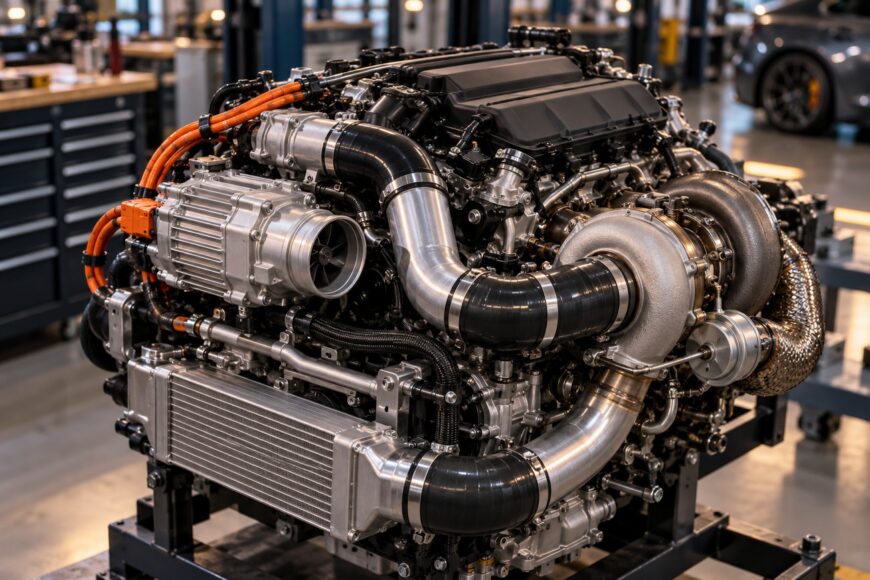
An electric turbocharger or electric compressor is an electrically driven intake-air device that can provide boost without waiting for exhaust-gas flow. A conventional turbocharger depends on exhaust energy to accelerate its turbine, so response at low engine speed is limited by the amount of gas available. An electric device can raise compressor speed independently and reduce that initial delay.
The terms are used loosely, which creates much of the confusion. An electric compressor usually sits in the intake path and supplies air pressure for a short interval. An electric turbocharger may combine an exhaust turbine with an electric motor on the turbo shaft, allowing the motor to accelerate the assembly before exhaust flow becomes sufficient. Both approaches target faster air delivery, although their packaging, electrical load, and control strategies differ.
Hybrid boost describes a wider group of systems. A motor-generator can support the combustion engine through a belt, crankshaft, transmission, or axle. That motor may fill a torque gap during launch, gear changes, or kickdown events, while the engine and turbocharger continue to provide the main sustained output. In some vehicles, intake boost and drivetrain torque assistance are combined into one coordinated strategy.
A 48 V mild-hybrid system is therefore an auxiliary support system, not an electric vehicle powertrain. Its electrical architecture is commonly treated as mild hybrid and sits below the 60 V DC threshold associated with more demanding high-voltage safety requirements. That simplifies some hardware and service arrangements, but it does not turn a turbocharged engine into a car with meaningful electric-only driving capability.
How the Electrical and Hybrid Architectures Deliver Torque
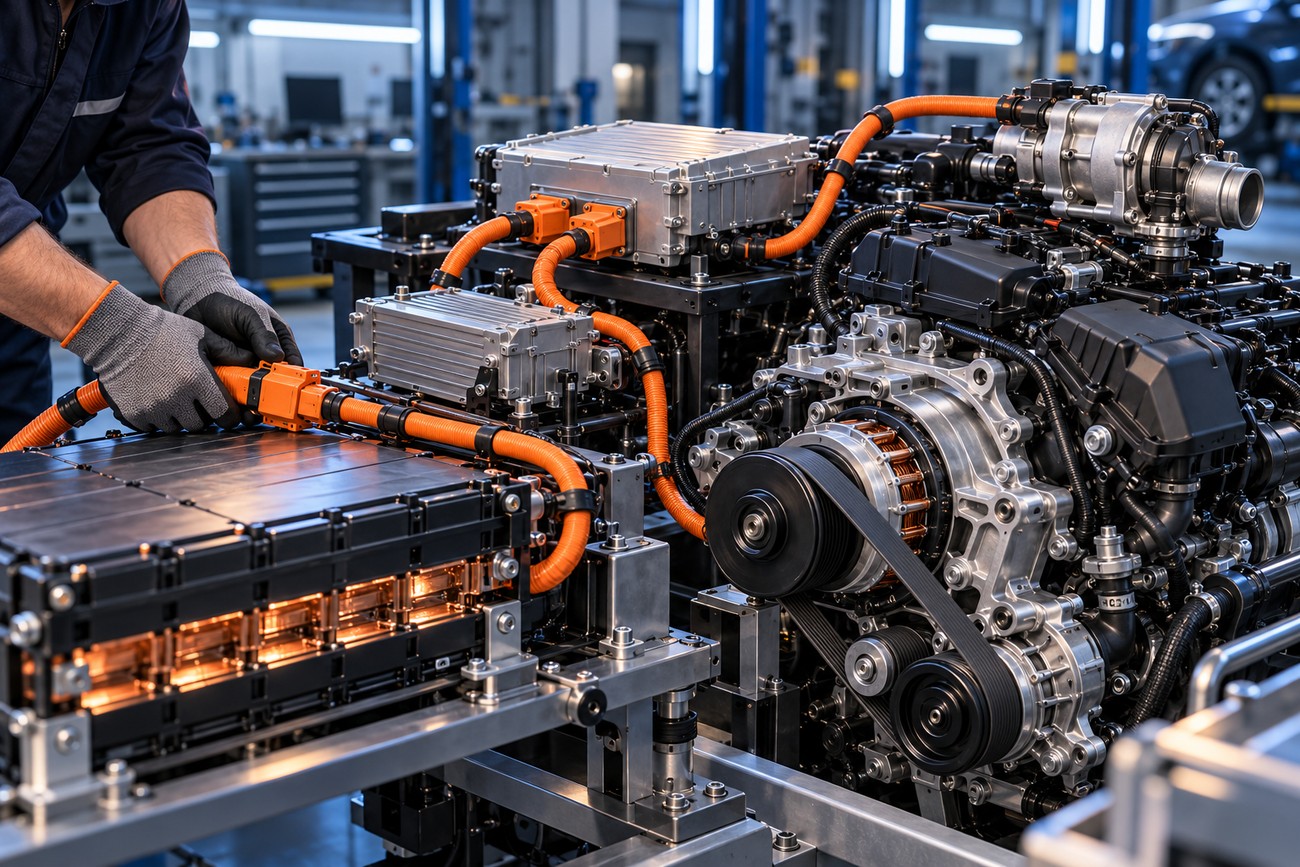
Every e-boost system needs a path from stored electrical energy to useful engine or wheel torque. A battery buffer supplies current, power electronics and DC/DC hardware manage voltage, and a controller decides when the compressor or motor-generator should operate. The final result depends on the location of the electric machine, because that location determines whether it changes intake airflow, engine torque, transmission torque, or wheel torque directly.
Typical 48 V mild-hybrid layouts use a belt starter-generator or a P0/P1 arrangement. In a P0 system, the motor-generator is commonly belt-driven from the engine and can restart the engine, recover energy, and provide short torque support. A P1 machine is coupled more directly to the engine crankshaft. Both arrangements can smooth starts and transient events, although their torque contribution is generally measured in tens of N·m, not hundreds of N·m.
P2, P3, and P4 layouts place the electric machine farther along the drivetrain. A P2 motor is positioned between the engine and transmission, often with a clutch that allows the engine to disconnect. It can supply torque through the transmission, recover energy during braking, and fill the gap while an automatic or dual-clutch transmission changes gear. P3 and P4 arrangements place the motor farther downstream or at an axle, making direct axle assistance possible.
The system often combines a turbocharger, an electric compressor or motor-generator, and a battery buffer. That combination is more practical than asking one large electric motor to provide continuous propulsion from a relatively compact 12 V or 48 V network. The compressor deals with intake response, while the motor-generator can handle launch support, regeneration, or torque fill, depending on the architecture.
The result is a coordinated power path rather than one universal “electric turbo” design. A belt-driven machine may make the engine feel cleaner during starts and shifts. A P2 motor can add a more obvious torque layer through the transmission. An electric compressor can remove the initial air-delivery delay while leaving the engine responsible for most of the car’s sustained performance.
Electric Turbo vs Hybrid Boost: Which System Does What?
The practical distinction is easiest to see by following the energy and torque path. An electric compressor changes how quickly the engine receives pressurized intake air, while a motor-generator can add torque through the engine or drivetrain and can also recover energy.
| System | Energy source and torque path | Main response benefit | Regeneration | Electric-only capability | Duration and key limits | Typical useful situation |
|---|---|---|---|---|---|---|
| Electric compressor | 12 V or 48 V battery power drives a separate intake compressor; torque reaches the wheels through the combustion engine. | Fast intake-air delivery before exhaust flow is sufficient, improving low-speed response. | None from the compressor itself; another hybrid component must recover energy. | None; the device supports engine breathing. | Usually short intervals because electrical demand, heat, and voltage stability limit continuous operation. | Low-rpm throttle response, transient acceleration, and reducing initial turbo lag. |
| Electric turbocharger | An electric motor assists the turbocharger shaft, often alongside an exhaust turbine and compressor. | Accelerates turbo response and can reduce the torque gap before exhaust energy builds. | Some designs may recover energy through a motor-generator function, depending on hardware. | None by itself; the engine still provides propulsion. | Limited by electrical power, turbo temperature, cooling, and control calibration. | Fast spool-up and stronger elasticity before the engine reaches its normal boost range. |
| BSG or ISG mild-hybrid assistance | A belt- or engine-coupled motor-generator adds short crankshaft torque and restarts the engine. | Launch support, smoother starts, and reduced torque gaps during selected transient events. | Yes, through regenerative braking or overrun operation. | Generally no meaningful electric-only driving range. | Short bursts constrained by battery current, temperature, belt drive, and motor-generator output. | Urban stop-start driving, launch refinement, and shift or engine-restart smoothing. |
| P2 hybrid boost | A motor between the engine and transmission sends torque through the gearbox. | Strong torque fill during launch, kickdown, and gear changes. | Yes, with useful regenerative braking potential. | Possible in some systems, subject to battery charge, control logic, and vehicle design. | Limited by battery power, thermal capacity, clutch operation, and available charge. | Repeated transient acceleration and smoothing automatic or dual-clutch transmission behavior. |
| P3 or P4 hybrid boost | A motor downstream in the drivetrain or directly at an axle adds torque closer to the wheels. | Direct axle response and additional flexibility in traction and torque distribution. | Yes, when the motor and control system support regenerative braking. | Potentially possible in a full hybrid design; 48 V assistance alone does not guarantee it. | Battery, inverter, motor temperature, traction, and software limits determine repeatability. | Axle assistance, traction management, and coordinated hybrid performance. |
Why the Car Feels Faster Even When Peak Power Barely Changes
The clearest improvement from electric assistance is transient response. A turbocharged engine can have plenty of maximum power once airflow, boost pressure, and engine speed are established, yet still feel weak during the first part of a throttle application. Electric boost fills that low-rpm gap and gives the driver torque sooner.
This changes elasticity as much as launch performance. Passing acceleration, a short gap in city traffic, or a throttle input after an upshift can feel more immediate because the system supplies torque before the combustion engine reaches its effective operating zone. The driver experiences less waiting, even if the engine’s sustained airflow and peak output remain close to those of a conventional version.
Hybrid boost can also improve the feel of the transmission. During a gear change, torque from a P2 motor or a belt-driven motor-generator can reduce the interruption while engine torque is being adjusted. A kickdown event may feel cleaner because the electric machine fills part of the delay while the gearbox selects a lower ratio and the engine builds boost.
Peak acceleration remains constrained by airflow, gearing, vehicle mass, tire grip, and how long the electrical contribution is available. A claimed peak output may exist only in a narrow operating window and for a brief period. The same hardware can feel impressive in a light vehicle with aggressive calibration and much less convincing in a heavier vehicle with conservative controls or a low battery state.
Torque fill is often most valuable during the fraction of a second before the engine reaches its efficient boost range; adding more peak output does little if the control system misses that transition.
That is why an intelligently timed system can feel quicker than its specifications suggest. The improvement comes from removing an unpleasant gap in the torque curve, rather than from making every part of the power band larger. A smooth, repeatable intervention also tends to feel faster than a stronger but abrupt surge.
The Real Limits: Battery Current, Heat, and Duty Cycle
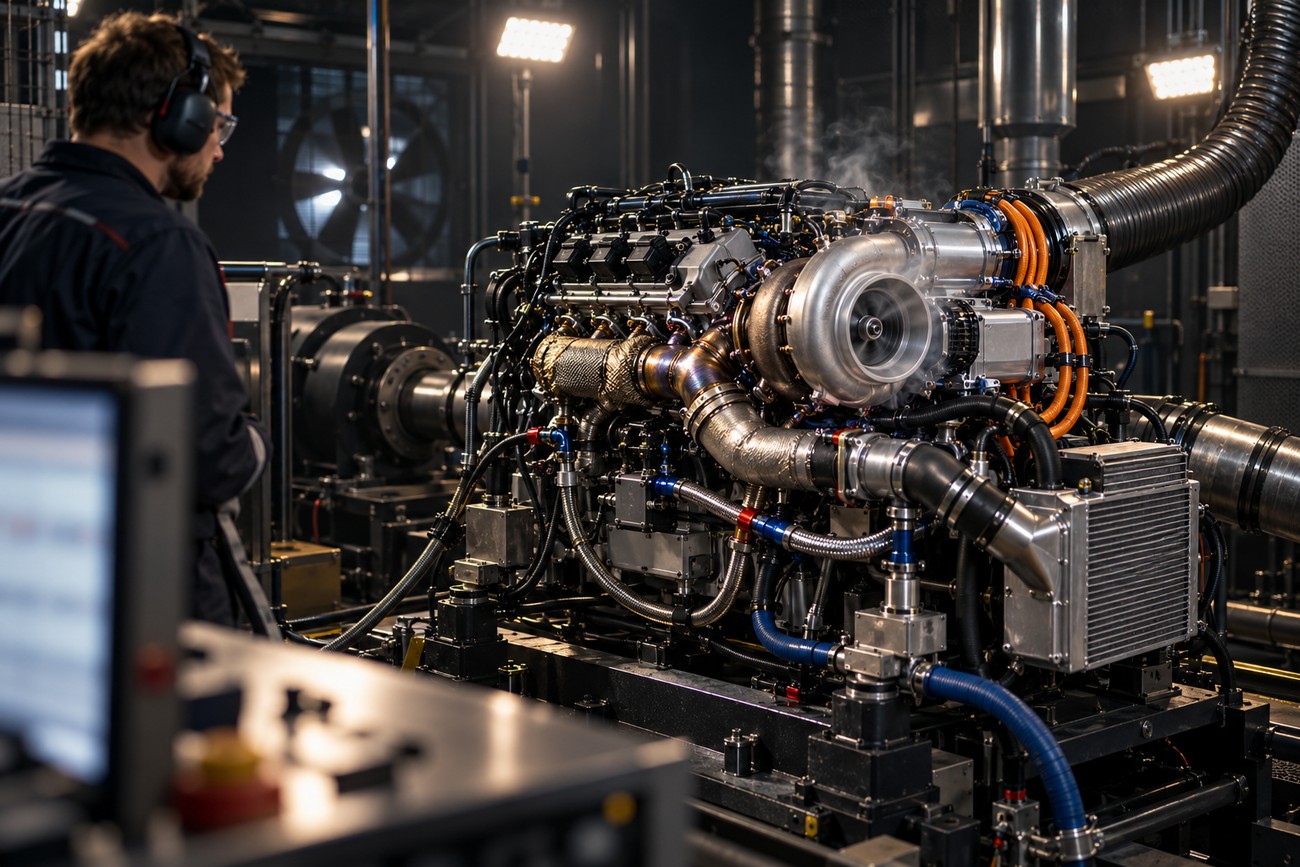
Electric compressors commonly use 12 V or 48 V supplies and draw very high power. Their energy requirement is easy to underestimate because a short event can demand substantial current even when its total duration is brief. The battery must deliver that current without excessive voltage sag, while the inverter, wiring, DC/DC converter, and motor remain within their electrical limits.
Nominal watt-hours alone do not predict boost quality. A battery may display a healthy state of charge and still struggle to provide the required current in cold conditions or after degradation. Voltage stability matters because a drop in supply voltage can reduce motor speed, alter compressor performance, and cause the control system to limit assistance before the driver expects it.
Short operating intervals are typical because continuous operation quickly reaches electrical and thermal limits. The compressor motor, bearings, power electronics, intake hardware, and surrounding engine-bay components all generate or absorb heat. Cooling capacity, air temperature, repeated acceleration, and the requested pressure ratio determine how quickly a system must reduce its output.
Repeated pulls reveal more than a dashboard state-of-charge reading: technicians look for voltage sag and temperature-based derating because a battery can appear charged while the system is already unable to sustain its commanded current.
Cold temperatures can reduce or disable electric assistance until the battery and electronics reach a suitable operating condition. Low state of charge has a similar effect, especially after repeated acceleration or heavy regenerative demand. Poor cooling can trigger thermal derating earlier than the driver expects, so the first pull of the day may feel stronger than the next few.
These limits are part of the design rather than proof of a malfunction. A system intended for short torque fill does not need to provide continuous boost during a long climb or repeated high-load acceleration. Diagnosis becomes important when assistance disappears under conditions where the vehicle should provide it, when a warning appears, or when a previously smooth transition becomes abrupt.
Why Owners Notice Inconsistent Boost, Cost, and Wear
Owners commonly describe the assistance as a brief boost followed by ordinary engine behavior. That impression can be accurate: once the battery reserve, temperature window, or control request is exhausted, the combustion engine continues alone. The system may work exactly as calibrated while still disappointing a driver who expected continuous electric support.
Calibration determines whether the transition feels polished. If electric torque fades before engine torque rises, the driver may feel a dip. If the motor-generator cuts in too sharply, the car can feel lurch in traffic or during a gear change. These sensations do not automatically identify a failed component; they can reflect software strategy, battery condition, transmission adaptation, or a mechanical fault that needs separate testing.
Fuel-economy improvement is often modest because a 48 V system must recover energy before it can reuse it. Traffic, road gradient, load, climate-control demand, and driving style affect the result. Aggressive acceleration can consume the stored electrical reserve faster than normal urban driving, while heavy wheels or added equipment increase the torque and energy required for the same response.
Reliability concerns also have a wider scope than the turbocharger itself. The battery, inverter, motor-generator, sensors, software, cooling circuit, wiring, belt drive, bearings, and DC/DC hardware all become possible failure points. BSG and ISG belt systems face additional operating demands, while replacement motor-generators and power electronics can be expensive after warranty coverage ends.
How to Judge an E-Boost System Before Buying or Modifying
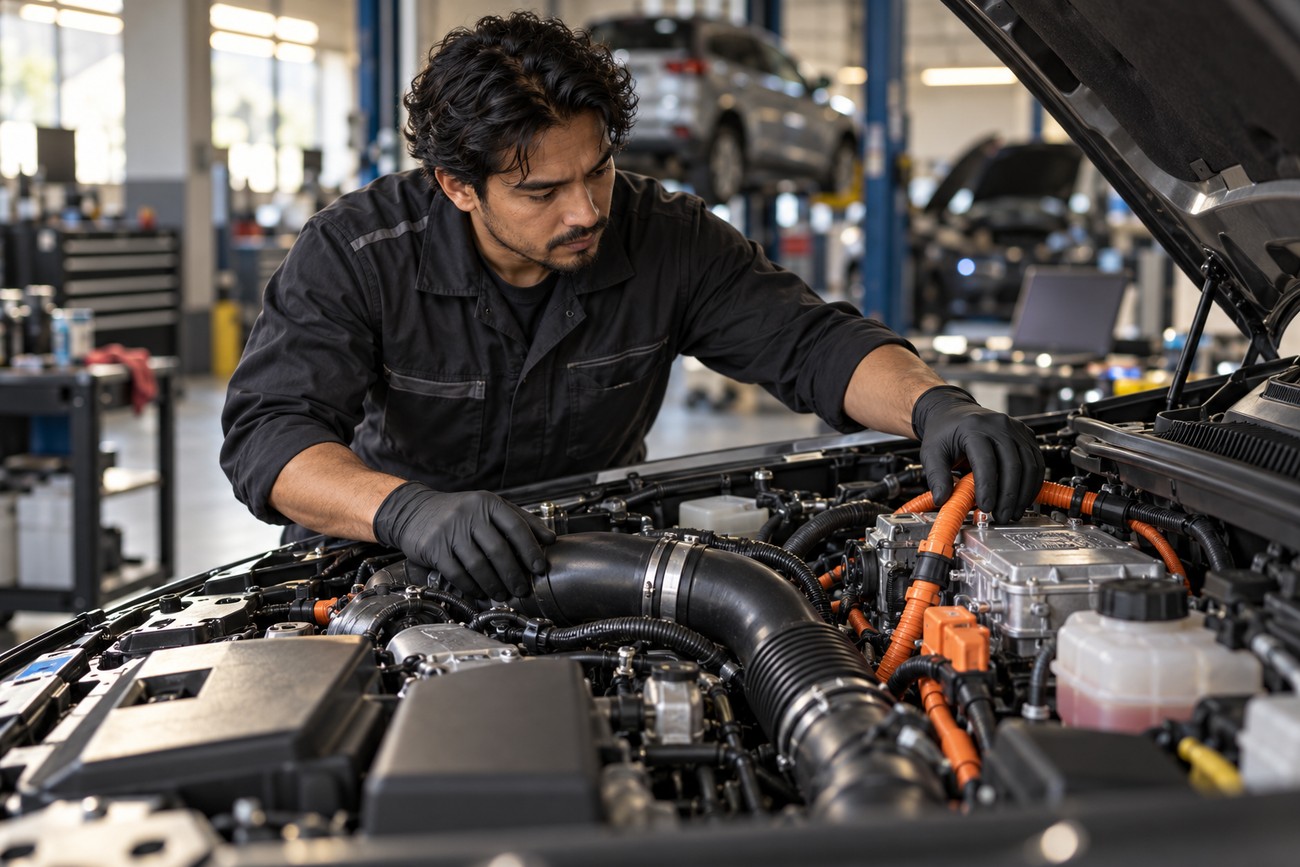
Start by identifying exactly what the vehicle has. Ask whether the advertised electric device is an intake compressor, an electrically assisted turbocharger, a BSG or ISG, or a transmission-mounted traction motor. Then find out when assistance is available, what state-of-charge range the control system requires, and how cold temperatures or repeated acceleration affect it.
Look for comparable acceleration or dyno information across more than one run. Open specifications often lack independent measurements for different operating modes, even when a manufacturer advertises very fast electric-turbo spool-up. A useful evaluation checks response, torque duration, repeatability, and the shape of the torque curve instead of relying on one peak horsepower figure.
Warranty coverage deserves the same attention as the performance claim. Confirm whether the battery, inverter, motor-generator, turbo hardware, cooling components, and control modules are covered separately. For a used vehicle, inspect charging and starting behavior, warning history, battery health, belt or bearing noise, and evidence that the 12 V system and DC/DC hardware are operating correctly.
Modification requires a complete engineering assessment. Adding an electric compressor to a 12 V vehicle may exceed the electrical system’s current capability, overload wiring or the alternator, and require new controls, cooling, packaging, and calibration. The practical benefit is usually greater in city driving and transient acceleration than as a universal high-speed upgrade, especially when extra equipment or heavy wheels increase the underlying load.
Electric Turbo and Hybrid Boost Myths, Trade-Offs, and Emissions Reality
An electric turbo is not automatically more powerful in every condition. Its clearest advantage is response at low engine speed, where it can provide boost without waiting for exhaust-gas energy. Sustained power still depends on the engine’s airflow capacity, fuel system, thermal limits, gearing, and the electrical system’s ability to support the device.
A 48 V mild hybrid is not nearly equivalent to a full electric vehicle. It normally offers no meaningful electric-only driving range and uses its stored energy for starting, regeneration, short torque support, or intake-air assistance. The badge tells you about the voltage architecture, not how much electric propulsion the car can provide.
Advertised peak horsepower also needs careful interpretation. The peak may be brief and available only at a particular engine speed, battery state, temperature, and throttle request. On the road, the average benefit can be smaller while the response improvement remains obvious, particularly during low-speed acceleration and gear changes.
Emissions and fuel-use results depend on calibration, the WLTP or EPA test cycle, traffic, vehicle load, and driving style. A 48 V system does not guarantee large savings, and heavy or aggressive use can produce a much smaller real-world difference. In many applications, the practical value of intelligently timed torque fill exceeds the value of a larger but poorly calibrated peak output.
Frequently asked questions
These systems are easiest to assess by separating the electric device, the torque path, and the period for which assistance is available. The answers below address the two claims most likely to be misunderstood in specifications and buying discussions.
How much horsepower does an electric turbo add?
There is no honest universal horsepower figure. The result depends on electrical input, compressor or motor size, airflow gain, pressure ratio, engine calibration, battery voltage stability, and how long the system can hold the requested output. An electric compressor may improve response without producing a large increase in sustained peak power.
Interpret a claimed peak by asking whether it is measured at the engine or wheels, under what battery and temperature conditions, and for how long it lasts. A narrow, short-lived peak can still make the vehicle feel better in traffic, but it should not be treated as a permanent increase across the rev range.
How long do hybrid turbos last?
Service life depends on which hardware the term describes. A mechanically upgraded hybrid turbo is governed by turbocharger lubrication, shaft speed, bearing load, exhaust temperature, oil quality, and calibration. An electric boost system adds battery health, inverter operation, motor temperature, cooling, wiring, software, and duty cycle to the durability picture.
Repeated high-load use, poor cooling, weak electrical support, and neglected maintenance can shorten the useful life of either arrangement. A service decision should therefore consider the complete system rather than the turbocharger alone, including battery state, DC/DC performance, fault records, and whether the vehicle’s control strategy is repeatedly forcing thermal or electrical derating.