You have a choice between static and dynamic wheel balancing, and the distinction can feel urgent when the steering wheel still shakes after a tire change. One method corrects an imbalance in a single plane, while the other also addresses imbalance across the wheel’s width. That difference is especially relevant for wider passenger-car wheels.
Yet a balanced wheel-and-tire assembly can still vibrate on the road. A tire may sit unevenly on its rim, the rim may be bent, or dirt between the wheel and hub may affect how it mounts. Understanding what each balancing method measures helps you choose a suitable service—and recognize when the next step is inspection rather than another set of weights.
- What static and dynamic balancing actually correct
- Static vs. dynamic wheel balancing at a glance
- Which method should you choose for your wheels?
- What a good balancing job depends on besides the machine
- Why vibration can remain after dynamic balancing
- Too many weights, or a new tire that rides worse?
- When to rebalance—and what the standards do not say
- Frequently asked questions
- Why does the steering wheel shake only when I brake?
- What is the difference between static balance and dynamic balance?
- What is the best type of wheel balancing?
What static and dynamic balancing actually correct
A wheel can look round while its mass is unevenly distributed. As it rotates, a heavy area tends to pull outward, creating a force that may be felt as vibration. Static balancing corrects single-plane mass imbalance: the assembly’s center of mass is displaced from its rotation axis. A weight placed at the appropriate position counteracts that offset.
Wheel width adds another possibility. Picture a heavy area near the inner edge of a rim and another near the outer edge, at different positions around the wheel. Their effects can partly cancel as a single overall heavy spot while still producing a rotating couple—a tendency for the spinning assembly to wobble from side to side. A single-plane correction can leave that couple behind.
Dynamic balancing measures the spinning assembly across two planes. The balance identifies corrections for the inner and outer portions of the wheel, addressing both single-plane imbalance and a rotating couple. “Dynamic” therefore describes a different scope of measurement and correction; it is not merely a more precise name for static balancing.
Both methods deal with mass distribution. Neither straightens a bent rim, repairs an irregular tire, or guarantees a vibration-free vehicle. Those limits matter when a machine reports a successful balance but the wheel still shows visible runout or the car still shakes.
Static vs. dynamic wheel balancing at a glance
The useful distinction is how much of the wheel’s width the measurement and correction account for.
| Comparison | Static balancing | Dynamic balancing |
|---|---|---|
| Measurement | One plane | Two planes while the assembly spins |
| Imbalance addressed | Center-of-mass offset | Center-of-mass offset and rotating couple |
| Correction | Weight to correct a single-plane reading | Weights positioned to correct readings across the wheel’s width |
| Typical use | May suffice for some narrow or light wheels in lower-speed use | Generally preferred for wide modern passenger-car wheels |
| Main limitation | Can leave a rotating couple | Cannot fix tire, rim, or vehicle faults |
A wheel width greater than 4 inches is sometimes cited as a practical rule of thumb for choosing dynamic balancing. It is not an official cutoff; the assembly and its intended use matter more than that number alone.
Which method should you choose for your wheels?

For a wide modern passenger-car wheel, dynamic balancing is generally the sensible default. Its two-plane measurement accounts for mass differences across the assembly’s width, including a rotating couple that a static correction may miss. This is particularly useful when you want the complete assembly checked after fitting new tires, even if there is no obvious shake yet.
Static balancing still has a place. On some narrow or light wheels used at lower speeds, a single-plane correction may be sufficient for the assembly and its application. That does not make static balancing suitable for every wheel, nor does it mean every wheel that receives a static correction will cause a noticeable problem. The service should match the wheel and how it will be used.
Some advice uses a width greater than 4 inches as the point at which to choose dynamic balancing. Treat it as a practical rule of thumb, not an official requirement. If a service proposes static balancing for a wide passenger-car wheel, ask how it will account for imbalance between the inner and outer sides before accepting the choice.
When the car drives smoothly, paying for a balance check is a service decision rather than an emergency response. After a tire change, a suitable dynamic measurement offers a useful check of the newly assembled wheel. Method choice is only part of the value, though: careful inspection, centering, and mounting can matter as much as the mode selected on the machine.
What a good balancing job depends on besides the machine
The job starts before the wheel spins. The technician should inspect the tire and rim for obvious damage, remove debris from the assembly, and check that the tire is seated properly. Loose weights and contamination can undermine the result, while old weights may need removal before a fresh correction. Finding a visible defect at this stage may save you from paying for repeated corrections that cannot fix it.
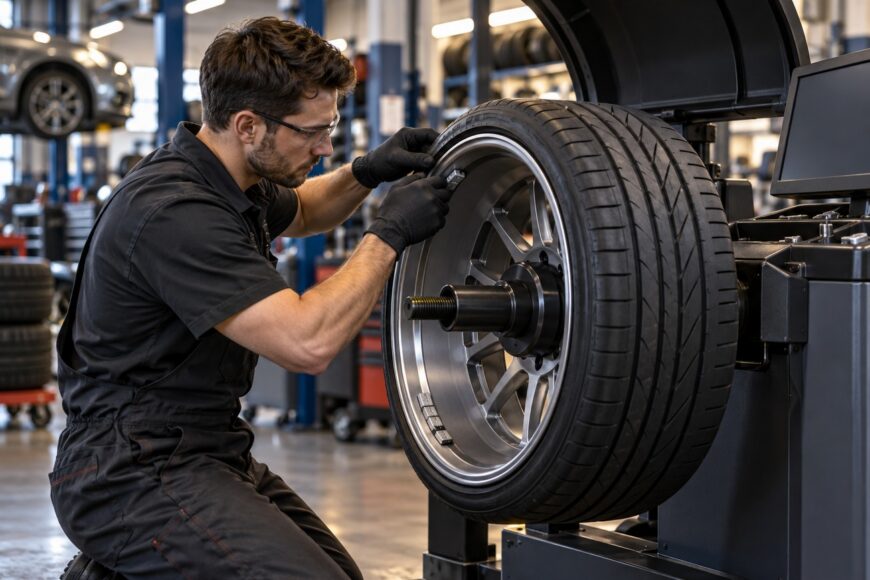
Next, the wheel-and-tire assembly must be centered on the balance using a suitable adapter and secure mounting. A dynamic balance spins it and indicates correction locations in two planes. The technician fits the appropriate weights, runs a verification spin, and checks the result against the machine’s tolerance rather than assuming the first placement was sufficient.
An advanced balance cannot compensate for an assembly mounted off-center on its shaft. That error can create a false imbalance reading even when the wheel itself is sound. Correct wheel dimensions and a stable setup also matter: the displayed correction is only as trustworthy as the measurement behind it.
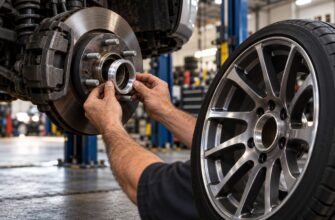
Finally, the balanced assembly must sit cleanly on the vehicle. Dirt or corrosion between the wheel and hub can affect its position and contribute to vibration after an otherwise successful balance. Clean mating surfaces and correct installation complete the job; a good reading on the machine is an important checkpoint, not the entire service.
Why vibration can remain after dynamic balancing
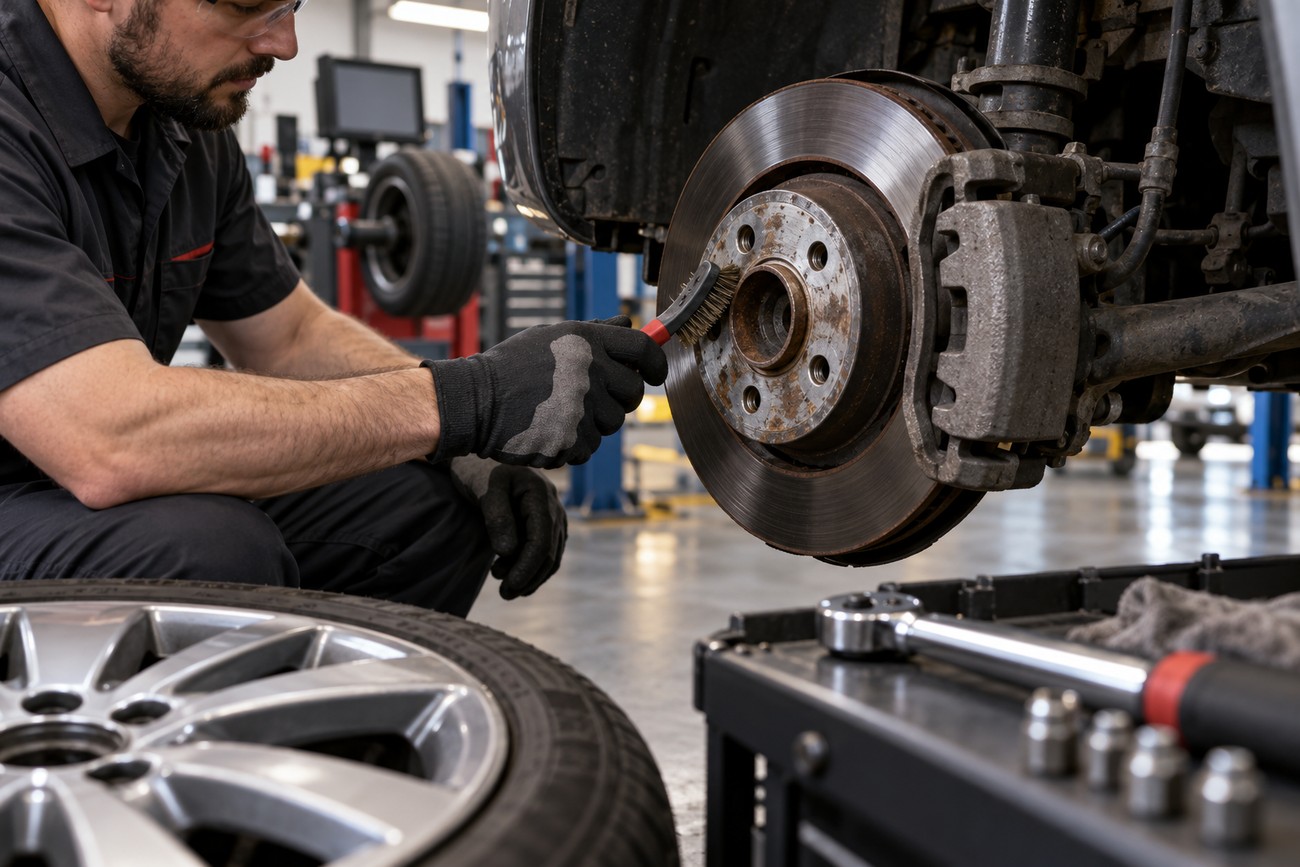
Steering-wheel shake at 90–120 km/h is a familiar complaint, including after a tire change or a balance service. That speed range describes what the driver notices; it does not identify a particular fault. Tell the technician when the shake appears, whether it changes under acceleration or braking, and whether it began immediately after work on the wheels. Those details help guide a check without turning a symptom into a diagnosis.
The first step is to confirm that the wheels are mounted correctly on the car and that their mating surfaces are clean. A shop can then recheck balance, including whether a reading remains consistent when an assembly is removed and remounted on the balance. If it does not, centering or setup deserves attention before anyone assumes the wheel needs more weight.
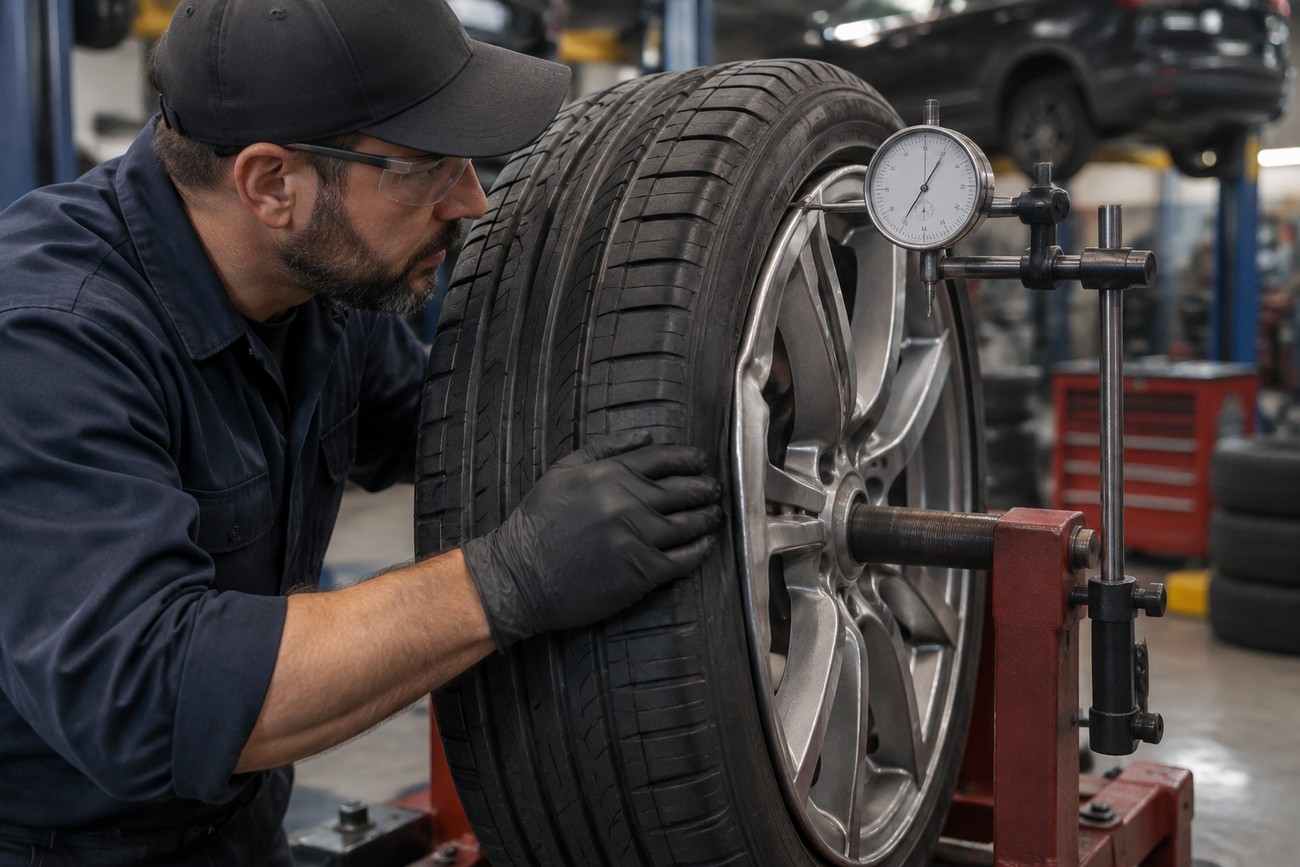
A repeatable balance result still leaves other possibilities. The tire can have an irregular shape or uneven wear, the rim can be bent, and a hub or mounting problem can affect how the assembly rotates on the vehicle. Checking tire and rim runout helps separate a mass problem from a geometry problem. Suspension or other relevant vehicle faults may also need investigation if the wheel checks do not explain the shake.
Inspecting only one wheel can miss a problem elsewhere on the same axle. If a symptom remains after one assembly has been checked, looking at its axle mate is more useful than repeatedly adjusting the first wheel without evidence. The location felt by the driver can help prioritize inspection, but it is not proof that a specific wheel is at fault. Moving an already balanced wheel-and-tire assembly to another position on the vehicle does not itself change its mass distribution; any new vibration after the move calls for a mounting and condition check.
Wheel alignment is a separate service. Balancing corrects mass imbalance in a rotating assembly; alignment concerns the angles at which the wheels sit and travel. An alignment check may be appropriate for a vehicle that pulls or has an unusual wear pattern, but changing wheel angles will not correct a heavy spot in a tire. Likewise, balance weights will not straighten a rim or repair a tire defect.
Too many weights, or a new tire that rides worse?
An unusually large correction calls for a closer look, especially when a wheel still vibrates afterward. Weight quantity alone does not prove poor workmanship: wheel and tire mass variations differ, and the placement of weights can be constrained by the rim. Still, repeatedly adding weights without checking the assembly risks masking the reason the machine is asking for them.
If the ride worsened immediately after new tires were fitted, inspect how each tire sits on its rim. Uneven seating, tire irregularity, and rim deformation can produce runout that balance weights cannot repair. A careful shop can check the assembled wheel for visible wobble or variation as it turns, then decide whether tire mounting, the tire itself, or the rim needs attention.
It is also worth asking whether the correction reading stays consistent. If the same assembly gives a materially different result after being removed and remounted on the balancer, the technician should check the centering method, adapter, and setup. More weights based on an unstable reading are unlikely to produce a reliable result on the road.
Keep the sequence tied to the evidence: confirm seating and condition, verify a repeatable measurement, then apply the indicated correction. This approach is more useful than judging the work solely by how many weights are visible. It also gives you a clearer explanation if the wheel needs repair or a tire needs further assessment instead of another balance attempt.
When to rebalance—and what the standards do not say
New vibration is a good reason to have the wheels checked, particularly if it follows tire replacement or a hard impact. A check can establish whether balance changed and whether the tire, rim, or mounting needs attention. After a severe hit, asking only for balancing may overlook damage that weights cannot correct.
Every 10,000–15,000 km or once a year is a common routine service recommendation, not a universal mandatory rebalance interval. How the vehicle is used, the condition of its wheels, and any symptoms should guide the decision. Seasonal storage alone does not prove that an assembly has lost its balance, although remounting stored wheels is a sensible time to inspect their condition and installation.
Standards sometimes cited alongside balancing advice cover narrower subjects. GOST R 53818-2010 concerns balance weights for automotive wheel rims with pneumatic tires and their use in correcting imbalance. ISO 13988:2021 specifies procedures and minimum requirements for testing balance-weight retention on wheels without tires. Neither document prescribes the commonly suggested routine service interval.
A timely balance check can reduce vibration caused by mass imbalance and help reveal a wheel that needs further inspection. It cannot promise a smooth ride when a tire is irregular, a rim is bent, or a vehicle component has a fault. That distinction makes a symptom-led visit more productive: ask for the cause to be checked, rather than assuming that rebalancing is the repair.
Frequently asked questions
These situations help narrow down what to ask for at the service desk. Each calls for a check based on the symptom, rather than an automatic balance adjustment. Describe when the vibration occurs and whether it followed tire or wheel work.
Why does the steering wheel shake only when I brake?
A shake that appears specifically while braking deserves a brake-system inspection before wheel imbalance is assumed. Tell the technician whether it happens only as you apply the brakes and whether you also feel pulsing through the pedal. The braking pattern points to a different diagnostic path, although a road test and inspection are needed to establish the cause.
What is the difference between static balance and dynamic balance?
Static balance concerns a center-of-mass offset corrected in one plane. Dynamic balance also accounts for a rotating couple across the wheel’s width, measured as the assembly spins. If you are comparing service descriptions, ask whether the shop will measure and correct both planes for your wheel rather than relying on the word “dynamic” alone.
What is the best type of wheel balancing?
Dynamic balancing is generally the best starting choice for wide modern passenger-car wheels; static balancing may suffice for some narrow or light wheels in lower-speed use. The best service also includes proper centering, a repeatable reading, and inspection of the assembly. If you notice a missing weight, have the wheel checked: neither the presence nor the appearance of weights can confirm its current balance.