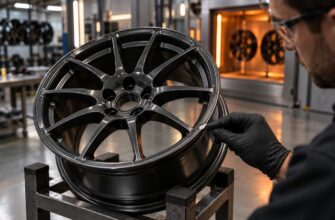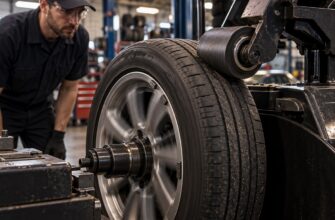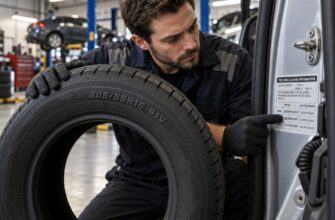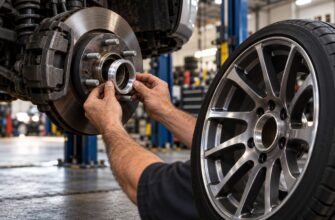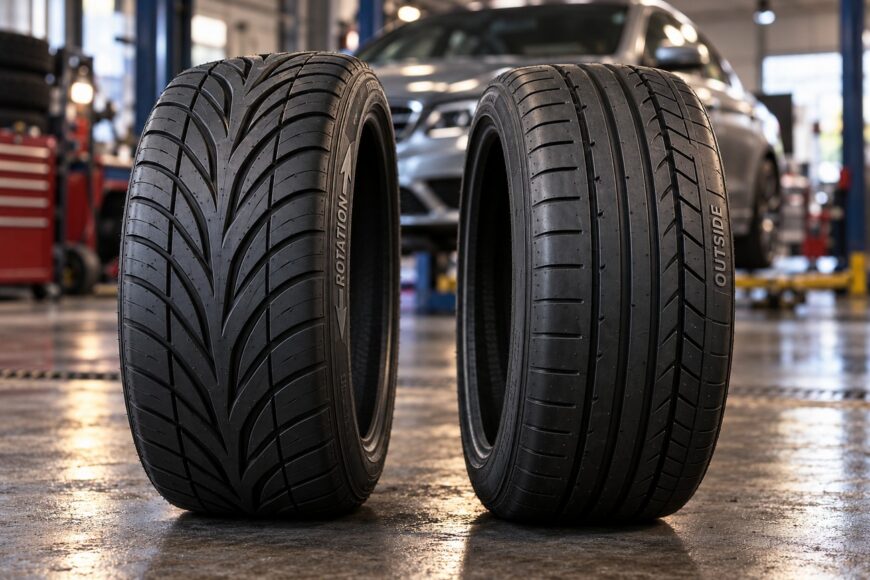
A V-shaped tread can look ready for a downpour, while an asymmetric tire may promise steadier cornering. Either can be a sensible purchase. The mistake is treating the pattern as a performance result: a tire that looks suited to rain may trail another model in wet braking, and a prominent shoulder does not guarantee dry-road grip.
Appearance can also mislead during installation. A directional tire needs the correct rolling direction; an asymmetric one needs its inner and outer sides in the right places. The useful comparison starts with what each design is intended to do, then checks the actual tire model, its fitment, and how it will be maintained.
- What directional and asymmetric tread patterns actually mean
- Directional vs asymmetric tires: differences at a glance
- Wet roads, dry corners, snow, and ice: where the differences matter
- How to identify the pattern and check the installation
- Rotation, replacement, and the real cost of flexibility
- Hidden tradeoffs: noise, uneven wear, and fading wet grip
- Which tread pattern should you choose for your driving?
- Frequently asked questions
- Why do my asymmetric tires look different on the left and right sides?
- Does tire width change which tread pattern works best in rain?
- How can I compare wet-weather tire tests fairly?
What directional and asymmetric tread patterns actually mean
A directional tire is designed to roll one way. Its sidewall carries a ROTATION arrow that must point in the direction the tire turns during forward travel. Directional grooves, often arranged in a V shape, are intended to move water away from the contact area as the tire rolls.
An asymmetric tire has different inner and outer tread zones. The inner area may use more open grooves to manage water, while larger or more supported blocks on the outer shoulder can help the tire resist deformation in corners. Its sidewalls identify the correct orientation with INSIDE and OUTSIDE markings. Unless the tire is also directional, it can roll either way with OUTSIDE facing outward.
These terms describe independent design properties, rather than competing grades of tire. A model can be directional, asymmetric, or both. If it carries both sets of markings, installation must satisfy both the ROTATION arrow and the INSIDE/OUTSIDE labels.
The pattern reveals a design intention, not a complete grip rating. Rubber compound, internal construction, inflation pressure, and tread condition all affect how the tire behaves. Two tires with similar-looking grooves may therefore brake, corner, and ride quite differently.
Directional vs asymmetric tires: differences at a glance
Use the markings to identify the design; treat the performance descriptions as aims to check against tests of specific models.
| Feature | Directional | Non-directional asymmetric |
|---|---|---|
| Design | Grooves arranged for one rolling direction, often in a V shape | Distinct inner and outer tread zones |
| Sidewall check | ROTATION arrow points in the direction of forward travel | OUTSIDE faces outward; no required rolling direction |
| Typical aim | Water evacuation, sometimes useful in slush | Inner-zone drainage with outer-shoulder cornering support |
| Rotation | Usually front-to-rear on the same side without remounting | Broader options if OUTSIDE stays outward |
| Compromise | Side-to-side moves may require remounting | Shoulder design alone does not prove grip or a quiet ride |
Both rotation descriptions assume the vehicle maker permits the move and the relevant tire sizes match.
Wet roads, dry corners, snow, and ice: where the differences matter

Directional channels are designed to clear water as the tire rolls forward. That can help preserve contact on a water-covered road, particularly where standing water raises the risk of aquaplaning. Channel layout is only part of the result, though: groove depth, tire width, construction, pressure, and the amount of water on the road also matter.
Aquaplaning resistance and wet braking deserve separate attention. One describes how a tire copes with water lifting it away from the road; the other measures how well it slows on a wet surface under the test conditions. A directional tire can perform well in one measure without leading in the other, and a well-developed asymmetric model may equal or exceed it in either.
Asymmetric designs can combine drainage-oriented inner zones with a more supported outer shoulder. That shoulder may help maintain a stable contact area during dry-road cornering, especially under higher loads. It does not turn every asymmetric tire into a sports tire; compound and construction remain decisive. Equally, a dramatic V shape says little about steering precision or dry braking by itself.
Winter driving adds another distinction. A directional winter tread may move water and slush effectively, yet bare ice demands grip from the compound and the tire’s overall winter design. A tire chosen for its ability to cut through slush can still disappoint on polished ice if the buyer assumes that the same grooves solve both problems.
Road tests are more useful than a category-wide claim. Compare the actual models in relevant sizes, and look at wet braking, aquaplaning, and dry handling separately. A single ranking can hide the tradeoff that matters most on your roads.
How to identify the pattern and check the installation
Check the sidewalls while the vehicle is parked safely. On a directional tire, locate the ROTATION arrow on each fitted wheel and confirm that it points in the direction the wheel turns when the vehicle moves forward. Check both sides of the vehicle; the correct visual orientation of a V shape can be harder to judge than its molded arrow.
For an asymmetric tire, OUTSIDE should be visible on every fitted wheel, with INSIDE facing toward the vehicle. A non-directional asymmetric tire has no required rolling direction when those labels are respected. Its grooves may appear to point different ways on the left and right sides without indicating a mounting fault.
After installation, check the markings on all four wheels before evaluating a change in handling. A reversed ROTATION arrow or an inward-facing OUTSIDE marking is a fitting problem to correct first, not evidence that the tire model lacks grip.
Some tires combine both designs, so look for both markings rather than stopping when you find one. If either orientation appears wrong, ask the installer to verify it against the tire maker’s instructions and remount the tire as needed. Avoid judging the installation by tread appearance alone, particularly when the grooves are curved or the two sides do not look like mirror images.
Rotation, replacement, and the real cost of flexibility
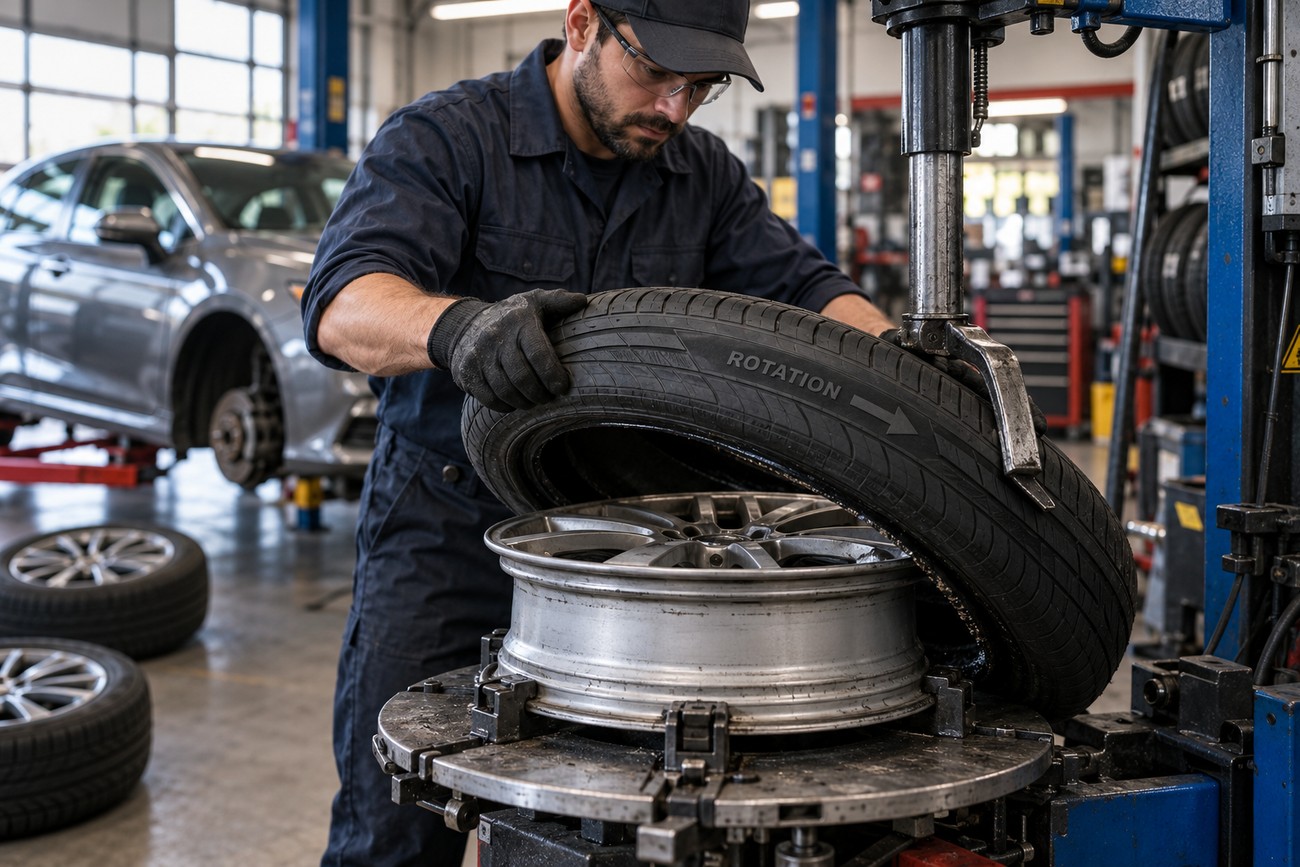
Rotating tires can help manage differences in wear between axles, but the permitted route depends on the tire and vehicle. A directional tire normally moves front-to-rear on the same side, provided the sizes match and the vehicle maker allows it. Moving the complete wheel from left to right would usually make its ROTATION arrow point backward.
To change sides, a directional tire may need to be removed from its wheel and remounted so that it rolls correctly in its new position. That adds work and may add cost. If the front and rear axles use different sizes, even a same-side front-to-rear move may be unavailable.
A non-directional asymmetric tire offers more rotation options because it can change rolling direction while OUTSIDE remains outward. That does not make every cross-rotation suitable: follow the vehicle’s rotation guidance, and account for differing axle sizes or other fitment restrictions. The tire’s sidewall orientation still needs checking after any remounting.
These limits matter most when one axle wears tires sooner. An owner hoping to spread that wear across all four positions may find a directional setup less flexible without extra tire-shop work. Plan for that before purchase, rather than discovering it when replacement is approaching; rotation cannot repair wear caused by poor alignment or incorrect pressure.
Hidden tradeoffs: noise, uneven wear, and fading wet grip
Neither pattern is inherently the quieter or more comfortable choice. A pronounced outer shoulder on one asymmetric model may create noticeable road noise; an aggressive V-shaped design on another may do the same. Tread-block shape, tire construction, road surface, and vehicle insulation all influence what you hear and feel.
Wear can change the comparison over time. As tread depth falls, there is less channel capacity to handle standing water, regardless of the original pattern. A directional design’s water-clearing intent does not make a worn tire dependable in heavy rain, and an asymmetric tire’s drainage zones also lose capacity as they wear.
Look across the tread, rather than checking only the most visible shoulder. Wear concentrated on one edge or one axle may point to alignment, inflation, or loading problems that a different tread pattern will not cure. Pressure checks and an inspection of the vehicle can be more valuable than replacing an unevenly worn tire with a design that merely looks tougher.
Comfort complaints deserve the same model-specific approach. If ride noise matters on long trips, seek tests or reviews that assess the exact tire model in a relevant size, and consider the road surfaces you use. A tire selected for a striking pattern may be a poor match for rough pavement even when its wet or dry grip is sound.
Which tread pattern should you choose for your driving?

Start with an approved tire size, load rating, and speed rating for the vehicle. Then define the conditions you regularly drive in: standing water, dry highways, slush, rough streets, or sustained heavy loads. These details narrow the useful comparison more effectively than sorting tires by tread appearance.
For a rain-prone commute, compare wet braking and aquaplaning results for the actual models on your shortlist. A directional option may have channels designed for substantial water evacuation, while an asymmetric alternative may combine strong wet results with different ride and handling characteristics. Choose from the measured behavior that fits your route, rather than assuming the V shape wins every wet test.
A heavier crossover or minivan places different demands on a tire in corners and under load. An asymmetric model’s supported outer zone may appeal, but its load suitability and tested performance matter more than the label. Drivetrain alone does not rule out an asymmetric tire; vehicle approval and the intended use come first.
For a driver who values dry-road response, a tire’s steering and cornering results deserve attention alongside braking and noise. A directional pattern is not proof of sports performance, and an asymmetric shoulder is not a guarantee of it. In winter conditions, compare tires designed for those conditions rather than asking a summer tread layout to provide bare-ice grip.
Finally, consider upkeep. If limited rotation options would make uneven axle wear costly to manage, check the vehicle’s rotation instructions before choosing a directional model. The sound decision is an approved tire in good condition, with tested performance suited to your roads and a maintenance plan you can follow—regardless of which pattern looks more convincing.
Frequently asked questions
Sidewall markings and tests answer different questions: the markings tell you how a tire must be fitted, while tests show how a particular model performed. Keep that distinction in mind when comparing tires that look alike or appear different across the vehicle.
Why do my asymmetric tires look different on the left and right sides?
A non-directional asymmetric tire can show grooves that appear to point opposite ways across the vehicle even when it is fitted correctly. The required check is that OUTSIDE faces outward on both sides; its rolling direction can differ. If the tire also has a ROTATION arrow, both markings must be satisfied. Ask a tire shop to check any conflicting or unclear markings against the tire maker’s instructions.
Does tire width change which tread pattern works best in rain?
Width can affect the demands placed on a tire when it meets standing water, but it cannot identify the better tread category on its own. Channel design, compound, pressure, and tread depth also affect the result. Stay within vehicle-approved sizes, then compare wet-test results for the actual models in the same or a closely relevant size; do not assume a wider V-shaped tire will clear water better than a narrower asymmetric one.
How can I compare wet-weather tire tests fairly?
Check the tested tire size, vehicle, and conditions before relying on a ranking. Read wet braking, wet handling, and aquaplaning results separately: a model can place differently in each, and your priorities may not match the test’s overall score. Tests in another size can still offer context, but treat them as guidance rather than a precise prediction for your vehicle.