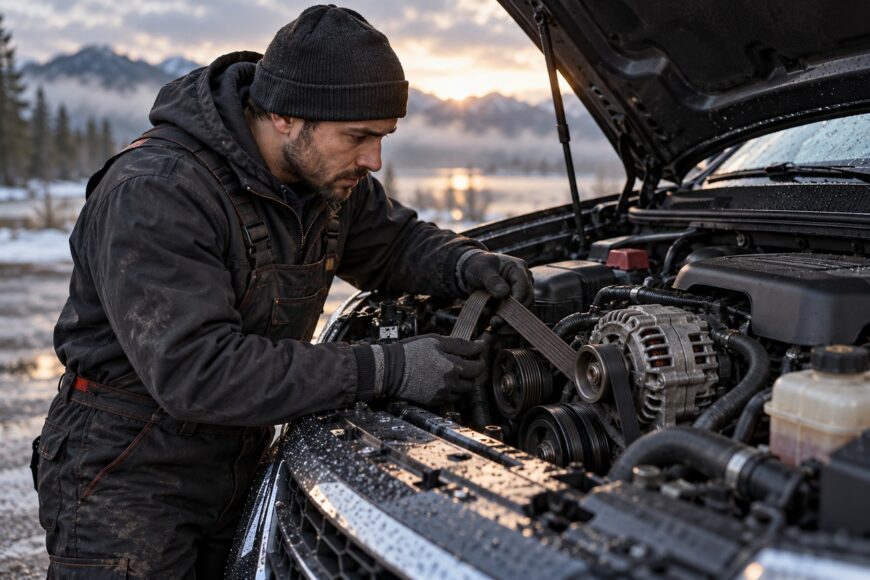
A sharp squeal for a few seconds after an overnight or damp start is a familiar cold-start complaint. It often comes from temporary serpentine-belt slip when the engine starts and the alternator or another accessory suddenly demands torque. Cold rubber, moisture, and a polished belt surface can reduce grip just when the drive is under its highest brief load.
The belt is only one possible source. A weak automatic tensioner, idler pulley, alternator bearing, air-conditioning compressor, or water pump can produce a similar sound. The useful first step is to separate a brief load-related squeal from noise caused by a rotating component, rather than replacing the belt based on sound alone.
- What a Cold-Start Squeal Usually Means
- Separate Belt Slip from a Noisy Pulley or Accessory
- Inspect the Belt Drive Safely Before Replacing Parts
- Use Load, Weather, and Repair History as Diagnostic Clues
- Why Tightening or Replacing the Belt Often Fails
- Decide How Urgent the Repair Is
- Frequently Asked Questions
- Can a serpentine belt squeal even when it has no cracks?
- Why does the squeal appear after rain but not on a dry morning?
- How can I tell whether my car has an automatic belt tensioner?
What a Cold-Start Squeal Usually Means
A brief squeal that appears immediately after startup and fades within seconds commonly indicates temporary belt slip. The alternator can demand a sharp burst of torque as it restores the battery’s charge, and the belt may momentarily slide across the pulley ribs before the drive stabilizes. This is more likely when the belt is cold, damp, glazed, contaminated, or held with insufficient operating tension.
The timing of the noise helps narrow the possibilities. A squeal limited to the instant of startup points toward a short-lived change in load or grip. A squeal that continues at idle, follows engine speed, or becomes a regular chirp suggests an ongoing belt-drive problem or a rotating component that is generating noise continuously.
Electrical loads provide a useful, low-risk clue. Headlights, the rear defroster, and the blower increase alternator load, so a squeal that becomes louder after they are switched on supports a belt-slip or alternator-load hypothesis. This observation does not identify the failed part by itself, because a weak tensioner or a rough alternator bearing may also react to the same load.
Cold temperatures and moisture can change the symptom without removing the fault. As the belt warms, its flexibility and contact with the pulleys may improve, allowing the noise to disappear. Silence after warm-up therefore shows that the operating conditions changed; it does not prove that the belt drive is healthy.
Separate Belt Slip from a Noisy Pulley or Accessory
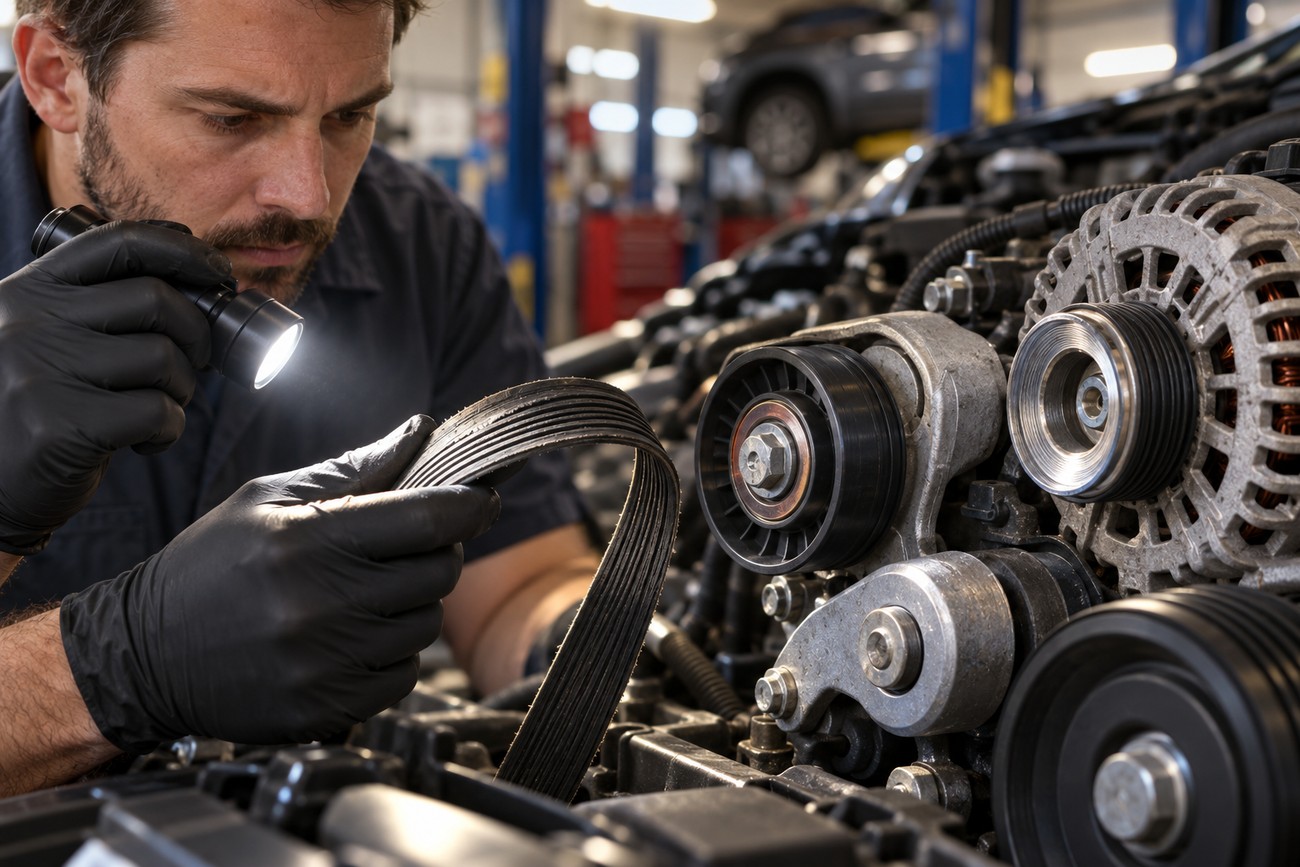
The automatic tensioner is designed to maintain operating tension and compensate for normal belt working stretch. Its spring and damper must also control belt movement as accessory loads change. If the tensioner is weak, its damper is worn, or the arm moves excessively, the belt may lose stable contact even when the belt itself looks acceptable.
Other possible sources include the tensioner or idler bearing, alternator, air-conditioning compressor, and water pump. A bearing can produce a high-pitched noise that travels through the belt and nearby brackets, making the belt appear guilty from the driver’s seat. A recording or a listening position beside the engine cannot reliably identify the source because sound reflects around the engine bay.
Excessive or irregular tensioner-arm movement is often more decisive than the squeal itself. It can reveal a weak damper, pulley misalignment, or uneven rotation from an accessory before the noise becomes constant.
With the engine off, inspect the tensioner for visible wobble and check its position against the vehicle’s service information. During a controlled observation from a safe distance, strong oscillation or repeated arm movement deserves attention, especially if it changes when electrical loads are applied. Do not reach into the drive to feel movement or try to restrain the arm.
Once the belt is removed by a technician using the correct procedure, each pulley should rotate smoothly. Side play, roughness, grinding, or binding points toward a pulley or accessory problem. A pulley that feels acceptable by hand can still behave poorly under belt load, so the inspection should include alignment, mounting, and the vehicle’s specified diagnostic checks.
Inspect the Belt Drive Safely Before Replacing Parts
Switch off the engine, remove the key or follow the vehicle’s shutdown procedure, and wait until every moving part has stopped. Keep loose clothing, jewelry, and hands away from the drive even during a brief inspection. The routing diagram, often found under the hood or in service information, helps confirm that the belt follows the correct path.
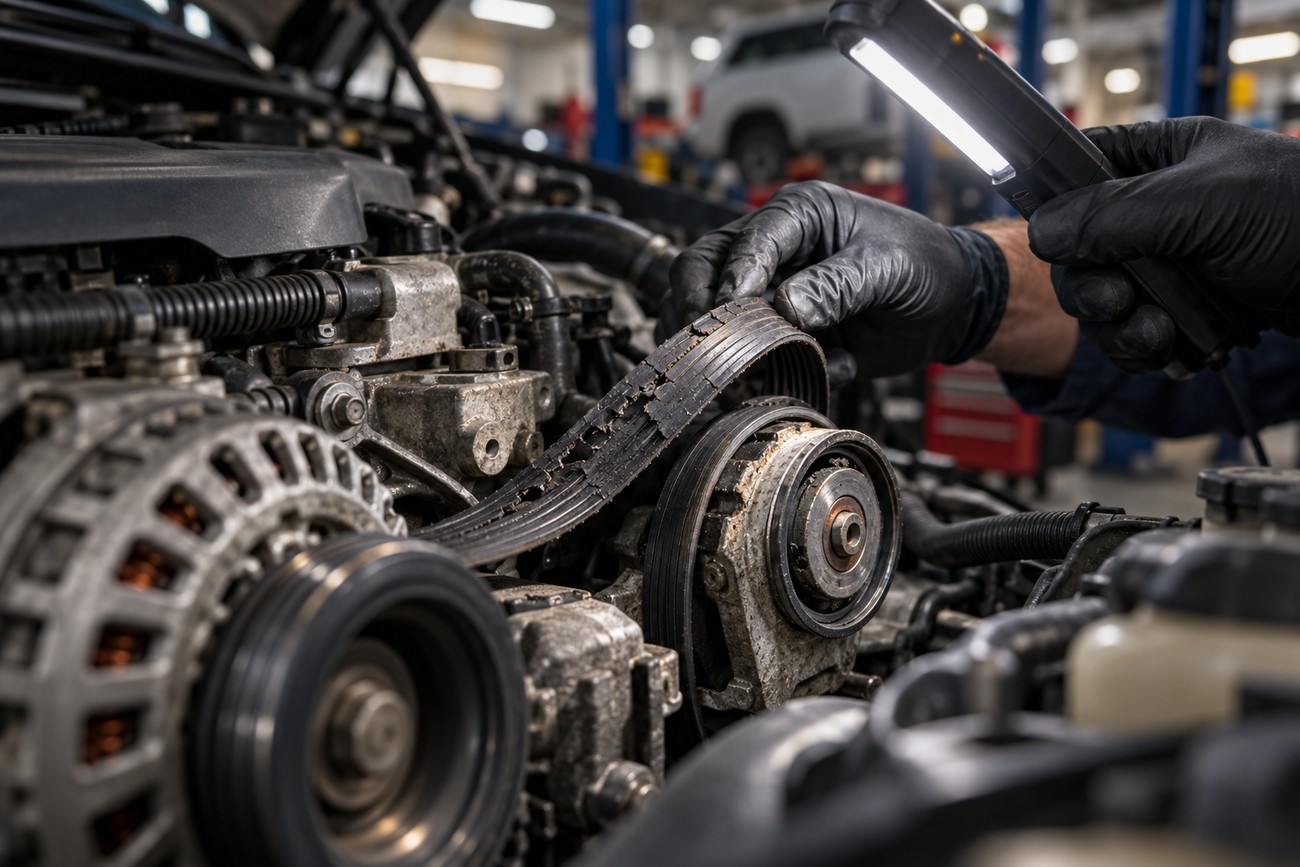
Check that the belt is seated in every ribbed groove and that no rib is riding outside a pulley. Look for shiny working ribs, cracks, fraying, missing ribs, rubber dust, and signs of oil or coolant. A belt can appear intact while its smooth or glazed surface has lost enough grip to slip during a cold, high-load start.
Contamination changes the diagnosis. Oil and coolant can soften or alter the rubber and reduce friction, while residue may reach the pulley grooves. Cleaning the visible surface does not restore the belt’s original properties; the leak must be repaired, and the belt should be assessed for replacement according to the vehicle’s service information.
A recently installed belt still requires the same checks. Incorrect routing, poor seating, a misaligned pulley, or a disturbed tensioner can leave the original symptom unchanged. If the belt must be removed, every pulley should be checked for smooth rotation, side play, roughness, and binding before a replacement is fitted.
Use Load, Weather, and Repair History as Diagnostic Clues

Record when the noise occurs and how long it lasts. Compare a cold start with the normal electrical load and another start after switching on the headlights, rear defroster, or blower only when the vehicle’s operating instructions allow it. A louder squeal under those conditions supports a load-related alternator or belt-slip hypothesis, while a noise unaffected by load keeps pulley and accessory faults high on the list.
Rain, overnight condensation, and a damp engine bay can expose marginal belt grip. Moisture may temporarily reduce friction or carry contamination across the pulley surface. Weather is therefore a trigger that helps reproduce the symptom, rather than proof that the belt is the failed component.
Repair history can be more informative than the age of the belt. If the sound began after belt, alternator, compressor, or cooling-system work, verify the belt direction where applicable, its seating in every ribbed groove, pulley alignment, and tensioner installation. A new belt cannot correct a routing error or a pulley that is no longer aligned.
Some practitioners suggest a light water-mist test to distinguish types of belt noise. There is no universal safe allowance for spraying a running belt drive, and the method can expose you to rotating parts or electrical components. Do not spray a running drive unless vehicle documentation and proper safety controls specifically allow it; inspection and manufacturer-based testing remain the safer diagnostic route.
Why Tightening or Replacing the Belt Often Fails
Many serpentine-belt systems use an automatic tensioner, so they have no manual adjustment. Forcing extra tension onto such a system can overload accessory and pulley bearings. It may quiet the original squeal briefly while creating a hum or whine, accelerating bearing wear, or masking the actual tensioner fault.
Belt dressing, oil, and WD-40 are poor substitutes for diagnosis. They alter the friction between the belt and pulleys, can damage the belt elastomer, and make later inspection harder. A change in sound after an aerosol or liquid is applied does not show that the underlying alignment, tension, or bearing problem has been corrected.
Replacing the belt alone also fails when the real cause is a weak tensioner, rough idler bearing, damaged alternator pulley, or crooked accessory. The same applies after oil or coolant contamination: repair the leak and assess the belt for replacement, because simple cleaning does not restore the rubber’s original properties.
A belt that was installed recently should be checked for routing, direction where relevant, groove seating, and alignment before another belt is fitted. Parts swapping can produce a second new part without answering why the first symptom remained. The correct repair follows the failed mechanism identified during inspection.
Decide How Urgent the Repair Is
A brief, isolated squeal on a cold or damp start may allow a short drive to an inspection facility if there are no other symptoms. Arrange diagnosis soon, because a short squeal can be an early sign of a loaded bearing or tensioner problem before constant noise develops. The fact that the sound disappears after warming does not remove that risk.
Stop using the vehicle and arrange professional inspection if the noise persists, the tensioner moves violently, or the belt shows cracks, fraying, missing ribs, heavy glazing, or contamination. A burning-rubber smell also suggests slipping or contact that should not be ignored. A pulley that binds during inspection requires correction before the drive is operated again.
Charging warnings, dimming lights, unusual electrical behavior, or an overheating temperature gauge raise the urgency further. A failing belt drive can affect the alternator and, depending on the design, the water pump. The exact consequences vary by vehicle, so the owner’s manual and service information should guide the decision to stop immediately.
Do not use a universal age or mileage promise to judge belt life. Repair decisions should follow the belt’s condition, operating tension, contamination, and the specific drive design. A vehicle-specific maintenance schedule remains useful, while visible damage, unstable tension, or a changed noise pattern takes priority over an assumed service interval.
Frequently Asked Questions
Can a serpentine belt squeal even when it has no cracks?
Yes. A smooth or glazed belt surface can slip without showing the classic cracked-rubber appearance. Poor seating in a pulley groove, contamination, pulley misalignment, or unstable tension from a weak automatic tensioner can produce the same symptom.
Inspect the belt ribs, pulley alignment, and tensioner behavior rather than judging the belt by cracks alone. If oil or coolant is present, repair the leak and assess the belt for replacement. A visually clean belt can still have lost the grip needed during a cold, high-load start.
Why does the squeal appear after rain but not on a dry morning?
Moisture can reduce marginal belt-to-pulley grip and make an existing weakness easier to reproduce. It may also move contamination across the pulley surface. Dry weather removes that trigger, while the underlying glazing, tensioner problem, alignment fault, or bearing issue can remain.
Rain therefore helps describe the operating condition, rather than identifying the failed component. Compare the symptom with electrical load and inspect the belt drive after shutdown. Weather alone is insufficient evidence for replacing a belt or another part.
How can I tell whether my car has an automatic belt tensioner?
Check the vehicle-specific service manual, belt-routing label, or manufacturer parts information. An automatic tensioner usually has a spring-loaded arm and a pulley, with a specified tool point or position used during belt removal. The exact appearance and procedure vary by engine.
Do not assume that a visible adjustment bolt means the belt can be tightened manually. Some systems use fixed mounting or automatic tensioning, and forcing adjustment can damage bearings or the tensioner. Confirm the design before attempting any belt work.