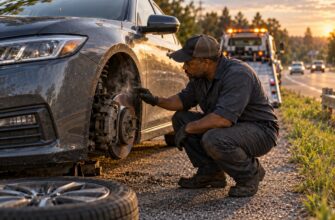
A car that requires constant steering correction can remain difficult to drive even after a wheel alignment. The steering wheel may sit off-center, the vehicle may move toward one lane, or the symptom may appear only during braking or acceleration.
A pull is not automatically an alignment problem. Tire behavior, road slope, camber, caster, toe, brake drag, and worn suspension parts can produce similar complaints. A useful diagnosis separates these possibilities instead of treating a green alignment report as proof that the vehicle will track correctly.
- Pull or Drift? Confirm the Symptom Before Diagnosing It
- Start With Cold Tire Pressure and Tire Condition
- Use a Tire-Swap Test to Detect Tire Pull
- Look Beyond Toe: Alignment Geometry and Rear-Axle Thrust
- Check Brakes, Suspension, and Pulls That Happen Only Under Acceleration
- Why Repeated Alignments and Quick Fixes Often Fail
- A Practical Diagnostic Order Before You Authorize Repairs
- Frequently asked questions
- Why does my car pull more when braking?
- How long should I test a car before deciding it has a pull?
- Is it safe to keep driving when the steering wheel is constantly off-center?
Pull or Drift? Confirm the Symptom Before Diagnosing It
A persistent pull is a repeatable movement toward one side on a suitable road, usually requiring continuous steering correction. A mild drift can develop because the pavement has a crown or cross-slope. The same car may move differently on two roads without having a mechanical fault.
Use a smooth, straight section with no potholes, ruts, or pronounced cross-slope. Keep the vehicle loaded in the same way for each test, hold the steering wheel lightly, and avoid deliberately correcting the direction. A completely hands-off test is unsafe; the aim is to observe the vehicle without masking the result through constant steering input.
One OEM procedure uses a pronounced-pull example in which the vehicle crosses a lane in less than 7 seconds at 60 mph on a road with less than 1.5° of slope. That is a procedure-specific reference, not a universal pass-or-fail rule for every vehicle. Vehicle design, road surface, tire condition, and test conditions still matter.
There is no universal rule that every vehicle must travel perfectly straight with the steering wheel untouched. A light, road-dependent drift can be normal on a crowned road. A strong, repeatable movement on an appropriate test road deserves diagnosis rather than dismissal as road crown.
Start With Cold Tire Pressure and Tire Condition
Check tire pressure before paying for alignment work. Measure it when the tires are cold, before driving has warmed the air inside them, and set it according to the vehicle placard or owner’s manual. The maximum pressure molded on the tire sidewall is not the vehicle’s recommended operating pressure.
An underinflated front tire may cause the vehicle to pull toward that tire. Check all four tires, since unequal pressure at the rear can also affect handling and steering feel. Confirm the tire size, load rating where relevant, installation direction, and overall condition.
Look for uneven tread wear, shoulder wear, bulges, impact damage, and differences in construction or tread pattern between sides of the axle. Uneven wear can be the result of a tire problem, geometry, or suspension wear. It is evidence that needs interpretation, rather than a cosmetic issue to ignore.
Do not use an intentional side-to-side pressure difference as a repair. Some practitioners suggest adding about 3 psi on one side as a workaround, but this is a disputed practice and does not establish the cause. OEM-style procedures favor the specified pressure in all tires.
Use a Tire-Swap Test to Detect Tire Pull
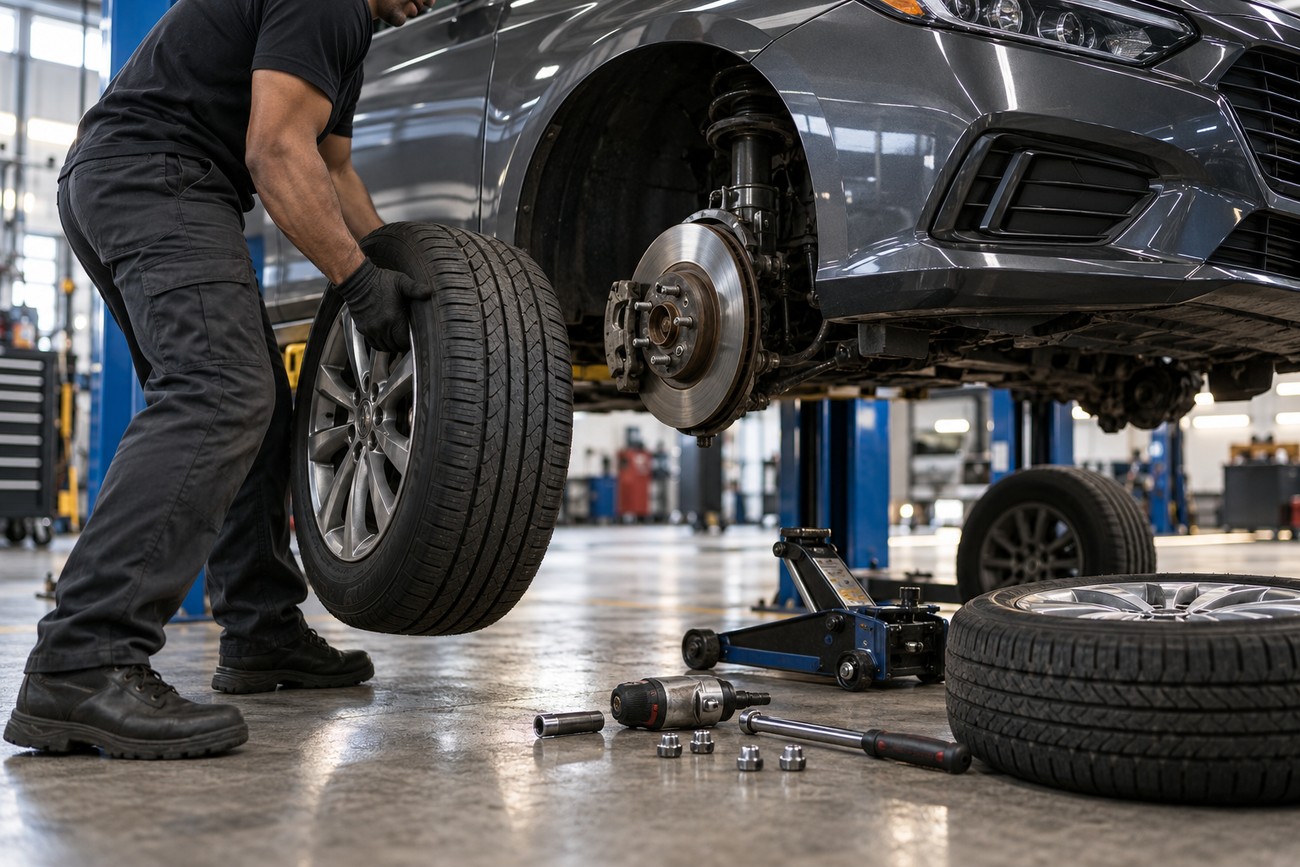
A tire can create a pull even when alignment readings are within their specified ranges. Internal construction, conicity, radial force variation, or uneven wear may make the vehicle favor one side. These characteristics can remain after a technically correct alignment.
For diagnosis, the front tires may be swapped left to right only when they are non-directional. Repeat the same controlled road test after the swap. If the direction of the pull changes, the tire becomes the primary suspect; the wheel alignment readings have not changed, but the tire behavior has.
Stopping at a green alignment report can leave the actual fault untouched. A permitted non-directional tire swap followed by the same road test often separates a tire-related pull from a geometry or chassis problem more efficiently than another alignment adjustment.
If the pull does not change after the permitted swap, geometry, suspension, brakes, or road conditions remain more likely causes. Directional tires must retain their intended direction of rotation, so they must not be moved left to right for this test.
OEM-style tire-pull procedures may test tires one at a time and replace the tire after the test that reduces or eliminates the pull. This approach avoids replacing several components based only on an alignment printout.
Look Beyond Toe: Alignment Geometry and Rear-Axle Thrust
Toe is only one part of alignment diagnosis. A vehicle can show acceptable toe while unequal camber or caster creates a steering tendency. A complete check considers the front and rear wheels, steering-wheel position, and the relationship between the axles.
More positive front camber generally produces a pull toward that side. One service procedure specifies keeping the camber difference between the wheels below 0.5°. The exact specification depends on the vehicle, so the correct reference is the applicable service information rather than a generic target.
A vehicle generally pulls toward the side with less positive caster. Caster differences can therefore explain a persistent pull even when toe appears correct. A technician should compare side-to-side readings and assess whether the measured values are adjustable, within specification, or evidence of a bent or displaced component.
The rear axle also matters. Rear thrust angle can make the driver hold the steering wheel at an angle, even when the front axle appears adjusted. Checking only the front wheels can miss a rear alignment condition that changes the vehicle’s tracking direction.
Green alignment values do not rule out tire pull, uneven wear, brake drag, or worn or damaged suspension components. Alignment measurements describe wheel angles at the time of testing; they do not prove that every tire, bearing, brake, bushing, or steering part is healthy.
Check Brakes, Suspension, and Pulls That Happen Only Under Acceleration
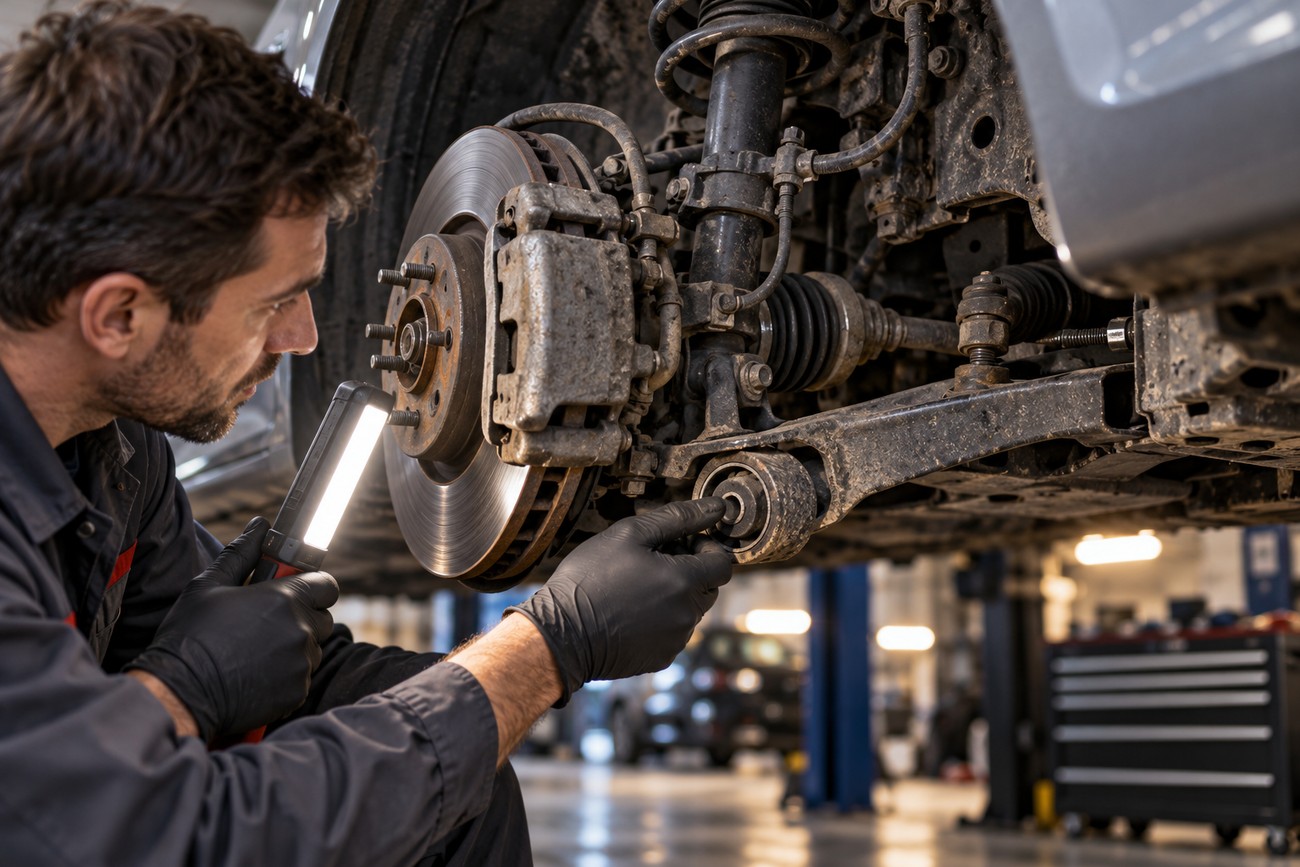
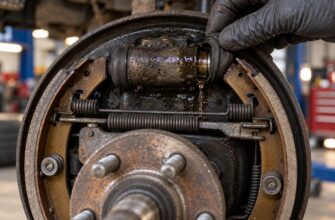
A constant pull and a pull that appears during braking follow different diagnostic paths. A dragging brake can create a pull as friction increases on one side, while uneven braking response can make the vehicle move when the pedal is applied. Alignment alone cannot confirm that the braking system is operating evenly.
Inspect suspension and steering components for looseness, damage, displacement, or abnormal wear. A bent arm, damaged knuckle, worn bushing, or other faulty component can influence tracking even when alignment values look acceptable. Uneven tire wear may provide an early clue that one of these conditions has been present for some time.
A pull mainly during acceleration differs from a constant pull. On a front-wheel-drive vehicle, drive torque and front-end reactions can influence steering under load. The symptom may therefore involve driveline or suspension behavior rather than alignment alone.
Unusual noise, a hot wheel, steering looseness, vibration, or a rapidly worsening pull should move the vehicle from routine diagnosis to prompt inspection. Avoid relying on repeated alignment adjustments when the vehicle also shows braking, tire, or suspension symptoms.
Why Repeated Alignments and Quick Fixes Often Fail
Repeated alignments can fail to resolve the complaint because the original diagnosis stopped at wheel angles. A green report does not exclude tire conicity or radial pull, uneven wear, worn suspension parts, or brake drag. The vehicle may leave the alignment rack with correct measurements and retain the same road behavior.
Marketing claims on a tire do not replace checking actual pressure, tread condition, installation direction, and pull behavior. A tire described as stable or performance-oriented can still be unsuitable for the vehicle, worn unevenly, damaged, or capable of producing a side-to-side force.
Changing pressure on one side may create a temporary difference in steering feel, which can make the advice seem successful. Some practitioners suggest adding about 3 psi on one side, but this is a disputed workaround, not a confirmed repair, and it conflicts with the OEM preference for specified pressure in all tires.
A controlled road test and a properly permitted tire-swap result can be more informative than alignment numbers alone. They show how the vehicle behaves in motion and help determine whether further alignment work is justified.
A Practical Diagnostic Order Before You Authorize Repairs
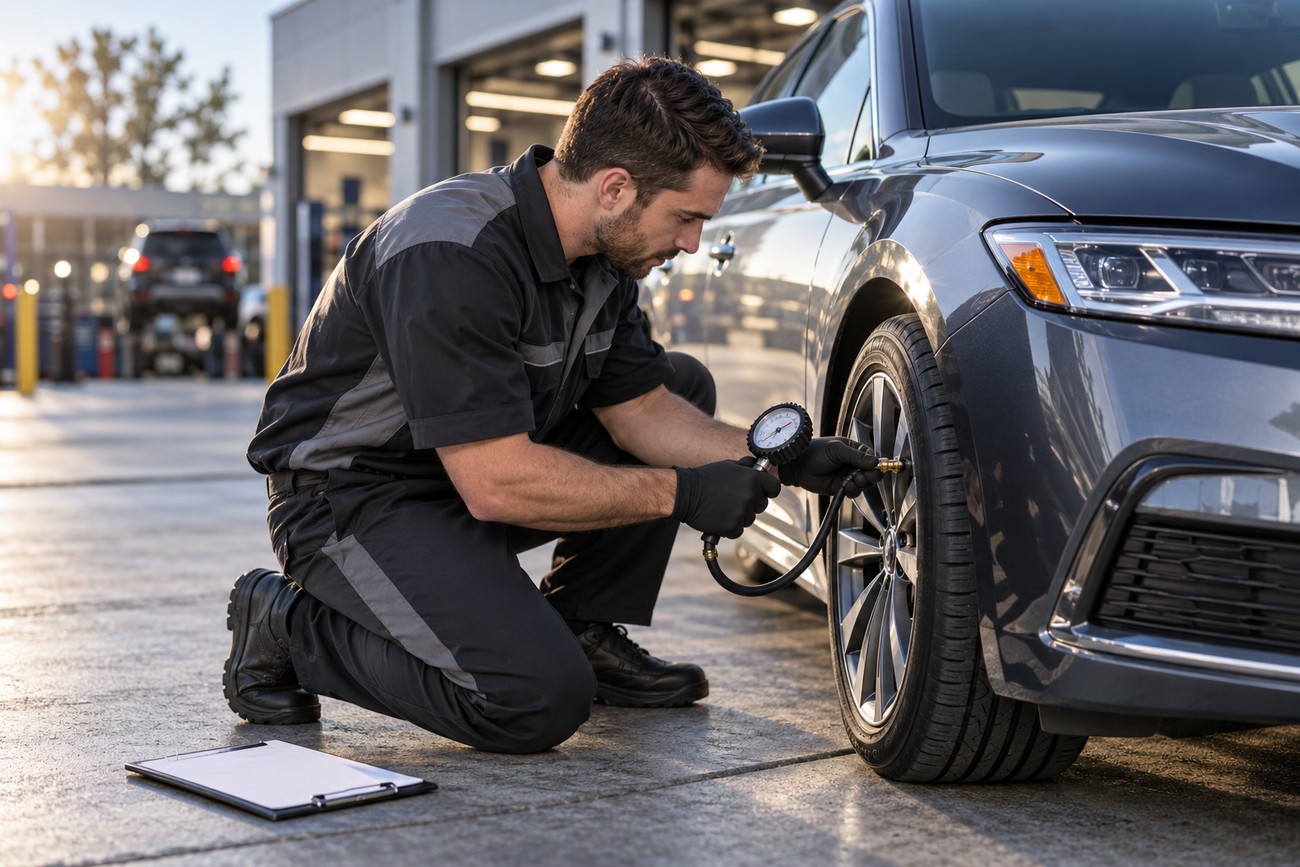
Begin with the simple checks that can change the diagnosis immediately. Verify cold pressure against the vehicle placard or owner’s manual, confirm tire size and direction, inspect tread condition, and look for visible damage. Record whether the steering wheel is off-center and whether the vehicle pulls constantly or only under a specific load.
Repeat the road test on a smooth, level section without potholes, ruts, or pronounced cross-slope. Use consistent loading and avoid deliberate steering correction. Note whether the symptom changes with road direction, braking, acceleration, or a different surface.
If the tires are non-directional, perform the permitted front-tire swap and repeat the same test. A changed pull direction points toward a tire; an unchanged direction keeps geometry, suspension, brakes, and road conditions in consideration. Directional tires must remain on their intended sides and rotation paths.
Request a complete four-wheel alignment check when the initial inspections do not identify the cause. The assessment should include camber, caster, toe, and rear thrust angle, followed by brake and suspension inspection when symptoms or measurements indicate a problem. A significant or changing pull on a suitable road requires diagnosis, rather than compensation with unequal tire pressure.
Frequently asked questions
These answers address common patterns that help distinguish a pull from normal road drift. They cover braking-related movement, road-test conditions, and steering-wheel position. Persistent or worsening symptoms still require an appropriate inspection.
Why does my car pull more when braking?
Braking can reveal a dragging brake or an uneven braking response that is less noticeable during steady driving. A caliper, pad, hose, or related component may create more resistance on one side, causing the vehicle to move in that direction as pedal pressure rises.
Note whether the pull appears only with the brake applied, whether one wheel becomes unusually hot, and whether there is noise or vibration. The vehicle needs a brake inspection alongside alignment and tire checks; a brake-related pull should not be treated as ordinary road drift.
How long should I test a car before deciding it has a pull?
Use repeated runs on an appropriate road rather than judging the vehicle from one movement. The road should be smooth and as level as practical, with consistent loading and no deliberate steering correction. Test in both directions if conditions allow, because pavement slope can favor one direction.
A repeatable symptom under similar conditions is more meaningful than a one-off movement caused by a rut, crown, crosswind, or steering input. The purpose is to establish a pattern, not to drive for a fixed distance or time.
Is it safe to keep driving when the steering wheel is constantly off-center?
A mild drift that changes with road slope is different from a worsening pull, steering looseness, brake-related movement, vibration, or unusual heat or noise. The latter symptoms justify prompt inspection because tires, brakes, steering, or suspension components may be involved.
Until the cause is checked, avoid high-speed driving and situations that require sudden steering corrections. A constantly off-center wheel can also indicate rear thrust-angle or alignment concerns, even when the vehicle remains controllable.