A click, slow crank, or intermittent no-start does not automatically prove that the starter motor has failed. The same symptoms can come from a weak battery, corroded terminals, a poor engine ground, excessive cable resistance, a starter relay, an immobilizer, or an engine-side problem that makes cranking unusually difficult.
Replacing the starter before checking those causes can leave the original fault in place. A sound diagnosis starts with battery voltage under load, voltage drop on both power and ground paths, the control circuit, and the solenoid. Those tests separate a failed motor from a wiring or control problem and can prevent an unnecessary replacement.
- What a Bad Starter Sounds and Feels Like
- Check the Battery, Grounds, and Voltage Drop First
- Test the Whole Starting Circuit Before Condemning the Motor
- What Usually Fails Inside a Starter
- Intermittent, Hot-Start, and Start-Stop Failures
- Repair or Replace the Starter?
- Mistakes That Turn a Starting Fault Into an Expensive Repair
- Frequently asked questions
- How can I temporarily get a reluctant starter to work?
- How long can I drive with an intermittent starter?
- How do I test if my starter motor is bad?
- What can be mistaken for a bad starter?
- How to trick a starter to work?
What a Bad Starter Sounds and Feels Like
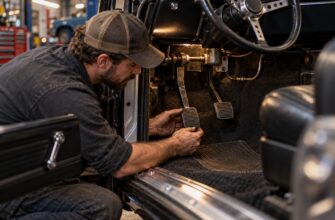
A silent response after turning the key or pressing the start button indicates that the starter is not engaging, but it does not identify why. The fault may be in the ignition switch, start button, relay, immobilizer, neutral-safety or clutch switch, low-voltage protection, solenoid, or the high-current motor circuit. Electronic control systems can prevent starter engagement even when the motor itself is healthy.
One solid click usually means that the solenoid is receiving at least some command. Poor battery power, bad grounds, corroded contacts, or worn solenoid contact plates can allow the click while preventing enough current from reaching the motor. Rapid clicking more often points to voltage collapsing as the solenoid engages and releases, although a poor connection can create a similar pattern.
Slow cranking is commonly blamed on the battery, but excessive resistance in the positive cable or engine-to-body ground can produce the same feel with a serviceable battery and starter. A grinding sound or loud metallic strike during engagement can indicate a damaged starter drive or flywheel teeth. If the engine cranks normally yet does not start, the fault may be fuel, ignition, compression, or engine-management related rather than the starter.
A starter that fails when hot and works again after cooling deserves particular attention. Heat can increase electrical resistance or reduce mechanical clearance in some older starter designs, exposing worn windings, bushings, bearings, or solenoid contacts. Intermittent operation is also significant: a starter can work at the repair shop and then fail in traffic, so the symptom should be documented while it is present.
Check the Battery, Grounds, and Voltage Drop First
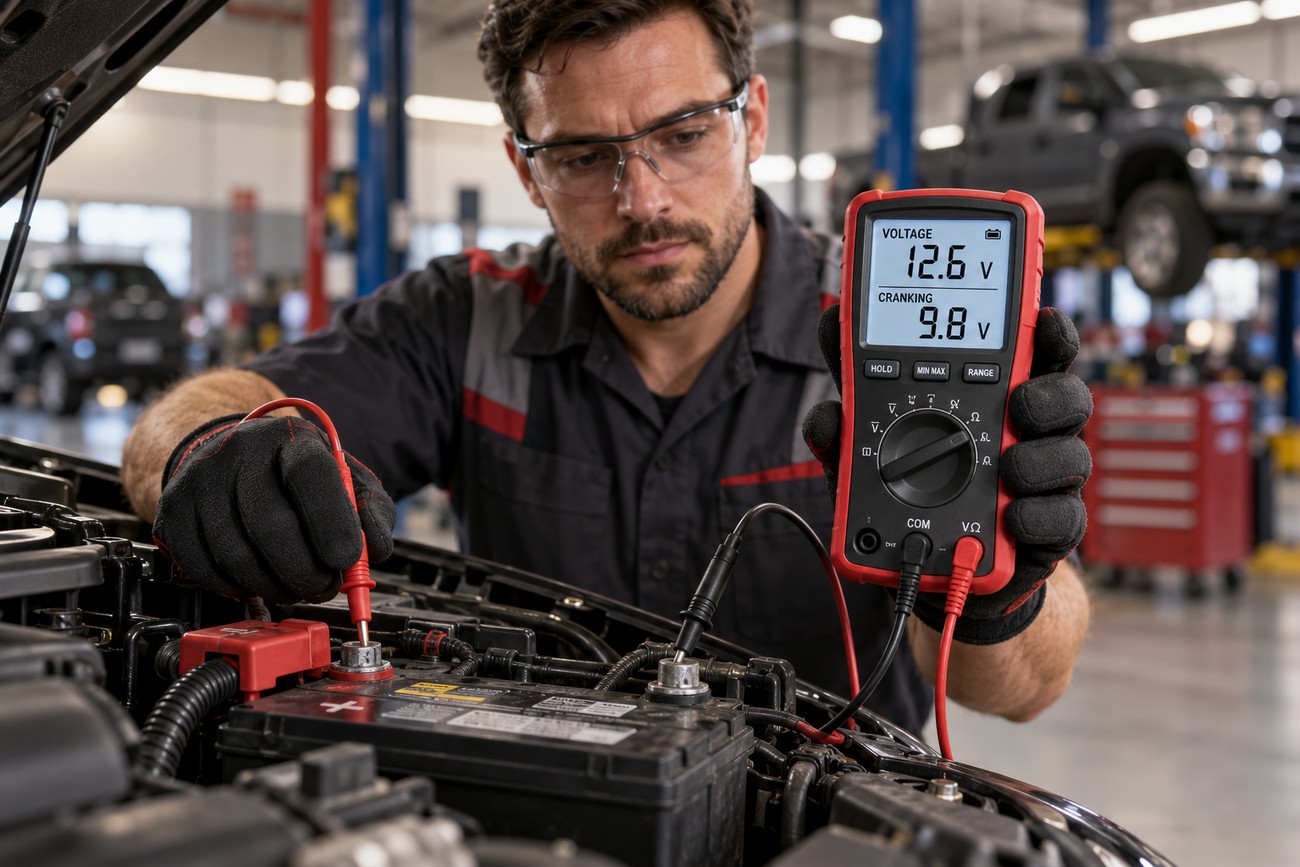
Battery and cable checks are the first diagnostic gate because the starter cannot be judged accurately without adequate power. A resting battery reading above 12 V does not prove that it can maintain voltage under load. During a 15-second starter load, battery voltage should generally remain at or above approximately 9.6–10 V.
Measure voltage directly at the battery posts while the engine is cranked, using a properly rated meter and keeping clear of belts, fans, and other moving parts. If the reading falls below the expected range, charge and test the battery, then inspect the terminals and cables. Avoid repeated long cranking, especially with a weak battery, because it can overheat the starter and cable connections.
Voltage-drop testing checks resistance while current is flowing. Place the meter across the battery positive post and the starter main terminal during cranking to test the positive path. Then test between the battery negative post and the starter housing, or a clean engine-metal point, to assess the ground path. About 0.5 V or less on either path is generally acceptable in a passenger car; above approximately 0.7–1 V indicates excessive resistance in wiring, terminals, or grounds.
The engine-to-body ground path is easy to miss because the battery terminals may look clean and the resting voltage may appear normal. A corroded or loose ground strap can imitate a weak starter, so technicians often test the negative path early rather than assuming the motor is at fault.
Repair the connection indicated by the voltage-drop test before condemning the starter. Clean metal contact surfaces, tighten the correct fasteners, and replace damaged cables or ground straps as required. Do not rely on a visual inspection alone; a cable can look sound while developing substantial resistance under starter load.
Test the Whole Starting Circuit Before Condemning the Motor
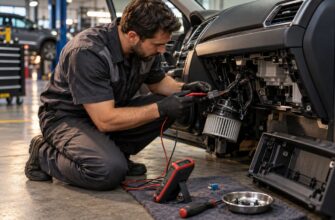
The starting system has two related parts: a low-current control circuit and a high-current power circuit. The ignition switch or start button sends a command through safety switches, the starter relay, and sometimes the immobilizer and engine control unit. The solenoid then connects battery power to the starter motor. A failure anywhere in that chain can look like a dead starter.
Check whether the solenoid receives the correct trigger voltage when the start command is given. If there is no trigger signal, test the relay, wiring, neutral-safety or clutch switch, alarm system, immobilizer, and any electronic start-interlock conditions. Low system voltage can also cause the control module to block engagement or withdraw the command.
A controlled direct-bypass test can help separate a control-side fault from a power-side fault, but it is a procedure for a qualified technician. The vehicle must be secured against movement, the transmission must be in Park or Neutral as appropriate, the parking brake must be applied, and the correct terminals and manufacturer procedure must be known. A careless jumper can cause sparks, unexpected engine movement, wiring damage, or a short circuit.
Current draw adds useful evidence when measured with a suitable clamp meter. A typical passenger-car starter draws approximately 100–200 A while cranking. A brief peak of approximately 300–400 A can be acceptable, while sustained high current combined with weak rotation suggests mechanical binding or internal starter wear. Low current with no rotation can instead indicate an open circuit, poor solenoid contacts, or a missing power path.
What Usually Fails Inside a Starter
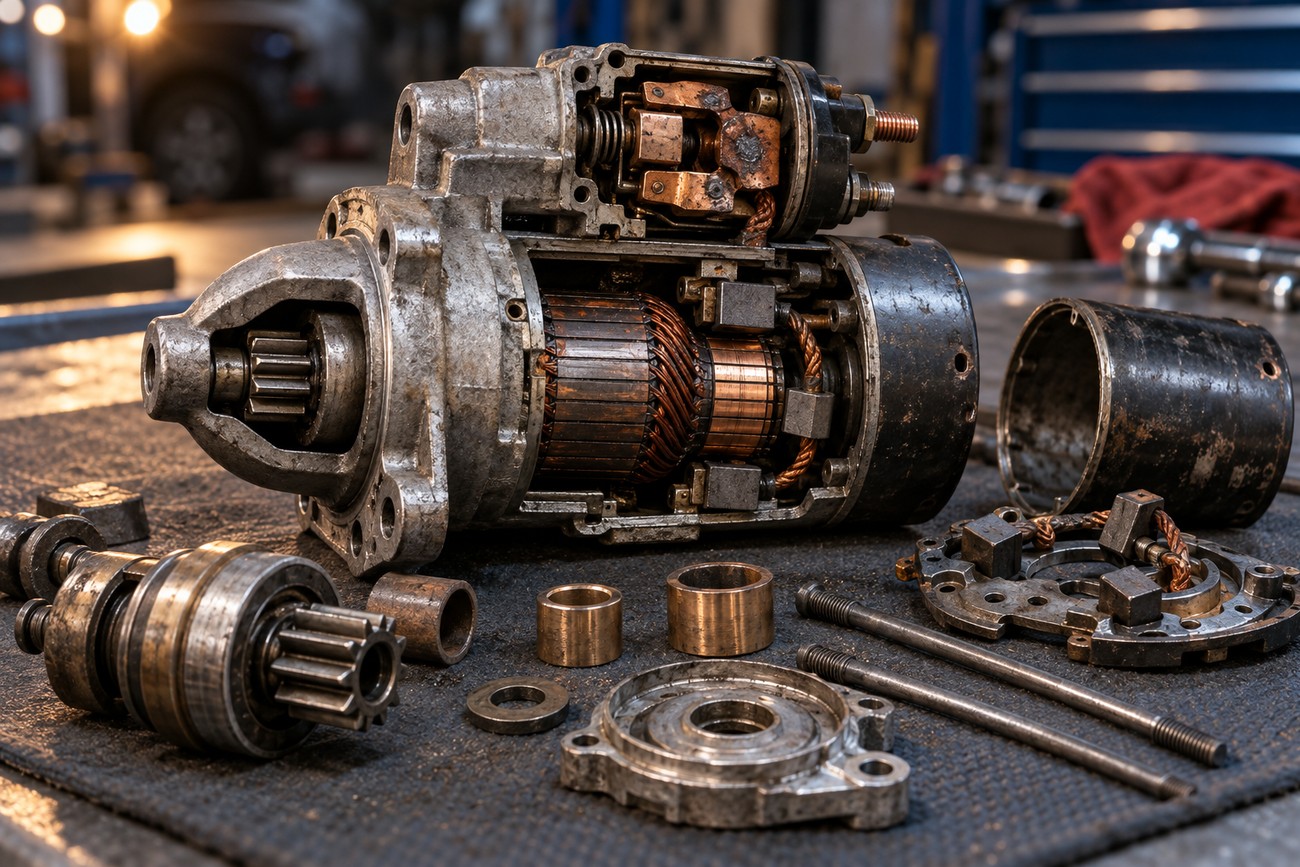
The solenoid is a frequent failure point. Its internal contact plates carry the heavy current needed by the motor and can become burned, pitted, or worn. Workshop experience commonly attributes about 30–50% of starter replacements to the solenoid and its worn contact plates, although the exact proportion varies by vehicle and repair practice.
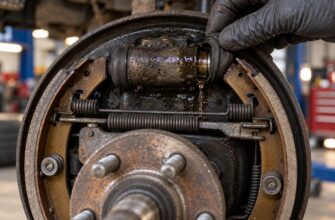
Brushes and the commutator can wear until the motor loses reliable contact, especially when the starter operates in a dirty or hot environment. Bushings or bearings may allow the armature to move off-center, increasing drag and causing the motor to bind. Damaged winding can produce high current, weak rotation, or a complete open circuit.
The overrunning clutch, often called the starter drive or Bendix, must engage the flywheel and then release once the engine starts. A slipping drive can produce free-spinning noise, while damaged teeth can cause grinding or a sharp metallic strike. A worn flywheel ring gear can create engagement noise at particular engine positions even when the starter motor itself spins correctly.
A bench test is useful but limited. A starter may spin freely without the load involved in turning the engine, so a satisfactory standalone test does not rule out an on-vehicle problem. Replacing only the brushes can also produce a short-lived repair if the bushings, bearings, commutator, solenoid, or starter drive remain worn.
Intermittent, Hot-Start, and Start-Stop Failures
Intermittent faults are easiest to misdiagnose because the vehicle may work normally by the time it reaches a shop. Loose terminals, corroded grounds, worn solenoid contacts, and heat-sensitive internal parts can all recover temporarily. Record whether the failure occurs cold, hot, after rain, after a long drive, or only in a particular gear position.
Heat can increase electrical resistance and reduce mechanical clearance in some older starter designs. A hot-only failure that disappears after cooling may point to an internal starter problem, but the battery, cable connections, and control signal still need testing. Capturing voltage, voltage drop, trigger voltage, and current during the actual failure is more useful than repeating a cold bench test.
Frequent short trips and repeated cold-weather starts reduce starter service life because the unit sees more operating cycles and the battery has less opportunity to recover. Start-stop systems also use the starter more often. Manufacturers may fit reinforced components for that duty, while heavy use can still accelerate wear in the starter, battery, and related connections.
Do not wait for a complete failure when a vehicle already has occasional hot no-starts or single clicks. An intermittent starter can leave the vehicle immobile without warning, turning a manageable repair into a recovery problem. Arrange diagnosis while the symptom is repeatable and avoid relying on a vehicle for remote travel until the cause is known.
Repair or Replace the Starter?
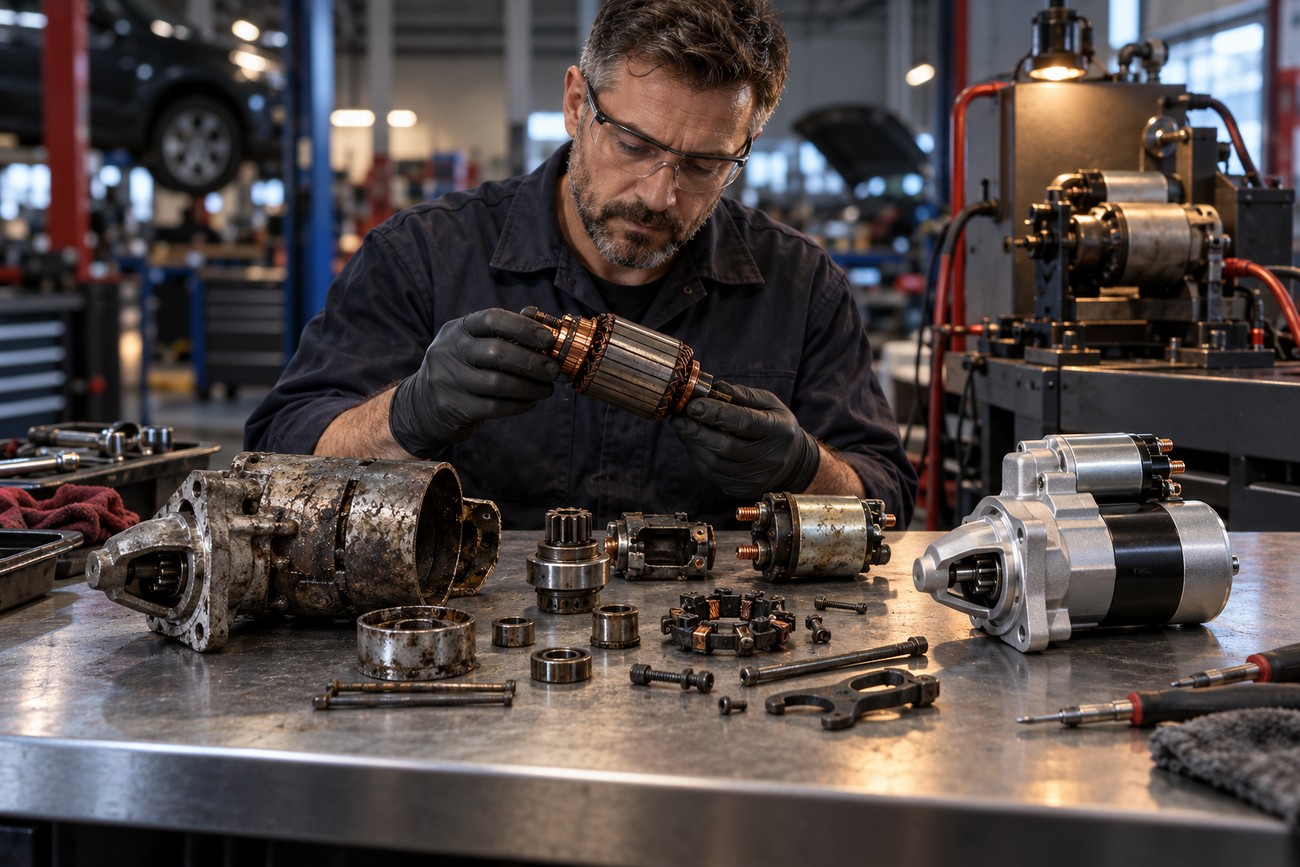
Repair and replacement can both be correct, depending on the failure and the quality of the available parts. Some manufacturers specify complete-unit replacement, while many automotive electricians service solenoids, brushes, windings, bushings, bearings, and starter drives. A repair is sensible when the housing, armature, and major components remain serviceable and the work includes proper inspection and testing.
A quality rebuild should address the complete wear pattern rather than replacing one visible part. New brushes will not correct a worn commutator, loose bushings, damaged bearings, weak solenoid contacts, or a failing starter drive. Ask what components were inspected or replaced and whether the rebuilt unit was tested under an appropriate load.
A new or remanufactured unit must match the original torque, mounting, electrical connections, rotation, and gear specifications. An inexpensive universal or incorrect high-torque starter can create engagement noise, increase demands on the battery and cables, or accelerate flywheel wear. In cold climates, a high-torque unit may place particular stress on an already marginal battery or ground path.
Under normal operating conditions, a starter may last approximately 150,000–250,000 km, but short trips, repeated cold starts, heavy start-stop use, and unresolved electrical faults can shorten that service life. Neither a new starter nor a rebuild will compensate for a weak battery, excessive cable resistance, a damaged ring gear, or a control-system fault.
Mistakes That Turn a Starting Fault Into an Expensive Repair
The most expensive mistake is buying a starter based on a single symptom. A click, slow crank, or no response does not by itself prove that the motor has failed. Check the battery under load, both cable paths, the ground straps, the solenoid trigger, and the starter relay before approving a complete-unit replacement.
Judging the fault by sound alone is also unreliable. Rapid clicking can reflect voltage collapse, while a single click can come from poor power, bad grounds, corroded contacts, or a solenoid fault. A resting battery reading above 12 V is not enough evidence because the battery and cables may fail to maintain starting voltage under load.
Repeatedly attempting to start a vehicle with a suspected seized starter can overheat cables, terminals, and the starter itself. It can also create a fire risk if a damaged component or short circuit draws excessive current. Stop the attempts, allow the system to cool, and arrange proper testing rather than relying on repeated jump-starts.
Do not ignore occasional hot failures or rare clicks simply because the vehicle eventually starts. Ask for measurements and a clear explanation of the failed component. Replacing the starter without correcting a poor ground, damaged cable, control fault, or flywheel problem can reproduce the original symptom and add another unnecessary part.
Frequently asked questions
How can I temporarily get a reluctant starter to work?
After securing the vehicle, selecting Park or Neutral, applying the parking brake, and keeping clear of moving parts, a light tap on the starter housing may temporarily free worn brushes in some starters. This is only a roadside measure and may work once or not at all.
Do not repeatedly strike the housing, bridge terminals, or continue using the vehicle as though the problem were repaired. Those actions can cause sparks, damage, or unexpected movement. Arrange diagnosis or recovery as soon as possible.
How long can I drive with an intermittent starter?
There is no dependable mileage estimate. An intermittent starter can fail on the next start, particularly after the engine becomes hot, leaving the vehicle immobile wherever it is parked.
Use the vehicle only for a short, controlled trip to a repair facility if the starting symptom is currently manageable and the vehicle can be safely operated. Avoid remote travel, switching the engine off in inconvenient locations, or relying on jump-start equipment as a plan.
How do I test if my starter motor is bad?
Test the battery under load, measure voltage drop on the positive and engine-ground paths, verify the solenoid trigger signal, and measure starter current while cranking. The evidence points toward the starter when the battery and cables maintain correct voltage, the control command is present, and the motor still draws abnormal current or cranks weakly.
A bench test can support the diagnosis, but it may not reproduce the load of turning the engine in the vehicle. The result should be compared with on-vehicle measurements rather than treated as conclusive on its own.
What can be mistaken for a bad starter?
A weak battery, corroded terminal, damaged positive cable, poor engine-to-body ground, faulty starter relay, solenoid contacts, ignition switch, immobilizer, alarm, neutral-safety or clutch switch, and low-voltage control strategy can all imitate a bad starter. Engine-side mechanical resistance can also make a sound starter crank slowly.
The symptom pattern helps narrow the list, but loaded voltage and voltage-drop measurements provide stronger evidence than sound alone.
How to trick a starter to work?
There is no safe trick that repairs a defective starter. A light tap on the housing may briefly free worn brushes, but bridging terminals or bypassing safety and immobilizer circuits can cause sparks, vehicle movement, wiring damage, or injury.
Use temporary roadside measures only to move the vehicle to a safe place, then stop and have the starting circuit tested. A repeated workaround can conceal a fault that may leave the vehicle stranded or damage the battery and wiring.