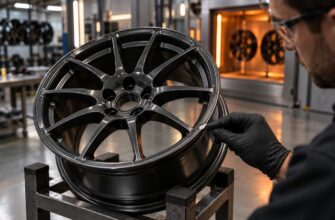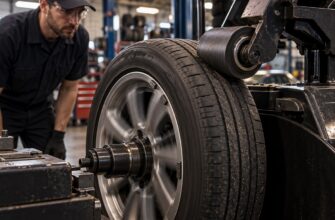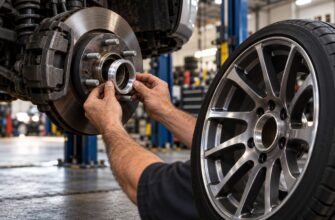
A wider wheel can give a tire a more supported shape and change the way a car responds to steering. It may also deliver the look you want. Yet a tire that mounts on that wheel can still ride harshly, follow grooves in the road, or rub against the car when you turn or drive over a bump. A successful installation is only the first part of choosing a suitable width.
Start with the approved rim-width range for the exact tire model and size you intend to use. Then check the wheel and mounted tire against the vehicle’s requirements, including clearance, load capacity, and offset. Those are separate decisions: tire-maker approval tells you whether the tire may be used on that width of rim, while a vehicle-fitment check tells you whether the complete assembly suits your car.
- What wheel width does to a tire
- Start with the tire maker’s approved rim-width range
- Choose within the approved range for your driving
- Narrow, middle, or wide rim: the trade-offs at a glance
- Check vehicle fitment beyond rim width
- Why a wider setup can disappoint on the road
- Verify the combination before buying or driving
- Frequently asked questions
- What is the 3% rule for tire size, and does it apply to wheel width?
- What does the J mean in a wheel size such as 7J?
What wheel width does to a tire
Wheel width is the nominal distance between the surfaces where the tire beads seat, rather than a measurement across the outside edges of the wheel. A tire’s marked section width describes its width across the sidewalls under specified measurement conditions. It does not describe tread width, which is the width of the road-contacting tread and varies with tire design. Matching a wheel to a tread that looks about the same width misses the dimension that tire specifications actually use.
The tire manufacturer measures nominal section width on a specified measuring rim. Mount the same tire on a narrower approved rim, and its section width generally decreases; mount it on a wider approved rim, and it generally increases. The sidewalls change angle as the bead seats move apart or closer together. That change can affect steering response and the way impacts feel, even though the tire’s sidewall marking stays the same.
Two tires bearing identical size markings can also have different actual dimensions. Their construction and tread design may differ, and published measurements may use the specified measuring rim rather than the wheel you plan to install. For a tight fit near a suspension part or wheel arch, the number molded into the sidewall is therefore a starting description, not a reliable clearance measurement.
A wider rim may support a tire’s sidewalls more firmly during a quick direction change, but that does not automatically create more grip. The tire’s compound, construction, pressure, load, temperature, and the road surface still matter. Think of wheel width as one influence on the tire’s shape and behavior, rather than a shortcut to a predictable handling gain.
Start with the tire maker’s approved rim-width range
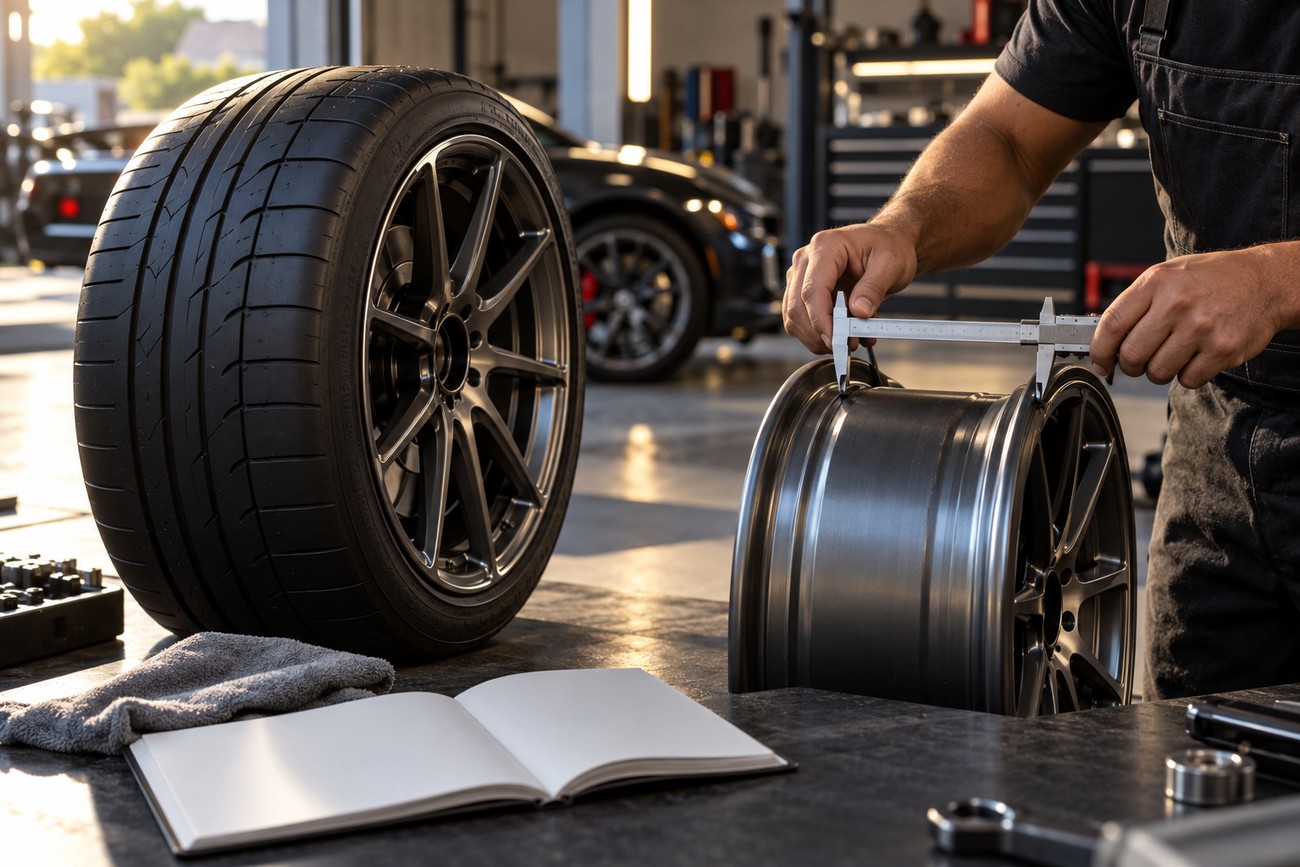
Identify the tire’s exact model and full size designation before looking up wheel widths. Find the manufacturer’s technical specifications for that combination and locate both its approved rim-width range and its measuring rim. The measuring rim tells you the basis for published dimensions; the approved range tells you which nominal wheel widths the tire maker permits. A range printed for another tire of the same marked size is no substitute.
Next, compare the width marked on the proposed wheel with that approved range. Avoid a universal rule based on a fixed difference between tire and wheel width: tire proportions and manufacturer specifications vary too much for such a shortcut to establish approval. If the technical sheet is unavailable or unclear, ask the tire manufacturer or a knowledgeable supplier to confirm the exact combination before ordering.
A fitter may be able to mount a tire outside its approved range, and a listing may describe it as “fitting” a particular wheel. Neither the fact that the beads seat nor a seller’s general fitment claim establishes tire-maker approval. This distinction matters most at the edges of a proposed setup, where a visual check can make an unsupported combination appear ordinary.
Once tire-to-rim approval is confirmed, check the vehicle’s permitted tire and wheel specifications. The wheel must have adequate load capacity, and the tire must meet the vehicle’s applicable load and sizing requirements. Those checks are independent of rim width: an approved tire-and-wheel pairing can still be unsuitable for the vehicle it is intended to carry.
Choose within the approved range for your driving
A wheel toward the narrow end of a particular tire’s approved range brings the beads closer together and gives the mounted tire a rounder sidewall shape. That may feel more compliant over uneven pavement and can leave more sidewall between the road and the rim edge. Under load or in abrupt maneuvers, however, the tire may feel less firmly supported and steering response may become less precise.
Near the wide end of the approved range, the same tire generally has a straighter, more firmly supported sidewall. Some drivers prefer the more immediate steering feel, especially during hard cornering. The trade-off can be a firmer response to sharp bumps and less sidewall protection for the rim when a pothole reaches the wheel. Remaining inside the approved range makes the fitment permissible; it does not make each width ride alike.
For daily driving, a suitable original-equipment width or a width nearer the middle of the tire’s approved range is often a sensible place to begin. It leaves room to weigh steering feel against ride quality without choosing an extreme for appearance alone. This is a starting point, not a claim that the middle is ideal for every tire or car. Your usual roads, loads, and vehicle requirements still shape the choice.
An off-road setup illustrates the compromise. A narrower approved wheel may appeal to a driver seeking a more compliant feel and greater rim-edge protection on rough surfaces, while the same combination can feel less precise on pavement. If comfort is the main goal on a road car, consider whether an appropriate tire profile within the vehicle’s permitted sizing would address it more directly than moving to the widest approved wheel.
Narrow, middle, or wide rim: the trade-offs at a glance
These are qualitative differences within one exact tire’s manufacturer-approved rim-width range, not size pairings or vehicle-fitment approvals.
| Position within the approved range | Likely steering feel | Comfort or impact trade-off | Essential caveat |
|---|---|---|---|
| Narrower approved-range fitment | May feel less precise as the sidewall flexes under load. | May feel more compliant and leave more sidewall protecting the rim edge. | Confirm the exact tire’s approval; a softer feel is not guaranteed. |
| Middle approved-range fitment | Often a balanced starting point for everyday steering response. | Avoids selecting either end of the range solely for its expected ride character. | It is not a universal optimum or proof of vehicle clearance. |
| Wider approved-range fitment | Generally supports the sidewall more firmly in hard cornering. | May feel firmer and leave less protection against sharp impacts. | The tire’s technical specifications and a separate vehicle-fitment check still apply. |
Check vehicle fitment beyond rim width

Begin with the vehicle’s permitted wheel diameter and tire sizing, then confirm that the wheel and tire meet its load requirements. The correct rim width cannot compensate for a wheel of the wrong diameter or inadequate load capacity. Confirm the appropriate inflation pressure for the vehicle and load as well; a pressure chosen only because the tire looks suitably shaped is not a fitment check.
Wheel offset describes the position of the mounting face relative to the wheel’s centerline. Changing offset moves the wheel’s position in the arch; changing rim width alters the distances from that centerline to its inner and outer edges. Consider both measurements together. A setup can gain space beside the outer arch while losing space near the suspension, or make the opposite trade.
Allow for the tire’s actual mounted shape, not only a catalog section-width figure. The same tire generally becomes wider across its sidewalls on a wider approved rim, and two models with identical marked sizes may measure differently. If the available space is tight, use the tire maker’s dimensions as a planning aid and verify the mounted assembly rather than treating its nominal size as an exact measurement.
Clearance also changes while the car is in use. Check the inner space near suspension parts and the outer space near the arch through relevant steering and suspension movement, accounting for normal loads. A tire that does not touch anything while the vehicle is parked may rub at steering lock or as the suspension compresses. A qualified fitter can help assess clearances that are difficult to see with the wheel installed.
Why a wider setup can disappoint on the road
Some drivers notice tramlining after fitting wider tires: the car starts following longitudinal grooves or ruts and needs more steering correction. A wider wheel and tire package may also transmit sharper impacts into the cabin. Neither result is inevitable, and width alone may not explain a change in feel. Tire construction, pressure, road surface, and the vehicle’s setup can all influence what the driver notices.
The opposite complaint can arise when a tire is mounted on a wheel near the narrow end of its approved range. More sidewall movement may make steering feel vague during quick inputs, even when the combination is permitted. If the response disappoints, check pressure and vehicle condition before blaming rim width alone. A different position within the approved range may help, but it should be chosen with the rest of the fitment in mind.
Maximum width is no guarantee of maximum real-world grip or comfort. Compound, load, temperature, pressure, and road conditions influence traction; wheel and tire weight, rolling resistance, and the way the car reacts to uneven pavement can affect the overall result. A wider package chosen for appearance may therefore feel less settled on familiar roads, even if its components are individually approved.
Keep dissatisfaction separate from a safety or approval problem. An approved, vehicle-suitable setup can still deliver road manners you dislike. An unapproved tire-to-rim combination requires correction rather than a period of adjustment, regardless of how it feels on a short drive. If a change produces rubbing, inspect and resolve it before further use rather than relying on a parked clearance check.
Verify the combination before buying or driving
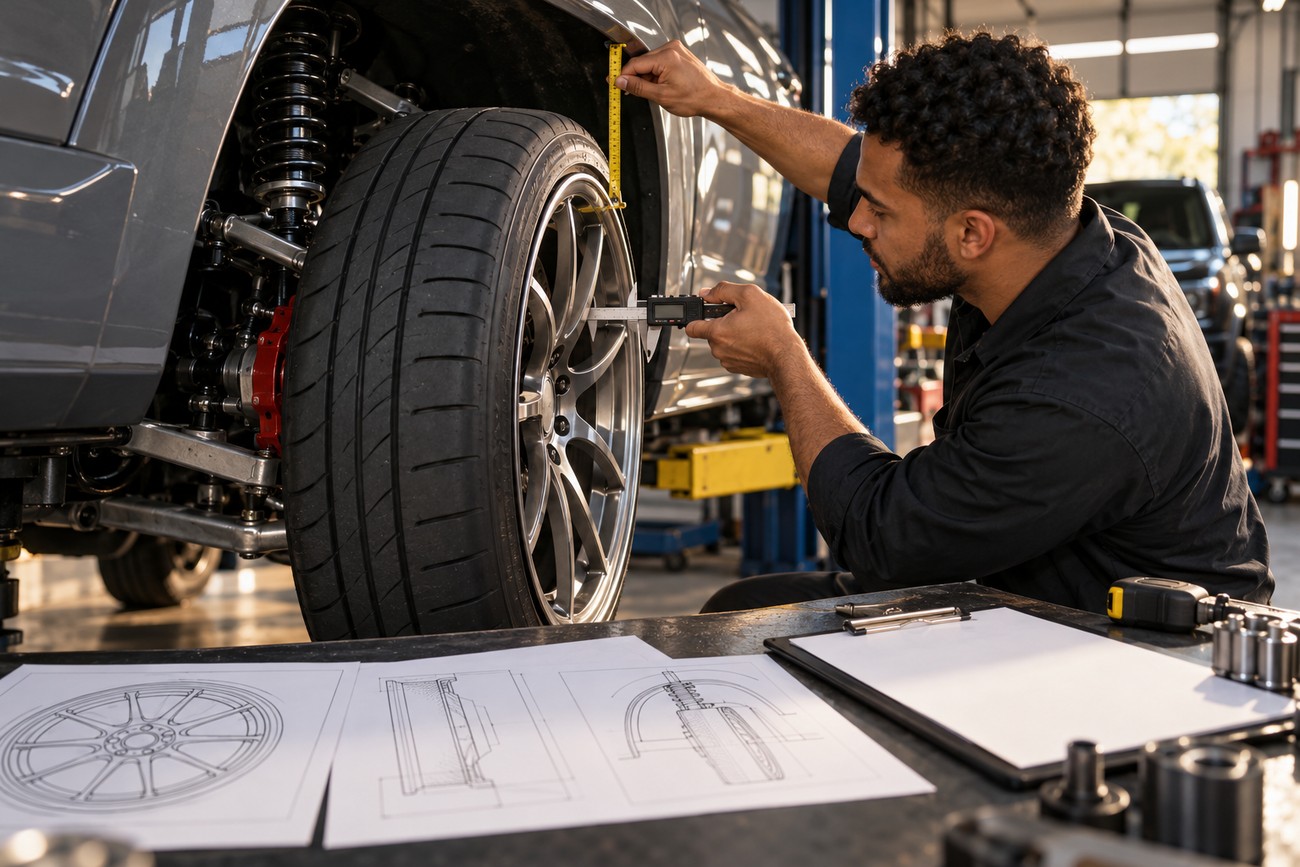
Record the exact tire model and size, along with the proposed wheel’s diameter, width, offset, and load rating. Use the tire maker’s technical specifications to confirm that the wheel width falls within the approved range for that tire. Keep the measuring rim and published tire dimensions in view when estimating space: they describe a specified measurement setup, which may differ from your chosen wheel.
Check the vehicle’s permitted sizes and load requirements separately. Compare the proposed assembly with available inner suspension clearance and outer arch clearance before purchase, taking the offset and the tire’s likely mounted dimensions into account. If a seller can confirm only that the tire will mount, ask for the missing tire-maker and vehicle-fitment information rather than treating that assurance as complete.
After installation, have a qualified fitter verify correct mounting, wheel and tire load suitability, and appropriate inflation pressure for the vehicle. The fitter should also assess clearance through relevant steering and suspension movement. Beads that have seated correctly show that the tire has mounted; they do not establish that its rim width is approved or that it will clear the car in use.
Keep the tire specification and wheel details with your records. They make a later replacement easier to check, particularly if you switch to a different tire model while keeping the wheels. Repeat the approval lookup for the replacement tire: identical sidewall size markings do not guarantee identical approved rim-width ranges or actual mounted dimensions.
Frequently asked questions
These common sizing terms address different parts of fitment. Use them for the decision they describe, rather than treating any one rule or marking as approval for a complete wheel-and-tire assembly.
What is the 3% rule for tire size, and does it apply to wheel width?
The 3% rule is an approximate comparison of overall tire diameter when considering a change of tire size. It does not apply to wheel width and is not a safety rule for matching a tire to a rim. Even if a proposed tire size appears close to the original in overall diameter, check the vehicle’s permitted sizing, the tire’s load suitability, and the exact tire model’s approved rim-width range. The comparison does not establish clearance during steering or suspension travel.
What does the J mean in a wheel size such as 7J?
The J identifies the wheel’s flange profile; it is separate from the nominal width, which is indicated by the number. It is not a tire-compatibility rating. Read the complete wheel specification, including diameter and offset, and check tire-maker approval and vehicle requirements rather than using the letter to judge fit.