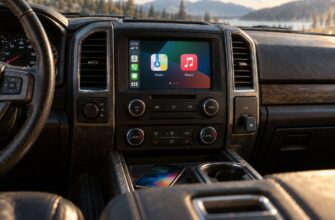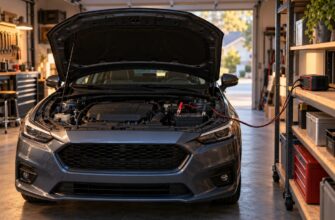
A well-rated jump starter can look reassuring in the glove box until a cold morning leaves the engine turning slowly—or not turning at all. The large amp figure on its case may describe a brief peak, while the mAh figure describes stored capacity. Neither tells you, on its own, whether the unit can deliver enough power to start your particular vehicle in those conditions.
A useful choice begins with the engine and the likely starting conditions, then tests the product claims against them. Clear current ratings, usable clamps, and a realistic charging routine matter more than an impressive number that lacks a measurement method. A jump starter also has to be ready after months in storage, not merely capable on the day it was charged.
- Start with the vehicle, not the biggest number on the box
- Read amp, peak-amp, and capacity claims correctly
- Choose lithium or supercapacitor power for how you will use it
- Plan for cold weather and months of storage
- Inspect the clamps, protections, and connection procedure
- Make a shortlist that survives a real roadside test
- Frequently asked questions
- What should I do if the engine still will not start with the jump starter connected?
- Where do I connect a jump starter if the battery is hard to reach?
- What portable jump starter did Consumer Reports recommend?
Start with the vehicle, not the biggest number on the box
Check the owner’s manual or vehicle specifications for engine displacement and fuel type before comparing jump starters. A device advertised for a small gasoline engine may be a poor match for a larger engine or a diesel. Also check whether the vehicle manual identifies special jump-start points or procedures, since these affect which cables and clamps you can use.
Around 200–300 A is a rough starting-current reference found in guidance for small gasoline engines. It is neither a guaranteed minimum nor a product rating sufficient in every condition. Diesel engines generally call for more starting current than comparable gasoline-engine applications, so a vague claim of “suits most cars” deserves particular scrutiny if you drive one.
Think about where the vehicle spends the night and what usually causes the starting problem. Cold raises the difficulty of starting an engine while reducing the power a lithium jump starter may deliver. An aging or deeply discharged vehicle battery can also make a successful start less predictable. A device that works during a mild-weather test may therefore offer little margin during a winter breakdown.
Use the manufacturer’s supported-engine list as a screening tool, then read its conditions and exclusions. Claims such as gasoline engines up to 6–8 L or diesels up to 16 L are model-specific marketing limits, not universal jump-starter capabilities. If your engine sits near a stated limit, seek credible evidence for your fuel type and climate rather than assuming the advertised maximum will hold on the hardest day.
Read amp, peak-amp, and capacity claims correctly
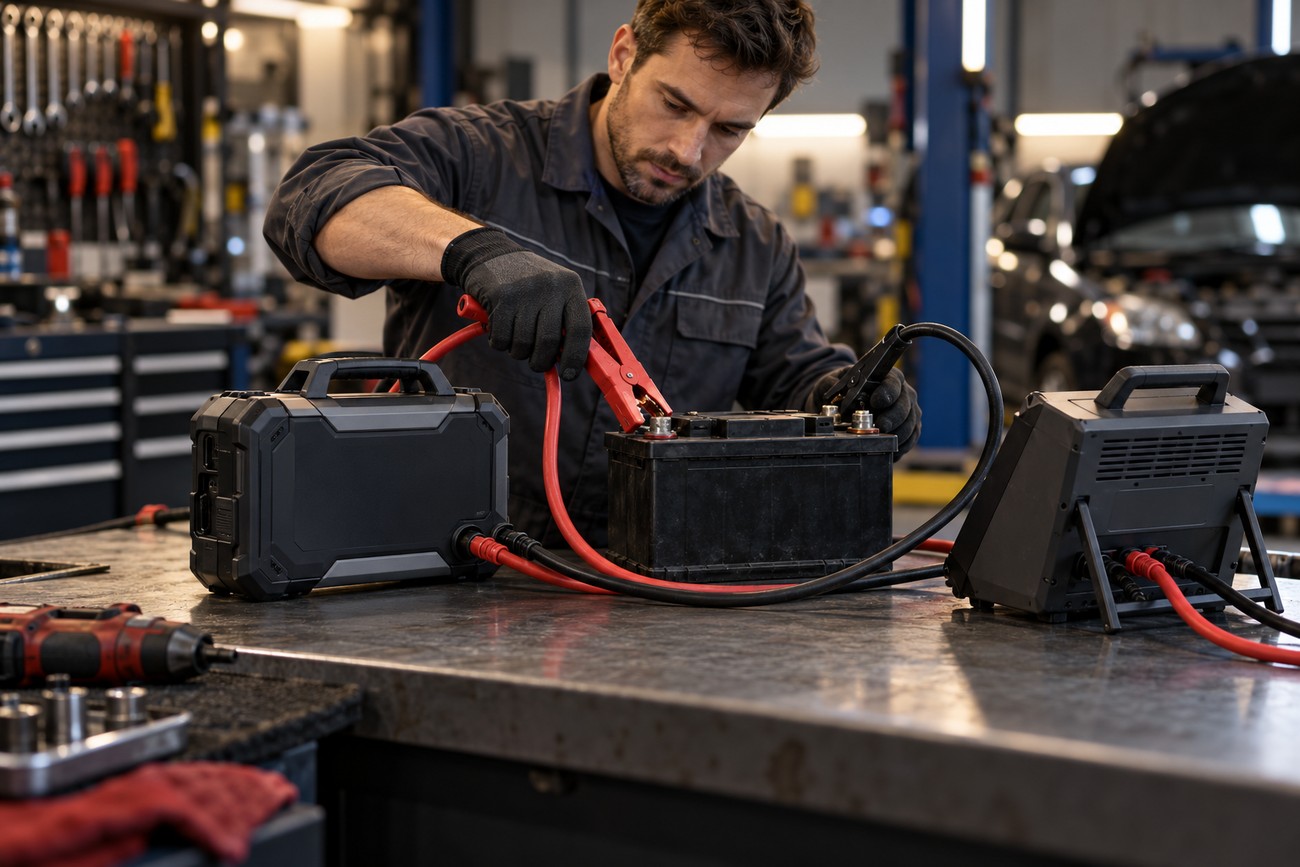
Starting-current capability matters because the starter motor needs substantial current while it turns the engine. A peak-amp claim usually refers to a brief output; it should not be treated as a directly comparable measure of sustained starting ability. Look for a definition of each rating, including how long the output can be delivered and the conditions under which it was measured.
Advertised working-current figures often appear around 200–600 A, while some models claim peak figures of 1,000–4,000 A or more. Those ranges describe what appears in product listings, not a verified performance standard. Different measurement methods can make two identical-looking amp figures mean different things, especially when one seller provides no test conditions.
A striking peak-amp figure is weak comparison evidence if the seller cannot explain how it was measured or show meaningful starting results in cold conditions. Set that claim aside and compare products with intelligible ratings and tests instead.
Capacity, commonly printed in mAh, describes an energy reserve; it does not alone establish the current a unit can deliver for starting. A large reserve may help with repeated use or accessory charging, but it cannot compensate for inadequate starting output. Capacity figures can also be presented in ways that are difficult to compare unless the stated voltage or energy rating is clear.
For a useful shortlist, match each unit’s supported engine types to your vehicle, then look for clearly defined current ratings and credible cold-start testing. Check what the testing actually involved rather than accepting an unsupported “all-weather” label. Warranty and return terms also matter: they give you a practical option if a device fails an appropriate check with your vehicle, though they do not prove that it will start the engine.
Choose lithium or supercapacitor power for how you will use it
Most portable jump starters use Li-ion or lithium-polymer batteries. They store their own energy, which makes them straightforward to carry for an emergency, provided you keep them charged. Their trade-off is that long storage and cold conditions can leave less usable power than the indicator or packaging suggests.
Supercapacitor jump starters offer a different arrangement. Rather than relying on a large stored battery charge in the same way, they typically need to gather energy before a starting attempt. Some models require roughly 2–4 minutes of pre-charging, depending on the device and available energy source. Check the permitted sources and connection procedure in the instructions before treating one as your emergency plan.
That dependence matters if the vehicle battery is severely depleted. A supercapacitor model may be designed to draw energy from a weak battery, but its ability to do so has limits; some devices offer other charging inputs. Claims that supercapacitors remain ready through long storage do not mean every unit can start a car without an available source of energy.
Choose based on the roadside situation you are preparing for. A maintained lithium unit carries its own starting reserve, while a supercapacitor unit may reduce the need to maintain a stored lithium charge but add a pre-charge step. For either type, verify that its instructions cover your vehicle and that you understand what must happen before you can crank the engine.
Plan for cold weather and months of storage
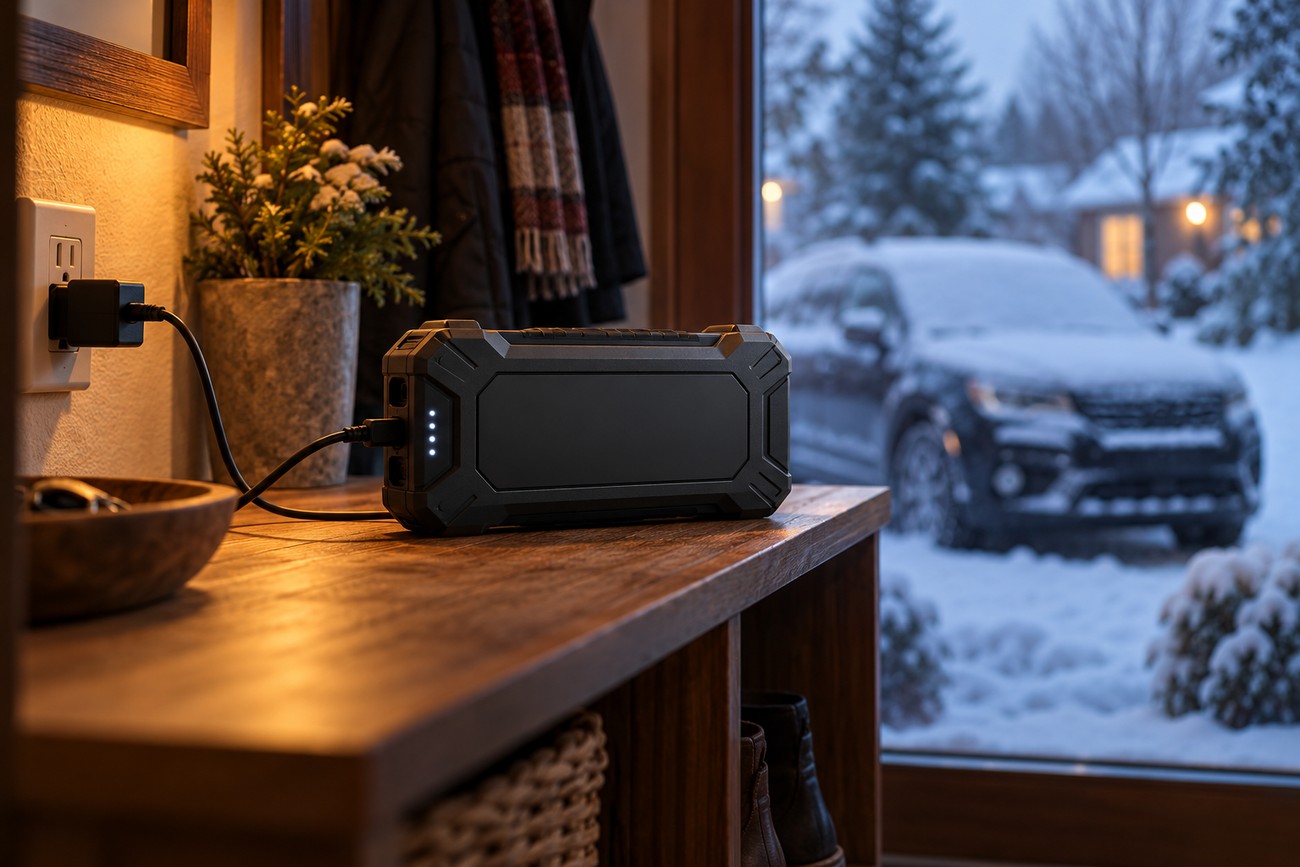
A charged-looking display is not a cold-start guarantee. Cold can substantially reduce the effective power available from a lithium jump starter, particularly if the unit has been left in a freezing vehicle. At the same time, the vehicle’s own battery may be weaker in the cold, so the jump starter faces a harder task just as its output becomes less dependable.
Follow the device’s storage-temperature and recharging instructions, and check its charge periodically. Avoid leaving a lithium unit discharged for months and expecting it to work immediately. Before use in cold conditions, bring it to a usable temperature as directed by its manufacturer; do not improvise heating methods or assume that charging or operating limits are the same for every model.
Keep the condition of the vehicle battery separate from the condition of the booster when diagnosing a failed start. A jump starter can help a battery that cannot supply enough starting power, but a severely depleted or failing battery may still complicate the attempt. If the engine does not respond as expected, the problem may also lie elsewhere in the vehicle.
Repeated unsuccessful cranking can reduce the power available for the next attempt. Respect the device’s limits on attempt length and recovery time, and stop rather than running through its remaining charge without checking the connections and indications. A practice check under the conditions allowed by both manuals is more informative than discovering an overlooked operating step at the roadside.
Inspect the clamps, protections, and connection procedure
Connection hardware deserves attention before purchase. Check whether the cables can reach the vehicle’s approved jump points without stretching across moving or hot parts, and whether the clamps can grip those points securely. A crowded engine bay or remote connection post can make a short, awkward cable a more serious drawback than its product photo suggests.
Inspect available close-up photos, instructions, or the unit itself for clamp construction and cable attachment. Poorly made hardware can be a weak point on some models, although price alone does not establish cable quality. A loose clamp can interrupt an attempt even when the jump starter’s electrical rating appears suitable.
Many modern units include reverse-polarity and short-circuit protection. These features are worth prioritizing over extra USB ports or other accessories, but they do not replace checking polarity and following both the vehicle and jump-starter manuals. Confirm what the device’s status lights or warnings mean before an emergency, especially if it has an override mode with different safeguards.
CE marking or a stated safety standard does not establish equal real-world cold-start performance across devices. Treat such claims as separate from evidence that the unit can start your engine, and check the instructions for the correct order of connections and removal. If the approved connection points are hard to reach, choose hardware that fits them rather than planning to attach a clamp somewhere more accessible.
Make a shortlist that survives a real roadside test
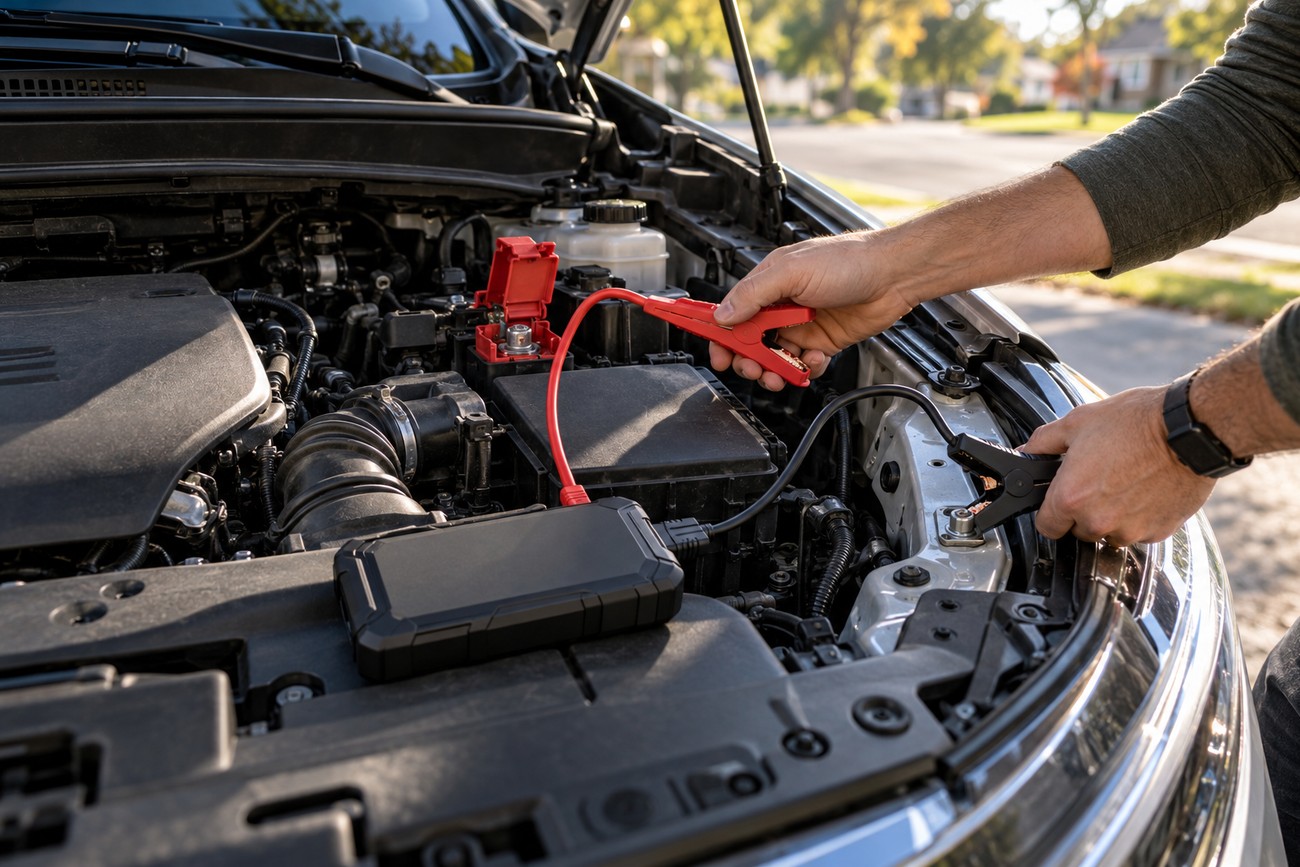
Start with a short list of units whose manufacturers explicitly support your engine size and fuel type. Remove models that rely on a large peak-amp figure without explaining the rating or offering meaningful evidence for cold use. A higher mAh figure cannot settle that uncertainty either: stored energy and starting-current delivery answer different questions.
Next, assess the parts you will handle. Check cable reach, clamp grip, polarity warnings, and whether the instructions clearly identify the connection sequence. Then consider the ownership work: where the unit may be stored, how you will check and restore its charge, and what warranty or customer support is available if it does not perform as described.
A multipurpose model can be useful if you also need its accessory functions, but those features should come after credible starting performance. USB ports and lights will not make an underspecified unit suitable for a diesel or improve a clamp that cannot reach an approved jump point. Cold weather and vehicle-battery condition can change the outcome even when the advertised engine-size limit includes your car.
Before relying on a purchase, read both manuals and check that its clamps, leads, and operating steps work with your actual vehicle. Make any functional check only as the manufacturers permit; there is no need to deliberately run down a healthy battery. If starting trouble recurs, have the vehicle battery and charging system assessed. A jump starter may get you moving after an occasional discharge, but it repairs neither a failing battery nor the fault that left it flat.
Frequently asked questions
The right next step depends on the vehicle’s approved procedure and the jump starter’s indications. Keep both sets of instructions accessible, since connection points, warnings, and operating limits vary.
What should I do if the engine still will not start with the jump starter connected?
Stop repeated cranking and check the jump starter’s warning lights or messages, charge status, and attempt limits. With the system in a safe state as directed by the manuals, verify that the clamps are on the approved points, have secure contact, and match the specified polarity. Do not bypass a warning simply to force another attempt.
If the connections and device status appear correct, consider causes other than insufficient battery power. An engine that cranks normally but will not fire, for example, needs a different diagnosis from one that will not crank. Follow the vehicle manual’s guidance and seek roadside assistance or a qualified inspection if the cause is unclear.
Where do I connect a jump starter if the battery is hard to reach?
Look in the vehicle owner’s manual for manufacturer-designated remote positive and negative jump points. Some vehicles provide these under the hood even when the battery is elsewhere or covered. Use the specified points and the connection order in the vehicle and device instructions.
Do not choose an exposed bolt or metal bracket merely because a clamp fits it. An improvised point may provide poor contact or conflict with the vehicle’s prescribed procedure. If the jump starter’s leads cannot reach the approved points safely, use suitable equipment or get assistance rather than stretching the cables.
What portable jump starter did Consumer Reports recommend?
Check Consumer Reports’ current, dated test results for its latest recommendation; a named pick can change, and a recommendation without its test date and conditions is easy to misapply. Review what the publication tested, including the vehicles and temperatures involved, before using its result as a buying decision.
Compare any recommended model with your engine, fuel type, climate, and approved connection points. Then confirm its specifications and instructions with the manufacturer. A favorable test result is useful evidence, but it does not guarantee a start with a colder, more demanding vehicle or a battery in worse condition.