The horsepower promised by a cat-back exhaust often exceeds what the car delivers on the road. On a stock naturally aspirated vehicle, the main gain is frequently a different exhaust note, while a poorly chosen system can add cabin drone, vibration, heat, or fitment problems. A louder car may feel faster without producing a meaningful increase in wheel horsepower.
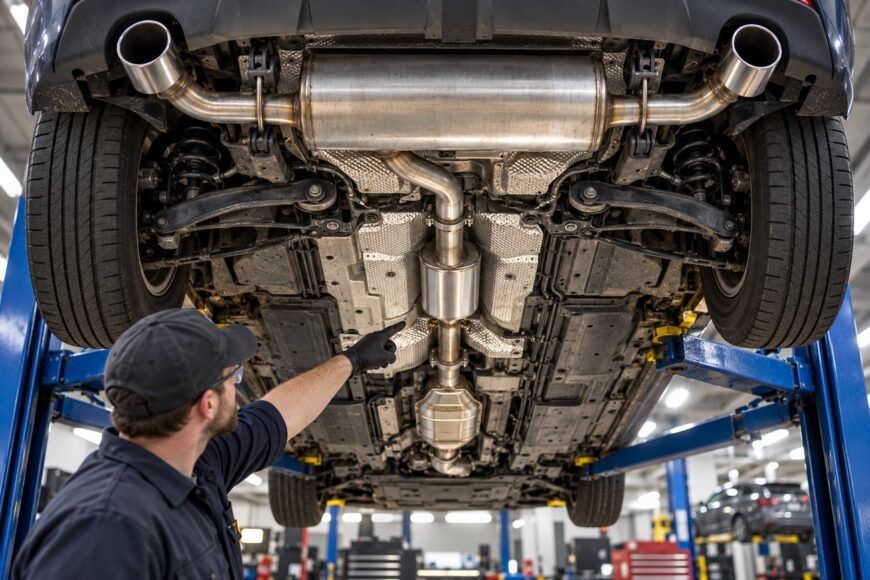
A cat-back is the exhaust section from the catalytic converter or its outlet to the tailpipe. It usually includes the mid-pipe, resonator or resonators, rear muffler, hangers, and tips. Choosing one means balancing power, sound, comfort, legality, durability, and installation quality rather than selecting the largest pipe or the loudest muffler.
- What a Cat-Back Exhaust Actually Replaces
- Power Gains, Pipe Diameter, and the Limits of Flow
- Sound, Drone, and What the Driver Hears
- 304 vs. 409 Stainless Steel, Fitment, and Hidden Failure Points
- Legal, Emissions, Valves, and Warranty Trade-Offs
- How to Choose a Cat-Back for a Daily Driver or Track Car
- Frequently asked questions
- How should I compare horsepower claims for different cat-back systems?
- What should I do if the new exhaust rattles only after it warms up?
- What does a cat-back exhaust replace?
- What are the downsides of a cat-back exhaust system?
- What is the best cat-back exhaust system?
What a Cat-Back Exhaust Actually Replaces
A cat-back begins after the catalytic converter and replaces the downstream exhaust hardware. Depending on the vehicle and kit, that means the mid-pipe, resonators, rear muffler, hangers, and tailpipes or tips. The exact layout varies between single- and dual-exhaust cars, and some systems include valves or electronic controls that must match the factory hardware.
The catalytic converter remains in place, so a cat-back is not a cat-delete. It does not remove the component responsible for treating much of the engine’s exhaust emissions, and it does not make the same changes to the emissions system as replacing or deleting the converter. That generally reduces emissions risk compared with a cat-delete, although local requirements still matter.
The practical changes are usually acoustic and physical. A new system can alter the tone, tailpipe appearance, weight, heat distribution, and exhaust restriction. On some engines, the reduced restriction supports a modest flow improvement, but the presence of a cat-back alone does not guarantee a large power increase.
Even a bolt-on system can change how the car feels to its occupants. More sound may make throttle inputs seem sharper, while a different resonance can make steady-speed cruising tiring. Factory exhaust valves, driving modes, and the shape of the vehicle’s tunnel or cargo area also influence the result.
Power Gains, Pipe Diameter, and the Limits of Flow
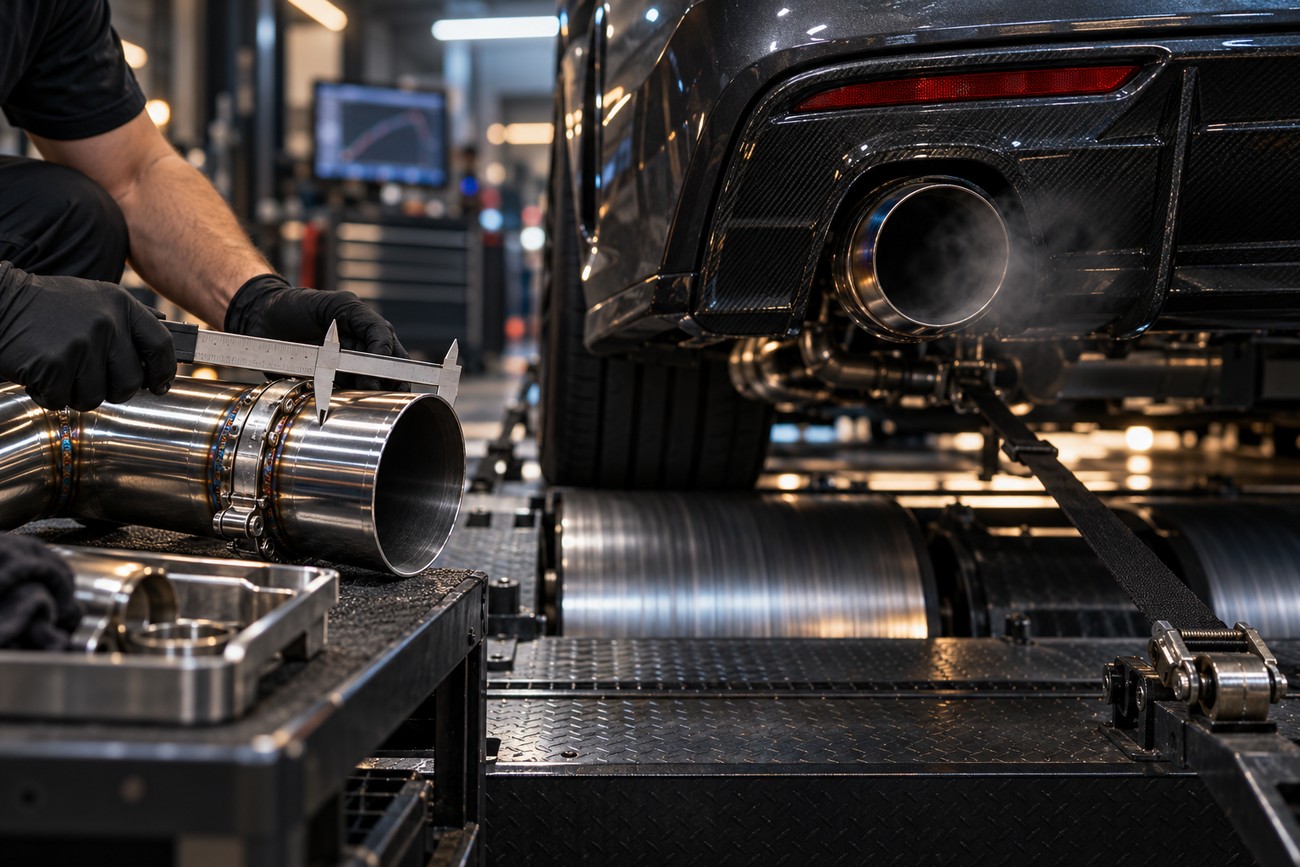
On a stock naturally aspirated vehicle, a cat-back commonly delivers about 0–5 whp. That range is small enough to disappear in normal driving, especially if the installation changes sound more than airflow. A dyno result can still be valid while offering little practical improvement in acceleration or passing response.
Power gains are more noticeable on turbocharged engines or vehicles with supporting intake and tuning changes. A turbo engine may benefit when the exhaust after the converter becomes a meaningful restriction, particularly as airflow demand rises. The result still depends on the turbocharger, calibration, converter, downpipe, and the rest of the engine combination.
Claims of +10–20 hp are often larger than practical results on otherwise stock cars. Compare tests only when the vehicle configuration, fuel, calibration, dyno, correction method, and baseline are comparable. A single peak number is less useful than a repeatable improvement across the rev range and a car that remains easy to drive.
Pipe diameter must suit the engine and its intended use. An oversize pipe can reduce low-end torque, increase drone, and deliver no useful power. Large tubing may make sense for a high-output turbo application, while the same choice on a stock naturally aspirated engine can trade away response and refinement for volume.
The most credible buying decision starts with the engine’s current airflow demand, then considers future modifications. If the car will remain stock, prioritize a well-designed muffler and resonator layout. If intake, turbo, or tuning changes are planned, leave enough capacity for that combination without assuming that maximum diameter is automatically the best route.
Sound, Drone, and What the Driver Hears
Sound is the reason many owners buy a cat-back, and it is also the most common source of regret. A system can sound sharp outside the car while producing a sustained boom inside. Cabin drone is commonly reported around 1,800–2,500 rpm, often during steady highway cruising when the engine stays in one narrow speed band.
Cold starts and heavy throttle can expose another compromise. A system that seems acceptable after the engine warms up may be too intrusive when the car starts early in the morning or carries passengers. The cabin, cargo area, and exhaust tunnel act as part of the acoustic system, so the same cat-back can sound different on a sedan, hatchback, coupe, or SUV.
Diagnose the troublesome rpm band before changing the rear muffler. Moving or adding a resonator can remove the dominant cabin frequency more effectively than simply making the entire system quieter.
A resonator can matter more than the rear muffler for controlling unpleasant frequencies and cabin drone. A straight-through or resonator-less layout may flow well, yet still create a harsh or tiring note. Removing a resonator is therefore a sound decision with consequences, rather than an automatic performance upgrade.
Factory valves and exhaust modes add another variable. They can make the exhaust change character by rpm, throttle position, or drive mode, and an incompatible replacement may produce behavior that is difficult to predict. A good system should be judged from the driver’s seat during cold start, low-speed acceleration, highway cruising, and full-load operation.
304 vs. 409 Stainless Steel, Fitment, and Hidden Failure Points
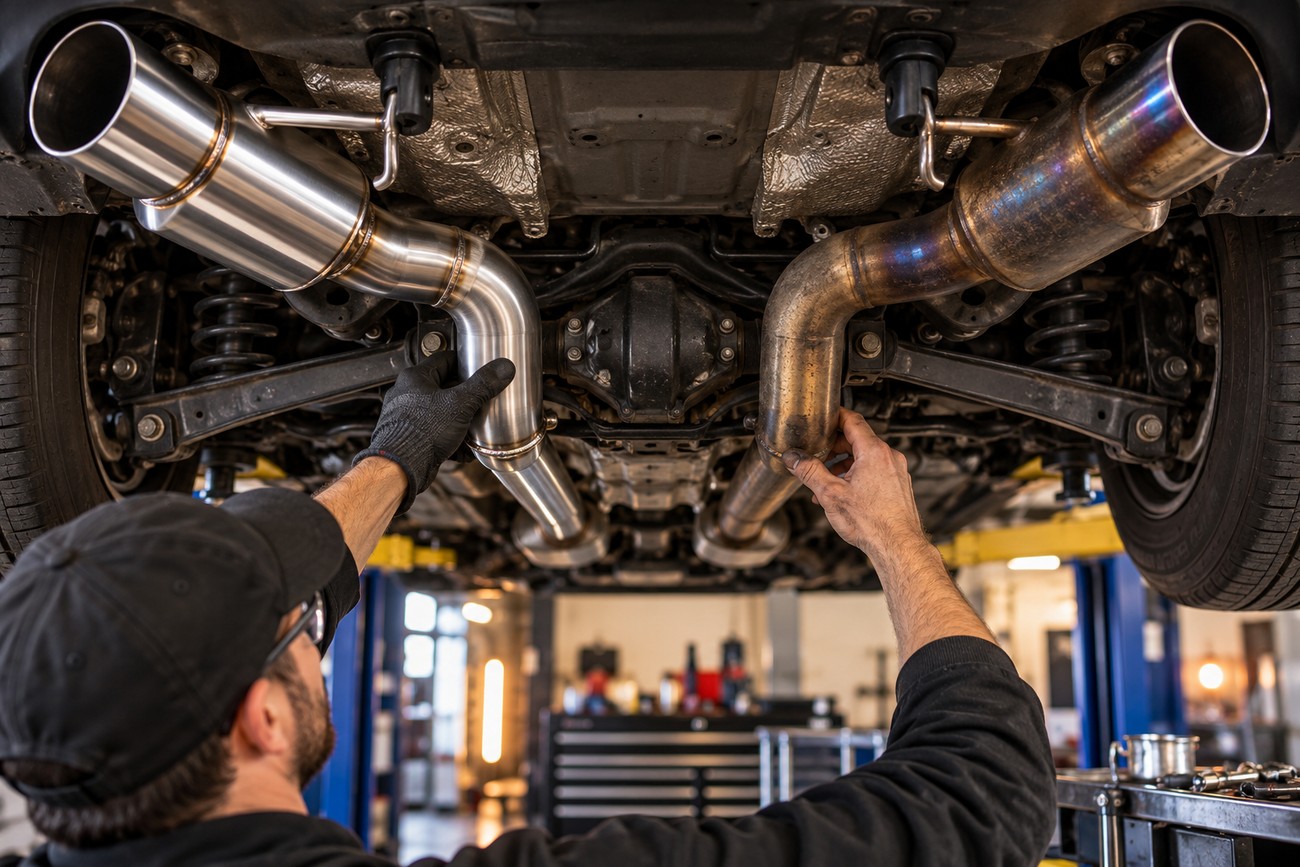
304 stainless steel generally offers better corrosion resistance than 409 stainless steel, usually at a higher cost. That makes 304 attractive for vehicles exposed to moisture, road salt, or long-term ownership. The material also affects price, weight, weld appearance, and how the system ages, so the choice involves more than a simple premium-versus-budget label.
409 stainless steel is commonly used by OEMs because it balances cost and service life. It is not automatically an inferior choice for every application. Surface discoloration or cosmetic changes do not necessarily mean immediate failure, while a well-designed system with sound welds and good mounting can provide useful service without using 304 throughout.
Fitment quality determines whether the claimed bolt-on installation remains bolt-on in practice. Poor hanger placement, weak flanges, uneven welds, or inaccurate alignment can cause exhaust leaks, vibration, rattles, and contact with suspension parts, heat shields, or the bumper. Thermal expansion can make a marginal fit worse after the system reaches operating temperature.
Inspect the clearances around the tailpipes, plastic trim, shields, and moving suspension components before final tightening. The system should sit without forced tension in its hangers, and the tips should remain centered as the car moves. A shiny finish and a high price cannot compensate for poor geometry or a leaking flange.
Legal, Emissions, Valves, and Warranty Trade-Offs
Keeping the catalytic converter generally creates less emissions risk than removing it, but it does not make every cat-back automatically legal for public-road use. Noise limits, inspections, local rules, and required emissions equipment still apply. A system intended for track use may be unsuitable for normal roads even when the converter remains untouched.
Check the rules that apply where the vehicle is registered and driven before ordering. The relevant issue may be sound level, inspection approval, visible equipment, valve operation, or the system’s certification. Product descriptions often use “street” or “bolt-on” as marketing language rather than as a universal legal guarantee.
Compatibility also covers factory exhaust valves, sensors, drive modes, and control logic. A replacement that leaves an actuator unsupported or changes how a valve operates can create warning messages, unexpected sound changes, or a complaint that is difficult to reproduce. Confirm the required hardware and software behavior with the vehicle-specific installation instructions.
Warranty questions depend on the reported fault and the applicable terms. A dealer may raise a warranty dispute if it believes the modification caused the problem, particularly when the complaint involves exhaust vibration, heat, sensors, or surrounding trim. Keep the original parts and installation records so the vehicle can be returned to its factory configuration if necessary.
How to Choose a Cat-Back for a Daily Driver or Track Car
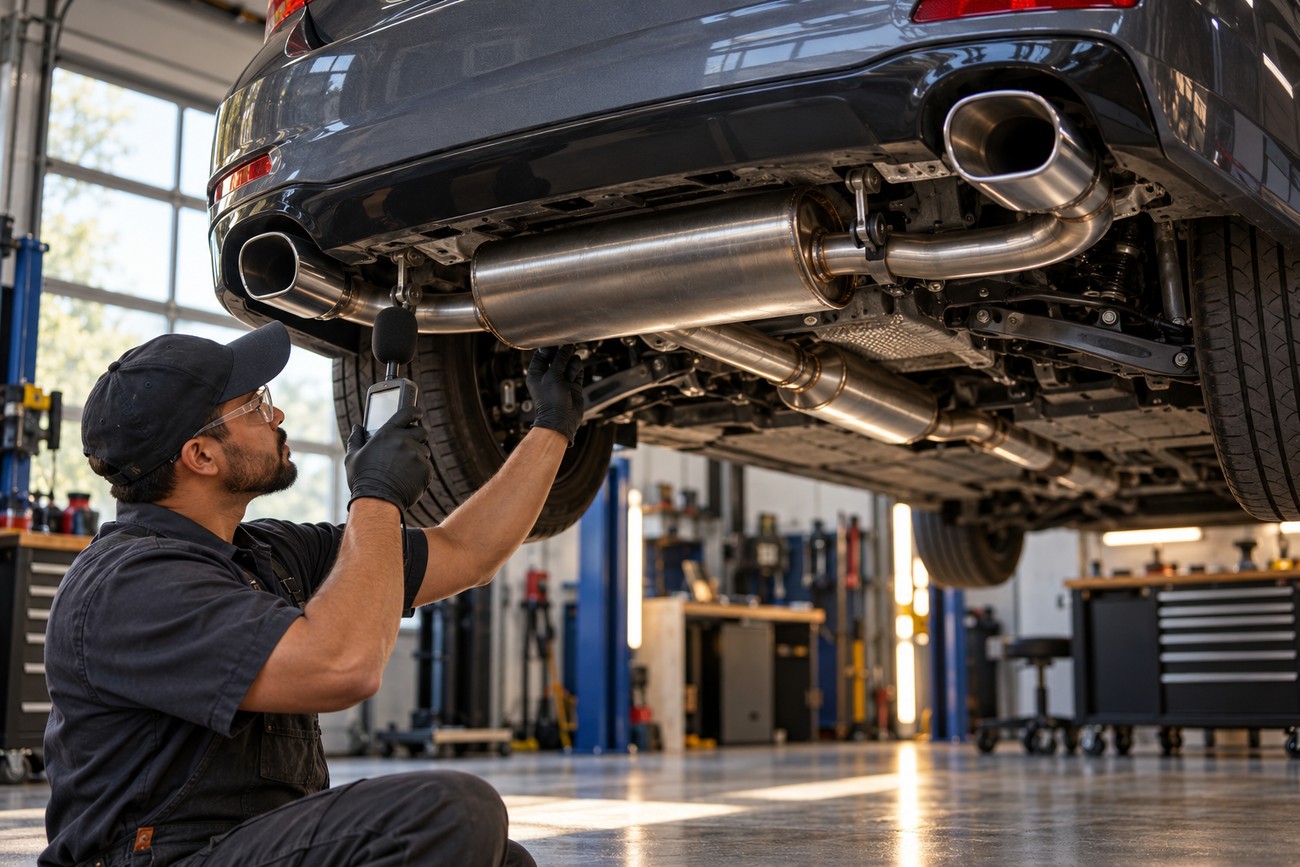
A daily driver needs controlled sound before maximum volume. Consider cold-start noise, passenger comfort, the rpm used on the highway, and local noise limits. A touring-oriented system with a properly selected resonator can be more satisfying over years of commuting than an aggressive system that sounds impressive for a short test drive.
Track use may allow more volume when the venue permits it, but louder does not guarantee more power. Track-day rules may impose sound limits, and excessive cabin noise can make it harder to hear mechanical problems, instructions, or tire feedback. The correct system still needs suitable clearance, reliable hangers, and enough thermal control for repeated hard use.
Match diameter and muffler design to the engine rather than to internet appearance. Turbocharged and modified engines are more likely to benefit from reduced restriction than stock naturally aspirated engines. For a mostly standard car, preserving low-speed response and avoiding drone may produce a larger ownership benefit than chasing a small peak dyno change.
Before installation, verify vehicle year, body style, drivetrain, exhaust-valve configuration, bumper cutouts, and the supplied hardware. After installation, check the following:
- Clearance from the suspension, heat shields, bodywork, and plastic trim.
- Hanger tension and tip alignment with the car sitting normally.
- Valve operation and drive-mode behavior, where fitted.
- Flanges, welds, and joints for leaks after the first heat cycle.
- Rattles or contact noises at idle, during acceleration, and at the suspected drone rpm.
That final inspection matters because a system can appear correctly installed when cold and move into contact once it expands. Allow the exhaust to reach operating temperature, then recheck clearances and fasteners. The best cat-back is the one that delivers the intended sound without creating a new maintenance problem.
Frequently asked questions
How should I compare horsepower claims for different cat-back systems?
Compare results only when the same vehicle configuration, baseline, fuel, calibration, dyno, and testing method are used. A peak figure from one car cannot reliably predict the result on another, and claims of +10–20 hp are often larger than practical results on otherwise stock cars.
Give more weight to repeatable results across the rev range and to drivability. A small, consistent improvement with no loss of low-end response is more useful than an isolated peak that appears only under one test condition.
What should I do if the new exhaust rattles only after it warms up?
Let the system reach operating temperature, then inspect the clearance to the heat shields, suspension, bumper, and nearby bodywork. Heat-related expansion can move a pipe into contact even when the cold installation looked correct.
Next, check hanger tension, flange alignment, loose shields, and fasteners. Do not compensate by forcing the system sideways in its mounts; correct the alignment and replace damaged or poorly positioned hardware before the contact causes wear or a leak.
What does a cat-back exhaust replace?
It replaces the exhaust section from the catalytic converter or its outlet to the tailpipe. Typical parts include the mid-pipe, resonator or resonators, rear muffler, hangers, and tips.
The catalytic converter remains in place, so the modification changes downstream sound, appearance, weight, and sometimes flow without being a cat-delete. Exact contents depend on the vehicle and the selected system.
What are the downsides of a cat-back exhaust system?
The main downsides are cabin drone, cold-start volume, vibration, rattles, heat, imperfect fitment, and possible issues with noise rules or inspections. A larger pipe can also reduce low-end torque when it is oversize for the engine.
Power gains may be small, especially on a stock naturally aspirated vehicle. The system can therefore spend most of its budget on sound and appearance, while a poor installation may add leaks or contact problems.
What is the best cat-back exhaust system?
The best system matches the engine, vehicle body, supporting modifications, intended sound, and tolerance for cabin noise. Price alone does not guarantee comfort or fitment, and maximum pipe diameter is not a universal performance choice.
For a daily driver, prioritize a resonator layout that controls drone, reliable hangers, correct valve compatibility, and legal noise levels. For a modified turbo car or track vehicle, place more emphasis on flow and thermal durability while still checking clearances and operating rules.