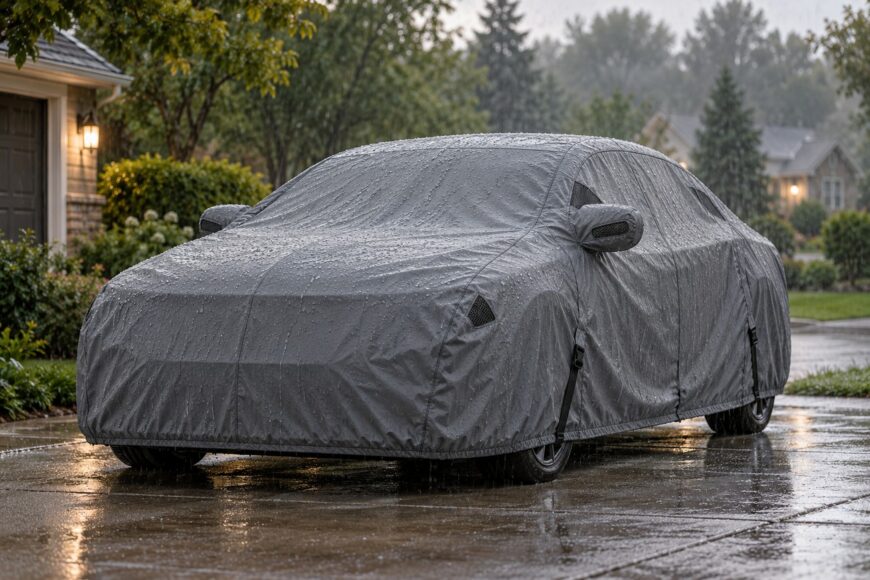
Outdoor parking puts a car cover in a difficult middle ground. It must reduce sun exposure, rain, dust, and airborne debris while allowing trapped moisture to escape and preventing grit from moving across the paint. Wind adds another problem: a loose cover can flap against the body, while water can collect in folds and around seams.
The right choice depends on the vehicle’s shape, the parking location, the local weather, and the condition of the car. Fit, breathability, attachment points, seam quality, and UV resistance usually matter more than fabric thickness or a “100% waterproof” label. A cover is a protective barrier, not a sealed promise that the vehicle will stay dry, cool, and free from every form of damage.
- What an outdoor car cover can—and cannot—protect against
- Outdoor car cover materials: what to compare before buying
- Fit matters more than a universal size label
- Choose for the weather your parking space actually gets
- How to install an outdoor car cover without damaging paint
- Prevent condensation, trapped water, and the greenhouse effect
- Common buying mistakes and hidden weaknesses
- Frequently asked questions
- How can I tell when an outdoor car cover needs to be replaced?
- Which car cover is best for outdoor parking?
- What is the best way to protect my car when parked outside?
- What are the downsides of using car covers?
What an outdoor car cover can—and cannot—protect against
Most outdoor covers use multiplayer nonwoven, PEVA, or polypropylene-based materials. Their practical role is to reduce direct exposure to ultraviolet radiation, precipitation, dust, and airborne debris. They help limit how quickly the exterior is soiled and how much sun reaches the paint, trim, and interior, although the result depends on the cover’s construction and how it is used.
Outdoor protection works through a balance between water repellency and vapor release. A surface that sheds rain is useful, especially during short showers, while some ability to release vapor helps prevent damp air from remaining against the vehicle. A completely non-breathable cover can increase condensation, particularly when a damp car warms in the sun or when temperatures move through a freeze-and-thaw cycle.
The words “100% waterproof” describe a marketing claim rather than a universal outdoor result. Rain can reach the car through seams, openings, stressed fabric, or folds where water stands. Strong wind also changes the outcome by lifting the cover, driving rain sideways, and making the material move against the body. Standing water is a separate test from ordinary water beading on the outer surface.
Think of a cover as a layer that lowers exposure rather than an enclosure that removes every risk. It cannot correct existing moisture, stop corrosion that is already developing, or protect paint from abrasion when dirt and sand are trapped underneath. It also does not automatically keep the cabin cool: dark or poorly ventilated material may leave heat concentrated beneath it.
Outdoor car cover materials: what to compare before buying
Material names give you a starting point, while the finished construction determines how the cover behaves outside. Compare the likely strengths with the weaknesses that matter in your parking location, especially ventilation, seam durability, and resistance to sun and handling.
| Construction | Likely outdoor strengths | Limitations to check | Where the design priority matters |
|---|---|---|---|
| Multilayer nonwoven | Can combine a protective outer layer with softer inner layers and some vapor release; often practical for general outdoor use. | Quality varies widely. Thin layers, weak stitching, and fragile elastic can fail before the main panels. | Useful where you need a balance of dust, sun, and precipitation protection with manageable handling. |
| PEVA-based construction | Offers a water-repellent surface and can provide a relatively smooth barrier against rain and dirt. | A less breathable design may increase condensation. Seams and attachment areas remain potential leak points. | Worth considering for wet conditions when vapor release and seam construction are clearly addressed. |
| Polypropylene-based construction | Can be light, flexible, and suitable for layered outdoor fabrics; may offer useful resistance to ordinary outdoor contamination. | Heat, sunlight, abrasion, and poor-quality edges can shorten practical life. The material label alone does not establish UV performance. | Suitable when low weight and regular handling matter, provided the cover has sound edges, fasteners, and fit. |
UV resistance deserves attention because sun and heat accelerate degradation. The first visible weakness may appear at seams, elastic, edges, and attachment points rather than across the largest fabric panels. A cover can still look intact while its elastic no longer holds the lower edge securely or its stitching begins to open around a mirror pocket.
Thickness is an incomplete measure of quality. A thick cover can be awkward to install, retain moisture, and exert more force on weak attachment points when wind catches it. A lighter construction with sound ventilation, durable edges, and a reliable fit may protect the finish more effectively during repeated outdoor use.
Inspect the inside surface as carefully as the outside. A softer inner layer can reduce the chance of harsh contact, but it cannot make a dirty vehicle safe to cover. Look for finished seams, reinforced stress points, and fastening hardware that will not concentrate all the wind load in one small area.
The useful combination for outdoor parking is UV resistance, moisture management, durable construction, and correct fit. No single material name guarantees all four. Product photographs, dimensions, seam descriptions, and care instructions often reveal more than a headline claim about weatherproofing.
Fit matters more than a universal size label
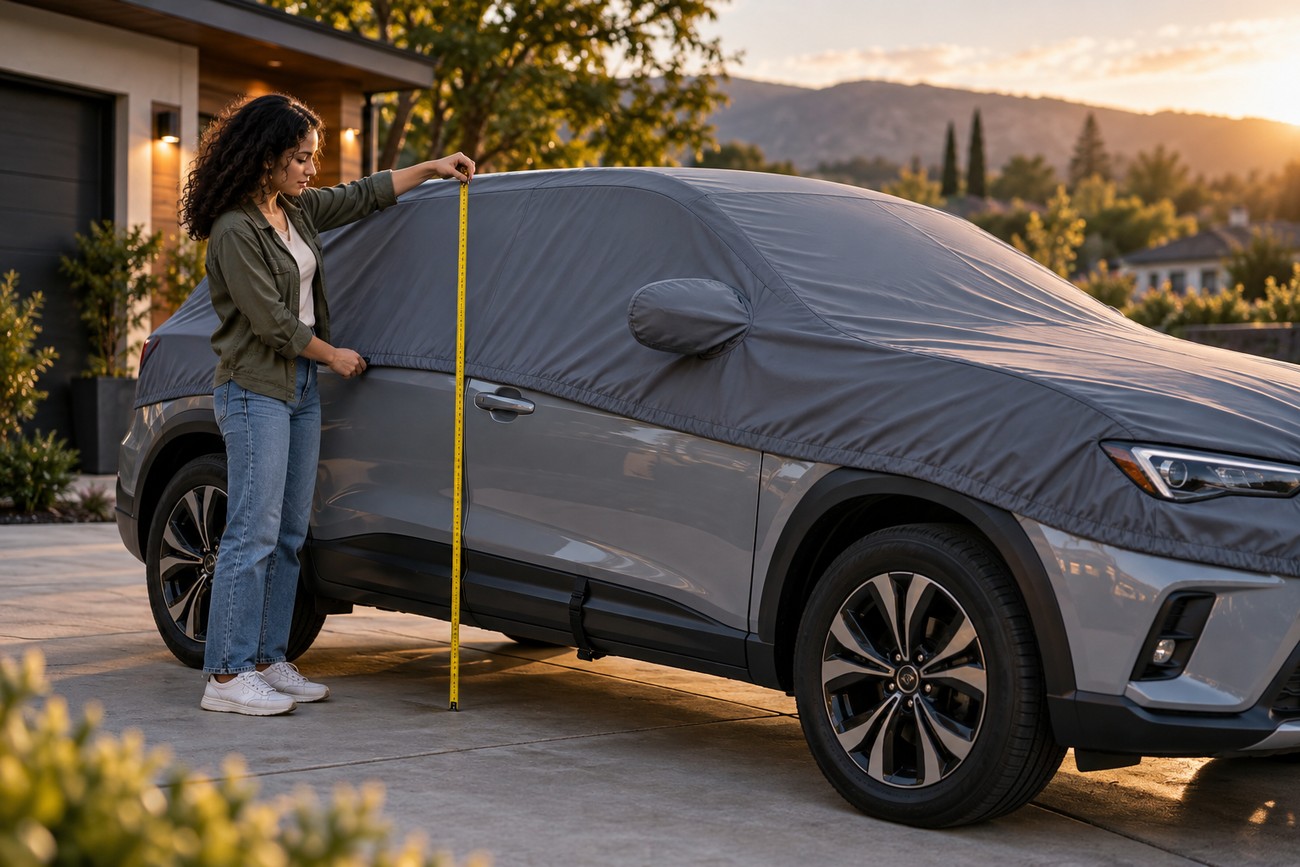
A cover follows the vehicle’s shape, so the same nominal size can behave differently on a low hatchback, a tall crossover, and a sedan with a long rear deck. Vehicle height, mirror design, antennae, spoilers, roof rails, tow hitches, and aftermarket trim all change the amount of material required. A “universal” label describes a range, not an assurance of a secure fit.
A loose cover can flap continuously, collect water in low areas, and place repeated loads on straps and elastic. That movement can carry dust across the paint and make the cover wear at corners or projections. A cover that is too tight creates a different failure pattern: it pulls at mirrors, antennae, sharp edges, and seams, especially when wind tries to lift the lower edge.
Before buying, compare the manufacturer’s dimensions with the vehicle’s overall length, width, and height. Check whether the listed dimensions include mirror coverage and whether the design has shaped pockets or allowances for mirrors, a roof antenna, a spoiler, or roof rails. Confirm how the front and rear are identified, where the straps pass beneath the car, and whether a tow hitch or unusual bodywork will stretch the fabric.
- Measure the vehicle, including the features that remain fitted during parking.
- Check the cover’s width and height, not only its nominal vehicle category.
- Look for likely contact points around mirrors, antennae, spoilers, rails, corners, and trim.
- Prefer a design with lower-body attachment where wind exposure is significant.
- Review return conditions if the product is sold in broad universal sizes.
Fit also changes over time. Elastic can lose tension, fabric can stretch, and attachment points can weaken even when there is no large tear. Recheck the cover after installation and after windy weather; a once-neat edge that now lifts or rubs deserves attention before it damages the finish.
Choose for the weather your parking space actually gets
Sun, rain, wind, and freezing conditions stress different parts of a cover. A sunny open lot places greater demand on UV resistance and ventilation, while a sheltered driveway may make wind control less important than easy daily handling. The best design matches the actual exposure instead of simply using the heaviest available fabric.
In hot, sunny locations, the face material, seams, elastic, and fastening points all receive repeated heat and UV exposure. Good ventilation helps release warm, damp air, but it does not guarantee a cool car. A cover can reduce direct solar exposure while still leaving substantial heat beneath it, especially if air movement is restricted by a close fit or a fully sealed construction.
Rain tests the whole cover, rather than only the outer panel. Seams, pockets, folds, and areas pulled tight over mirrors can behave differently from flat fabric. Water may collect in low folds and later run off as dirty water when you remove the cover, so a shape that keeps water from pooling is useful even where the fabric itself repels rain.
Wind control is essential on exposed parking sites. Lower-body belts, straps, elastic edges, or similar fasteners reduce displacement and flapping, but they cannot compensate for a substantially wrong size. A heavy cover can still move in strong wind, and that movement can abrade paint if dust is present underneath. Straps should hold the cover in position without creating sharp, concentrated pressure on the body.
Freezing weather creates a separate handling problem. Moisture can freeze the cover to wet body surfaces and edges, and forceful removal can scratch the finish or tear the material. After a thaw, a winter cover may also keep dampness close to the vehicle if airflow is poor. A design that works comfortably in summer can become stiff and awkward to fold in cold conditions, so storage and removal matter as much as weather resistance.
How to install an outdoor car cover without damaging paint
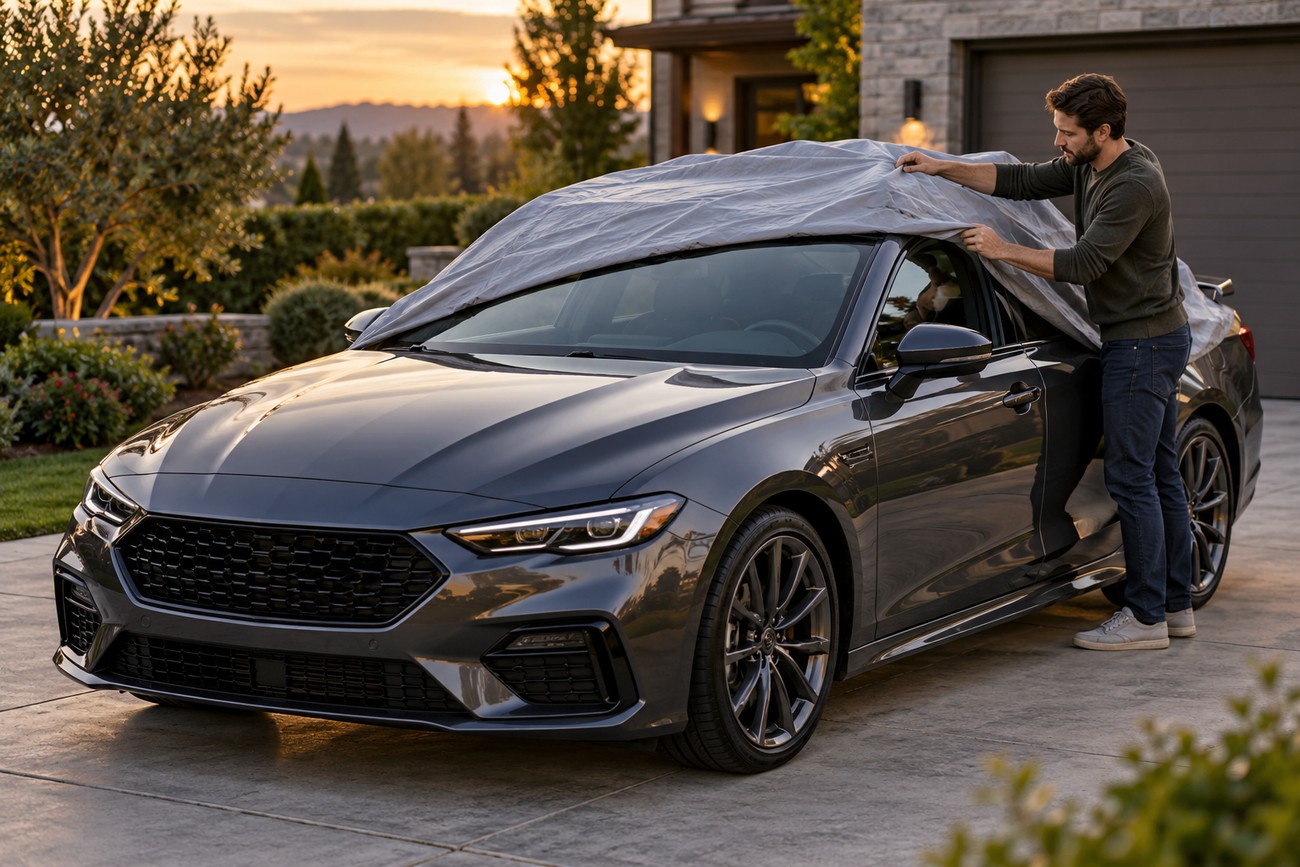
Start with the vehicle itself. Whenever possible, install the cover on a clean, fully dry surface, particularly after washing or rain. Dust and sand between the fabric and paint act as an abrasive when wind moves the cover, so a cover placed over a dirty car can create the very surface wear it was meant to prevent.
- Clear loose dirt from the vehicle and allow wet panels, glass, trim, and door gaps to dry.
- Identify the front and rear of the cover before lifting it onto the car.
- Check the inside for grit, trapped debris, or damaged seams.
- Place the cover over the roof and center it before pulling the front and rear sections into position.
- Fit mirror pockets, antenna allowances, or other shaped areas without forcing them over projections.
- Secure the underside, lower straps, elastic edges, or other fasteners before wind can lift the cover.
Work from the roof and broad panels rather than dragging the cover across a side that may still hold grit. Keep an eye on the antenna, mirror edges, spoiler, sharp trim, and tow-hitch area as the fabric settles. If the cover needs force to reach the fasteners, stop and reassess the size; attachment hardware cannot correct a cover that is substantially too small or too large.
Check mirrors, antennae, sharp trim, and strap contact points before the first windy night. Localized rubbing in these areas can damage a cover long before the main panel shows general wear.
For removal, loosen the fasteners first and lift or fold the cover inward where possible. Avoid pulling it across the paint, especially after dusty weather or when water has dried into dirty deposits. If the cover is frozen to a wet panel or body edge, allow the ice to release naturally rather than using force, scraping, or abrupt yanking.
Prevent condensation, trapped water, and the greenhouse effect
Keeping rain out and releasing vapor are separate jobs. A cover may shed water from its outer face while still allowing moisture from a damp vehicle, wet ground, or humid air to remain underneath. If the construction has weak ventilation, that moisture can condense when temperatures change and leave the car damp even after the rain has stopped.
Washing or rain immediately before covering creates a predictable problem. Water remains in panel gaps, around trim, under wipers, and in other places that are difficult to dry by wiping alone. Warm sunlight then raises the air temperature under the cover, while poor airflow limits evaporation. This can produce a greenhouse effect: the cover blocks direct exposure yet leaves heat and moisture concentrated in the space below.
A fully sealed material may sound attractive for long outdoor storage, but absolute sealing can be counterproductive when the vehicle is not perfectly dry. A better design balances water repellency with breathability. Vent openings, a suitable inner construction, and enough space for air movement can matter more than an aggressive waterproofing claim.
Check the cover after heavy rain rather than assuming the outer surface tells the whole story. Lift it carefully and look for wet panels, damp seams, or water held in folds. Dry the vehicle and the cover separately when possible. A wet cover should not be folded and stored closed, because retained moisture can create odor, mold-related problems, and faster material aging.
Winter conditions require extra caution because trapped moisture can remain against the vehicle through cold periods and then condense during a thaw. If the body, underside, or surrounding surfaces stay damp, corrosion risk may increase. A cover reduces environmental exposure, yet it cannot replace drying, inspection, and sensible ventilation.
Common buying mistakes and hidden weaknesses
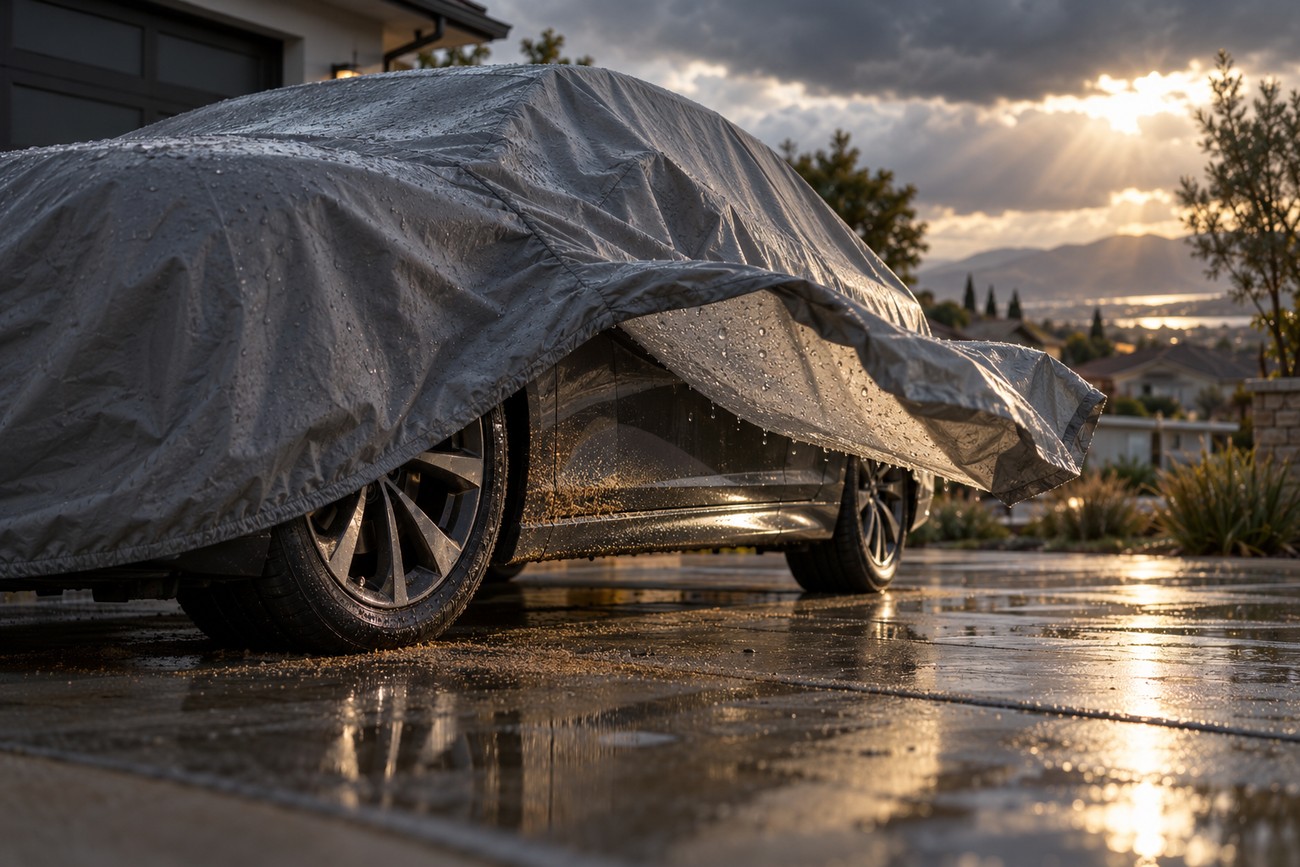
One of the most damaging mistakes is covering a dusty or sandy car and then leaving it in wind. The cover may look soft, but movement turns the trapped particles into an abrasive layer. Frequent removal and refitting also increase the chance of dragging grit across the finish, so outdoor protection requires a clean starting surface and careful handling.
Condensation, odor, and damp storage usually point to a moisture-management problem rather than a simple failure to repel rain. A completely non-breathable cover can hold humid air against the car, while folds can retain water after a storm. If the cover develops a persistent smell or remains wet inside, continuing to use it closed may create more problems than leaving the vehicle uncovered for a controlled drying period.
Wind-related complaints often begin with a poor fit. Loose material flaps and stresses fasteners; tight material pulls at mirrors, corners, and seams. Thin fabric, weak stitching, worn elastic, and sharp vehicle projections are common failure points, and localized wear may appear well before the center of the cover looks old.
Thicker is not automatically better. A heavy cover without ventilation or an accurate fit can trap moisture, become difficult to handle, and move with considerable force in wind. Waterproof marketing also does not mean rust-proof: if moisture remains under the cover, corrosion risk can increase, particularly in damp winter conditions.
Before buying, check these points:
- Does the size match the vehicle’s actual dimensions and projections?
- Does the construction provide a sensible balance of water repellency and breathability?
- Are UV resistance, seams, edges, elastic, and attachment points described clearly?
- Can the lower body be secured without excessive pressure or difficult access?
- Will the cover remain manageable in the local heat, wind, rain, or cold?
- Can it be dried and stored without folding it while wet?
Daily outdoor use also involves a maintenance trade-off. A cover reduces exposure while it is installed correctly, yet every installation creates an opportunity to introduce grit or rub a vulnerable area. Inspect the paint, the underside of the cover, and the attachment points at sensible intervals. Replace or repair the cover when its retention and surface condition no longer justify that handling risk.
Frequently asked questions
The right answer depends on the cover’s design, the vehicle’s finish, and the weather at the parking site. These questions address decisions that often arise after purchase, when everyday handling matters as much as the original specification.
How can I tell when an outdoor car cover needs to be replaced?
Replace it when it loses its original fit or retention, develops brittle fabric, or shows damage at seams, straps, elastic, edges, and attachment points. Persistent leaks, repeated water pooling, or a cover that flaps despite correct installation are also warning signs. A large tear is only one possible end-of-life indicator.
Inspect the inside as well as the outer face. Look for thinning around mirrors and corners, stretched openings, weakened stitching, and material that has become stiff or crumbly after sun exposure. If the cover now requires force to fit or allows abrasive movement, continued use may expose the vehicle to more risk than a controlled replacement.
Which car cover is best for outdoor parking?
The best choice is a properly fitted outdoor cover with UV-resistant construction, useful vapor release, durable seams and edges, and reliable lower-body attachment. Its material may be multiplayer nonwoven, PEVA, polypropylene-based, or a combination of layers; the material name alone does not determine performance.
Choose according to the dominant conditions. An exposed, windy site needs secure fastening and a close but non-stressed fit, while a hot, humid location places more emphasis on ventilation and moisture management. A product that is easy to dry and store is often more practical than a heavier design that is difficult to handle every day.
What is the best way to protect my car when parked outside?
Use a correctly fitted cover on a clean, dry vehicle, secure it against wind, and inspect the paint and cover regularly. Keep the car’s finish maintained according to the product instructions, and address existing moisture or dirt before covering it. The parking position also matters: shelter from prevailing wind and direct sun can reduce the work required from the cover.
Allow airflow and drying after rain or washing, and never store the cover folded while wet. For long periods of outdoor storage, check underneath periodically rather than leaving the cover undisturbed through changing weather. A cover works best as part of routine exterior care, not as a replacement for it.
What are the downsides of using car covers?
The main downsides are paint abrasion from trapped grit, condensation beneath poorly ventilated material, wind movement, difficult wet storage, and wear at mirrors, corners, seams, and elastic. Covers can also become hot underneath in strong sun and may be awkward to fit or remove in freezing conditions.
Repeated handling creates its own risk, especially for a daily-driven vehicle parked in dusty conditions. A cover that is poorly fitted or used on a damp car can worsen the environment under the fabric. These disadvantages are manageable with correct sizing, clean installation, drying, secure attachment, and regular inspection.