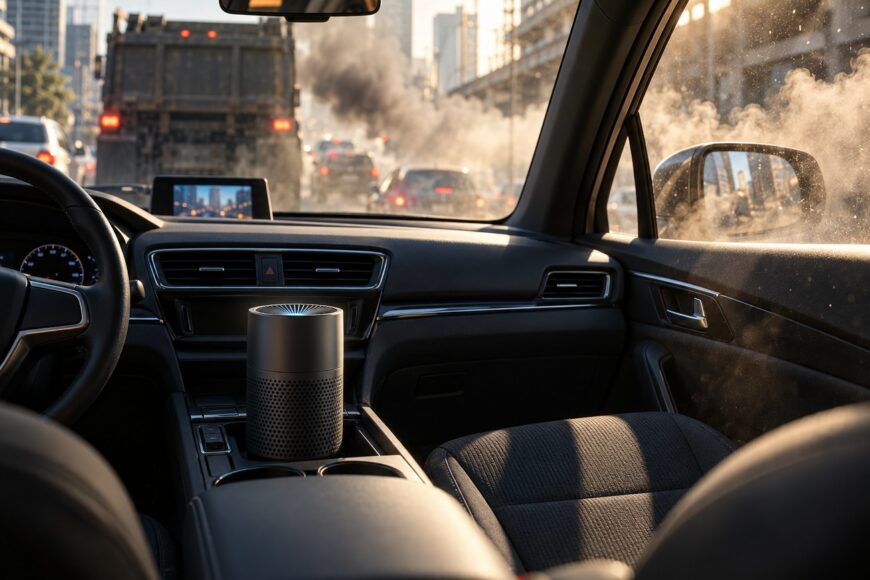
A car can feel fresh while carrying high levels of fine particles, exhaust aerosol, or carbon dioxide. A mild smell tells you little about PM2.5, volatile organic compounds, or ventilation. In city traffic, open windows and weak filtration can leave cabin PM2.5 concentrations often 2–5 times higher than outdoors.
The practical choice is usually between improving the factory HVAC system, adding a portable purifier, or combining both. A HEPA element can remove suspended particles when air passes through it correctly, but it does not remove gases. Ozone-generating devices and some ionizers create separate safety and maintenance concerns, especially when people remain inside the vehicle.
- Why Cabin Air Can Be Worse Than the Air Outside
- What Car Filters and Purifiers Can Actually Remove
- Portable Purifiers vs. an Upgraded Cabin Filter
- How to Choose a Car Air Purifier That Works in Real Use
- Fix the HVAC System Before Adding Another Gadget
- The Real-World Trade-Offs: Noise, Smells, Heat, and Maintenance
- Ozone, Ionizers, and Other Cabin-Air Myths
- How to Verify Performance and Build a Better Cabin-Air Routine
- Frequently asked questions
- What is the best car cabin air purifier?
- How often should a portable purifier filter be replaced?
- What should I do if a new car purifier smells like plastic?
Why Cabin Air Can Be Worse Than the Air Outside
Road traffic changes the cabin environment quickly. Open windows admit exhaust aerosol, brake and tire particles, and roadside dust directly into the vehicle. In a city, cabin PM2.5 concentrations with open windows and insufficient filtration are often 2–5 times higher than outdoors, particularly in queues behind diesel vehicles or near busy intersections.
The factory ventilation system can reduce this load when the cabin filter is correctly installed and the intake is set to draw filtered outside air. A clogged, damaged, or poorly seated filter allows air to bypass the filtering material. An ordinary filter also has limited performance against fine particles: it usually retains larger dust and pollen while handling PM2.5 and exhaust aerosol less effectively.
Recirculation changes the balance in the opposite direction. It can reduce the entry of traffic particles, which is useful in a tunnel, a short traffic jam, or a dusty area. With passengers inside and too little fresh-air intake, however, carbon dioxide can exceed 2000–3000 ppm within 30–60 minutes. Humidity also rises, and the cabin may feel heavy even if a purifier has reduced some particles.
Odor is an unreliable guide. A cabin may smell neutral while PM2.5 or carbon dioxide remains elevated, and a slight exhaust odor may persist even after particle levels have fallen. The same applies to the word “fresh” on a device display: without a particle measurement and a ventilation assessment, it describes perception rather than air quality.
What Car Filters and Purifiers Can Actually Remove
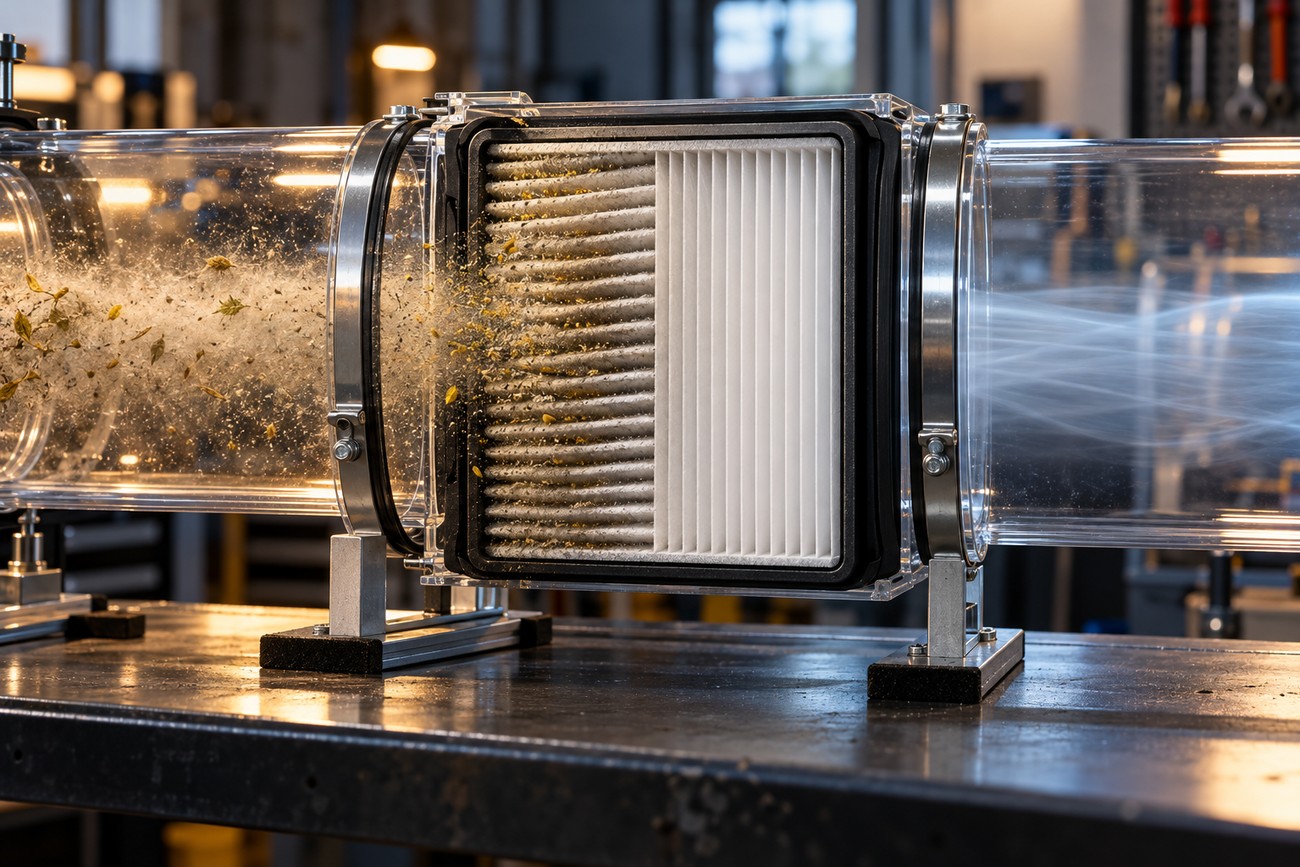
Different filter materials address different pollutants. A standard cabin HVAC filter is mainly a barrier for larger dust, pollen, and debris. It may improve comfort for people sensitive to pollen, yet its performance against the smallest traffic particles depends on the material, airflow, and condition of the element.
HEPA is designed primarily for suspended solid and liquid particles. Under correct airflow and with a sealed installation, H13–H14 HEPA filters capture at least 99.95–99.995% of particles measuring 0.1–0.3 micrometers. That laboratory figure describes the filter under defined conditions; it does not automatically describe the result of a small portable unit in a vibrating vehicle with air leaks around the cartridge.
Air must actually pass through the filter for the rating to matter. A loose frame, a distorted gasket, or a housing gap can send part of the airflow around the media. A high-grade element in a poorly sealed holder may therefore perform worse in practice than a lower-rated filter that fits the HVAC housing correctly.
Activated carbon serves a different purpose. A sufficiently substantial and well-designed carbon layer can adsorb volatile organic compounds and some gases, helping with certain fuel, solvent, and traffic odors. Carbon has limited capacity and is almost ineffective for reducing carbon dioxide. A HEPA filter likewise does not remove gaseous exhaust components simply because the air passes through it.
Carbon dioxide requires ventilation or a technology specifically designed to remove it. A particle purifier can make recirculated air cleaner by particle count while the occupants continue adding carbon dioxide. This is why a quiet, clean-feeling cabin can still require controlled outside-air intake during a longer drive.
Portable Purifiers vs. an Upgraded Cabin Filter
A portable unit and an improved cabin filter work through different air paths. A replacement filter in the factory HVAC system treats air that the vehicle already moves through its ventilation circuit. A small dashboard- or vent-mounted device may have a useful local effect, yet many such products have low real-world CADR and primarily clean the air near one occupant.
| Approach | Best suited pollutants | Cabin coverage | Noise and maintenance | Typical limitations |
|---|---|---|---|---|
| Portable purifier | Particles; odors only when it includes a meaningful carbon stage | Often local, depending on CADR, placement, and circulation | Higher fan speeds can be noisy; small filters may load quickly | Limited airflow, poor mounting, blocked vents, and air bypass around the filter |
| Upgraded cabin filter | Particles; carbon versions can reduce some gases and odors | Uses the vehicle’s HVAC airflow and can reach the whole cabin | Usually integrated into existing service; replacement access varies | Fit, sealing, pressure drop, and compatibility with the vehicle housing |
| Combined approach | Particles through both paths, with carbon where provided | Broad HVAC coverage plus local assistance | Two filter systems and two maintenance schedules | Still requires ventilation control and cannot remove cabin CO₂ through filtration alone |
For many vehicles, the quality and fit of the factory filter have greater influence on whole-cabin air than a small gadget on the dashboard. The HVAC blower has enough reach to distribute treated air through the vents, while a portable unit may discharge into the ceiling, a side window, or one narrow area.
A portable purifier should be judged by the air it moves through its filter, not by the size of its fan or the number printed on its packaging. Check the filter seal, discharge direction, mounting stability, and replacement availability before comparing advertised power.
There are situations where combining systems is reasonable. A professional driver may use a good cabin filter, controlled fresh-air intake, and a compact purifier near the breathing zone during short high-pollution periods. This arrangement adds resilience, but it does not turn a low-CADR device into a whole-cabin air treatment system.
How to Choose a Car Air Purifier That Works in Real Use
Start with the pollutant you want to reduce. For pollen, dust, soot, and PM2.5, look for a genuine particle filter with documented construction and a sealed air path. For fuel or traffic odors, look for a meaningful activated-carbon stage. Treat claims about “all pollutants” with caution because particles, gases, and carbon dioxide require different controls.
CADR is useful only in context. Compare the stated value with the cabin volume, the actual fan speed you can tolerate, and the direction in which air leaves the unit. A device that reaches its published performance only on a loud maximum setting may deliver little cleaning during normal driving if you reduce the speed.
Inspect the physical design before installation. The unit should remain stable under braking and cornering, avoid obstructing a deflector, and allow air to circulate through the cabin. A vent-mounted device that blocks the louver or points all treated air toward the windshield may produce a clean pocket while leaving rear-seat air largely unchanged.
Real vehicles add conditions that laboratory tests do not reproduce. Vibration, temperature changes, humidity, and small housing gaps can reduce performance. Check whether the filter is replaceable, whether the seal can be inspected, and whether replacement elements are available at a reasonable interval. Small cartridges can clog within a few months in dusty traffic, while proprietary replacements may be expensive or difficult to obtain.
Power deserves a practical check. USB sockets and cigarette-lighter outlets in older vehicles may provide unstable voltage, causing some units to operate below their intended mode, become noisy, or heat up. After installation, feel the housing during normal operation, verify that the cable cannot interfere with driving controls, and stop using the unit if abnormal heating or a persistent chemical odor appears.
Fix the HVAC System Before Adding Another Gadget
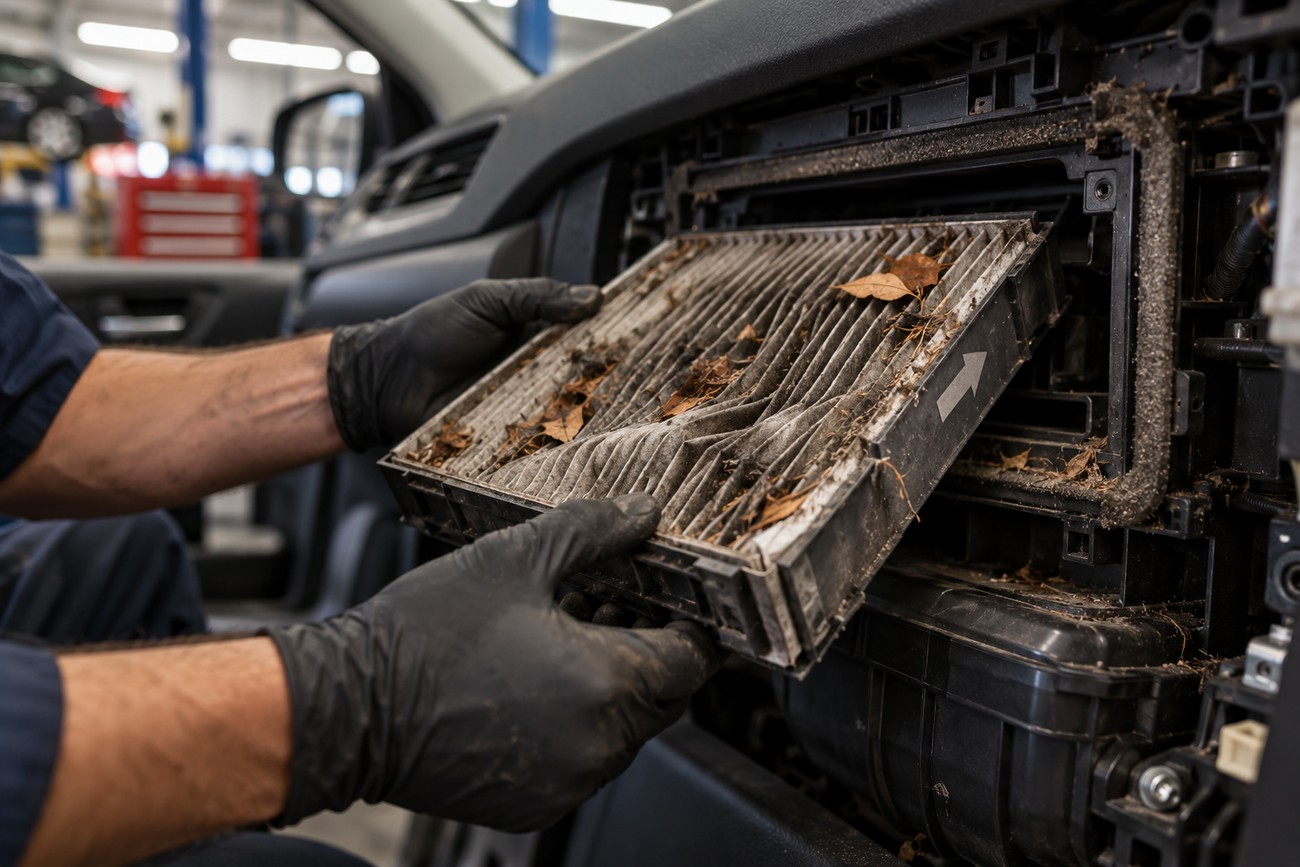
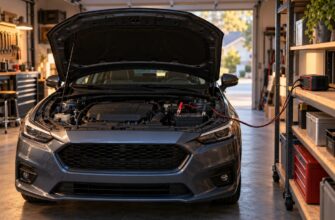
Inspect the factory cabin filter first. Confirm the correct part, airflow direction, and seating in the housing. Look for crushed edges, gaps around the frame, dampness, leaves, and visible loading. A filter that permits air to pass around its edge can undermine the entire HVAC treatment path.
Replacement timing depends on the vehicle and environment. Manufacturer manuals often specify approximately 15,000–20,000 km. In dusty cities or vehicles that spend much of the day in traffic, service practices and drivers often use a shorter 8,000–12,000 km interval. Construction dust, pollen seasons, smoke, and frequent recirculation can justify inspection before either interval is reached.
Use recirculation strategically. It can reduce the entry of traffic particles during a short exposure, especially when the outside intake is close to a line of exhaust. For longer periods, introduce fresh air as conditions allow, because continuous recirculation without sufficient intake accelerates carbon dioxide and humidity buildup.
- Use recirculation briefly in dense traffic or around visible dust sources.
- Switch to fresh-air intake during longer drives when outdoor pollution is acceptable.
- Keep the HVAC intake area clear of leaves and debris.
- Check whether a higher-quality carbon or HEPA-equivalent filter is compatible with the housing.
- Inspect airflow after installation; a filter that causes an abnormal drop may be too restrictive for the system.
A filter upgrade should preserve safe defogging and heating performance. If a denser element noticeably weakens airflow, delays windshield clearing, or makes the blower strain, the vehicle may need a different compatible filter rather than the densest available media.
The Real-World Trade-Offs: Noise, Smells, Heat, and Maintenance
Persistent exhaust odor does not necessarily mean a particle filter has failed. HEPA media cannot remove gaseous exhaust components, so odor control requires an effective carbon stage and a sealed air path. External leaks, open windows, door seals, or a ventilation intake near traffic can also reintroduce odor after the purifier has treated part of the cabin air.
Noise creates a direct performance compromise. A small fan may need high speed to move useful air through a compact filter. If the sound is irritating, drivers often reduce the setting or switch the unit off, lowering the actual air exchange. Judge the device at the speed you can use for a full journey, rather than at a maximum mode used only for a short demonstration.
Filters have a finite service life. A loaded or damp element can restrict airflow and develop an odor; in some cases, it becomes a source of contamination rather than a useful barrier. Replace it according to the manufacturer’s instructions and earlier if airflow falls, the unit becomes unusually loud, the filter looks heavily soiled, or a new smell appears.
Placement affects daily usability. A purifier that repeatedly falls from a deflector may distract the driver and can damage the louver. A unit left in direct sun may heat up and produce a plastic smell, especially when its power supply is unstable. Check the housing after parking in heat, keep it out of direct sunlight where possible, and do not leave a suspiciously hot device operating unattended.
Ionizers can create a misleading visual result. Charged particles may settle on the dashboard, glass, or other surfaces, making the air appear cleaner while the pollutants remain inside the cabin in deposited form. More dust on the instrument panel or a film on the windows is a reason to question the process, not proof that the air has been cleaned.
Ozone, Ionizers, and Other Cabin-Air Myths
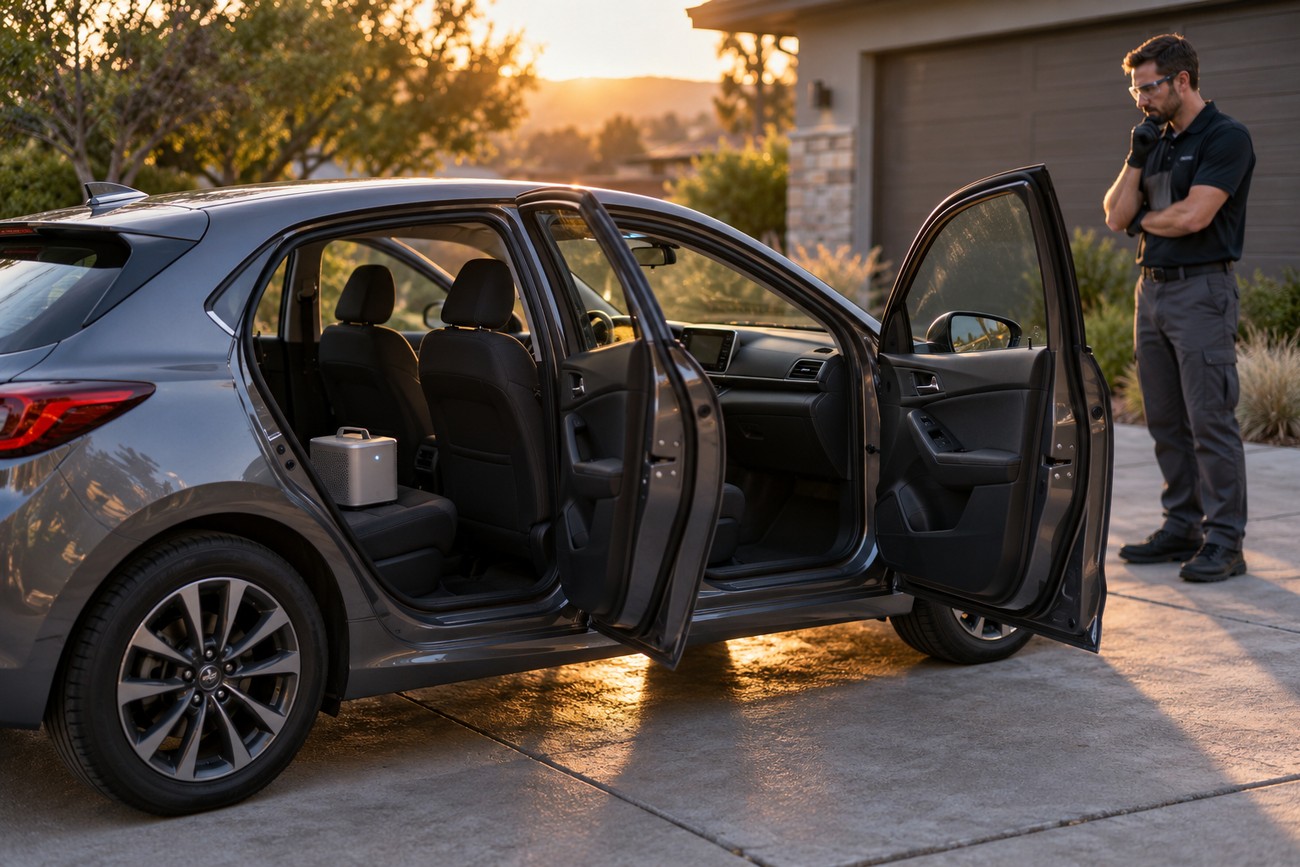
Myth: an ozone generator safely sterilizes the cabin while people are inside. Ozone is a reactive respiratory irritant, and ozone generators and some ionizers can produce it. A reference point for prolonged exposure is about 0.05 ppm, while actual emissions vary by device, operating mode, and cabin conditions.
Ozone can react with materials and odors, but mild levels do not guarantee complete sterilization. Higher concentrations increase the exposure concern, particularly for children and people with asthma or other respiratory sensitivities. A device that requires occupants to leave the vehicle is a treatment tool with a separate procedure, not a permanent substitute for filtration and ventilation.
Myth: ionization equals removal. An ionizer may cause particles to settle on surfaces, but deposition is different from capturing pollutants in a filter and removing the filter from the cabin. Some designs also generate ozone, so the actual emissions and safety documentation matter more than the word “ion” on the label.
Myth: a pleasant smell proves clean air. Fragrance can mask exhaust, and the absence of smell does not indicate low PM2.5 or carbon dioxide. Use ventilation to control carbon dioxide, particle filtration for PM2.5, and an appropriate carbon stage for some gaseous pollutants. These functions should not be treated as interchangeable.
If a product gives no clear information about ozone emissions, filter construction, or operating conditions, avoid using it around occupants until those details are verified. A purifier should improve air quality without introducing an unmeasured irritant or relying on odor to demonstrate its effect.
How to Verify Performance and Build a Better Cabin-Air Routine
Begin with a baseline. Check the factory filter, its seating, the selected HVAC mode, and the condition of the intake. A portable PM2.5 monitor can show whether readings change after the filter is replaced or a purifier is installed. Place the monitor consistently, because a reading beside the purifier outlet may differ sharply from one near the passenger’s breathing zone.
Use a separate carbon dioxide measurement if you need to assess ventilation. A particle sensor cannot tell you whether carbon dioxide is rising, and a carbon dioxide monitor cannot describe PM2.5. Compare the cabin during open-window driving, fresh-air intake, recirculation, and purifier operation while keeping the driving conditions as similar as possible.
A practical routine in a traffic queue is to close the windows, use recirculation for the short high-exposure period, and avoid leaving the cabin sealed for the entire journey. In hot weather, recirculation may reduce particle entry while carbon dioxide and humidity rise quickly. Introduce outside air when the traffic plume has passed and use the HVAC system to maintain visibility and comfort.
Taxi and truck cabins deserve closer attention because their exposure to passengers, road dust, diesel soot, and long operating hours is higher than average. Professional drivers have been described as having an increased frequency of respiratory symptoms. A maintained cabin filter, planned ventilation, regular cleaning, and measured checks are more dependable than relying on a small device’s indicator light.
Use the results to adjust the system rather than chase a single impressive reading. If PM2.5 remains high, inspect leaks, filter fit, and outside-air entry. If PM2.5 falls while carbon dioxide remains high, improve ventilation. If odors persist, assess the carbon stage and possible external leaks. A portable purifier is a supplement to this routine, not a replacement for HVAC service or fresh-air management.
Frequently asked questions
The right answer depends on the pollutant, the vehicle, and how the cabin is used. A purifier that helps one driver in short traffic queues may be inadequate for a full-size truck, a family car with rear passengers, or a taxi operating all day.
What is the best car cabin air purifier?
There is no single best device without checking the factory cabin filter first. For allergies and traffic particles, prioritize a well-sealed particle filter and enough real airflow for the whole cabin. For odors, choose a unit with a substantial activated-carbon stage; for a taxi or truck, favor serviceable filters, stable mounting, and replacement availability over a compact design with impressive packaging claims.
In heavy traffic, a good HVAC filter combined with short, controlled recirculation may provide more whole-cabin benefit than a weak dashboard purifier. A portable unit becomes more useful as a local supplement when its airflow can reach the breathing zone and the vehicle’s standard filtration is already in good condition.
How often should a portable purifier filter be replaced?
Follow the device instructions, then shorten the interval when the vehicle operates in dust, smoke, dense traffic, or heavy pollen. There is no universal mileage that fits every small filter. Replace or inspect the element when airflow drops, fan noise rises, odors appear, or the filter looks visibly loaded.
Keep a spare element available if the replacement is difficult to source. A clogged filter can make the purifier louder while moving less air, so continued operation does not prove continued performance. If the filter has become damp, correct the cause and replace it if odor or contamination remains.
What should I do if a new car purifier smells like plastic?
Turn the device off and disconnect it first. Check whether the housing has overheated in direct sun, whether the power outlet is stable, and whether the smell comes from the filter, cable, adapter, or device body. Ventilate the cabin before testing anything again.
Inspect the filter and air path for packaging material or manufacturing residue. If the smell persists after the unit has cooled and the power source has been checked, stop using it and seek a replacement or technical assessment. A persistent chemical odor should not be masked with fragrance, especially when children or people with respiratory sensitivity are traveling.