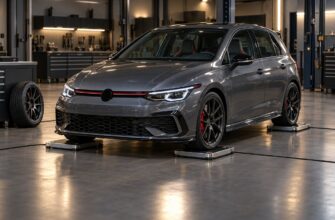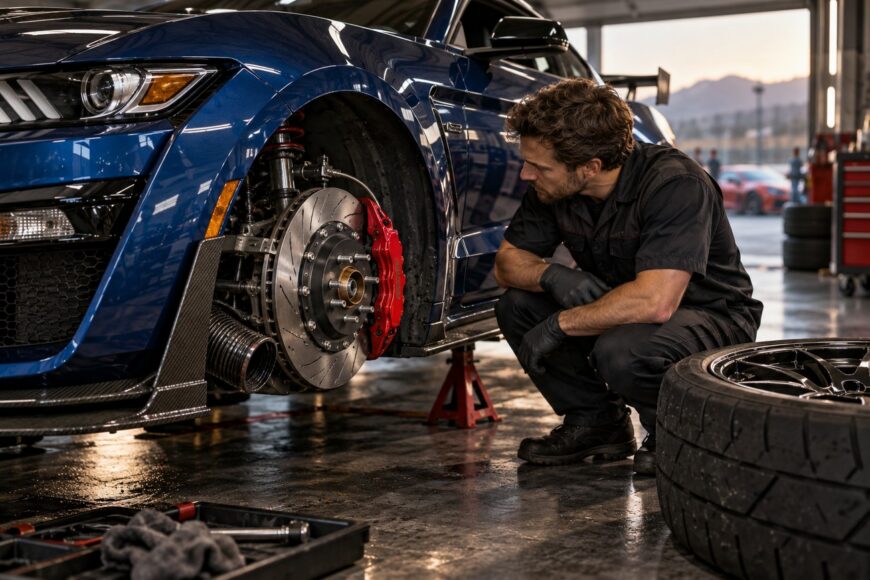
A big brake kit is usually bought for confidence under repeated braking, especially on a circuit or during fast road driving. It can deliver that confidence, yet it may also bring wheel-clearance problems, more noise and dust, poor cold behavior, and higher running costs. A kit that looks impressive in a catalog can be a poor match for the car’s tires, wheels, or actual heat load.
The main distinction is between reducing fade and shortening one stopping distance. On street tires, stopping distance is often limited by tire grip and ABS rather than brake hardware. A sensible choice therefore starts with the whole braking system: vehicle mass, tires, pads, fluid, cooling, wheel fitment, balance, and the cost of replacement parts.
- What a Big Brake Kit Actually Changes
- Choose by Heat Load, Not Piston Count
- Wheel Clearance and the Reality of “Bolt-On” Fitment
- Build the Supporting System: Pads, Fluid, Tires, and Cooling
- Street, Spirited, and Track Use: The Practical Trade-Offs
- The Mistakes That Make a BBK Disappoint
- Frequently asked questions
- What is the 70/30 brake rule?
- How much does a big brake kit cost?
What a Big Brake Kit Actually Changes
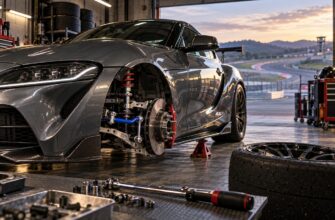
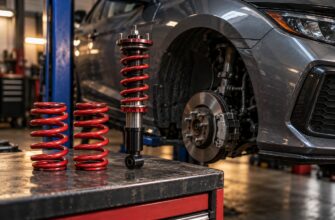
A typical BBK includes larger ventilated rotors, multi-piston calipers, braided lines, pads, hardware, and vehicle-specific adapters. The larger rotor provides greater leverage and heat capacity, while the caliper is designed to apply the pad with controlled stiffness and even pressure. Braided lines and fresh hardware can also improve consistency when the original system is old or heavily used.
For road and track use, the main benefit is greater thermal stability, reduced fade, and more consistent pedal feel during repeated braking. That matters on a circuit, where several heavy stops can raise rotor and fluid temperatures quickly. It also matters on a fast road when the car is repeatedly slowed from speed, although road use rarely creates the same sustained thermal load as a circuit session.
A BBK does not automatically produce a shorter first stop. If the tires reach their grip limit and ABS is already controlling wheel slip, adding brake torque cannot make the tire generate more road friction. Better hardware can preserve braking performance after repeated stops, which is a different benefit from increasing the peak deceleration of a single stop.
The result depends on the complete setup. A heavy car with poor cooling can still overheat a large kit, while a lighter car may gain more from suitable pads, fresh fluid, and better tires. The useful question is how the current system fails: fade, a long pedal, uneven pad wear, poor modulation, or simply insufficient tire grip.
Choose by Heat Load, Not Piston Count
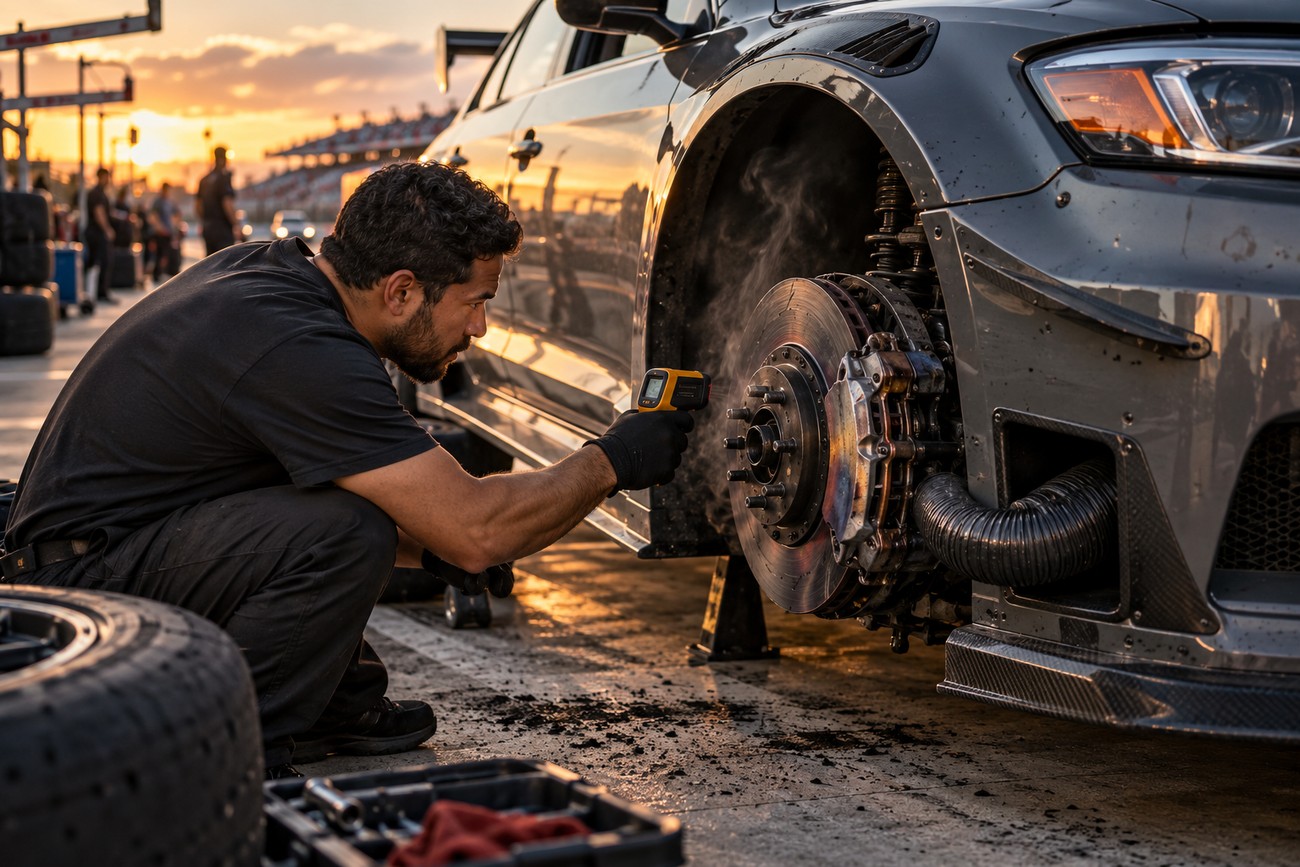
Brake choice should follow the energy the system must absorb. Vehicle mass, speed, session length, driving style, ducting, rotor ventilation, and the number of repeated stops all matter. A short spirited drive creates a different demand from a long track session in a heavy vehicle, even if both cars use the same engine power.
Ready-made kits illustrate the wide range available: approximately 286–421 mm rotors with 4-, 6-, or 8-piston calipers, depending on the application. That range describes product availability, not a universal upgrade path. A large eight-piston caliper may add cost, wheel restrictions, and unstrung mass without solving the actual problem if the pads or cooling are wrong.
Rotor heat capacity, ventilation, and mass deserve close attention. A compact rotor with effective ventilation and a sensible pad shape can be more practical than a heavier, more complex-looking design. Pad area, caliper stiffness, rotor design, fluid, and friction compound also influence braking, so piston count alone does not guarantee better performance.
Front-to-rear balance is another limit. An aggressive front upgrade without a suitable rear setup can affect modulation and stability, particularly as weight transfers forward under braking. The rear axle still contributes to control and deceleration, and the master cylinder, ABS calibration, and pad characteristics all influence how the car feels at the limit.
Wheel Clearance and the Reality of “Bolt-On” Fitment
Wheel diameter is only the first fitment check. BBK compatibility depends on wheel size, ET, spoke shape, and caliper/rotor clearance. A kit that fits inside one 18-inch wheel may contact the spokes of another wheel with the same nominal diameter, while a different offset can alter the available space at the caliper.
Radial clearance controls whether the rotor and caliper fit inside the barrel. Lateral clearance controls the space between the caliper and the spokes. Both need checking, along with the position of the rotor, the brake hose route, and any interference with suspension components through the full steering range.
“Bolt-on” describes the intended mounting solution, but it does not remove the need to verify wheels, hoses, rotors, and clearances. Some installations need different wheels, spacers, or careful hose positioning. Spacers can create their own fitment and bearing-load considerations, so they should not be treated as a free correction for an incorrectly selected kit.
Before ordering, obtain a vehicle-specific template or confirmed clearance data for the exact wheel. Check the wheel model, width, ET, and spoke profile rather than relying on its diameter alone. A supplier’s application list is useful, but it does not replace measuring the parts that will actually be used on the car.
Build the Supporting System: Pads, Fluid, Tires, and Cooling
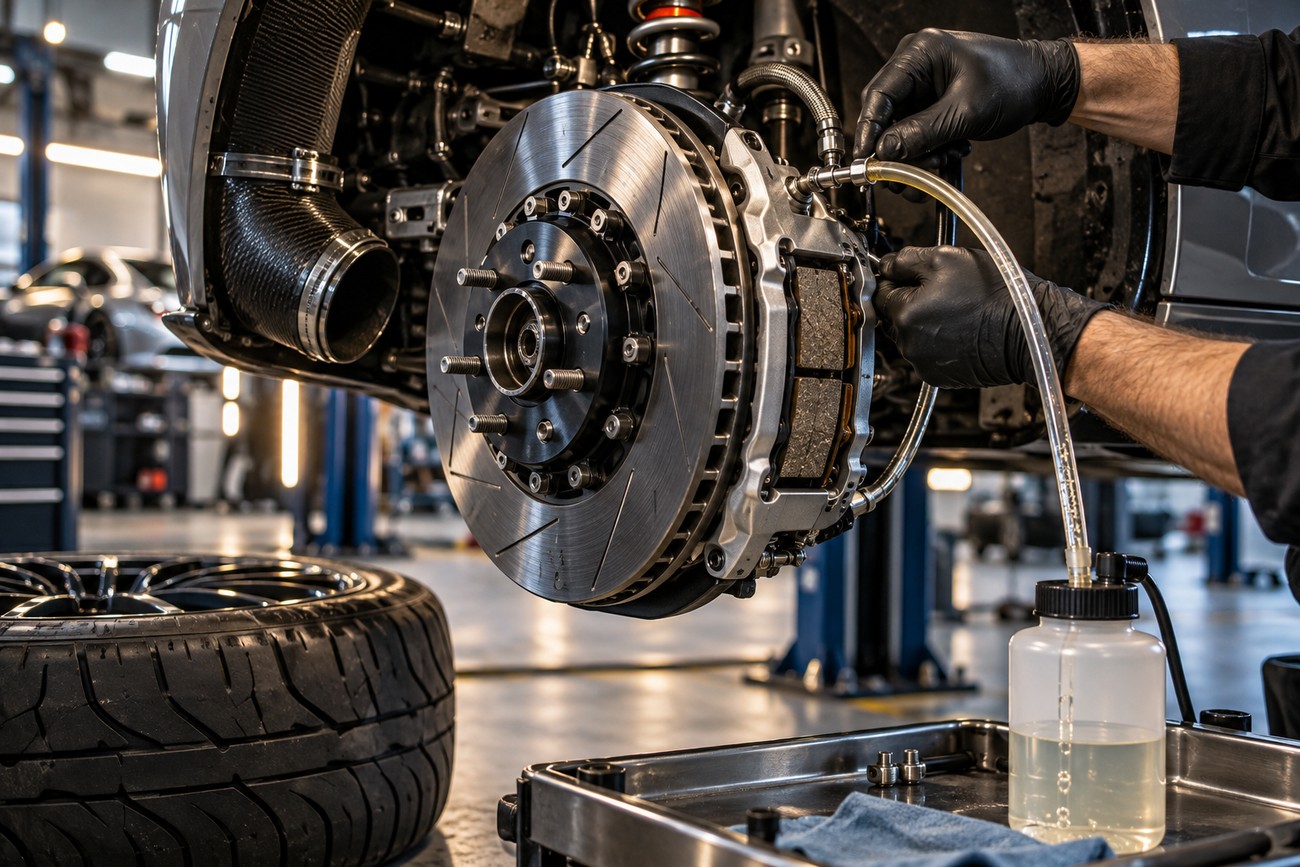
Suitable pads and fresh brake fluid are often addressed before replacing the complete brake assembly for track preparation. Pads determine much of the friction behavior, temperature tolerance, bite, modulation, dust, and noise. Old fluid can contribute to a long or inconsistent pedal feel, even when the calipers and rotors are mechanically sound.
Fitting a BBK while retaining ordinary pads and old fluid can therefore produce a smaller improvement than expected. The hardware may have more capacity, but the friction material and fluid still set important operating limits. Correct bleeding is essential, and the system should be checked for leaks, hose movement, and a firm pedal before any hard driving.
Fade complaints are often diagnosed through pad compound, fluid condition, and cooling airflow before a larger caliper is recommended. More hardware cannot compensate for a pad that is operating outside its useful range or air that never reaches the rotor.
Street and track compounds involve real compromises. A track compound may work well when hot yet feel less effective, noisy, or abrupt when cold in everyday driving. A street-oriented pad may be quieter and easier to modulate, but it can lose consistency during repeated circuit stops. Choose for the temperatures and traffic conditions the car will actually see.
Cooling and tires complete the system. Ducting can help move air toward the rotor, while good tires allow the ABS and brake hardware to use available grip more effectively. A BBK does not solve poor tires, unsuitable alignment, or inadequate cooling, and it cannot prevent a heavy car from overheating during a long session when the rest of the system is under-specified.
Bed the pads and rotors according to the kit or pad manufacturer’s procedure. The process allows the friction surfaces to mate and the pad material to establish correctly on the rotor. Skipping it can create uneven deposits, poor pedal feel, or misleading early performance, particularly after a new installation.
Street, Spirited, and Track Use: The Practical Trade-Offs
Daily driving favors predictable cold bite, quiet operation, manageable dust, and smooth modulation. Fast road use adds repeated braking and higher temperatures, so fluid quality and pad choice become more important. Full circuit use places greater emphasis on heat capacity, cooling, rotor durability, and the ability to replace consumables without excessive downtime or cost.
Common BBK complaints include squeal, heavy dust, expensive pads and rotors, and less comfortable cold performance. These are often characteristics of the chosen friction compound rather than proof that the caliper is defective. A street/track pad may be acceptable for a dual-use car, while a dedicated track compound can be unpleasant and less reassuring during ordinary cold stops.
A track-capable kit can still overheat during a long session on a heavy vehicle if airflow, fluid, pads, or rotor capacity are inadequate. Two-piece rotors can reduce some design compromises and simplify replacement of selected components, yet proprietary rings and hardware may increase service complexity. Consumables should be priced before purchase, not after the first replacement is needed.
For a vehicle used on the street with occasional track days, a moderate four-piston front kit can be more practical than an extreme eight-piston setup. It may preserve more wheel-choice freedom and offer a better balance of cost, cold behavior, and heat control. The correct size is the one that matches the car’s mass, tires, cooling, and session length.
The Mistakes That Make a BBK Disappoint
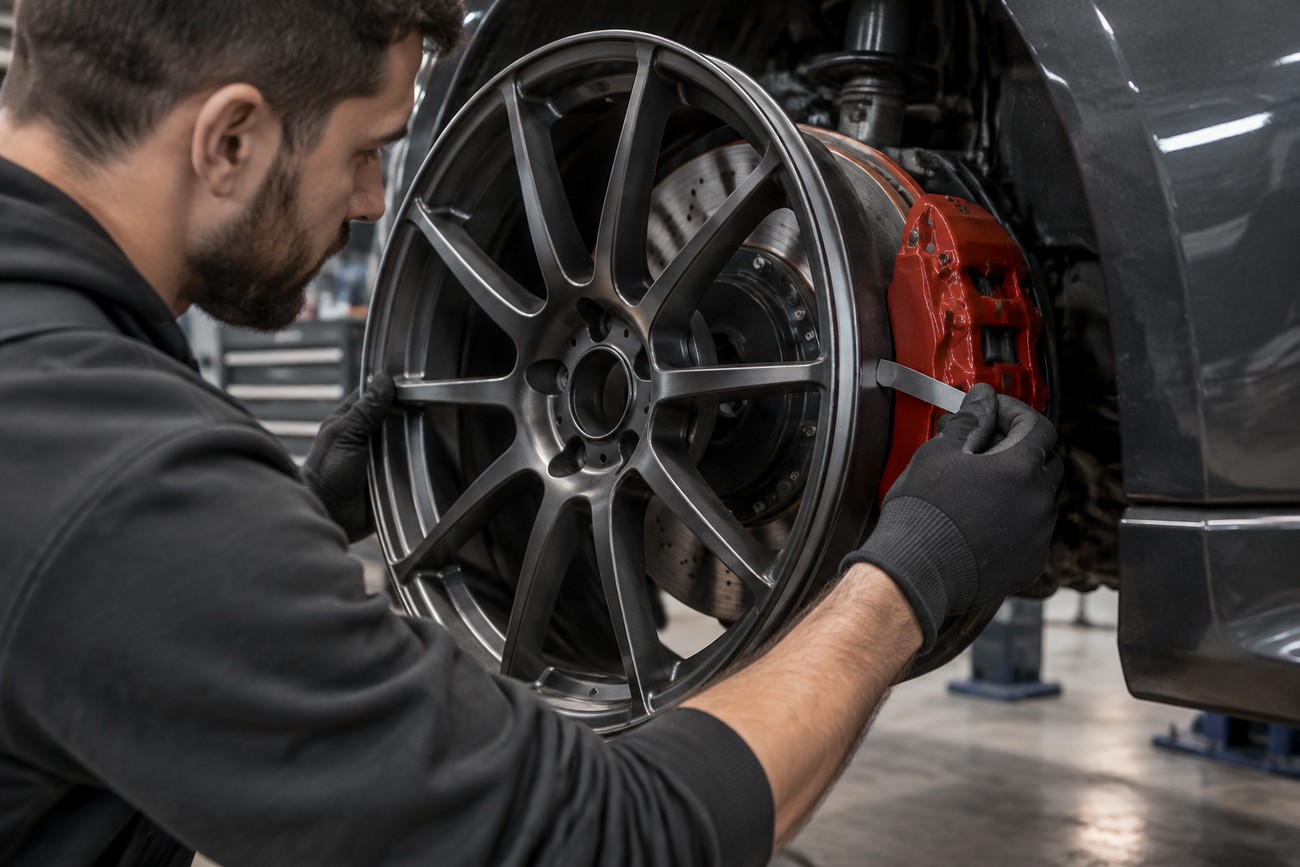
Appearance and piston count are common reasons for buying the wrong kit. A large painted caliper says little about pad compound, rotor ventilation, thermal capacity, or the balance of the complete system. Start with the failure you need to correct, then compare the kit’s operating range and replacement parts with your actual use.
Ignoring wheel fitment creates one of the most expensive surprises. The kit may be listed for the vehicle yet fail behind the owner’s chosen wheels because of spoke shape or ET. Ordinary pads and old fluid create a second problem: the new hardware is installed, while the components that control friction and pedal consistency remain unsuitable.
Street and track compounds should not be treated as interchangeable. A cold track pad can feel wooden in traffic, while a comfortable street pad may fade during repeated circuit braking. Installation also requires careful bleeding and bedding-in; depending on the application, the master cylinder and brake balance may need checking after the change.
Drilled or slotted rotors are not a universal cure. Drilling and slotting may support gas release or surface cleaning, but they do not eliminate overheating and can involve durability or noise trade-offs. Ventilation, rotor construction, pad compatibility, and cooling airflow are more useful selection criteria than surface styling alone.
- Define the use: daily driving, spirited road use, occasional track days, or repeated circuit sessions.
- Estimate heat load from vehicle mass, speed, session length, and cooling.
- Confirm wheel size, ET, spoke shape, and caliper/rotor clearance.
- Select pads, fluid, tires, and cooling as part of the same system.
- Check balance, installation requirements, bedding-in procedure, and long-term consumable cost.
Frequently asked questions
What is the 70/30 brake rule?
The 70/30 figure is a rough way to discuss front-to-rear braking distribution, not a universal setup target. Real balance changes with tire grip, weight transfer, ABS calibration, suspension geometry, vehicle load, and the condition of the road.
During hard braking, weight moves forward and the front axle can accept more braking force. The exact distribution still varies by vehicle and braking event. Installing a larger front kit based on a fixed percentage can therefore create poor modulation or stability if the rear system and electronic controls are ignored.
How much does a big brake kit cost?
Cost depends on the vehicle application, rotor and caliper design, pads, hardware, and the installation work. The purchase price is only one part of the calculation: wheel or spacer changes, fluid, bleeding, bedding-in, and possible fitment checks can add to the initial outlay.
Long-term cost depends on replacement pads and rotors. Two-piece rotors and proprietary consumables may increase service complexity and limit alternative parts. Compare the price and availability of replacement components before choosing a kit, especially if the car will attend regular track events.