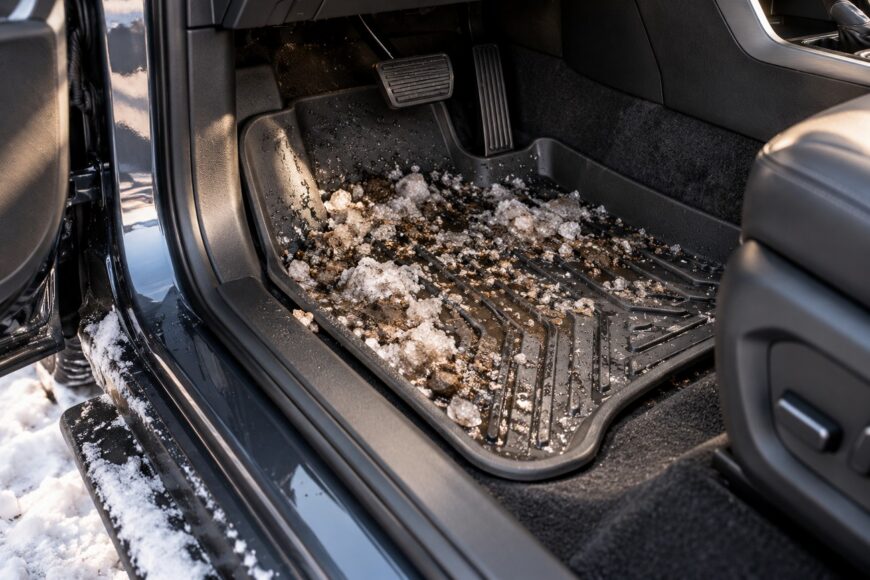
Wet shoes, melting snow, and road grit can turn a clean vehicle carpet into a damp, abrasive surface. Once moisture reaches the carpet, drying takes longer, salt residue can remain around the fibers, and routine cleaning becomes a more involved job. A floor liner creates a separate surface that is easier to remove and wash after everyday driving.
The benefit depends on more than a rubbery or molded material. Raised edges, complete floor coverage, secure attachment, and clear pedal travel determine whether the liner contains the mess safely. A well-fitted liner can reduce direct contact with the carpet, but it is not a watertight barrier and should be treated as part of regular interior maintenance.
- How all-weather floor liners protect your car’s carpet
- Less scrubbing, easier seasonal cleanup
- When the benefits are worth the trade-offs
- Choose fit and secure attachment before material
- Install the driver’s liner without creating a pedal hazard
- Limits and upkeep that keep the benefit intact
- Frequently asked questions
- What are the downsides of using floor mats instead of liners?
- When should I replace a worn floor liner?
- How should I store liners when switching to carpet mats?
How all-weather floor liners protect your car’s carpet
Raised-edge all-weather liners help contain tracked-in water, mud, snow, and road salt, reducing direct contact with vehicle carpet. Their molded walls and channels give liquid and loose debris a defined area to collect instead of allowing everything to spread across a flat floor mat. This is especially useful during wet commutes, winter trips, and short journeys when snow melts before the cabin has time to dry.
Keeping that material away from the carpet makes cleaning more controlled. Mud and salt can be lifted out with the liner, while the carpet receives less moisture and abrasive grit. The result is less mess in the footwell, not a guarantee that the original flooring will remain untouched under every condition.
Coverage matters as much as the raised edge. A liner that leaves a gap near the door sill, seat rail, transmission tunnel, or front edge can allow water and sand to reach the carpet. Protection also depends on edge height and how the liner follows the floor contours; a tall wall is useful only where it remains stable and does not fold away from the surface.
A liner is not watertight. Water can enter through gaps, collect beneath a lifted edge, or spill over the wall when the liner is removed. Its practical value is containment and easier removal of dirt, provided it fits the vehicle and is inspected regularly.
Less scrubbing, easier seasonal cleanup
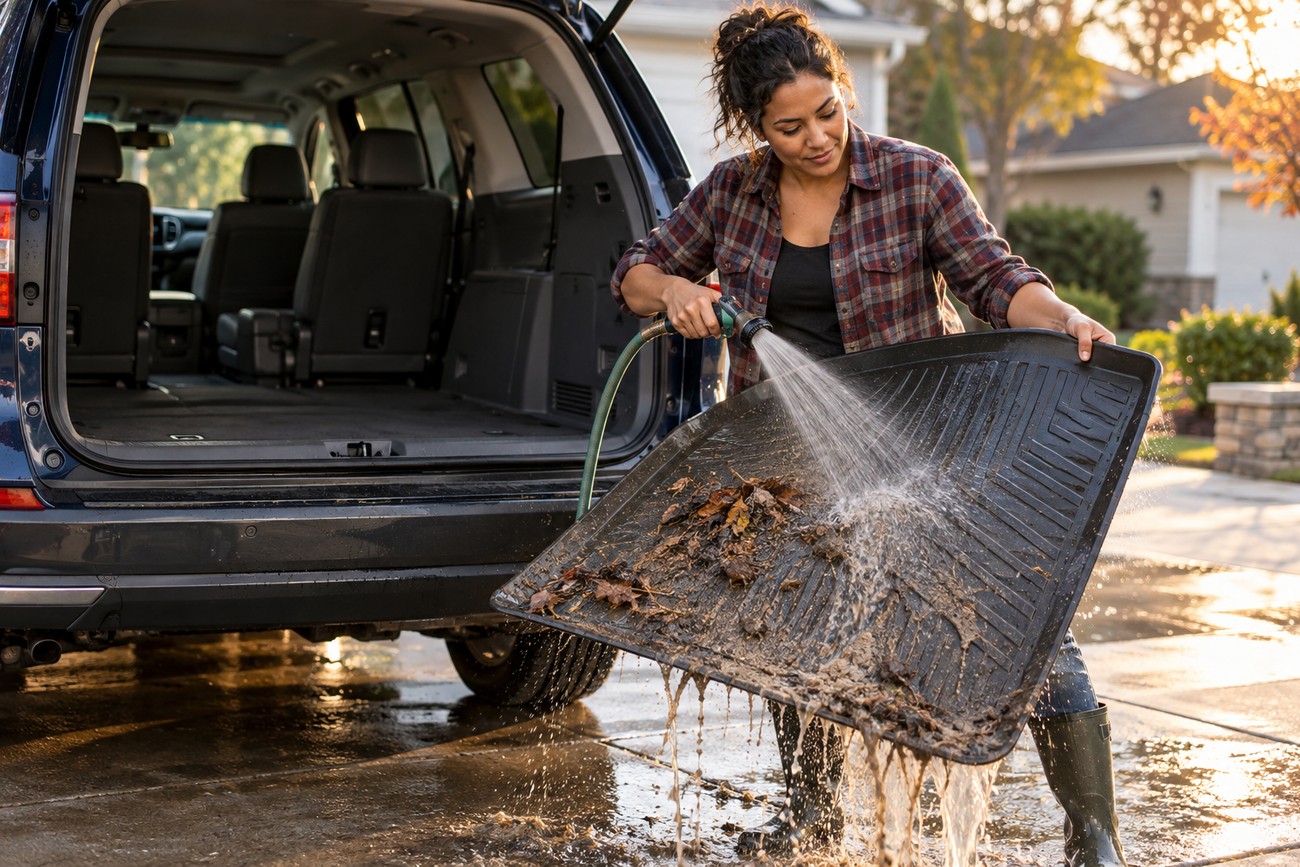
Most of the cleaning advantage comes from moving the mess out of the vehicle in one piece. A liner can be removed for rinsing or wiping, while embedded mud in carpet usually needs brushing, extraction, and drying. That difference is noticeable after a season of wet footwear, children’s shoes, or passengers carrying debris into the rear footwells.
Snow creates a specific cleaning problem because the snow itself is easy to remove, while the resulting meltwater spreads quickly. A liner with sufficient wall height can hold that water until it is emptied. Sand behaves differently: it settles into channels and finds small openings, so close coverage around the door-side edge and a stable fit are more important than a deep central reservoir.
Deep channels and tall walls can also make removal harder. Lifting a full liner too quickly may tip collected water onto the carpet or door sill. Removing it slowly, keeping it level, and choosing a design with practical grip zones or a controlled drainage feature can make seasonal cleanup less awkward.
Cleaning remains necessary even when the upper surface looks clear. Fine grit can settle beneath the liner and act like sandpaper against the carpet or the liner’s underside. Periodic removal, rinsing, and drying of both surfaces preserve the containment benefit and help reveal edges that have started to lift.
When the benefits are worth the trade-offs
All-weather liners make the most sense when water and tracked-in debris regularly reach the footwells. Drivers in wet or snowy climates, people who walk through muddy areas, and households with passengers who bring in sand can use the raised edges every day. The liner gives those contaminants a removable surface instead of letting the carpet absorb and hold them.
Front liners usually receive the most attention because the driver’s footwell sees frequent use and has additional safety requirements. Rear coverage is useful when passengers carry wet footwear or loose debris, though the rear footwell configuration may vary with seat rails, a center hump, folding seats, or other interior equipment.
A driver who rarely encounters moisture may prefer a simpler flat or carpet mat. Such a mat can be lighter and easier to lift, and it may suit an interior that sees little dirt. The trade-off is lower liquid containment and, with a carpet mat, a greater need to dry the mat after it becomes soaked.
High walls also have a physical cost. They can restrict useful space near the pedals, make it harder to reach seat-adjustment controls, or catch on a door sill during installation. Because a liner is not watertight, its value should be judged by how well it contains ordinary mess in the vehicle, rather than by a claim of complete floor protection.
Choose fit and secure attachment before material
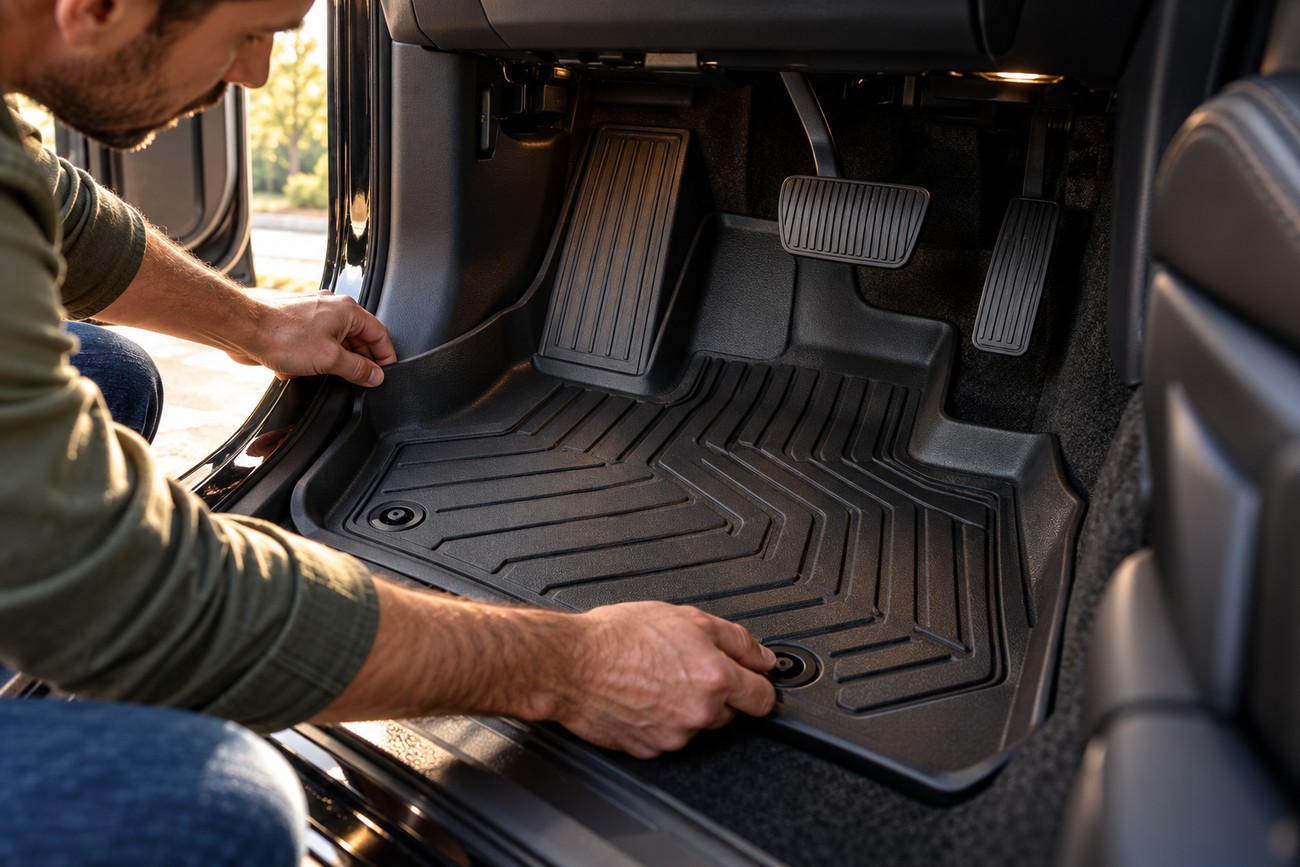
Begin with the vehicle details, not the material description. Check the exact model year, body style, interior configuration, steering position, and the footwell for which the liner is intended. Differences in seat layout, trim, floor contours, and right- or left-hand drive can change both the outline and the available attachment points.
Inspect the factory retainers before buying. Count and locate the hooks, posts, or other attachment points in each footwell, then confirm that the liner leaves them accessible and engages them without force. A model-specific outline is useful because it follows the floor more closely, but material alone cannot compensate for poor fit or blocked retainers.
Rigid edges deserve particular attention. Plastic can become less flexible in cold conditions, and a hard edge may catch adjacent trim, rub the carpet, or curl away from a contour. Even a vehicle-specific or original-equipment liner can have a geometry defect, so inspect the actual piece rather than assuming its label guarantees a secure fit.
After placement, run a hand around the perimeter and check the full footwell. The liner should lie flat, leave the doors and seat controls clear, and remain attached without strong tension. If it needs to be pulled into position or its edge rises when the seat moves, resolve that compatibility problem before use.
Install the driver’s liner without creating a pedal hazard
Safety starts with removing the existing driver’s mat. Do not place an all-weather liner over a carpet mat or stack two mats in the same footwell. NHTSA advises using a compatible driver’s mat secured to the factory retainers and warns that a displaced or incompatible mat can interfere with the accelerator.
- Remove the existing driver’s mat completely, including any material caught beneath the pedals.
- Place the replacement liner in the correct orientation and confirm that its front edge does not move toward the pedals.
- Engage every available factory retainer, following the vehicle and liner instructions rather than relying on friction.
- Check the perimeter by hand for folds, raised corners, or material caught against the sill or seat rail.
- With the vehicle stationary, operate each pedal through its full travel and confirm that the accelerator returns freely without contacting the liner.
Repeat the check after removing the liner for cleaning or disturbing the vehicle’s interior. A retainer that appears engaged may still be holding only an edge, and a folded section can be difficult to see from the driver’s seated position. Never assess pedal clearance while driving; complete the inspection before the vehicle moves.
The risk is not limited to unbranded universal products. In 2024, GM recalled certain Buick Envision driver’s all-weather liners because they could trap the accelerator; up to 27,793 vehicles may have been affected. A branded, original, or model-specific product therefore still needs proper installation and a recall check where relevant.
Limits and upkeep that keep the benefit intact
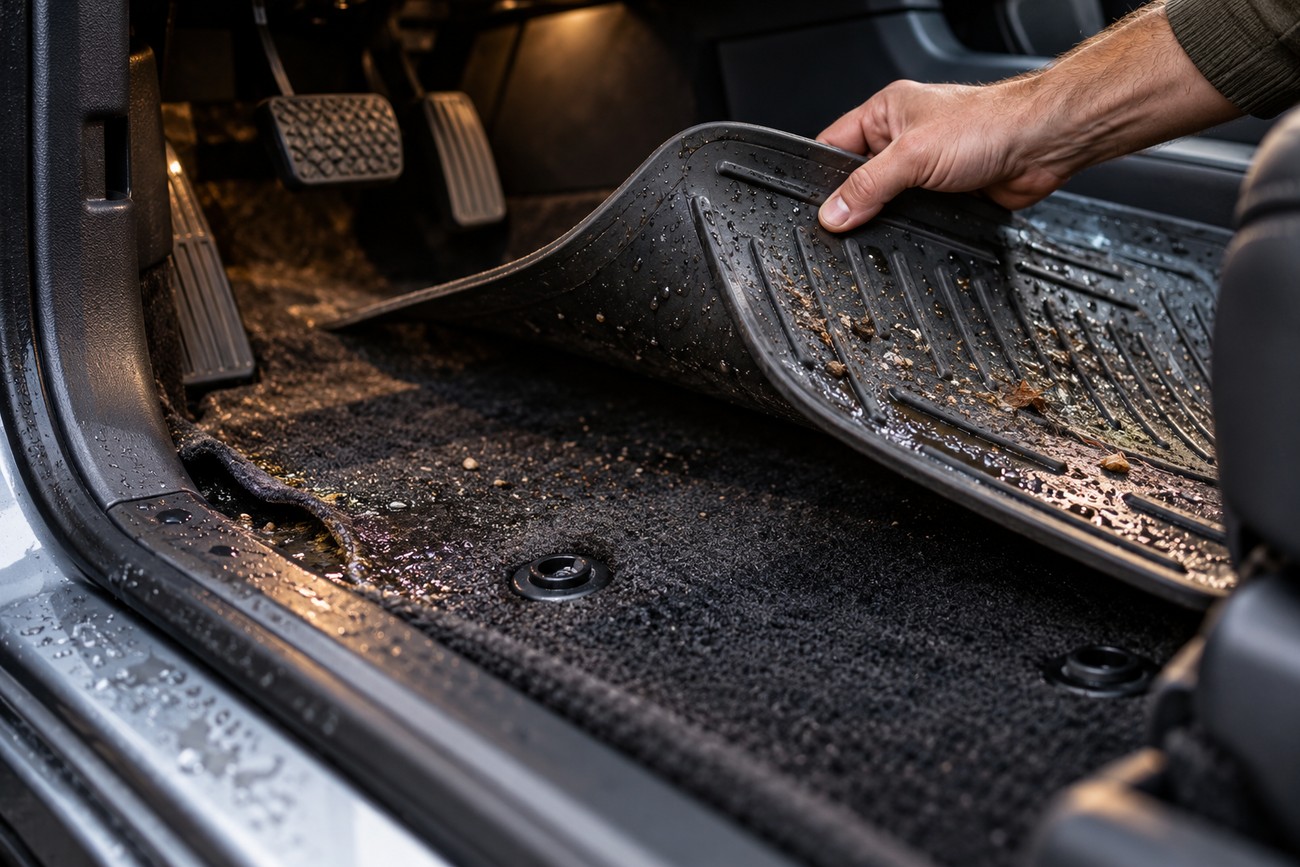
A liner reduces exposure to mess; it does not remove the need to inspect the carpet beneath it. Water can enter through a gap at the edge, pass under a curled section, or spill during removal. If the liner is full of meltwater, lift it slowly and keep it level until it is outside the cabin.
Fine grit can collect underneath and remain hidden by the liner. Remove the liner periodically, clear the debris, and inspect the carpet, attachment points, and surrounding trim. Areas touched by the driver’s shoes deserve special attention because repeated contact can make an edge lift or curl even when the rest of the liner remains flat.
Material behavior changes with temperature and age. Rigid plastic may become less flexible and noisier in cold weather, while heat or repeated bending can contribute to distortion. Correct a raised edge that rubs the carpet, catches the door seal, or intrudes into the pedal area rather than accepting it as normal fit.
Wash the liner according to its care instructions, then let it dry fully before reinstalling it. Dry the underlying carpet and check that no grit remains around the retainers. After cleaning, repeat the fit and pedal-clearance check, since a liner can be placed slightly differently when it is wet, slippery, or still holding its shape from storage.
Frequently asked questions
Mats and liners handle liquid differently, and both need secure placement in the driver’s footwell. Wear at the edges or attachment points can affect a liner’s fit. Cleaning and storing liners without deforming their raised edges helps them sit flat when reinstalled.
What are the downsides of using floor mats instead of liners?
Conventional flat or carpet mats are often easier to lift, shake out, and store, but they typically contain less liquid. A flat edge gives meltwater more opportunity to spread across the carpet, while a carpet mat may need separate drying after it becomes soaked. That can be a reasonable trade-off for a lightly used vehicle or a driver who values easy handling over deeper containment.
The choice also depends on how much debris enters the cabin. A simple mat may be easier to reposition, while a liner requires more care around high walls, retainers, and pedal clearance. Neither option removes the need to use the correct driver’s mat and keep it secured.
When should I replace a worn floor liner?
Replace a liner when persistent curling, distortion, or cracks prevent it from lying flat and containing liquid. A cracked section can release trapped water, while an edge that repeatedly lifts can expose the carpet and allow grit underneath. Replacement is also appropriate when the attachment points no longer hold securely.
Before ordering a new one, compare the old liner with the vehicle’s current floor and retainers. A changed interior configuration, damaged factory fastener, or replacement seat can affect fit. The new liner still needs a full perimeter and pedal-clearance inspection after installation.
How should I store liners when switching to carpet mats?
Clean and dry the liners fully before storage, including the channels and the areas around the attachment points. Residual water, salt, or grit can leave an odor and transfer contamination back to the vehicle when the liners are installed again.
Store them flat where possible, or follow the maker’s storage recommendation. Avoid folding or compressing them in a way that deforms the raised edges and attachment areas. After seasonal storage, inspect the shape and install the liners only after confirming that they sit flat and remain clear of the pedals.