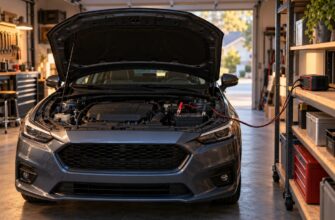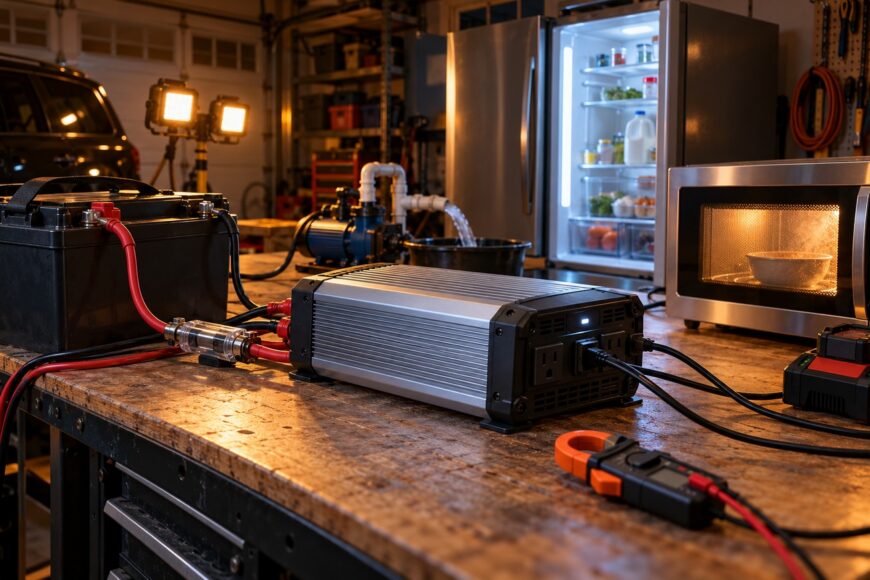
A seemingly modest AC appliance can demand very high current from a 12 V battery. Startup surges from motors, voltage loss in long cables, and missing overcurrent protection can cause shutdowns, damaged equipment, or a fire in the DC wiring.
An inverter therefore has to be treated as part of a complete electrical system. Reliable AC power depends on the battery bank, cable size, fuse, ventilation, waveform, and the vehicle’s or boat’s charging system. A 12 V battery cannot automatically run every 2000 W inverter safely or for a useful length of time.
- Start with the AC devices, not the inverter label
- Calculate inverter size and 12 V battery current
- Choose the battery, cables, fuse, and mounting location
- Select the waveform and look past the headline power
- Install the inverter without overloading the vehicle or boat
- What should you not plug into an inverter?
- Troubleshoot shutdowns, noise, and sudden battery drain
- Frequently asked questions
- Should I disconnect an inverter when no AC device is plugged in?
- How can I reduce inverter fan noise without causing overheating?
Start with the AC devices, not the inverter label
Make a list of every device that may operate at the same time. Include continuous loads such as chargers, refrigerators, pumps, lights, and entertainment equipment, then add occasional loads such as a microwave or air conditioner. The inverter’s nominal power should be at least the combined active load plus a 20–30% margin.
Running power is only part of the calculation. Induction motors in refrigerators, pumps, compressors, and air conditioners can draw approximately 3–7 times their running current during startup. If another appliance is already operating, that short surge can push the inverter into overload even though the individual devices appear to fit its rating.
Choose an inverter by its credible continuous rating, then check the manufacturer’s surge rating and its duration. A stated peak rating may last only a fraction of a second and may not start a motor. A unit advertised as 2000 W can therefore be unsuitable for a combination of motor loads and heating appliances if its continuous rating, surge capability, or thermal design is weaker than the label suggests.
Read the appliance labels and manuals where possible. A microwave, refrigerator, pump, or charger may draw differently from its rated description, and a device that cycles on and off can still create a difficult combined load when several appliances start together.
Calculate inverter size and 12 V battery current
At 12 V, estimate DC current with this formula: I ≈ AC output power / 12 V / inverter efficiency. Quality inverters commonly achieve about 85–92% efficiency in their effective operating range, so the battery current is always higher than the AC wattage divided by 12.
For example, a 1000 W AC load requires approximately 90–100 A on the DC side. That current must pass through the battery terminals, fuse, cables, connections, and inverter input without excessive voltage drop. A loose lug or undersized cable can make the inverter shut down even when the battery itself is charged.
Runtime depends on battery capacity, usable depth of discharge, temperature, battery condition, and the charging source. A high-load appliance can exhaust a modest battery quickly, while the alternator may need to supply substantial current continuously. Voltage sag under load can also trigger a low-voltage shutdown before the battery’s resting voltage appears seriously low.
A larger inverter is not automatically a better upgrade. Oversized units can have higher standby consumption and require heavier cables, larger protection, and a battery bank capable of supplying the current. Size the whole system for the loads you actually intend to run, rather than buying a headline rating that the battery and wiring cannot support.
Choose the battery, cables, fuse, and mounting location
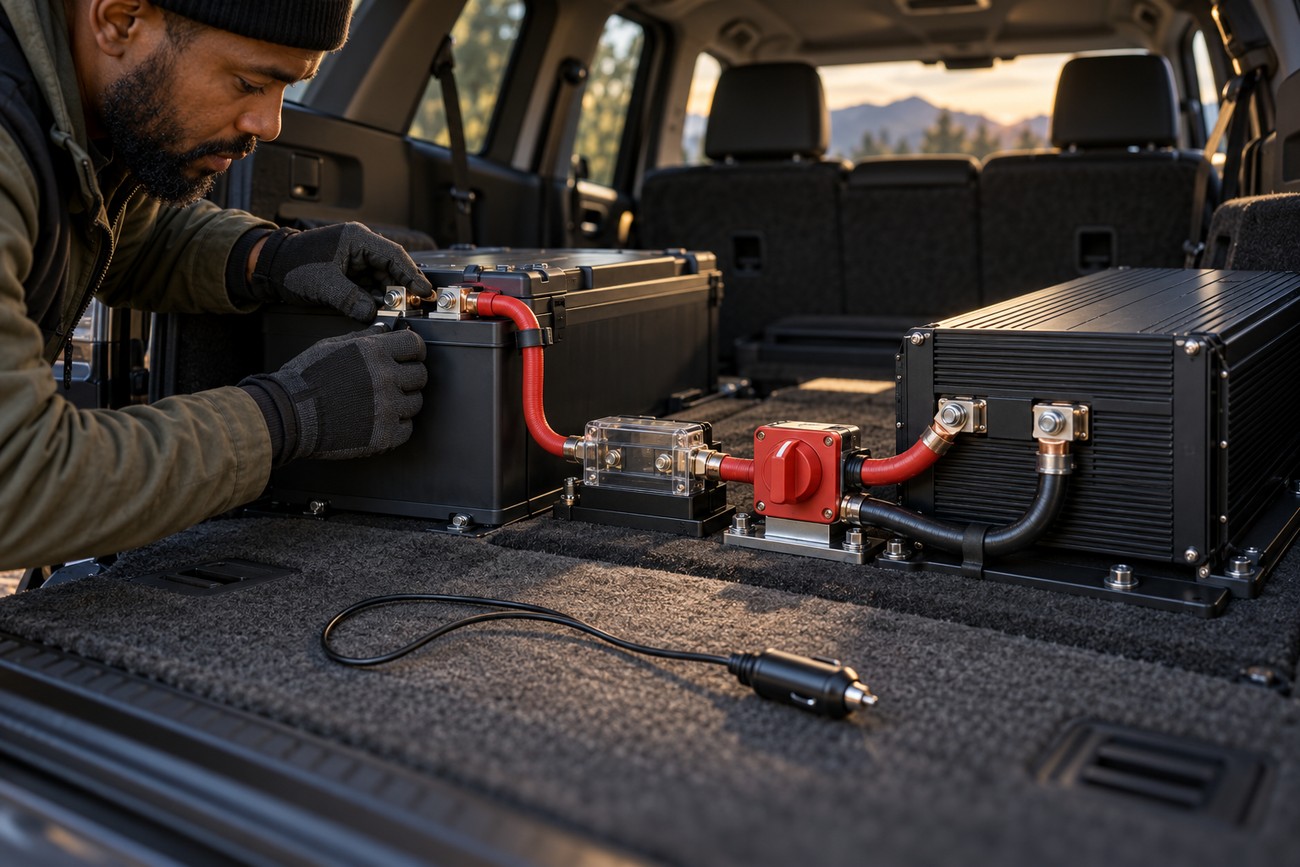
A starter battery is intended for engine starting, where high current is delivered briefly. Sustained inverter use is better matched to a traction, AGM, or deep-cycle battery. Repeatedly drawing heavy current from a starter battery can accelerate wear and cause its capacity to fall.
Use short, heavy DC cables between the battery and inverter. For vehicle and boat installations, target no more than 3% DC voltage drop at full load. A cigarette-lighter outlet and thin 10–15 A wiring are unsuitable for a high-current inverter; a 1000 W AC load can require approximately 90–100 A at 12 V.
Short, heavy cables should still be kept away from battery acid vapors, corrosion, exhaust heat, and moving parts. The best mounting point is a compromise: electrically close to the battery, mechanically protected, and accessible for inspection.
Install a fuse or circuit breaker as close to the battery as practical. It should be rated for the inverter’s maximum continuous DC current and matched to the cable’s safe capacity. The protection is there to interrupt a short circuit in the cable before the cable overheats, so placing it far from the battery leaves much of the unused cable exposed.
Mount the inverter securely in an open, ventilated location. Do not seal it in a small box or locker without designed airflow; heat can cause throttling or premature failure. Keep it protected from water, condensation, fuel, and battery corrosion, and leave enough space for the cooling fan and service access.
Select the waveform and look past the headline power
Pure sine wave is the recommended choice for sensitive electronics, switch-mode power supplies, and motors. It is the safer default for computers, audio equipment, refrigerators, pumps, chargers, and devices with electronic controls because the output more closely matches utility power.
Modified sine wave is generally limited to simple resistive loads such as basic heaters and lamps. It can cause noise, heating, unreliable operation, or poor motor starting in complex equipment. A device may appear to work while its power supply or motor runs hotter than intended.
Check the inverter’s total harmonic distortion where the specification provides it, rather than relying only on the words “pure sine.” High distortion can cause audio whine, radio interference, heating, or electronic glitches. Physical separation, sound cable routing, and proper bonding may also be needed when sensitive radio or audio equipment shares the installation.
Separate continuous power from peak power, and check the built-in outlet and internal wiring limits. Some units display a large figure on the case while their outlets or thermal design impose a lower practical limit. Standby consumption also matters: some inverters draw 1–2 A or more with no AC load, and some units may enter protection earlier around −10 °C or +40 °C.
Install the inverter without overloading the vehicle or boat
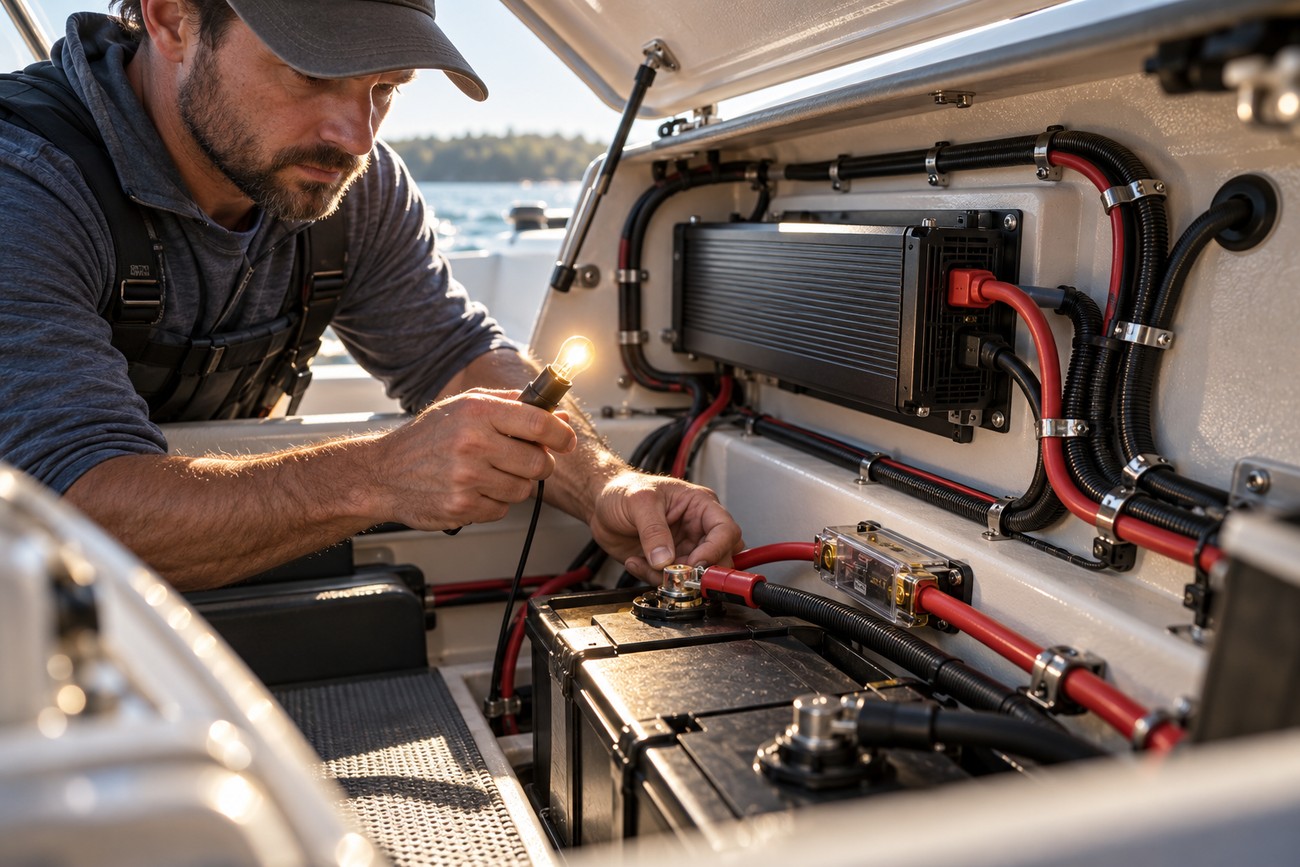
Plan the complete DC path before making connections: battery, fuse or breaker, cable route, disconnect point, inverter, and ventilation. Mount the inverter so the terminals cannot contact metalwork accidentally, and secure the cables against vibration and chafing. Follow the inverter manufacturer’s polarity, grounding, and protection instructions.
Install the fuse or breaker near the battery, connect the positive and negative conductors correctly, and inspect every crimp and terminal. Test the system first with a small load, then increase the load while checking for hot terminals, unusual smells, falling voltage, and unexpected alarms. Stop if a cable or connection becomes warm.
A large inverter can place a substantial demand on an alternator, generator, or onboard charging system. Voltage sag may cause flickering lights, unstable electronics, or inverter shutdown, while prolonged high output can overheat the charging equipment. Confirm that the charging system can support the battery load instead of assuming that engine operation makes the AC power unlimited.
A two-level setup can be more practical than one large inverter. Use a small inverter for light continuous loads and reserve a larger unit for occasional heavy appliances. A remote-control input or external switch is useful when the inverter is installed near the battery, under a seat, or in a boat compartment.
What should you not plug into an inverter?
Do not connect a device whose startup demand exceeds the inverter’s real surge capability. This includes motor-driven equipment that starts while other loads are already running. A continuous rating that looks adequate on paper does not guarantee that a compressor, pump, or air conditioner will start reliably.
Do not use a questionable modified sine wave output for sensitive electronics, switch-mode power supplies, or motors when pure sine output is required. Symptoms such as buzzing, excess heat, unstable charging, or intermittent operation are reasons to stop using the combination rather than accept them as normal.
Some equipment depends on stable grounding, neutral arrangements, transfer switching, or a purpose-built power source. Follow the equipment instructions and the inverter manual, particularly for medical, high-power, or permanently installed systems. Portable inverter power should not be treated as a substitute for a correctly designed AC distribution system.
Never feed inverter output into shore power, a generator output, or a building circuit through an ordinary receptacle. Backfeeding can energize wiring unexpectedly and damage connected equipment. A suitable transfer switch and correctly designed installation are required where more than one AC source is involved.
Troubleshoot shutdowns, noise, and sudden battery drain
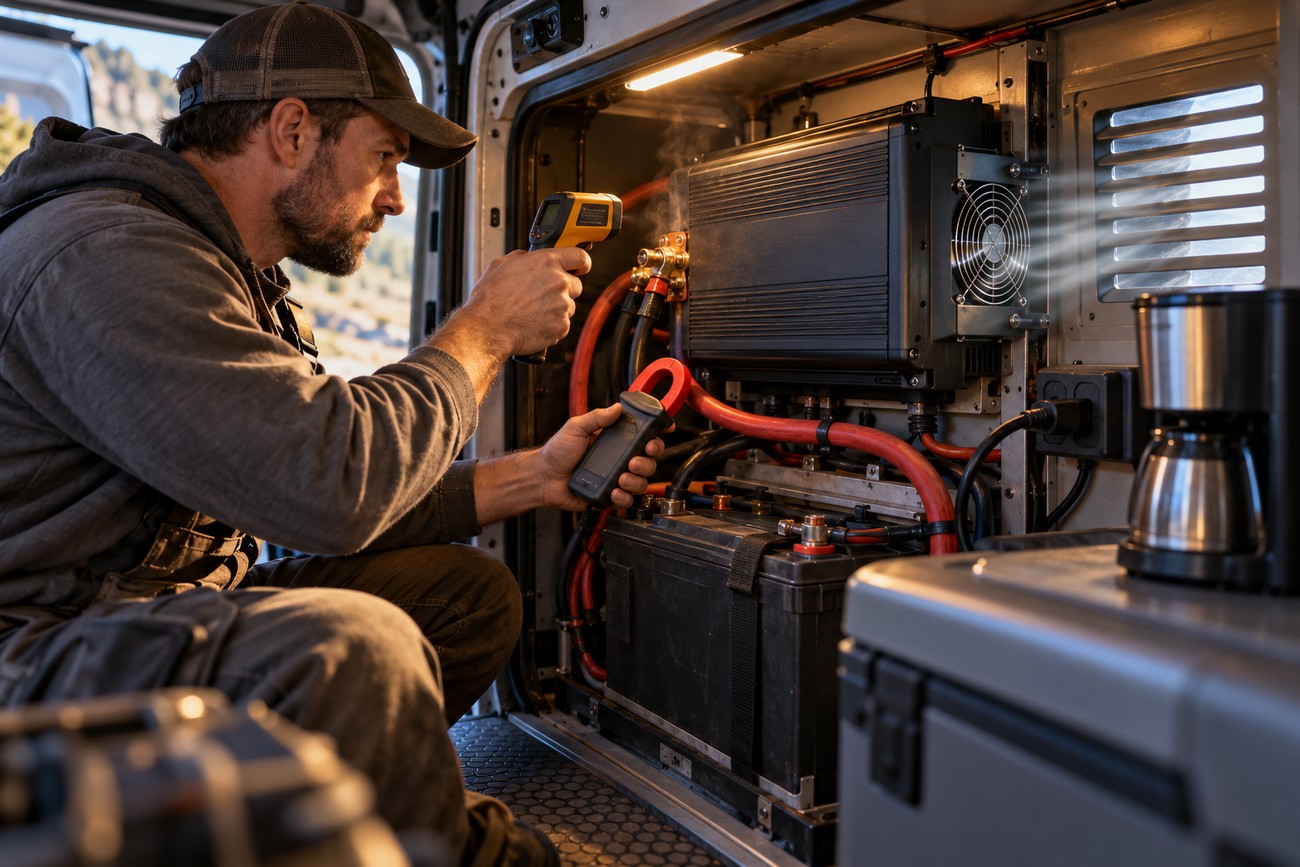
A unit marketed as 2000 W may shut down around 1000–1200 W under real conditions. Check the load’s startup demand, battery voltage while loaded, cable size, cable length, terminal tightness, and ventilation. The fault may be voltage drop or thermal protection rather than an inverter whose label is simply being ignored.
A loud fan can indicate high internal temperature, a heavy load, restricted airflow, or a control design that runs the fan frequently. Move the inverter to a cooler location, reduce unnecessary load, and keep the airflow path clear. Do not block vents or slow the fan to reduce noise; that can turn an irritating sound into an overheating failure.
Rapid battery drain is expected from high-power AC appliances, but it can be made worse by standby consumption. Some inverters draw 1–2 A or more with no AC load. Turn the unit off when it is not needed, and check whether a remote switch or automatic disconnect can prevent it from remaining in standby.
Radio noise, audio whine, and electronic glitches can result from waveform quality, high distortion, grounding arrangements, or interference between DC and signal cables. Keep inverter and high-current cables away from antennas and audio wiring, use clean connections, and test sensitive equipment from a pure sine wave inverter if the problem remains.
Manufacturers advertise battery protection, but field measurements report that some units continue drawing below 11 V and shut down around 10.0–10.5 V. That level can already harm a starter battery. Treat the inverter’s low-voltage cutoff as a last protection layer, not as a complete deep-discharge controller; use suitable battery monitoring and a separate disconnect where necessary.
Frequently asked questions
These operating details often determine whether an inverter remains reliable after installation.
Should I disconnect an inverter when no AC device is plugged in?
Yes, switch it off when it will not be used unless the installation has a deliberate automatic-disconnect strategy. Standby draw can continue with no AC appliance connected, gradually reducing battery charge and potentially leaving the battery too weak for engine starting.
A remote switch is useful when the inverter is hard to reach. A battery monitor or low-voltage disconnect can add control, but it should be configured for the battery type and should not replace sensible operating habits.
How can I reduce inverter fan noise without causing overheating?
Reduce unnecessary load, switch off the inverter during idle periods, and move it to a cooler location with clear airflow. Keeping high-current cables secure and connections tight can also prevent extra heat that causes the fan to run more often.
Do not cover the vents, install the inverter in a sealed compartment, or alter the fan control without engineering the cooling system. If the fan remains loud at a light load, the unit may be poorly matched to the environment or may need inspection.