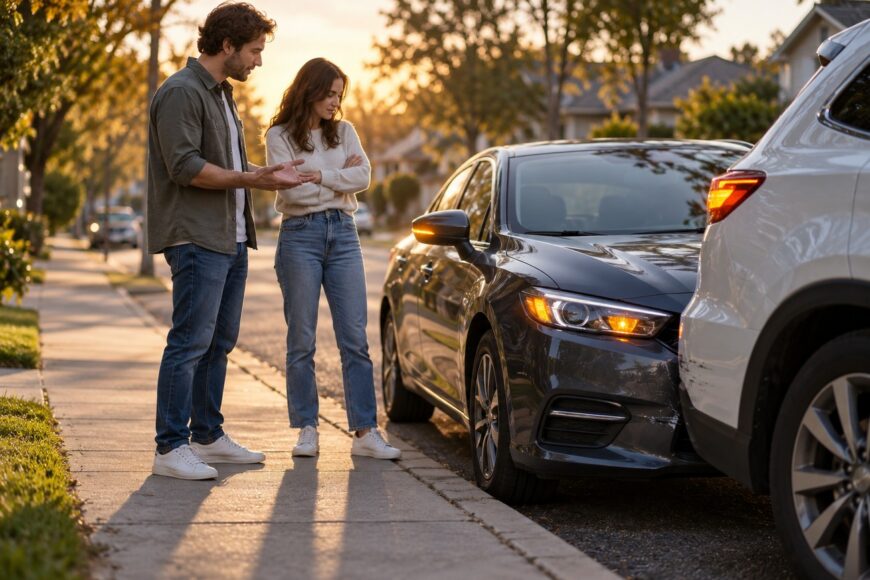
After a minor collision, you may want to clear the lane quickly while preserving proof of where the cars stopped. Personal safety and urgent medical needs come before photographs or paperwork. Check for danger around the vehicles before trying to document anything.
A barely visible scrape can later become a disagreement about how the impact happened, or a repair shop may find damage beneath the bumper. Take a breath, stop the car, and check on everyone involved. The next few minutes matter, but you do not need to settle fault at the roadside.
- Stop, Check for Injuries, and Make the Scene Safer
- Photograph the Scene Before Anything Changes
- Decide When to Move the Cars
- Exchange Details Without Settling Fault at the Roadside
- Choose the Right Reporting and Insurance Route
- Follow Up for Damage That Was Not Obvious at the Scene
- Frequently Asked Questions
- What is considered a minor fender bender?
- What should I do if the other driver leaves before we exchange details?
- What if I hit an unattended parked car?
- What if someone feels sore hours after the collision?
Stop, Check for Injuries, and Make the Scene Safer
Stop, secure the vehicle, and switch on your hazard lights. Check how you and your passengers feel, then ask about the people in the other car if you can do so safely. Pain, dizziness, or confusion changes the priority: seek urgent help rather than moving straight to photographs or forms.
Look for approaching traffic, poor visibility, leaking fuel, smoke, or a fire risk before you step out. If someone needs urgent medical help, call the local emergency number and give your location. If it is safer to leave the vehicle, move to a protected place and keep others away from traffic. Do not stand between the cars to inspect a scratch.
Rules for warning devices and emergency calls depend on where you are. In Russia, drivers must stop immediately, secure the vehicle, and turn on hazard lights immediately after stopping; 112 is the emergency number, and 103 reaches an ambulance. Russia’s warning-triangle rule calls for at least 15 m from the vehicle in a built-up area and at least 30 m outside one. Elsewhere, follow local rules without putting yourself in the path of traffic to place a triangle.
Photograph the Scene Before Anything Changes
If it is safe, record vehicle positions and relevant surroundings before vehicles or debris are moved. Start with wide photos that show both cars in relation to the lane, curb, junction, or parking spaces. Then photograph each registration plate and the visible damage on both vehicles. A short video can help capture the overall layout, though clear still images remain useful for specific details.
Include road markings, signs, traffic signals, debris, and any visible tire marks or displaced objects. Take pictures from more than one safe viewpoint so an insurer or investigator can understand the approach and final positions. If a witness is willing, ask for their name and contact details, and note where they were standing.
Rushed close-ups of a dent may show the repair need while leaving the cause unclear. That gap can matter if the drivers later give different accounts. Photograph what you can without entering a live lane or delaying urgent care; a missing image is preferable to a second collision. Keep the original files, including their dates, rather than relying only on images sent through a messaging app.
Decide When to Move the Cars
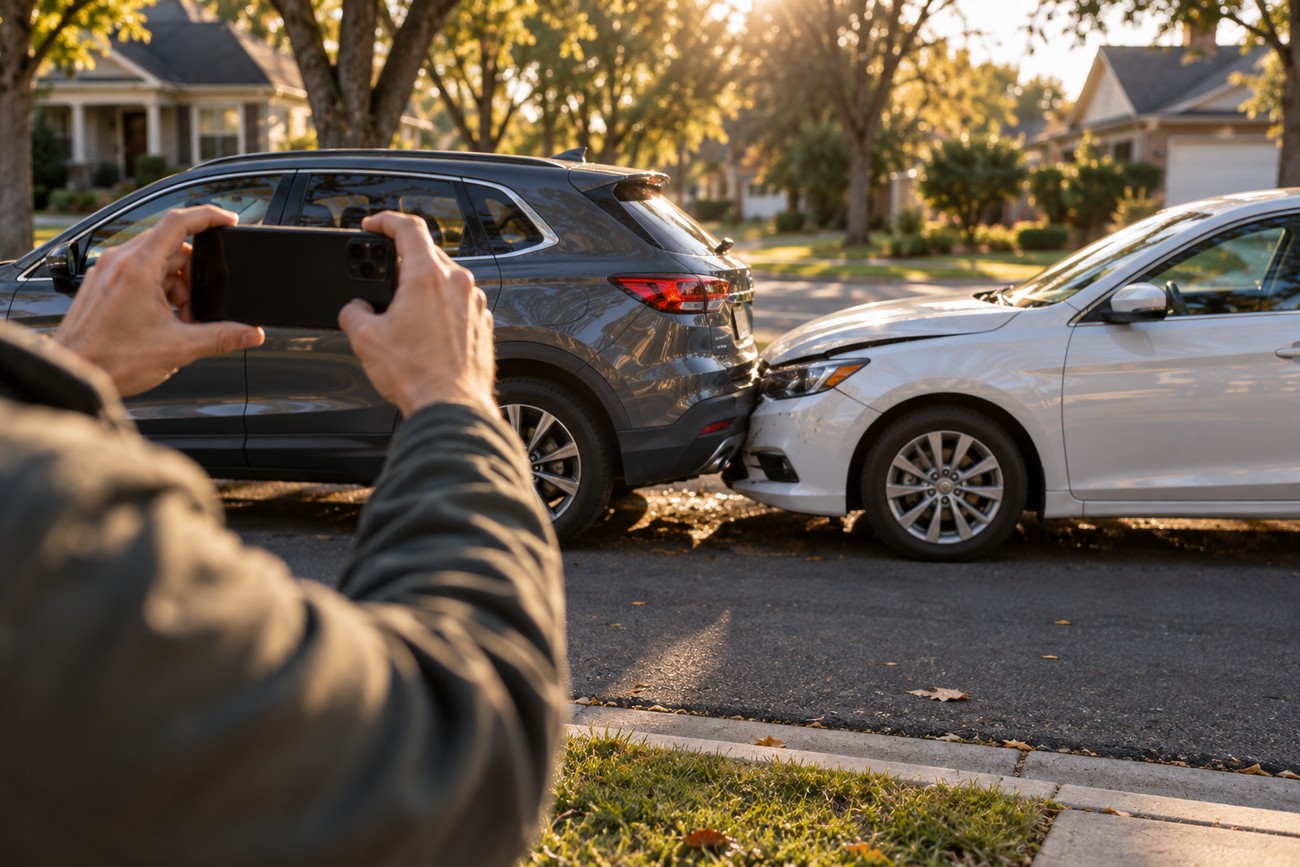
A blocked lane creates pressure to move, while an unchanged scene can help establish what happened. If it is safe, make a quick record of both cars and nearby road features first. Then consider whether moving them is needed for safety or traffic flow and what local rules require. There is no sound universal rule that driveable cars must move immediately or always remain where they stopped.
Fast traffic, darkness, or a narrow shoulder can make standing beside the cars more dangerous than losing a perfect scene photograph. Do not remain in danger to preserve evidence. If you can safely drive to a nearby protected spot, note where the vehicles stopped and where you moved them. Tell the other driver what you are doing so you can reconnect away from traffic.
If a car cannot be moved, keep people clear of the roadway and seek appropriate help with traffic control or recovery. Avoid shifting loose parts solely to tidy the scene when it is safe to leave them for documentation. Where you must clear a hazard, record what you can first and note what changed afterward. This gives a later reviewer a more reliable account than an unexplained change in vehicle positions.
Exchange Details Without Settling Fault at the Roadside
Collect names, contact details, vehicle registration, and insurance information from the other driver, and provide your own details as required locally. Check that the registration matches the car involved. If passengers or witnesses can help establish events, ask how they can be reached; do not assume the other driver can contact them later on your behalf.
Write down the time, location, direction of travel, and a brief account of what you observed. Let the other driver describe their version without pressing for an admission of fault. A calm exchange of facts is more useful than an argument over a scratch, especially when neither person has yet checked for damage beneath the visible panels.
Do not leave with only a verbal promise to call or pay. Phone numbers can be mistyped, and memories of an informal agreement can differ. If either driver suggests paying privately, preserve the photographs and written details anyway, then check whether reporting or insurer notification is still required. A roadside agreement does not replace those obligations.
Choose the Right Reporting and Insurance Route
Reporting requirements and insurer deadlines vary by location and policy; visible damage alone does not determine the procedure. Injuries, damaged property beyond the cars, a driver who leaves, or a dispute about the events may change whom you need to notify. Check local requirements and contact your insurer promptly for instructions, even if the damage initially looks small.
Some places allow drivers to document an eligible collision without an officer attending. In Russia, an eligible collision may be documented using a European accident report without traffic police, but eligibility must be checked. Do not treat that option as automatic: confirm the applicable conditions and complete the form accurately before the drivers separate. An incorrect account or missing detail can complicate a later claim.
When you speak to an insurer, give the known facts and mention anything you have not yet been able to inspect. Ask which photographs, forms, and repair records it needs and how to submit them within your policy’s deadline. If the reporting route remains unclear, seek guidance from the appropriate local authority or insurer before assuming that a small scratch requires no record.
Follow Up for Damage That Was Not Obvious at the Scene
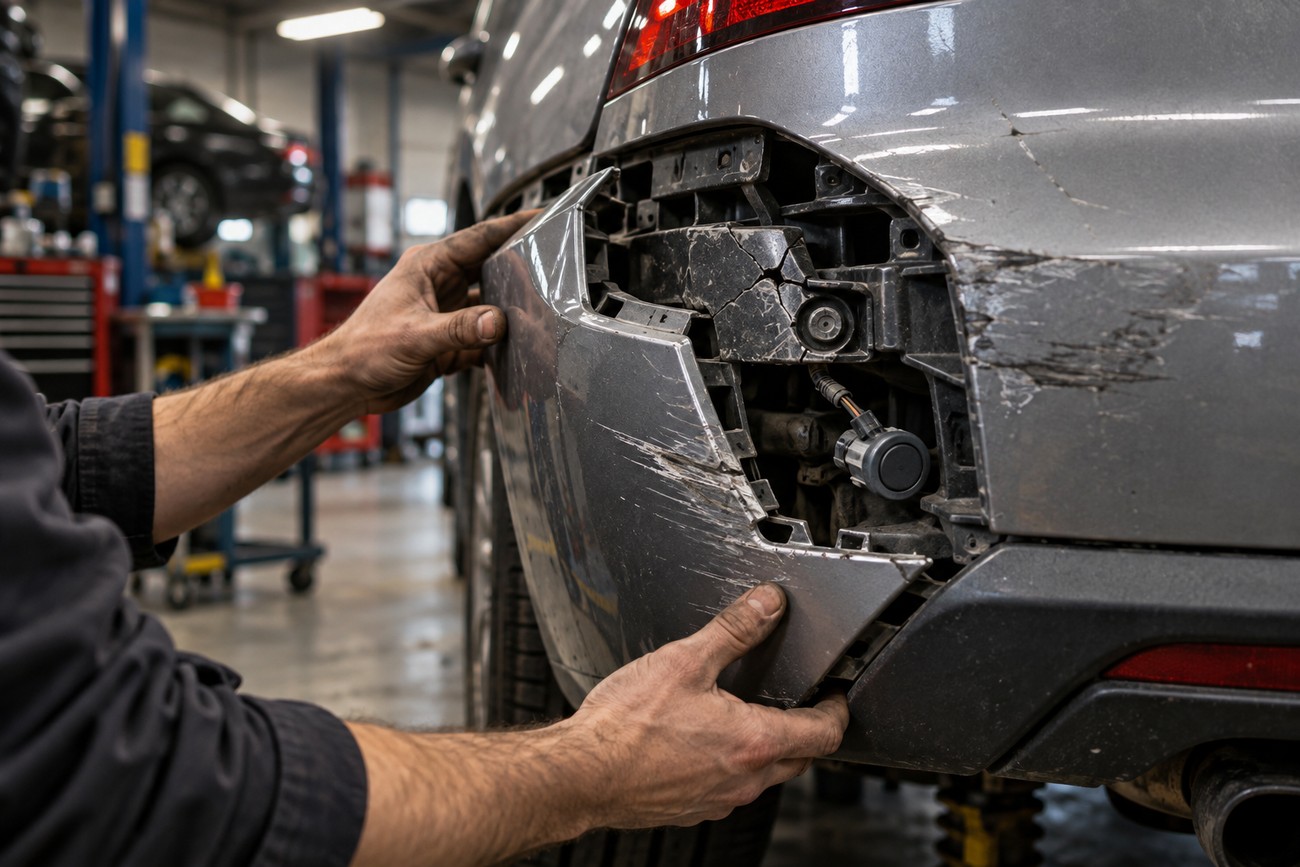
A minor-looking impact can conceal damage to bumper mounts, sensors, or vehicle alignment. A car that drives away normally may still need inspection, particularly if a panel has shifted or a warning light appears. Arrange a professional assessment before treating a roadside repair estimate as final, and tell the assessor where the other vehicle made contact.
A clean-looking bumper cover can spring back after an impact while its mounting points or nearby sensors remain damaged. That is why a cash figure agreed beside the road may have little connection to the eventual repair.
Keep the original scene photos alongside the drivers’ details, your written account, and any report or insurer reference. Save inspection findings and repair estimates as they arrive. This record helps show how later-discovered damage relates to the collision, although any claim decision will depend on the evidence, local rules, and policy terms.
If the vehicle begins handling differently or a safety system reports a fault, do not put off an inspection simply because the exterior mark is small. Update the insurer with new findings through its required process, and retain copies of what you send. That creates a clear timeline without requiring you to guess the full cost at the scene.
Frequently Asked Questions
“Minor” describes how a collision appears, not the steps every driver must take. These situations need particular care because the other party may be absent, the full damage may be unclear, or symptoms may develop later.
What is considered a minor fender bender?
It usually means a low-severity collision with limited apparent damage, such as a bumper scrape at low speed. It is an informal description, not a legal or insurance classification. Appearance alone cannot establish whether there is an injury, hidden vehicle damage, or a reporting duty; use the actual circumstances and local rules to decide what happens next.
What should I do if the other driver leaves before we exchange details?
Stay safe and note whatever you can without pursuing them: the registration, vehicle description, direction of travel, and time. Preserve any photos and witness contact details, then contact the appropriate local authorities and your insurer. Ask what report or claim information they need, particularly if you have only a partial registration.
What if I hit an unattended parked car?
Stop and photograph the vehicles, their positions, and the damage. Follow local requirements for notifying the owner or the authorities; leaving a note alone may not meet those requirements. If a note is permitted or required, include reliable contact information, and keep a record of what you left and any further notification you made.
What if someone feels sore hours after the collision?
Seek medical advice promptly rather than relying on how the person felt at the scene. Keep the assessment record and update the relevant claim or report as required by local rules and policy terms. If symptoms are severe or worsening, use the local emergency service; paperwork can wait until the person is safe.