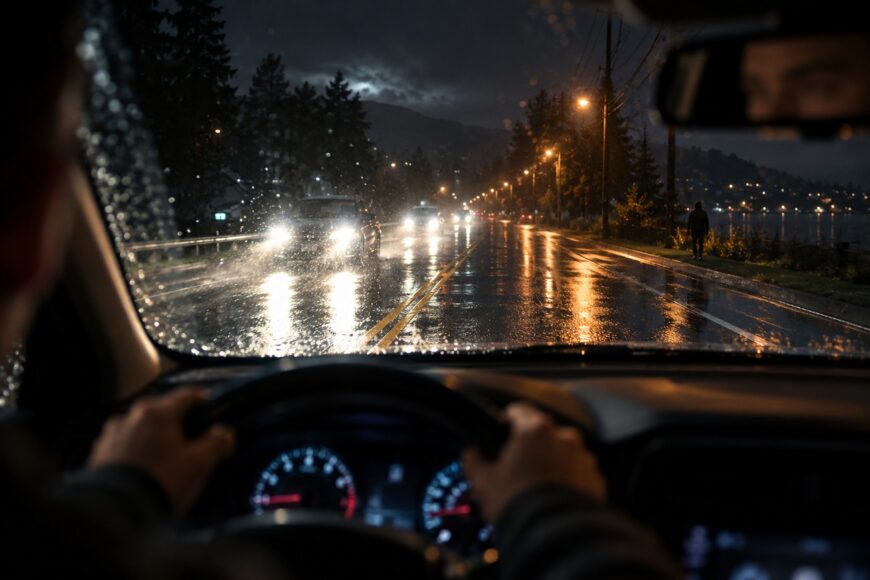
Night driving becomes tiring when oncoming headlights flare across the windshield, wet roads reflect every light source, and lane markings lose contrast. After a trip, your eyes may burn, feel dry, or seem slow to refocus. These symptoms can appear even when the road is technically well lit.
The main problem is usually glare, low contrast, and the eye’s adaptation to bright points of light—not darkness alone. A brief look toward oncoming headlights can reduce useful visibility for several seconds, while dark adaptation takes minutes and full adaptation takes substantially longer.
Better night visibility comes from controlling light, contrast, and vehicle setup. Brighter bulbs alone cannot compensate for dirty glass, incorrect beam aim, scattered reflections, or an overly bright cabin.
- Why night driving strains your eyes
- Fix the vehicle before blaming your eyes
- What to do when headlights hit your eyes
- Rain, wet roads, and reflections: the hardest conditions
- Lighting upgrades that help—and those that backfire
- A low-strain night-driving routine
- Frequently asked questions
- How can I reduce eye strain when driving at night?
- When should night-driving glare be checked by an eye-care professional?
Why night driving strains your eyes
At night, the eye must shift between a dark road and intense points of light. Headlights, reflective signs, and wet markings can create glare that spreads across the visual field. At the same time, low contrast makes it harder to distinguish a pedestrian, lane edge, or road-surface irregularity from the background.
Adaptation adds another layer of difficulty. After exposure to a bright source, the eye needs minutes to adjust again, while full adaptation takes substantially longer. Even a brief glance at oncoming headlights can reduce useful visibility for several seconds, which explains why the road may seem to disappear briefly after a vehicle passes.
Older drivers are generally more sensitive to glare. With age, the lens scatters more light, and recovery after bright exposure is slower. This does not by itself indicate an eye disease, but new or unusually severe glare deserves attention rather than being treated as an unavoidable part of getting older.
LED headlights may feel harsher than older lamps because of beam distribution, mounting height, and angle. The discomfort does not depend on lumens alone. A well-designed, correctly aimed beam can illuminate useful road cues, while a poorly matched or incorrectly adjusted system can send more light into the eyes of approaching drivers.
Fix the vehicle before blaming your eyes
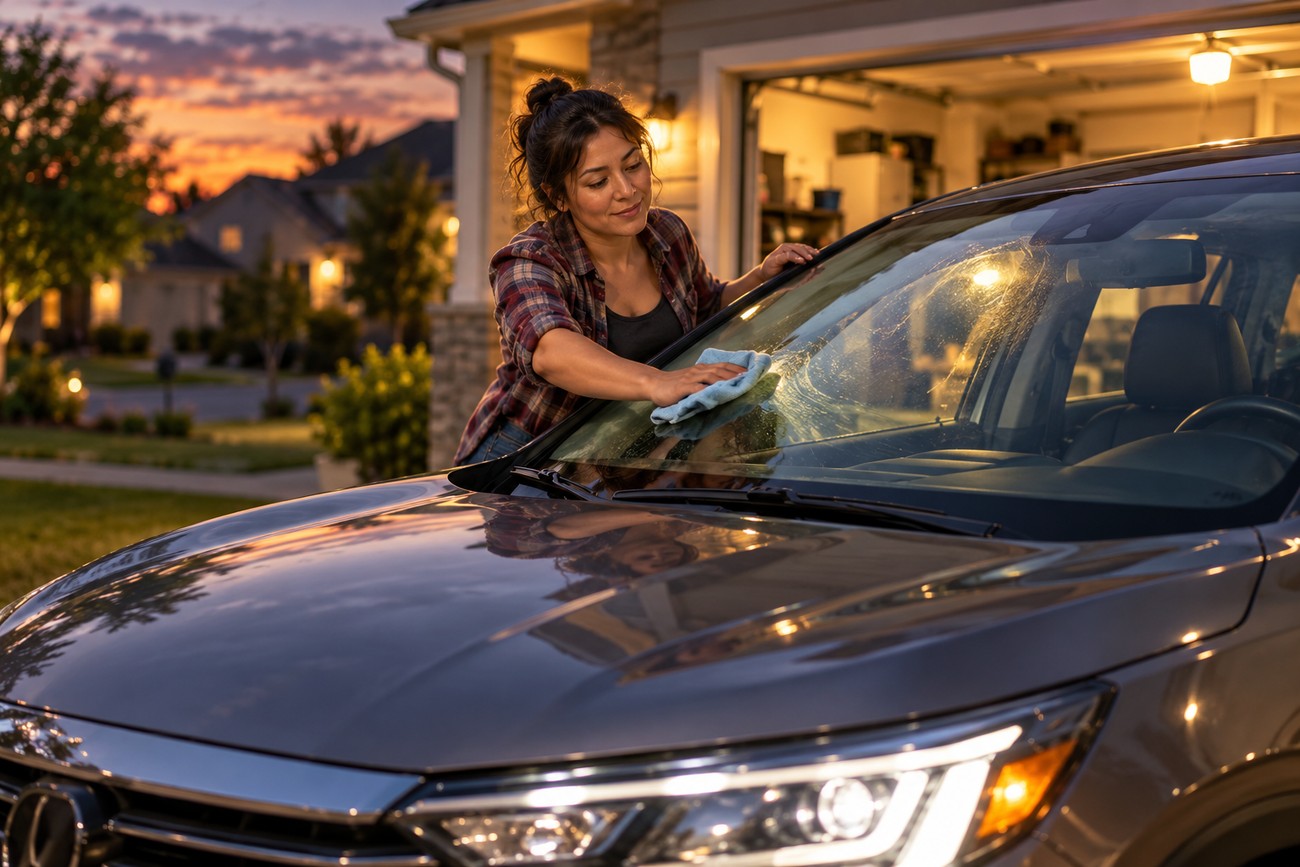
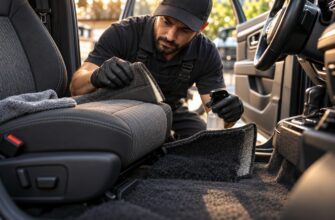
Start with the surfaces through which and from which light travels. Clean the inside and outside of the windshield, headlight lenses, mirrors, and side windows. Residue, fine scratches, cloudy plastic, and moisture scatter light and increase halos around lamps and reflective signs.
Worn wipers can leave a thin film across the windshield, especially in rain. Replace blades that smear, skip, or leave streaks, and use washer fluid suitable for the conditions. A windshield that looks acceptable in daylight can produce substantial flare at night when exposed to multiple headlights.
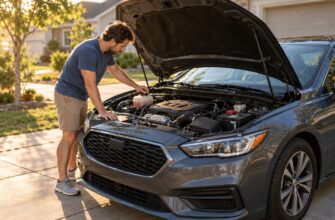
Have the headlight aim checked after replacing lamps, changing suspension components, or carrying a significant load in the rear. Even a small upward deviation can increase glare for oncoming traffic. A brighter light source also does not automatically produce better useful visibility if the beam pattern is wrong.
Reduce instrument and cabin lighting before moving off. Keep the instrument panel very low while leaving enough illumination to read essential information; this is practical advice rather than a universal official standard. A bright dashboard makes the pupils and visual system adjust repeatedly, which can make the dark road feel harder to see afterward.
What to do when headlights hit your eyes
Avoid looking directly into oncoming lamps. Move your gaze slightly down and to the right, then use the right road edge, lane boundary, or roadside reflectors as a reference. This keeps the vehicle’s path in view without forcing the brightest source into the center of your vision.
Keep the scan soft and continuous. Trying to stare as far ahead as possible can draw your eyes toward every bright source and increase the effect of glare. Road markings, signs, and reflectors may provide more reliable orientation than the illuminated center of the road during a short period of visual discomfort.
If visibility is temporarily compromised, briefly reduce speed. The purpose is to restore a larger reaction margin while the eyes recover, especially on an unfamiliar road, near pedestrians, or where lane markings are difficult to distinguish. Maintain your lane and avoid sudden steering toward the light.
After the vehicle passes, return your gaze gradually to the normal forward scan. Repeated exposure can make the eyes feel as though they are “pushing through” the darkness, even when the road is visible. If the recovery remains poor or the trip feels unsafe, stop in a suitable location rather than continuing to compensate with speed or brighter lights.
Rain, wet roads, and reflections: the hardest conditions
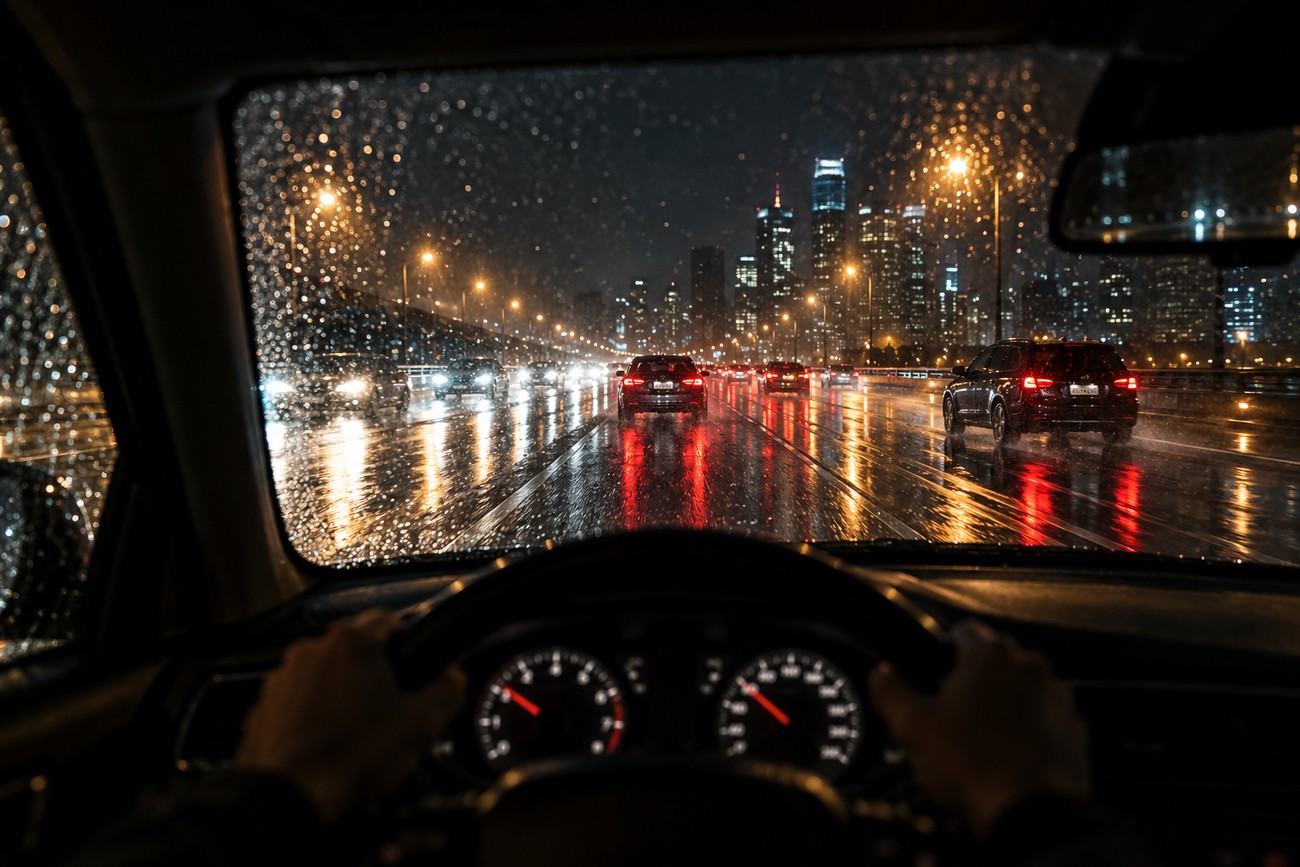
Wet asphalt can reflect headlights toward the driver rather than scattering them diffusely. Fresh road markings can add another bright reflective surface, creating visual clutter and reducing the contrast between a lane boundary and the surrounding pavement. In heavy rain, headlights can seem to form a bright wall ahead.
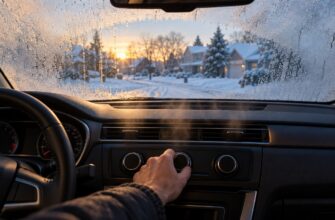
Water and residue on the windshield make this effect worse. Dirty or wet side windows can add glare from passing vehicles, while wet clothing, dashboard surfaces, and other items inside the cabin may create reflections in the glass. These internal reflections can be mistaken for a problem with the road or the vehicle’s headlights.
Clean, streak-free glass and effective wipers are especially important in wet night conditions. Keep the windshield clear of fog and check that the defogging setting does not leave a hazy area in the driver’s primary view. If lane markings become difficult to separate from reflections, reduce speed and use the road edge or reflectors for orientation.
Automatic high-beam systems can be less reliable in rain, fog, winding roads, or when the glass is dirty. They may respond to detected lights in ways that do not match the driver’s actual view of the road. Treat the system as assistance, and take manual control whenever conditions make its timing or beam selection uncertain.
Lighting upgrades that help—and those that backfire
High-output bulbs and retrofit LED units do not guarantee lower eye strain. The housing, reflector, lens, cutoff, and mounting position must work together. If a replacement light does not match the original optical design, part of its output may scatter above the useful beam and increase glare for other drivers.
LED technology can provide effective illumination when the optics and geometry are appropriate and the system is correctly aimed. LED is not automatically better than halogen for eye comfort. A harsh-looking beam may result from its distribution, height, or angle rather than from brightness alone.
The useful question is where the light lands. Illumination that improves contrast on lane edges, signs, and hazards is more valuable than light that produces a broad wash of glare. Before changing bulbs, inspect the lenses, confirm the aim, check the vehicle’s load, and consider whether the existing beam is being lost through dirt or damage.
Yellow or tinted night-driving glasses are not a universal solution. They generally reduce total light transmission, and their safety benefit for night driving has little universal proof. They may change the subjective color or comfort of the scene while also reducing the light available for useful road details, especially in poor weather.
A low-strain night-driving routine
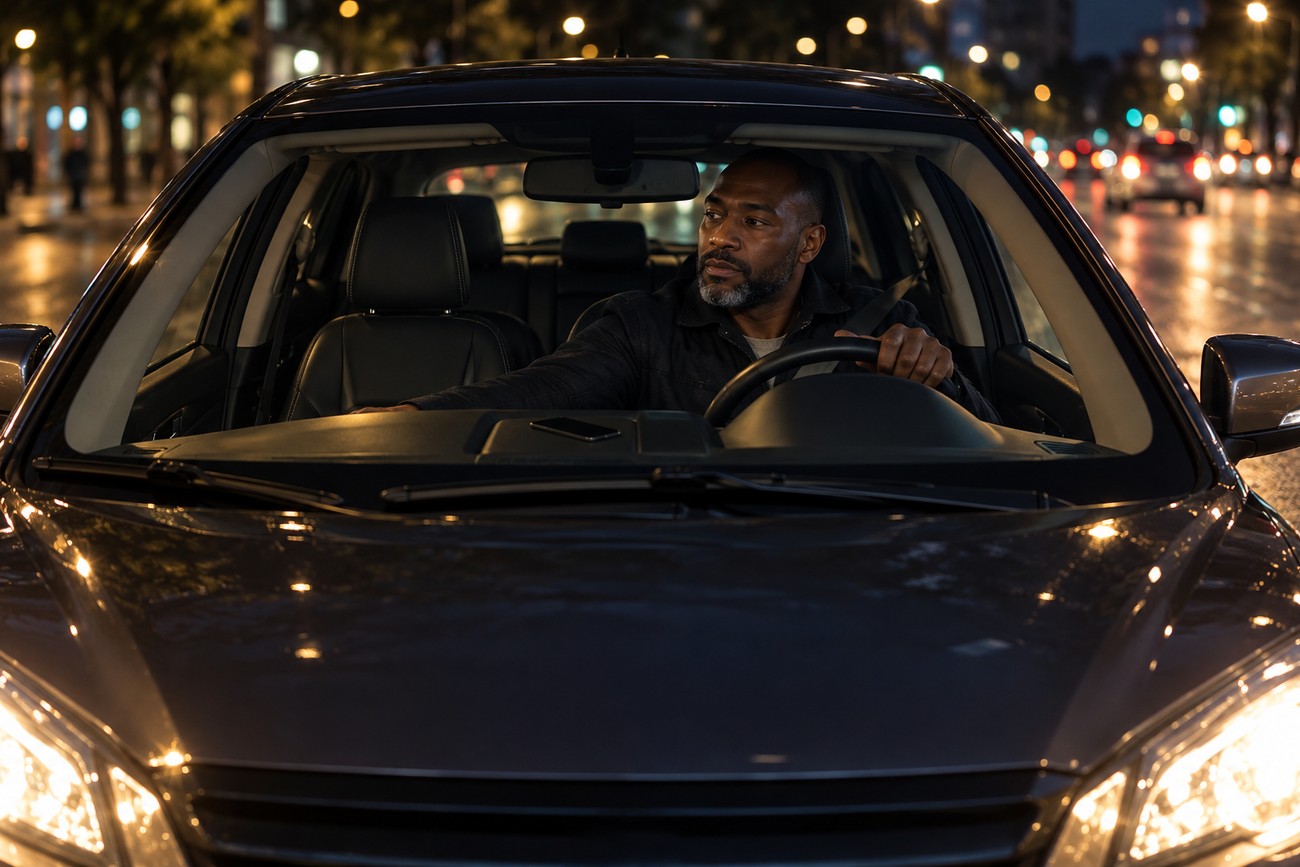
A short preparation routine addresses the most common sources of avoidable strain. Clean the windshield and mirrors, check the headlight lenses, confirm that the wipers clear the glass, and make sure the beam aim has not changed after maintenance or loading. These steps often improve the visual scene more effectively than increasing lamp output.
Set the cabin lighting low enough to preserve dark adaptation while keeping essential controls readable. Before entering traffic, let your eyes settle on the road rather than staring at a bright phone or interior display. Keep screens out of the driver’s visual field and adjust navigation before moving whenever possible.
On the road, maintain a soft forward scan and avoid fixing your gaze on headlights. Use the right road edge, lane markings, and reflectors when glare interrupts the view. After a bright exposure, briefly reduce speed instead of trying to maintain the same pace with temporarily degraded visibility.
Stop and reassess when burning, blurred vision, or glare remains severe enough to make the road unsafe. Persistent symptoms should not be dismissed as a normal lighting problem. If cleaning the glass, correcting the vehicle setup, and moderating the cabin light do not resolve the difficulty, an eye-care professional can assess the visual cause.
Frequently asked questions
How can I reduce eye strain when driving at night?
Use this priority order for the first trip: clean the windshield, mirrors, and headlight lenses; confirm that the headlights are correctly aimed; dim the cabin and instrument lighting; then use a gaze slightly down and to the right when approaching headlights. This sequence addresses scattered light, incorrect beam placement, poor dark adaptation, and direct glare.
During the drive, scan gently toward the right road edge or lane markers and briefly reduce speed after strong glare. If the road remains difficult to see, stop safely rather than relying on brighter bulbs or tinted glasses to solve the problem.
When should night-driving glare be checked by an eye-care professional?
Arrange an assessment when glare is new, worsening, unusually severe, or noticeably worse in one eye. Persistent burning, blurred vision, difficulty recovering after headlights, or problems that continue after cleaning the glass and checking the vehicle should also be assessed.
Vehicle adjustments can reduce avoidable glare, but they cannot explain every change in night vision. A symptom-based decision is safer than relying on tinted lenses, LED claims, or increasingly bright lighting.