Two drivers can receive radically different car insurance quotes, even when they own similar vehicles. A calculator may show a low figure at first, then change it after the insurer checks registration records, driver history, or other database information. The first number is therefore a starting point, not proof that the final policy will cost the same.
The safest savings come from accurate information, a suitable usage period, careful comparison, and removing services you did not request. Deliberately changing your age, experience, region, vehicle power, or driver list can create disputes that outweigh any apparent saving. In Russia, OSAGO is mandatory third-party liability insurance, while CASCO is a separate optional product with different pricing rules and coverage.
- How Your Car Insurance Premium Is Calculated
- Five Legitimate Ways to Lower the Premium
- Check KBM and Every Policy Detail Before Paying
- Compare Quotes Without Being Misled by the Calculator
- Avoid Savings Tactics That Create Bigger Problems
- Fix Errors, Unwanted Add-Ons, or an Unexplained Refusal
- Frequently asked questions
- What are five ways to reduce my car insurance premium without misrepresenting your information?
- What should you not tell your insurance company?
How Your Car Insurance Premium Is Calculated
OSAGO pricing is built from a base rate and regulated coefficients rather than from one universal average. The formula is Base Rate × KT × KBM × KVS × KO × KM × KS (KP). Each factor can change the result, so an advertised “average price” says little about what a particular driver will pay.
KT reflects the territory used for rating, while KBM reflects the driver’s insurance history. KVS is connected with age and driving experience, KO concerns the permitted-driver arrangement, and KM relates to vehicle power. KS reflects the period of use, and KP may apply in relevant circumstances. The exact effect of each coefficient depends on the information submitted and the rules applicable to the policy.
That is why region, claim history, age, experience, vehicle power, and the people allowed to drive all matter. A driver with a clean record may still receive a different quote from another driver with the same car if their region or permitted-driver setup differs. A policy covering several drivers also requires those drivers’ details to be entered accurately.
The seasonal coefficient can reduce the OSAGO price when the vehicle is used for less than the full year. Select a shorter period only when it reflects how the car will actually be used. Choosing a seasonal period and then driving outside it can create a coverage and compliance problem, so the saving depends on truthful planning rather than on selecting the shortest option available.
Five Legitimate Ways to Lower the Premium

Start with the factor most likely to be wrong rather than changing several details at once. Check the driver’s KBM, confirm the permitted-driver arrangement, and review the vehicle and owner information before requesting new quotes. This sequence makes it easier to identify a genuine correction and prevents a lower price from being built on defective data.
First, verify and recover an accurate KBM. The maximum OSAGO discount corresponds to a KBM value of 0.46, but an inaccurate or missing history can prevent the expected discount from applying. If a claim-free record has not been reflected, request a review and keep documents that support the driver’s history. Correction may require verification and correspondence, so treat it as a formal process rather than an instant calculator adjustment.
Second, choose a truthful permitted-driver setup. A policy with named drivers may be priced differently from an arrangement that permits a broader group, yet the cheaper option is useful only if it matches the people who will actually drive. Third, use the correct seasonal period if the car genuinely remains unused for part of the year. Both choices can reduce the premium, although each places limits on how the vehicle may be used.
Fourth, compare several insurers using exactly the same information. Different insurers can quote substantially different prices for identical submitted data, so one calculation should not be treated as the market price. Fifth, remove unwanted add-on services. An add-on should be explained and separately accepted; it should not be treated as a required condition for issuing the OSAGO policy.
These actions affect the price without reducing the accuracy of the application. A cheaper quote produced by omitting a real driver or selecting an inaccurate usage period is not a dependable saving. Before paying, compare the final premium, the policy details, and any additional services shown in the payment summary.
Check KBM and Every Policy Detail Before Paying
Use a final checklist before accepting the policy. Review the KBM, full name, date of birth, VIN, registration number, driver information, policy dates, vehicle power, and region. Small typographical errors can later require a separate request, especially when the incorrect field affects a coefficient or identifies the insured vehicle.
Pay particular attention to information filled automatically from a database. Auto-filled data saves typing, yet it can reflect an outdated or incomplete record. Compare every field with the vehicle documents and identity documents before signing. If the system displays an unexpected driver, address, vehicle characteristic, or history, pause the purchase and ask how it can be corrected.
A database entry can be wrong even when the form looks official. Checking the source documents before payment is usually easier than proving later which party introduced the error.
After issuance, download the policy and read it again. Check the spelling of names, VIN, registration number, listed drivers, validity dates, and any stated restrictions. An error in an issued policy does not necessarily disappear automatically, even when it was introduced by an agent or an online system.
Ask for a correction record and keep the original policy, messages, and payment confirmation. If the KBM is missing or a claim-free history has not been reflected, save evidence of the relevant previous policies or insurance history. A separate correction procedure may be needed, and the corrected document should be checked as carefully as the first version.
Compare Quotes Without Being Misled by the Calculator
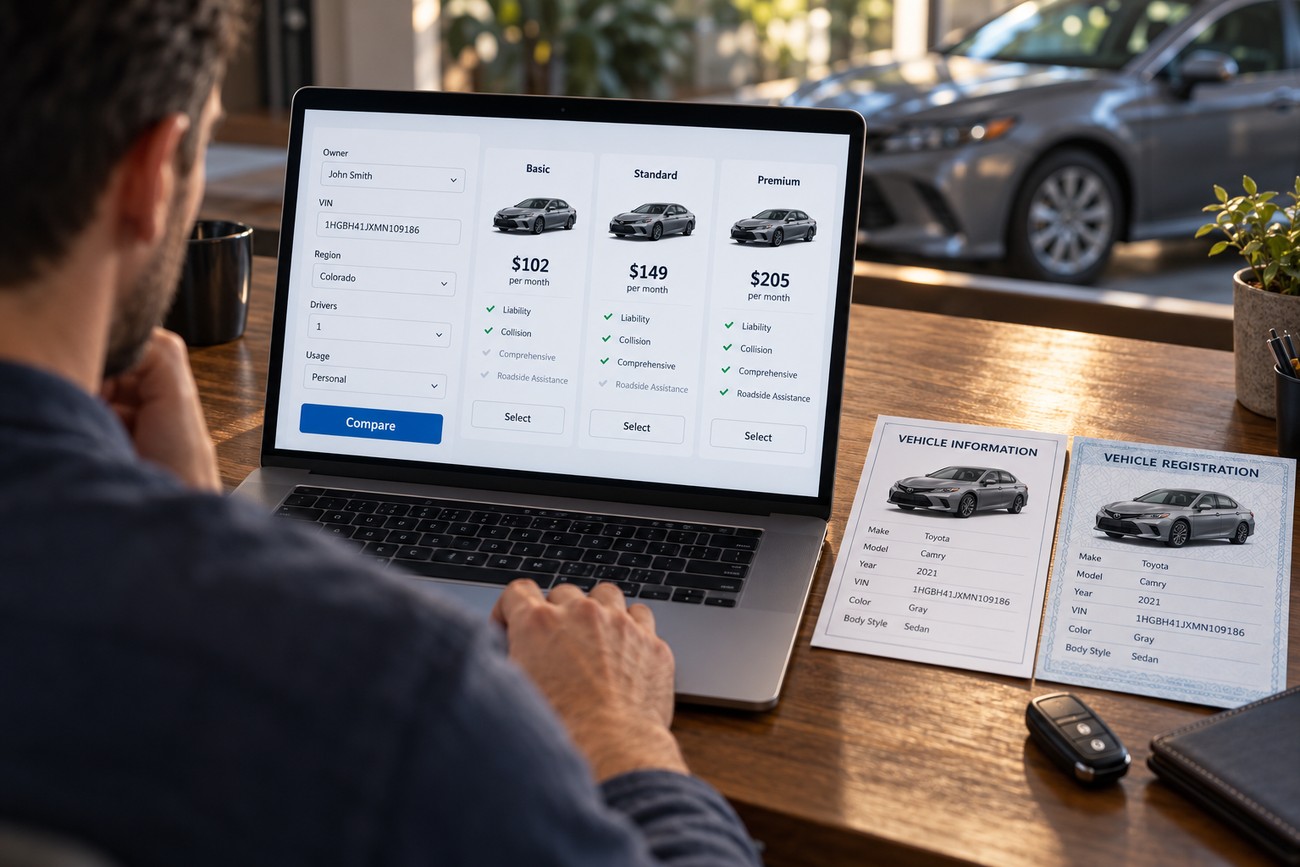
Make quote comparisons meaningful by holding the inputs constant. Use the same owner, vehicle, VIN, registration details, region, permitted drivers, usage period, and insurance history for every calculation. A change in one field can produce a different coefficient and make two apparently comparable offers misleading.
Inspect the final offer rather than relying on the first number displayed. A calculator result may rise after the insurer or a connected database verifies the submitted information. This explains complaints from drivers who see one amount initially and a higher amount after their details appear in the system. Save a screenshot or download the quote before proceeding, including the date, entered information, and any explanation of the adjustment.
An October 2026 example from an OSAGO aggregator illustrates how wide the spread can be: for a passenger car owned by an individual in Moscow, quotes for one identical data set ranged from 1,801 ₽ to 94,155 ₽. This is an illustration of variation in that market and period, not a typical national price or a forecast for every driver.
One aggregator also states that passenger-car OSAGO for individuals can start at 1,399 ₽. That figure depends on the parameters entered and is not a universal standard. Treat a very low advertised minimum as an invitation to check the assumptions, included services, and final policy rather than as a realistic target for every vehicle.
Avoid Savings Tactics That Create Bigger Problems
Entering a lower vehicle power, a younger or older age, a longer experience period, or a different region can make a calculator output look better. It can also produce a policy that does not match the documents or the facts used to rate the risk. Correcting the record later may require correspondence, supporting documents, and a new calculation.
Include every person who will actually drive the vehicle under the applicable permitted-driver arrangement. Leaving out a regular driver to reduce the quote creates a mismatch between the policy and real use. The apparent saving can become difficult to defend if a claim or document check exposes the omitted information.
Do not assume that an error is harmless because the policy was issued. Incorrect names, VINs, registration numbers, driver details, dates, vehicle power, or regions may affect the policy record and the price. The fact that a system accepted the form does not confirm that the data was correct.
OSAGO and CASCO also require separate comparisons. OSAGO is mandatory third-party liability insurance, while CASCO is an optional product that generally concerns the insured vehicle and follows different pricing logic. A discount, calculator result, complaint route, or add-on rule associated with one product should not automatically be applied to the other.
Fix Errors, Unwanted Add-Ons, or an Unexplained Refusal

Preserve the evidence before asking for help. Keep the quote, final policy, payment receipt, screenshots, correspondence, call references, and documents showing the correct information. Write down when the price changed, which field was disputed, and whether an additional service was presented as a condition of issuing the policy.
For a data error, ask the insurer or intermediary to correct the policy and provide a written record of the request. If an add-on was imposed, ask for the legal and contractual basis for making it a condition. If the insurer refuses to conclude the contract, request a written refusal that identifies the reason. A verbal explanation is harder to verify later.
Keep the dated quote before you resubmit information. Without that record, it is harder to show whether the problem was a database error, an unwanted add-on condition, or a genuine underwriting change.
Choose the complaint channel according to the issue. The Russian Union of Motor Insurers (RSA) accepts matters concerning OSAGO, the Green Card international system, and technical inspection; it is not a universal body for every auto-insurance dispute. Depending on the facts, another matter may belong with the Central Bank, the Federal Antimonopoly Service (FAS), or another relevant authority.
FAS complaints concern possible antimonopoly violations or forced services, not simply the fact that a premium feels expensive. A high quote alone does not automatically prove an antimonopoly violation. Evidence of a required add-on, inconsistent treatment, or another specific alleged breach is more useful than a general statement that the policy costs too much.
Allow realistic time for review. OSAGO complaints submitted to supervisory authorities are commonly considered within 30 days, with a possible additional extension of 30 days. In exceptional cases, RSA review may be extended by no more than 30 days. A complaint can create a formal route to correction, yet it does not guarantee an instant result or replace the need to submit clear documents.
Frequently asked questions
Premium reductions depend on accurate inputs and the product being compared. These answers focus on practical decisions that help you choose the next step without creating a new policy problem.
What are five ways to reduce my car insurance premium without misrepresenting your information?
Use a decision sequence: check for a missing or inaccurate KBM first; then confirm that the permitted-driver arrangement matches actual use; select a truthful seasonal period if the vehicle is not used year-round; compare equivalent quotes from different insurers; and remove add-ons you did not request. This order starts with possible data errors, then moves to legitimate rating choices and market comparison.
If the KBM is wrong, correcting it may matter more than searching for another calculator. If the details are already correct, compare final offers using identical inputs and read the payment summary before accepting it. Keep the policy and quote so you can show exactly what changed.
What should you not tell your insurance company?
Do not provide deliberately false information about the vehicle, owner, region, age, experience, claims history, usage period, or people who will drive. Those facts can affect the premium and the policy record, so an apparent saving may lead to correction work or a dispute later.
You may ask why a particular piece of information is needed and avoid volunteering unrelated personal details that are outside the application or contract. That is different from hiding a material fact the insurer requires for rating or policy issuance. Give complete, accurate answers to relevant questions and keep a copy of your submission.