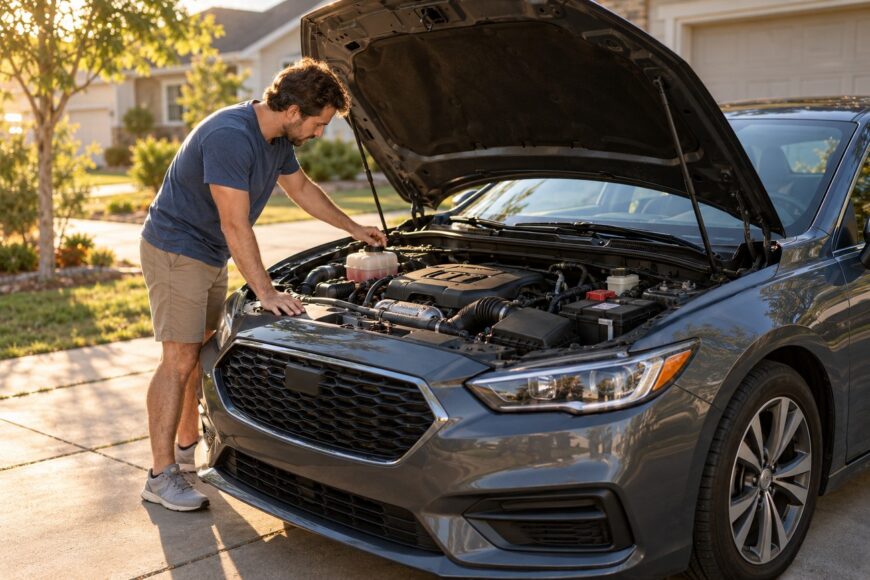
Summer failures often begin quietly: the temperature gauge rises in traffic, the air conditioner cools less effectively, tire pressure changes from one drive to the next, or a battery that seemed fine through winter fails at the first hot roadside stop. Heat exposes weaknesses that mild weather can hide.
Preparing your car for summer means checking how its cooling system, tires, fluids, electrical system, and cabin cope with sustained heat. A quick inspection before a long trip can reveal low coolant, restricted airflow, aging tires, or a weak battery before those faults cause a breakdown.
- Start with the cooling system before the first heatwave
- Set up tires and fluids for hot roads
- Make the air conditioner and battery ready for heat
- Protect the cabin, electronics, and fuel system while parked
- The summer mistakes that turn maintenance into a breakdown
- A pre-trip heat check you can complete in one pass
- Frequently asked questions
- What is the 30-60-90 rule for cars?
- What is the $3,000 rule for cars?
- How can I tell whether summer overheating is caused by airflow or low coolant?
Start with the cooling system before the first heatwave
Hot weather increases the workload on the cooling system, especially in traffic when the car has little natural airflow. Check the coolant with the engine cold at least every 7 days or at each refueling. Keep the level between MIN and MAX, preferably near the midpoint.
Inspect the coolant itself. Cloudiness, rust-colored fluid, foam, sediment, or an unexplained low level calls for prompt inspection. Look for wet spots, dried residue, cracked hoses, loose clamps, and the smell of coolant around the engine bay. In a sound pressurized system, coolant may boil at approximately 140°C, so the correct fluid and system pressure matter in summer.
The narrow gap between the engine radiator and the air-conditioning condenser can hold a dense layer of dust, seeds, and fluff. Cleaning only the visible outer fins may leave the main airflow restriction untouched.
Check whether the cooling fan operates when the engine reaches operating temperature or when the air conditioner is switched on, following the vehicle’s service guidance. Examine the radiator surface and the space between the radiator and condenser, using cleaning methods that will not bend the fins. Radiator cleaning or flushing may be needed at least every 2–3 years, depending on contamination and manufacturer guidance.
Stop safely if the temperature gauge rises, a coolant warning appears, steam escapes, or the heater suddenly blows cold air while the engine is hot. Never remove a radiator cap or coolant reservoir cap from a hot, pressurized system. Allow the engine to cool and arrange an inspection if the level falls again or overheating repeats.
Set up tires and fluids for hot roads

Check tire pressure before driving, while the tires are cold, and set it to the manufacturer’s cold-pressure specification on the vehicle placard or in the owner’s manual. Do not deliberately lower pressure for hot weather. Underinflated tires flex more, generate more heat, and can raise the risk of a rupture.
Inspect the tread and sidewalls at the same time. Use 1.6 mm as the minimum tread-depth benchmark, but remember that adequate tread alone does not make a tire safe. Replace or have a professional assess tires with cuts, bulges, sidewall cracking, uneven wear, or visible microcracks, particularly before sustained high-speed driving in heat.
Winter tires used in summer can reduce warm-weather handling and braking performance, wear faster, and increase fuel consumption. If the car has been running on winter tires, arrange the seasonal change before a long trip and check the replacement tires for age-related damage.
Before a long summer drive, check engine oil, brake fluid, coolant, power-steering fluid where applicable, and windshield-washer fluid. Correct the levels using the manufacturer’s specified products. A pressure reading that rises after driving is expected as the tires warm; adjust the pressure only when the tires are cold, unless the vehicle manufacturer gives different instructions.
Make the air conditioner and battery ready for heat
An air conditioner that cools only partly needs diagnosis before refrigerant is added. A technician should check for leaks and system faults first. Adding refrigerant without finding the cause can produce temporary cooling while allowing the underlying problem to worsen.
Inspect or replace the cabin and engine air filters, and clean the evaporator when needed. A clogged evaporator or dirty air-conditioning condenser restricts heat transfer, increases compressor and engine load, and can increase fuel consumption. Odors, weak airflow, or cooling that fades during a drive are reasons to schedule service.
Battery condition also deserves attention before extreme heat. High temperatures accelerate electrolyte evaporation, plate corrosion, and battery aging. A car that starts today may still have insufficient reserve for a hot restart after a long drive.
Batteries older than 3 years deserve a charge-level, load, and condition check rather than only a basic starting test. Where applicable, inspect terminals for corrosion and confirm that the battery is secure. A load test gives a more useful picture than assuming the battery is healthy because the engine currently starts.
Protect the cabin, electronics, and fuel system while parked
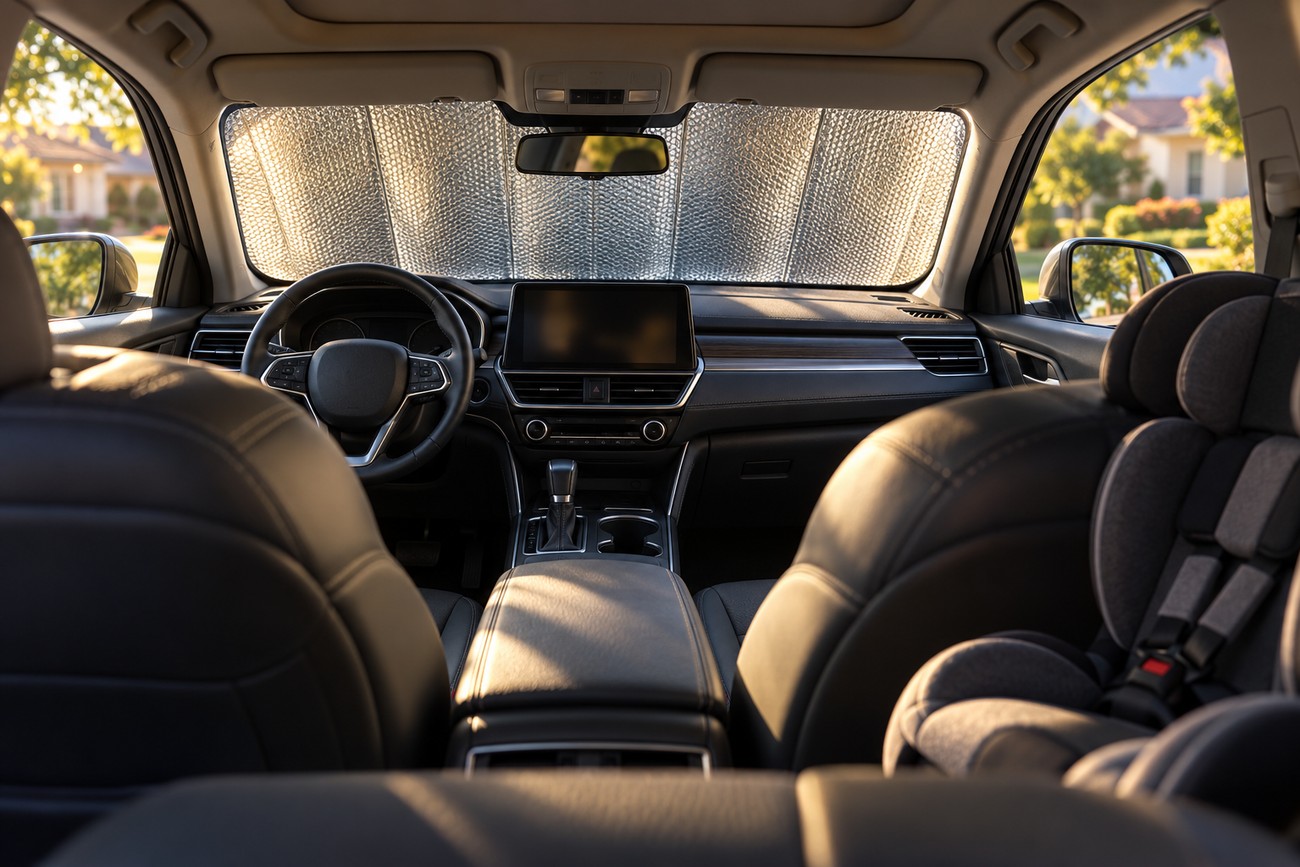
Direct sun can fade and crack dashboards, plastics, leather, screens, and other interior materials. Use shaded parking where possible, place a sunshade behind the windshield, and use suitable treatments for leather and plastic surfaces. Keep child seats and other heat-sensitive equipment out of direct sun when safe and practical.
A fully sealed cabin in direct sun can become excessively hot, placing additional stress on interior materials and electronics. Ventilation may reduce heat when the vehicle is parked in a secure, appropriate location, but never leave children, pets, or vulnerable people inside a parked vehicle.
Keeping the fuel tank at least half full is a practical hot-weather precaution during prolonged travel. It reduces the chance of running short in an isolated area and helps limit fuel-system heat and vapor-related problems. Plan fuel stops before the gauge reaches the lowest range, especially on unfamiliar routes.
The summer mistakes that turn maintenance into a breakdown
Replacing coolant with water alone is a common summer mistake. Water boils sooner than the correct coolant mixture, promotes corrosion and cavitation, and can reduce water-pump and radiator life. Older or diluted coolant may also lose boiling protection and corrosion inhibitors, even when its level looks correct.
Relying only on the dashboard warning light leaves little margin for diagnosis. A warning may appear after a fault has already caused significant heat stress. Check the coolant condition, leaks, hoses, fans, and airflow before the first heatwave, and treat repeated level loss as a fault rather than a routine need to top up.
Blindly refilling the air conditioner can hide a leak and increase compressor strain. Ignoring the gap between the radiator and condenser can also impair cooling because debris can block airflow where it is difficult to see. Assess both systems as working assemblies rather than servicing them through a single fluid top-up.
Universal fluids and oil grades are not automatically suitable for every engine or climate. Oil viscosity and coolant specification should follow the vehicle manufacturer’s approvals. In hot regions, a higher upper viscosity such as 5W-40 instead of 5W-30 may be acceptable only when the manufacturer permits it.
Old tires and a battery that has started the car recently can also create false confidence. Sidewall microcracks can raise tire-failure risk during sustained high-speed driving in heat, while a battery can fail after heat has accelerated internal deterioration. Age, condition, and test results matter alongside current performance.
A pre-trip heat check you can complete in one pass
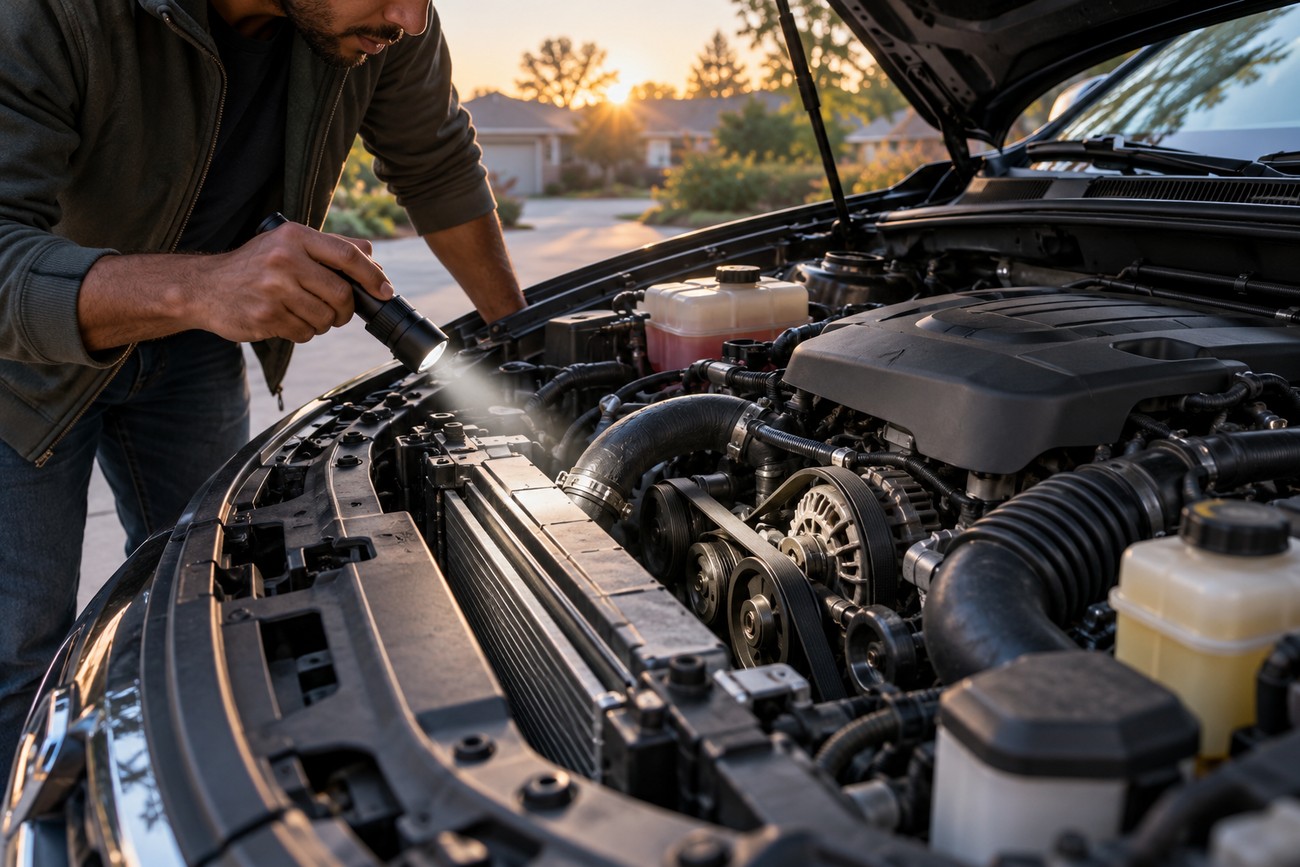
Begin with the engine cold. Check coolant level and appearance, inspect for leaks, and look over hoses, belts, the radiator surface, the condenser, and the space between them. Check coolant at least every 7 days or at each refueling during regular summer use.
Next, check tire pressure against the manufacturer’s cold-pressure specification, then inspect tread, sidewalls, and wear. Confirm engine oil, brake fluid, coolant, power-steering fluid where applicable, and washer fluid. Do not lower tire pressure because the weather is hot.
Test the air conditioner for cooling strength and airflow, and arrange leak diagnosis if performance is weak. Have the battery tested under load, especially when it is older than 3 years. A driver can perform these visual and level checks safely with a cold vehicle; pressure testing, electrical load testing, refrigerant work, and cooling-system repairs require suitable equipment and training.
Carry water for occupants, a phone charger, basic emergency equipment, and a plan for roadside assistance. Stop driving safely if the temperature gauge rises, coolant odor appears, a visible leak develops, pressure loss repeats, or overheating occurs. Do not use the air conditioner’s behavior to dismiss an engine-temperature problem, and never open a hot pressurized cooling system.
Frequently asked questions
These questions cover maintenance planning and repair decisions that go beyond the summer inspection itself.
What is the 30-60-90 rule for cars?
The 30-60-90 rule commonly refers to service milestones at 30,000, 60,000, and 90,000 miles. It is a planning framework rather than a universal schedule.
Manufacturer schedules take priority because requirements vary by vehicle, drivetrain, age, and severe-use conditions. Around 90,000 miles, check the owner’s manual for timing-belt replacement, transmission service, cooling-system work, and other major requirements instead of assuming the generic milestone covers them.
What is the $3,000 rule for cars?
The $3,000 rule is an informal repair-versus-replace decision aid, not a technical or legal standard. It suggests comparing a major repair with the vehicle’s current value and future ownership costs.
A sound decision also considers safety, reliability, service history, upcoming maintenance, and the likelihood of additional repairs. A lower-value car may still be worth repairing if it is structurally sound and reliable, while an expensive repair may be poor value on a vehicle with several major faults.
How can I tell whether summer overheating is caused by airflow or low coolant?
Overheating mainly in traffic can be associated with inadequate airflow, fan operation, or blocked radiator and condenser surfaces. The problem may improve at road speed and worsen when the vehicle is stationary, although this pattern is not conclusive.
A low coolant level, coolant odor, or visible leak points toward a cooling-system loss that needs prompt diagnosis. Both conditions can exist together, and a hot pressurized system is unsafe to open. Stop safely, let the vehicle cool, and have the system inspected if the gauge rises or overheating repeats.