The ice on your windshield starts to clear, then the glass turns misty again from the inside. These are two different problems: exterior ice must be thawed or removed, while interior condensation clears when the air against the glass becomes drier. Treating only the ice leaves you with poor visibility as soon as the cabin warms up.
Restore a clear view through the windshield and other windows before driving. For interior fog, start with the windshield defroster, fresh outside air, and air conditioning if your vehicle has it. That setup helps clear moisture from the glass and cabin air while the heater warms up.
- The fastest way to clear a fogged windshield
- Why the defroster runs but the glass stays misty
- Stop the fog from returning on the next trip
- Fog inside or ice outside? Use the right fix
- Shortcuts that can make winter visibility worse
- Frequently asked questions
- What if the moisture is on the outside of the windshield?
- How do I clear a fogged rear window?
- How do I stop my windows from fogging up in the winter?
- How do I get windows to defog in winter?
- Why does my windshield keep fogging up even with the defroster on?
The fastest way to clear a fogged windshield
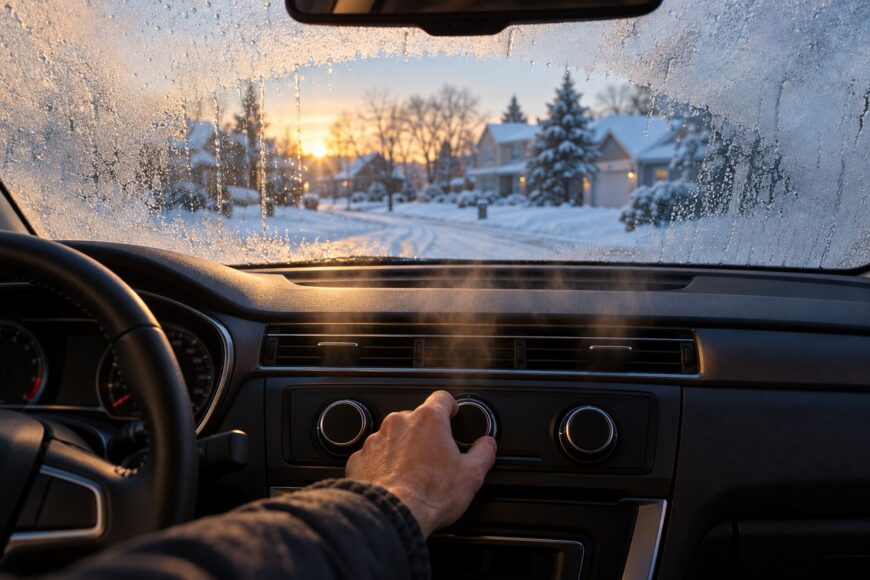
Set the airflow to the windshield and switch recirculation off so the system can bring in outside air. Turn on the A/C if available, even when you are using heat: it can help remove moisture from the air delivered to the glass. Check that the windshield vents are open and unobstructed.
Use a higher fan setting to move air across the glass. As the engine and heating system warm up, raise the temperature to help warm the windshield, then adjust the fan for comfort once the view is clear. Heat helps clear the surface, but it does not remove the moisture carried in on wet shoes or clothing.
Wait until the windshield and the windows you need for safe visibility are clear before setting off. If the glass fogs while you are driving, slow down and pull over somewhere safe. A wiped patch may cloud over again quickly and gives you a restricted view in the meantime.
Why the defroster runs but the glass stays misty
Start by checking the controls: select windshield airflow, turn recirculation off, and use A/C if available. Recirculated cabin air can remain humid, especially after passengers bring snow or rain inside. If the glass begins to clear but quickly mists again, check for wet mats, snow on shoes, and damp clothing that continue adding moisture.
Next, feel whether a useful amount of air is reaching the windshield vents. Make sure nothing on the dashboard blocks them. A clogged cabin filter can restrict airflow, although weak airflow alone does not prove the filter is the cause.
Strong airflow with persistent mist points toward moisture continuing to enter the cabin air; noticeably weak airflow calls for a closer look at the vents and cabin filter.
Remove obvious wet items and try the defroster again with fresh air selected. If airflow remains weak or the system still cannot clear the glass under normal conditions, have the ventilation system inspected rather than continuing to drive with poor visibility. Persistent unusual residue or an odor inside the cabin also warrants inspection instead of repeated glass cleaning.
Stop the fog from returning on the next trip

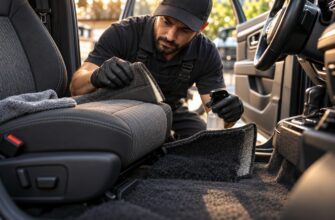
Knock snow off your shoes before getting in, and remove snow from clothing where practical. During a short drive, melting snow can soak the mats and keep supplying moisture to the cabin air. Wiping the windshield removes condensation already on the glass, but it leaves that source of moisture in place.
Empty water from removable mats and let damp mats dry thoroughly. Take wet coats, towels, and other damp items out of the vehicle when you can. Check the floor beneath the mats as well; a mat can look dry on top while moisture remains underneath.
Keep the inside of the glass clean so any remaining mist is easier to see and clear. An anti-fog treatment may help on a compatible, properly prepared surface, but it cannot remove persistent cabin humidity. If the fog keeps returning after you have dried the cabin and used fresh-air ventilation, investigate the moisture source rather than applying more product.
Fog inside or ice outside? Use the right fix
Check which side of the windshield is obscured while the vehicle is parked. Moisture that wipes off the cabin-facing surface is interior condensation and calls for drier cabin air. Frost or ice you can feel on the outside needs thawing or removal; changing the cabin-air setting alone will not scrape it away.
For exterior ice, run the vehicle’s defroster while you use a clean scraper made for automotive glass. A compatible automotive de-icer can help, provided you follow its instructions. Check the scraper edge for trapped grit or damage before using it, because a dirty or rough edge can scratch glass.
Work across the full area needed for a safe view, including the glass needed to check traffic around you. Thick ice can resist quick treatments, so allow for more thawing and careful scraping rather than forcing the tool. Do not drive away with only a small clear patch, even if the cabin-facing surface is already free of fog.
Shortcuts that can make winter visibility worse
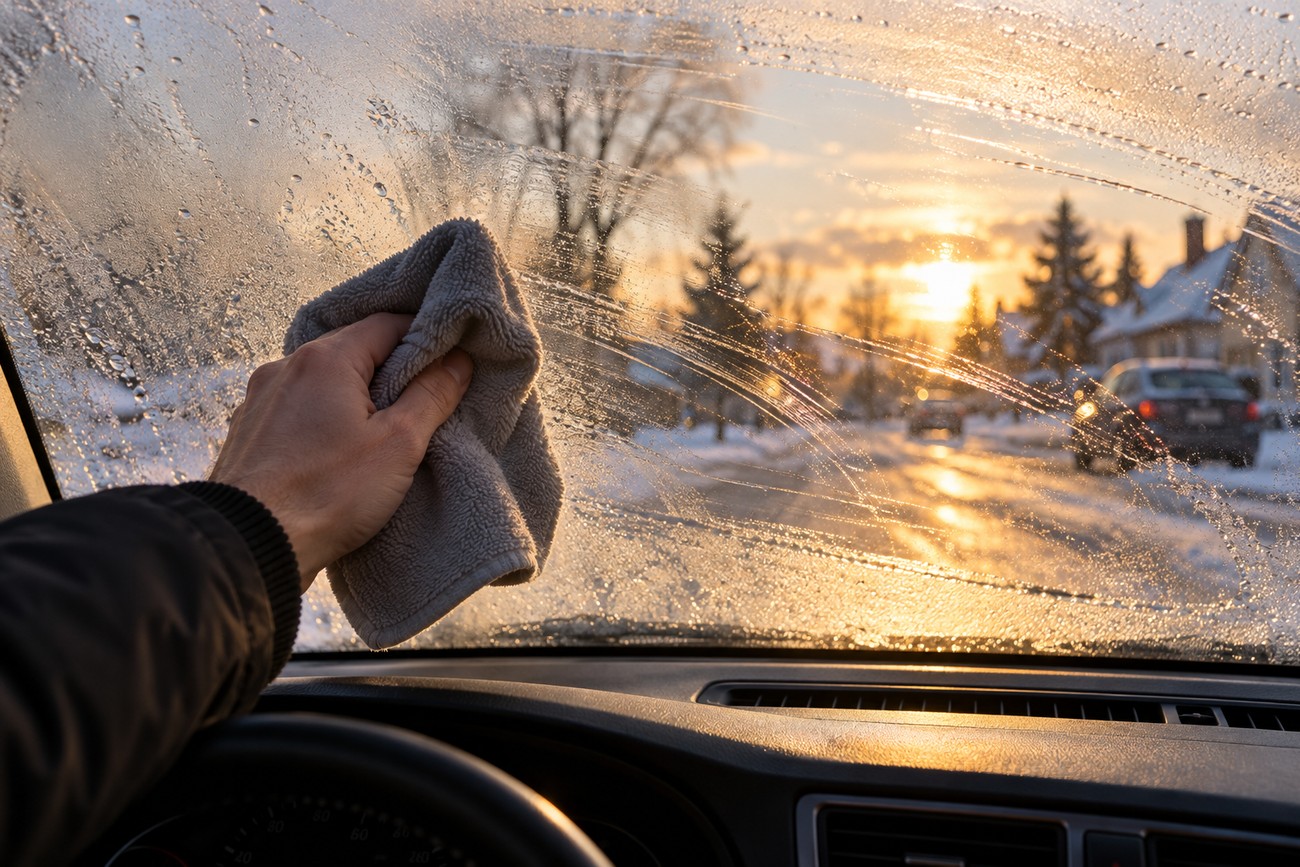
Repeatedly wiping a fogged windshield may briefly improve the view, but it does little if the cabin air remains damp. It can also leave streaks that become distracting in low winter light. Use wiping, if needed, as a temporary measure while parked, then correct the airflow and moisture problem.
Anti-fog products and rain-repellent coatings serve different purposes, and neither replaces ventilation or ice removal. Coatings depend on clean, properly prepared glass and compatibility with the surface being treated. Read the product directions before applying anything to tinted glass or an existing coating.
Homemade salt, vinegar, or alcohol mixtures are sometimes suggested for winter glass care, but their compatibility with automotive seals, paint, tint, and coatings is not assured. A product intended for automotive glass, used as directed, is the more cautious choice. For recurring interior fog, spend your effort on drying the cabin rather than adding another treatment to the windshield.
Frequently asked questions
The surface carrying the moisture determines the next step. Rear glass also has a control that differs from the front defroster, while persistent or unusual fog may call for a closer check. Use the answers below while parked if visibility is already impaired.
What if the moisture is on the outside of the windshield?
Check the surface while parked by touching or wiping a small area of the outside glass. If it is liquid condensation and the wipers can move it without dragging over ice, use the wipers and confirm the glass stays clear. If the moisture is frozen, thaw or remove it before driving; changing the cabin settings will not directly clear the outside surface.
How do I clear a fogged rear window?
Switch on the rear-window electric defogger and give it time to clear the glass. Check your vehicle’s controls to see whether the same switch also heats the side mirrors, since that feature varies by vehicle. If the rear glass is covered with exterior ice, remove it carefully before relying on the defogger for visibility.
How do I stop my windows from fogging up in the winter?
Begin each trip with a dry cabin and use fresh-air ventilation when the windows start to mist. If fog repeatedly returns despite dry mats and clear airflow, check for water collecting under the mats or elsewhere in the cabin. Have an unexplained source of moisture investigated rather than relying on an anti-fog coating to hide the symptom.
How do I get windows to defog in winter?
While parked, direct air at the windshield, turn recirculation off, and use A/C if available to help dry the airflow. Increase the fan and adjust the heat as the system warms, then wait until the glass needed for safe visibility is clear. Remove exterior frost or ice separately before driving.
Why does my windshield keep fogging up even with the defroster on?
The cabin may still be gaining moisture, or too little air may be reaching the glass; neither is a confirmed fault on its own. Check for wet flooring and confirm strong airflow from the windshield vents. If fog persists after the cabin is dry and the settings are correct, or you notice unusual residue or an odor, arrange an inspection.