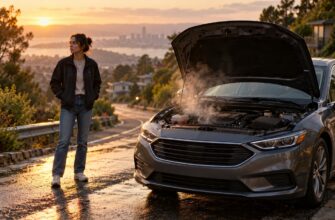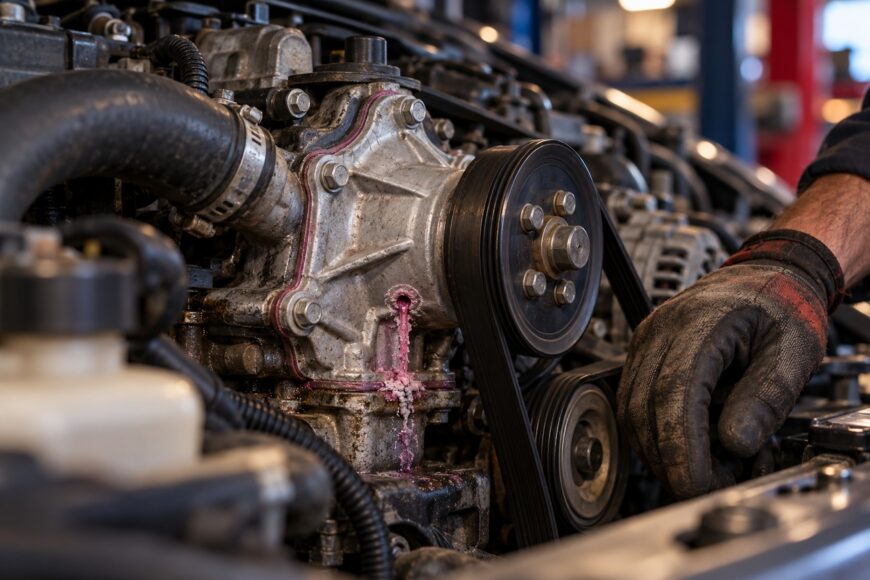
A rising temperature gauge and disappearing coolant naturally point toward the water pump, especially when no clear puddle appears. A pump can lose circulation through impeller damage or an impeller slipping on its shaft without an external leak. At the same time, overheating has several other causes, so one symptom cannot confirm pump failure.
Look for coolant residue, belt-area noise, unstable cabin heat, and changes that appear only after the engine warms up or works hard. You can make safe observations with the engine cold, while pressure testing, circulation checks, and electrical diagnosis require suitable equipment. If the temperature rises, steam appears, or coolant is being lost quickly, stop safely rather than testing how far the vehicle will go.
- Visible and audible signs of a failing water pump
- Overheating without a leak: when circulation is the clue
- What else can mimic a bad water pump?
- How to check the symptoms without guessing
- When to stop driving and what to do next
- Replacing the pump without repeating the failure
- Frequently asked questions
- How can I tell a head gasket problem from a bad water pump?
- How long can a car run with a bad water pump?
- Should the timing belt be replaced when the water pump is replaced?
Visible and audible signs of a failing water pump
Typical observable clues include coolant at the weep hole, dried residue, bearing noise, pulley play, and corrosion or scale. The weep hole is designed to reveal seal deterioration, so a small trail of dried coolant around it can appear before a puddle forms. White, pink, or crusty deposits on the pump housing deserve attention even when the reservoir level still looks acceptable.
A worn pump bearing may produce a whine, rumble, or grinding sound that changes with engine speed. A loose pulley, visible wobble, or movement when checked with the engine off can support that suspicion. Do not place your hands near a running belt system; a technician can assess play safely and determine whether the movement comes from the pump or another component.
Noise near the belt is not proof that the pump is the source. An idler, tensioner, alternator, or another accessory can create a similar sound, particularly on a cold start. A persistent coolant leak needs prompt diagnosis, while a small dried trace still requires monitoring and inspection because its rate can change as the seal deteriorates.
Overheating without a leak: when circulation is the clue
Heat that rises in traffic, during a long climb, or under heavy load can indicate inadequate coolant circulation. A vehicle may seem acceptable at highway speed and begin overheating at idle, where the cooling system has less airflow and a weak pump has less ability to move heat away from the engine. This pattern supports a circulation problem, though it remains nonspecific.
Weak cabin heat at idle can precede an obvious overheating warning, but low coolant or trapped air can cause it too. The heater may alternate between warm and cool as coolant flow changes, especially after a repair or a slow leak. Treat this change as useful evidence about the cooling system rather than as proof that the pump has failed.
A pump can lose circulation through impeller damage or an impeller slipping on its shaft without an external leak. Some impellers are plastic and may become damaged or loosen on the shaft while the housing continues to look intact. Cavitation, poor coolant condition, low fluid level, and air in the system can contribute to damage and reduce flow before a major leak develops.
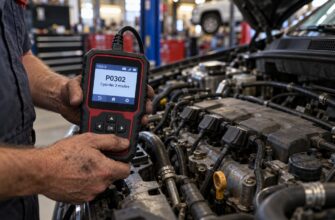
Electric pumps create a different diagnostic pattern. They may fail intermittently or register a circulation or electrical fault without visible leakage. The vehicle may store a fault code before the driver notices a clear temperature change, so code data, commanded operation, current draw, and actual coolant temperature may all be relevant.
What else can mimic a bad water pump?
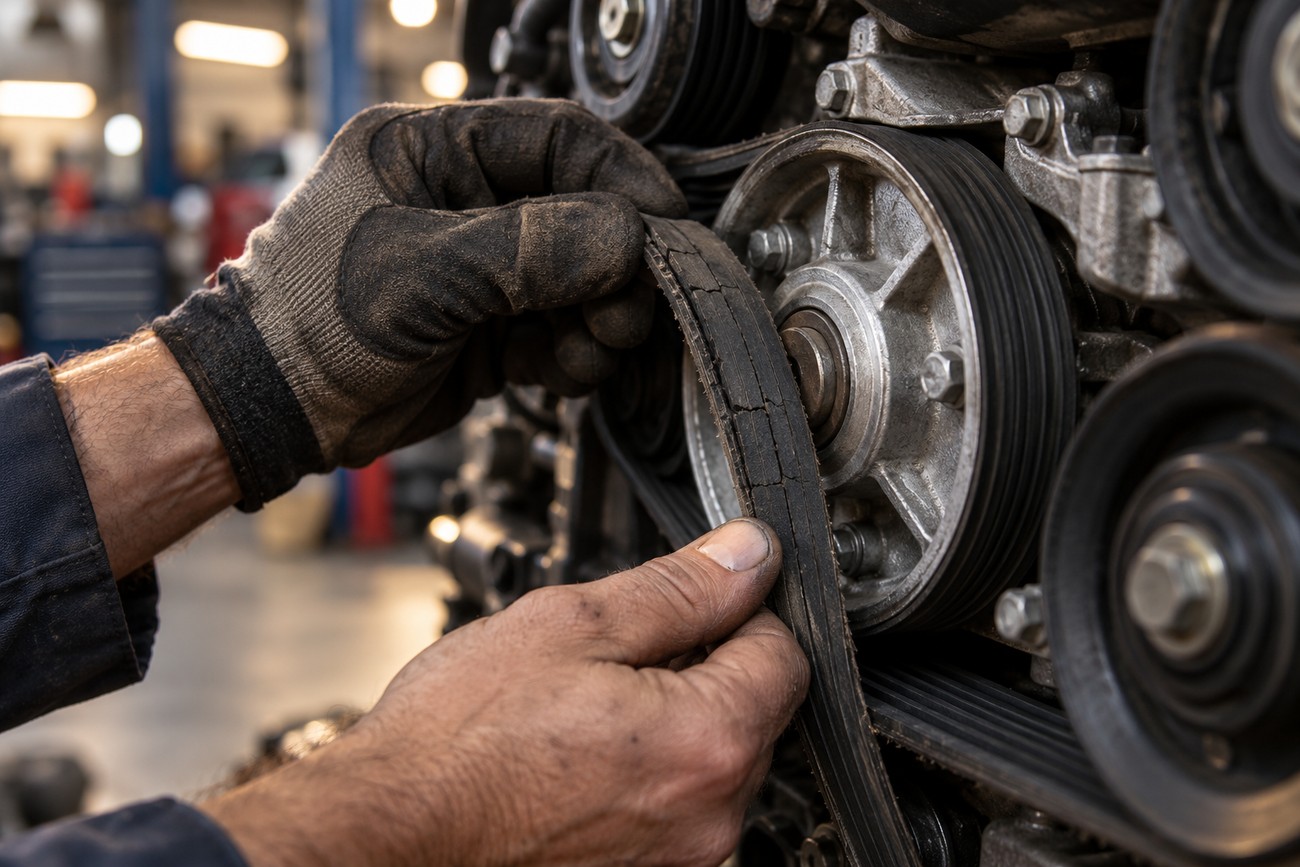
Overheating alone does not identify the pump: the thermostat, radiator, fan, pressure cap, coolant level, trapped air, and belt drive are alternatives. A thermostat that remains closed can restrict flow, while a restricted radiator can prevent heat from leaving the coolant. A failed fan or weak pressure cap can create overheating with a perfectly serviceable pump.
Low coolant reduces the system’s ability to transfer heat and may allow air to enter the pump. Trapped air can also make the heater run cold at idle and produce symptoms that resemble poor circulation. A slipping, loose, damaged, or incorrectly tensioned belt can reduce pump speed or create belt-area noise without a failed pump bearing.
Replacing a thermostat because the gauge rose once, or replacing the pump because a noise appeared, can leave the original fault in place. A belt-area whine or grinding sound can also come from an idler, tensioner, or accessory. The diagnosis should compare the full symptom pattern with coolant level, system pressure, fan operation, thermostat behavior, and drive condition.
How to check the symptoms without guessing
Begin by recording when the problem occurs: on cold start, at idle, in traffic, during acceleration, on hills, or only after the engine reaches operating temperature. After the engine has cooled completely, inspect the coolant level, the area around the pump, and the belt drive for residue, contamination, fraying, or obvious misalignment. Dried coolant residue around the weep hole may reveal a leak before a puddle forms.
Never remove a hot radiator or expansion-tank cap. A pressurized cooling system can release scalding coolant and vapor. A running engine’s belts and pulleys are not safe to probe by hand, and a visual check cannot establish whether an impeller is moving coolant effectively.
A technician compares pump-housing noise with nearby idlers, the tensioner, and the alternator before attributing a belt-area whine to the pump. Sound travels through brackets and the belt, so the loudest point is not always the failed component.
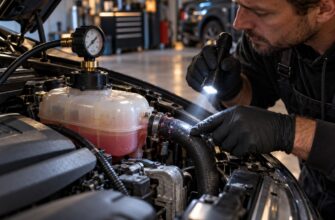
A cooling-system pressure test can help locate a leak but does not prove adequate pump circulation. Fault-code checks can identify an electrical or circulation-related problem on vehicles with electronic pumps, yet a stored code still needs to be matched with live data and physical inspection. Comparing pulley sounds with suitable listening equipment, checking for play, and evaluating temperature behavior together gives a more reliable result than any single test.
When to stop driving and what to do next
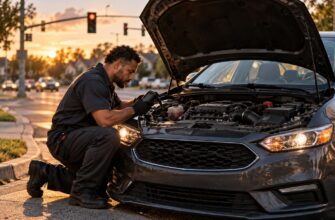
If the temperature rises, an overheating warning appears, steam develops, or coolant is lost rapidly, stop safely and shut off the engine. Turn off the vehicle, move away from traffic where possible, and allow the cooling system to cool before any inspection. Do not open the cap while the system is hot or pour cold coolant into a hot engine unless the vehicle and manufacturer’s procedure specifically allow it.
There is no universal safe driving distance or running time with a failing water pump. A pump can lose circulation without an external leak, so the absence of a puddle is not reassurance. Partial circulation may deteriorate suddenly, and continued overheating can cause damage beyond the pump itself.
A mild belt-area noise, a small residue trace, or occasional weak cabin heat still warrants prompt diagnosis. Arrange an inspection before the symptom becomes a temperature warning, and describe exactly when it appears. This timing can help the technician separate a pump problem from a fan, thermostat, air, pressure, or belt-drive fault.
Replacing the pump without repeating the failure
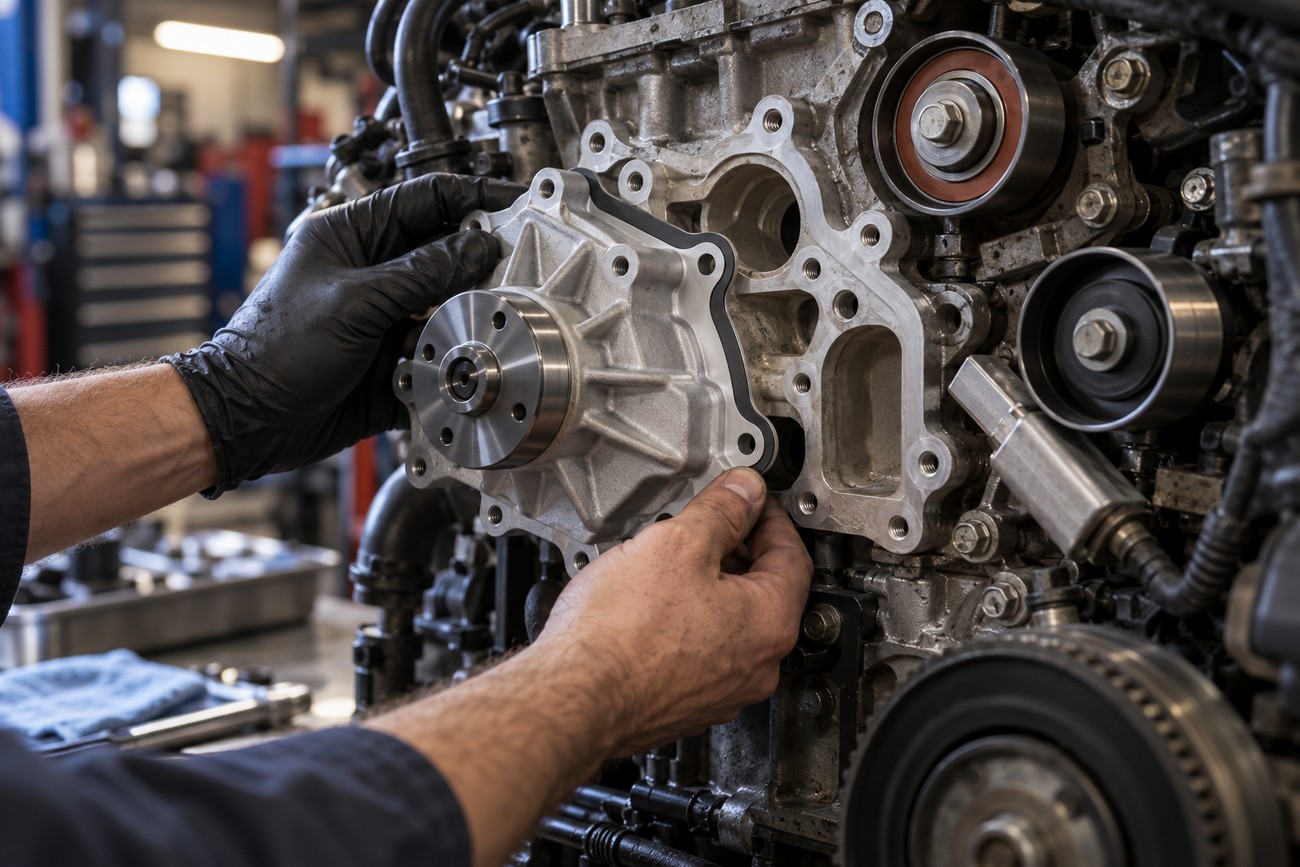
Diagnosis should precede replacement whenever practical. The technician should inspect the related belt, tensioner, idlers, seals, and mounting surfaces, with the exact scope depending on the engine design. For a timing-belt-driven pump, replacement decisions depend on the engine’s service procedure and the condition and interval of related parts.
Incorrect belt tension, damaged related components, unsuitable coolant, improper sealing, retained debris, or trapped air can undermine a replacement. Excessive tension can overload a new bearing, while too little tension can allow slip and reduce pump speed. Gaskets and sealant must be used according to the engine’s instructions; extra sealant can interfere with seating or enter coolant passages.
Debris from a damaged pump and heavy deposits may need to be cleared before the new part is installed. The correct coolant specification matters because incompatible fluids or mixed additive packages can promote corrosion, deposits, and seal deterioration. The system must then be filled and bled according to the engine-specific procedure, since simply topping up the reservoir may leave an air pocket.
Pump life has no reliable universal mileage: bearing and seal condition, coolant, installation, and operating conditions matter. Advertised service-life figures are not a guarantee for every engine or installation. If a new pump becomes noisy or leaks soon after fitting, inspect belt tension, related pulleys, sealing surfaces, coolant condition, and trapped air before assuming the replacement part alone is at fault.
Frequently asked questions
Water-pump symptoms often overlap with other cooling-system faults, so diagnosis should consider the complete pattern rather than one sign. The following questions cover common ways to distinguish related problems and decide how urgently to act.
How can I tell a head gasket problem from a bad water pump?
Appearances alone cannot confirm either fault. Persistent bubbles in the expansion tank, unexplained coolant pressurization, repeated coolant loss, or combustion gases entering the cooling system can point toward a head-gasket problem, but similar symptoms can follow trapped air or another leak.
A technician can use a combustion-gas test, cooling-system pressure observations, and temperature data alongside a pump and belt inspection. A pressure test can locate a coolant leak, while a combustion-gas test addresses a different failure path.
How long can a car run with a bad water pump?
There is no reliable time or distance estimate because partial pump failures can worsen suddenly, while some faults affect circulation only under load. A mild noise or residue should lead to arranging diagnosis promptly; an overheating car should be stopped and shut off rather than driven to a repair shop.
If temperature rises, a warning appears, steam develops, or coolant is being lost rapidly, arrange recovery or professional assistance. Continuing to drive can turn a cooling-system repair into wider engine damage.
Should the timing belt be replaced when the water pump is replaced?
It depends on the engine’s service procedure and the condition and interval of the related parts. Some water pumps are driven by the timing belt, which may require belt removal for access; the labor involved can make inspection and scheduled replacement relevant.
A timing-belt replacement is not a universal requirement for every water-pump job. Follow the manufacturer’s procedure and base the decision on belt condition, service history, access, and the engine’s specified interval.