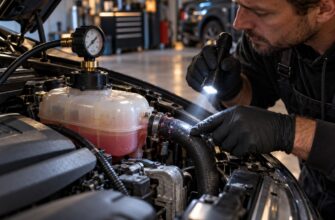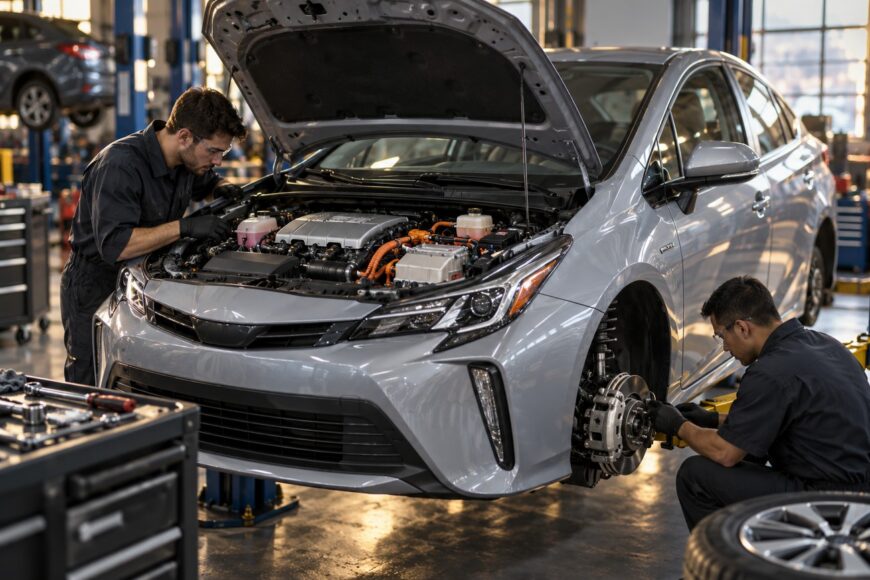
A hybrid’s gasoline engine may shut off in traffic and run less often than the engine in a conventional car. It still needs oil, filters, coolant, spark plugs, and scheduled inspections. Fewer engine-running miles do not erase time-based service requirements.
The electric side changes the workload rather than removing it. Regenerative braking can reduce pad wear, while the traction battery, inverter, and their cooling arrangements add checks that a gasoline-only car does not have. The useful comparison is which jobs remain, which change, and which are new.
- Hybrid vs. conventional engine maintenance: the actual task list
- Oil changes still follow time, mileage, and driving conditions
- Cooling systems: check more than the engine radiator
- Two batteries, different failure points
- Regenerative braking saves pads, not every brake job
- Build a service plan around your exact hybrid
- Frequently asked questions
- How long can a hybrid engine last?
- What should I do if my hybrid will sit unused for several weeks?
- What maintenance records matter most when buying a used hybrid?
Hybrid vs. conventional engine maintenance: the actual task list
This table compares types of work, not replacement intervals. Your model’s maintenance schedule determines when each item needs attention.
| System | Conventional gasoline car | Hybrid |
|---|---|---|
| Engine | Change oil and filters; inspect or replace spark plugs as specified. | Keep those engine jobs, even if the engine runs intermittently. |
| Cooling | Service the engine cooling system. | Check engine cooling and any separate inverter circuit; keep the traction battery’s cooling air path clear. |
| Brakes | Inspect pads, discs, fluid, and other brake components. | Do the same. Regeneration may reduce pad wear, while discs still need inspection. |
| 12-volt power | Check the battery and charging system. | Check the separate 12-volt battery; a DC-DC converter usually charges it instead of a conventional alternator. |
| High-voltage system | No traction-battery or inverter checks. | Follow specified battery, inverter, cooling, and diagnostic checks. |
Oil changes still follow time, mileage, and driving conditions
Engine-off driving can reduce the miles accumulated while the gasoline engine is running. It does not remove oil’s calendar interval or the need to change the oil filter. Toyota’s official schedules still call for oil changes, despite promotional claims that hybrids may need them less often.
Start with the schedule for your car, then check its severe-use provisions. Frequent short trips, extended idling, or commercial use may call for shorter intervals where the manufacturer specifies them. A low odometer reading alone cannot tell you whether an oil change is due.
Air filters and spark plugs also remain part of engine maintenance. Check their specified intervals and inspect sooner if the schedule calls for it under dusty or demanding conditions. Treating the car as an electric vehicle and skipping these items leaves an ordinary engine without ordinary care.
Even a routine oil-level check can be model-specific. The RAV4 Hybrid owner’s manual says to wait about five minutes after shutting off a warmed engine before checking its level. Use your own manual’s procedure rather than assuming that timing applies to every hybrid.
Cooling systems: check more than the engine radiator
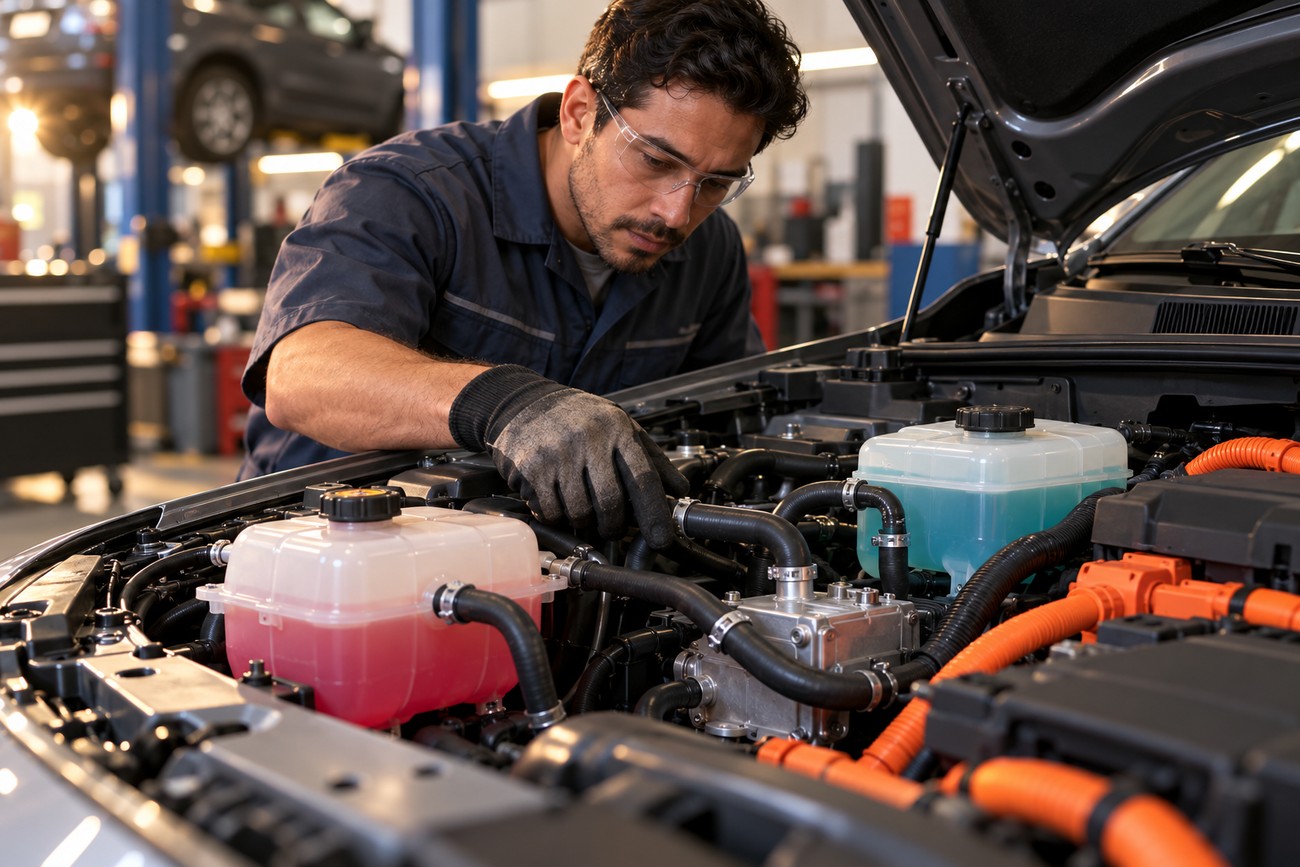
A hybrid may have separate cooling needs for the gasoline engine and the inverter, which manages power between the battery and electric drive. The traction battery may rely on cabin air drawn through an intake or filter. A single request for an “antifreeze change” can therefore miss a distinct circuit or a blocked air path.
Toyota specifies inspection of the high-voltage battery cooling intake and, on some models, cleaning every 20,000 miles (about 32,000 km). Follow the procedure for your car; intake location and cleaning instructions differ.
Cabin conditions can matter more than the distance since the last intake check. After carrying pets or exposing the interior to heavy dust, look for buildup at the accessible grille rather than waiting solely for a mileage reminder.
Coolant intervals also resist generalization. The cited Toyota New Zealand schedule calls for the first engine and inverter coolant replacement after 75,000 km, with subsequent intervals set by the manufacturer. Toyota’s Corolla Hybrid schedule gives a first engine coolant replacement at 100,000 miles or 120 months, then every 50,000 miles or 60 months.
Those examples cover different schedules and cannot be combined into a rule for another car. Confirm the market, model year, coolant circuit, and specified fluid before booking the work.
Two batteries, different failure points
The high-voltage traction battery supplies the electric drive. A separate 12-volt battery supports the car’s low-voltage systems and can prevent the vehicle from starting its operating sequence when discharged. Owners who focus only on traction-battery health can be caught out by this smaller, replaceable battery.
Most hybrids charge the 12-volt battery through a DC-DC converter rather than a conventional alternator. Long periods parked and repeated short trips can contribute to a low charge. If the car becomes unreliable after sitting, have the 12-volt battery and its charging operation checked according to the model’s procedure.
Keeping an accessible battery-cooling intake unobstructed is a different task from working on high-voltage hardware. Do not open the traction battery or inverter without the required training and protective equipment. Fault warnings or cooling-system concerns belong with a technician equipped to diagnose that system safely.
Regenerative braking saves pads, not every brake job
During deceleration, regenerative braking lets the electric motor recover some energy that would otherwise become heat at the friction brakes. Pads may consequently wear more slowly, particularly in driving with frequent gentle stops. That benefit does not set a reliable pad-life estimate for an individual car.
In fact, discs that see little friction-brake use can develop corrosion even while the pads retain plenty of material. An inspection should consider disc condition and braking behavior as well as pad thickness. Reports of original pads lasting around 220,000 miles are individual experiences, not a service expectation.
Brake fluid and other brake-system components still need the checks and service specified in the schedule. Tell the workshop about noise, uneven braking, or a change in pedal feel rather than waiting for a pad-wear warning. Regeneration does not make a neglected hydraulic or friction brake system safe.
Build a service plan around your exact hybrid

Find the maintenance schedule for the vehicle’s model year, market, and powertrain. Check the time and distance limits for each task, along with the manufacturer’s definition of severe use. A schedule quoted for a different Corolla Hybrid market, for example, is no substitute for the one supplied with your car.
Keep dated records for engine oil and filters, spark plugs, coolant circuits, brake inspections and fluid, both battery-related checks, and the cooling intake. Ask which circuit was serviced when an invoice simply says “coolant.” Clear records help the next workshop avoid repeating work or overlooking a separate system.
Check the model-specific requirements for transmission fluid, even if it is described as “lifetime”; that label is not a transferable replacement interval. Budget planning should also allow for 12-volt battery replacement and possible high-voltage diagnostics. Safe diagnosis and repair of high-voltage faults can be more involved than routine engine work, and there is no useful universal price.
Frequently asked questions
For ownership decisions, the maintenance history and the car’s present condition are more useful than a single claim about hybrid longevity. These checks help turn broad advice into questions you can take to an owner’s manual or a workshop.
How long can a hybrid engine last?
There is no supported mileage at which every hybrid engine wears out. Look for documented oil and coolant service, evidence that scheduled filters and spark plugs were addressed, and signs of leaks, abnormal noise, or poor running. A technician’s assessment of the actual engine is more useful than an odometer-based promise.
What should I do if my hybrid will sit unused for several weeks?
Read your model’s storage instructions before leaving it parked, especially the guidance for maintaining its 12-volt battery. Arrange the recommended care if needed, and confirm that routine service will not fall due during the idle period. Do not assume a charged traction battery guarantees that the car’s 12-volt systems will be ready when you return.
What maintenance records matter most when buying a used hybrid?
Request dated evidence of oil and coolant changes, brake-fluid service and brake inspections, and checks or cleaning of the traction-battery cooling intake. Ask for records of 12-volt battery work and any high-voltage fault diagnosis, including what was repaired. Traction-battery condition cannot be judged reliably from mileage alone; unresolved warnings warrant a model-appropriate inspection.