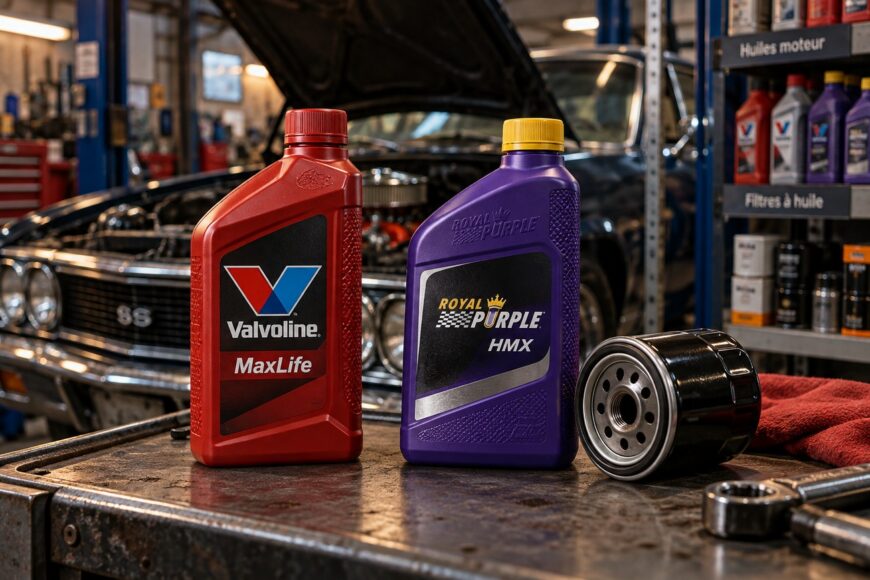
An aging engine may leave oil spots, need top-ups between changes, or develop a lifter tick. Those symptoms can make a premium high-mileage oil appealing, but paying more for oil does not guarantee a fix. The useful question is which product suits the engine’s requirements and the problem you can actually observe.
Valvoline MaxLife high-mileage motor oil is commonly viewed as a value-oriented choice for everyday use. Royal Purple HMX high-mileage motor oil is commonly viewed as a more premium-priced choice, with a stronger emphasis on protection in its positioning. Neither has a demonstrated universal advantage in leaks, wear, or engine noise based on the available comparison evidence.
Before weighing either pitch, check the viscosity grade and performance specifications required by your vehicle. The exact bottle matters: oils within the same product family can differ. Once both candidates meet the vehicle’s requirements, you can judge their cost and your engine’s symptoms without asking a brand name to stand in for a diagnosis.
- Valvoline MaxLife vs Royal Purple HMX at a glance
- Start with the specification, not the brand
- Can either oil reduce leaks or oil consumption?
- Wear protection, lifter tick, and what the claims cannot prove
- Is Royal Purple’s premium worth paying for?
- Which oil should you choose for your engine?
- How to judge the switch after an oil change
- Frequently asked questions
- Can I mix Valvoline MaxLife and Royal Purple HMX when topping up?
- Can used-oil analysis tell me which brand protects my engine better?
- What is the best brand of high-mileage oil?
Valvoline MaxLife vs Royal Purple HMX at a glance
This is a purchasing comparison, not a laboratory ranking. Check the exact product variant before applying any of these general descriptions to the bottle you plan to buy.
| Consideration | Valvoline MaxLife | Royal Purple HMX |
|---|---|---|
| General positioning | A value-oriented high-mileage choice commonly considered for older daily drivers. | A more premium-priced high-mileage choice associated with a protection-focused pitch. |
| Likely buyer | Someone seeking an approved oil at a sensible total cost, especially if availability makes routine changes straightforward. | Someone willing to pay more for HMX’s positioning, provided the exact oil meets the vehicle’s requirements. |
| Seepage and consumption | Seal conditioning may reduce some seal-related seepage; it cannot repair damage or promise lower consumption. | The same limits apply: the cause of a leak or top-up need matters more than the product’s premium positioning. |
| Wear and engine noise | High-mileage protection claims do not establish a head-to-head wear or noise advantage. | A premium protection pitch does not establish less wear or reliably quieter operation in your engine. |
| Price and value | Often viewed as the practical value option; actual cost depends on variant and retailer. | Often priced as a premium option; the added cost may bring no noticeable benefit in ordinary driving. |
The comparison is qualitative. Owner reports can describe what happened in one engine, but they do not control for engine condition, driving, or the formulation used. Product claims and specifications can also vary by exact variant, so confirm them rather than treating either family as a single oil.
Use the table to narrow a purchase, then give the label and owner’s manual the final say. An oil that costs less or sounds more protective offers little value if it misses a required specification.
Start with the specification, not the brand
Find the required viscosity grade and oil performance specifications in the owner’s manual or other manufacturer guidance for your vehicle. The grade describes how the oil flows under defined conditions; it is only part of the requirement. Your vehicle may also call for a particular industry standard or manufacturer approval, which deserves its own check.
Next, compare those requirements with the exact Valvoline MaxLife or Royal Purple HMX product you intend to purchase. Read the bottle and, where needed, current product information for that variant. “MaxLife” and “HMX” identify product families, not a promise that every available grade or formulation carries the same specifications.
This step prevents a common high-mileage mistake: choosing an oil because its description sounds tailored to old engines while overlooking a requirement set for that engine. A protection claim cannot substitute for an approval the vehicle calls for. If neither candidate in the available grade meets the stated requirements, look for an oil that does.
A thicker grade is also a poor automatic response to ticking, seepage, or oil consumption. It may change how an engine sounds or how a symptom appears without addressing its cause, and it may fall outside the vehicle’s guidance. Where the manufacturer permits several grades under stated conditions, use that guidance rather than assuming thicker means safer for an older engine.
Can either oil reduce leaks or oil consumption?

External leakage and oil consumption are different symptoms. A damp seal, wet gasket area, or oil spot points toward oil escaping the engine, while repeated top-ups with no obvious external trace may point toward oil being burned or another problem that needs investigation. Either symptom can have causes an oil change will not fix.
High-mileage seal conditioning may reduce some seal-related seepage, but it is not a guaranteed repair. It cannot mend a cracked component or reverse mechanical wear. That limit applies to MaxLife and HMX alike, regardless of a report that one happened to help a particular engine.
After safely cleaning the engine and surrounding area, check where fresh oil first appears. An old stain on an undertray can obscure the source, and oil can travel before it drips. If a leak is substantial, reaches hot components, or is difficult to locate, arranging an inspection is more useful than trying a succession of oils.
For consumption, record the oil level on level ground using the same checking method each time, and note the distance driven and any top-ups. Compare the next interval under broadly similar driving conditions. A change in level may be worth investigating, but it does not by itself show whether oil was burned, leaked, or measured differently.
Wear protection, lifter tick, and what the claims cannot prove
Royal Purple HMX is associated with a premium protection pitch, while Valvoline MaxLife is frequently selected for practical high-mileage needs. Both are sold for aging engines, but their positioning is not a controlled comparison of wear in yours. The available evidence does not demonstrate a universal winner for wear, leaks, or engine noise.
A quieter lifter tick after an oil change is useful to note. Fresh oil, the correct level, a different formulation, or a changed operating condition could affect the sound. None of those observations alone proves that internal parts are wearing more slowly, and a tick that remains may need diagnosis beyond oil selection.
Be especially cautious with claims built around an additive ranking or a protection percentage. Without comparable testing of the exact products under the same conditions, an unverified ZDDP ranking or figures drawn from unlike marketing tests cannot establish a head-to-head result. The requirement on the bottle is more actionable than an isolated claim about one ingredient.
Noise also deserves context. Record whether it occurs only at startup, at idle, when hot, or across engine speeds, then check that the oil level and filter are correct. If the noise is pronounced, persistent, or worsening, changing between two approved oils should not delay inspection; a mechanical or oil-supply problem may be involved.
Is Royal Purple’s premium worth paying for?
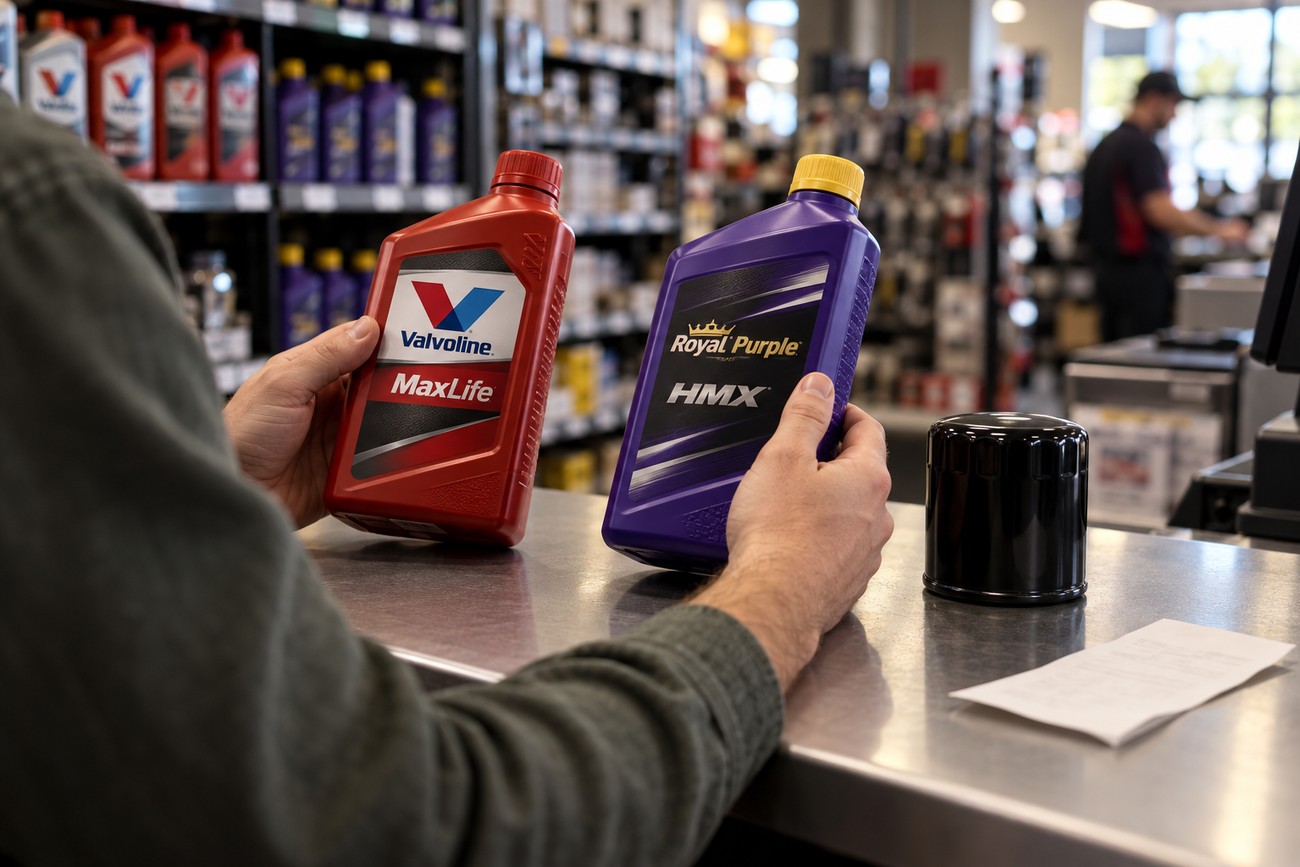
Compare the total purchase cost of the exact grade and specification your vehicle needs, rather than general impressions of either brand. MaxLife is commonly viewed as value-oriented, and HMX as more premium-priced, but actual prices vary by product and retailer. Include the amount needed for the oil change and a suitable filter when judging what the service will cost.
HMX can be a reasonable purchase if you prefer its protection-focused positioning, can verify the required specification, and are comfortable paying the difference. That is a preference, not evidence that it will quiet your engine or reduce wear more than an approved MaxLife variant. A higher price does not guarantee a noticeable benefit in ordinary driving.
For a normally driven older car with no unusual symptoms, MaxLife may be the more rational everyday purchase when it meets the same vehicle requirements and costs less locally. Reliable availability matters too: an oil you can obtain consistently makes planned changes and appropriate top-ups easier. Do not assume either brand is the cheapest option everywhere.
There is a less obvious cost in choosing oil as a remedy for an unexplained fault. Repeated premium oil changes can consume money while a leak worsens or consumption remains unmeasured. If the engine is losing oil, spend effort establishing the rate and cause before treating the price gap as an investment in a repair.
Which oil should you choose for your engine?
For a healthy older daily driver, begin with the approved viscosity and specifications, then compare availability and total cost. If a MaxLife variant meets those requirements and is less expensive, it is a defensible everyday choice. HMX is also a valid option when its exact variant qualifies and its premium price suits your priorities; neither choice promises a noticeable change.
With minor, confirmed seal-related seepage, either suitable high-mileage oil is a reasonable trial if you are due for a change. Seal conditioning may reduce some seepage, but it cannot be counted on to stop it. Keep watching the area and the oil level so that a small improvement does not hide a leak that still needs repair.
Persistent oil consumption calls for a different decision. An approved oil can be used while you track top-ups, but the brand choice should not replace checks for leaks or other causes. If the engine needs frequent additions, keeping it at the proper level and seeking a diagnosis matter more than paying for a protection pitch.
A visible, active leak or pronounced mechanical noise moves diagnosis ahead of product selection. Choose an oil that meets the vehicle’s requirements for the scheduled service, then address the fault rather than expecting either bottle to repair it. The best purchase is conditional on the engine’s condition, the exact approved product available, and what it costs where you buy it.
How to judge the switch after an oil change

Establish a baseline before draining the old oil. Record the level using a consistent method, note any top-ups, and identify existing wet areas or drips. If you can, note the driving conditions as well; an interval dominated by short trips is a poor comparison with one dominated by steady longer journeys.
At the change, use the correct fill amount and a suitable filter, then verify the level as directed for the vehicle. Check periodically afterward on level ground with the same procedure. Log additions rather than relying on memory, and compare consumption over similar distances and driving conditions.
Resist declaring a winner after one quiet startup or a different engine feel. Lifter noise can vary with temperature and operating conditions, and a change in sound alone does not prove a change in wear protection. Give the oil a fair observation period within the vehicle’s prescribed change interval, without ignoring a symptom that needs prompt attention.
If a leak continues, consumption worsens, or a tick persists, use your notes to support a diagnosis instead of making another brand switch the default next step. Follow the vehicle’s prescribed oil-change interval; premium branding is not a reason to extend it. Consistent measurements give you a better basis for a maintenance decision than a first impression from the driver’s seat.
Frequently asked questions
These situations arise after the initial purchase, when the oil already in the engine or the evidence from a completed change complicates a simple comparison. The vehicle’s requirements and the exact product label still control the practical decision. Treat a change in symptoms as a reason to check further, not as proof that an existing fault has been repaired.
Can I mix Valvoline MaxLife and Royal Purple HMX when topping up?
For an unexpected low-oil situation, prioritize an oil with the compatible viscosity and specifications required by your vehicle; check the exact bottles rather than relying on the brand names. Topping up with a different suitable motor oil is generally preferable to driving with an unsafe oil level. Consult the vehicle guidance if it gives specific topping-up restrictions.
A mixed fill tells you little about which product performed better. You have changed the blend and may also have changed the oil level, so any subsequent difference in sound or consumption is not a controlled MaxLife-versus-HMX comparison. Record what and how much you added, especially if you are tracking consumption.
Can used-oil analysis tell me which brand protects my engine better?
Used-oil analysis can help track trends in one engine, particularly when samples are taken consistently and interpreted alongside oil level, driving, and service history. It may flag a condition worth investigating. A single report cannot establish that MaxLife or HMX universally protects engines better.
Comparing reports becomes harder if the driving pattern, sampling point, oil interval, top-ups, or filter changed at the same time as the brand. If you use analysis, keep those details with each sample and look for repeatable trends. An unusual result warrants interpretation in the context of that engine, rather than an automatic switch of brands.
What is the best brand of high-mileage oil?
There is no single best brand for every high-mileage engine. Start with oils whose exact variants meet the vehicle’s required viscosity and specifications, then choose based on availability, total cost, and the problem you are trying to monitor. An older engine with no leak has a different purchasing priority from one needing regular top-ups.
Between these two, MaxLife is commonly viewed as the value-oriented choice, while HMX appeals to drivers willing to pay for its premium positioning. Neither has a demonstrated universal advantage in leaks, wear, or noise. A clear maintenance record and attention to persistent symptoms will do more for the decision than a blanket brand ranking.