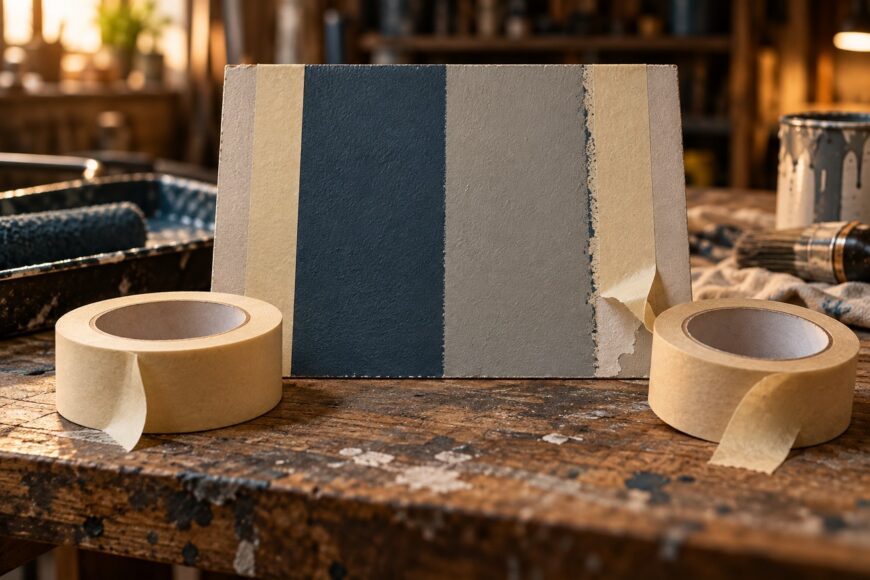
A tape that fails to seal can let paint seep under the edge. A tape that grips too hard can pull off the finish you meant to protect. The costly choice in a 3M versus Sellerio comparison is therefore between specific rolls used under specific conditions, rather than between brand names alone.
The surface, paint, temperature, and time the tape stays in place all affect the result. So do details that are easy to overlook on a product listing: the backing and adhesive, the stated removal window, and whether the tape is intended for a newly painted surface. Those details give you a basis for choosing a roll before a small trial shows how it behaves on the actual job.
- First, identify the tape—not just the brand
- 3M vs. Sellerio masking tape: a job-focused comparison
- Why a sharp paint line can still become a bad finish
- Match the roll to the surface and removal window
- Run a small test before masking the whole job
- The verdict: which tape earns its place on the job?
- Frequently asked questions
- What should you do if masking tape has already left adhesive residue?
- How should you store an opened roll between painting jobs?
- Which brand of masking tape is considered the best?
- What masking tape do professionals use?
- Who are 3M’s main competitors in tape manufacturing?
First, identify the tape—not just the brand
Start with the exact 3M product name and the exact Sellerio listing or roll. Each may describe a different backing, adhesive, or intended use, so a brand-level verdict cannot tell you which will hold an edge or release safely. Keep the packaging or product sheet available while you compare them; vague claims are less useful than instructions tied to the roll in your hand.
Look for the backing material and adhesive type, then check the recommended application conditions, suitable surfaces, paint compatibility, and stated removal window. Paper-backed tapes can differ in how they follow a curve or textured wall, while adhesive choice affects both initial grip and removal. If a listing omits a specification, record it as unverified rather than treating the omission as evidence of poor or good performance.
Documentation is generally easier to find for established 3M lines, which can make it simpler to check whether a product fits the job. That does not establish that every 3M roll will outperform a Sellerio roll. Specifications and consistency still need checking for the products at hand, particularly if the surface or finish is difficult to repair.
Read “clean removal” as a condition, not a permanent property. It depends on the product’s stated removal window and working conditions, including heat and exposure to light. If you cannot find a removal limit or surface guidance for either roll, the uncertainty belongs in your decision.
3M vs. Sellerio masking tape: a job-focused comparison
Use this checklist for the two products you can actually buy. Fill it from their packaging or documentation, and mark any missing detail as unverified. Neither column is a performance rating.
| Check | Specific 3M tape | Specific Sellerio roll or listing | Why it matters |
|---|---|---|---|
| Backing and adhesive | Check the named product’s backing and adhesive; unverified until identified. | Check the roll or listing; unverified if unspecified. | Backing affects handling and edge contact; adhesive affects grip and removal. |
| Surface suitability | Check the stated substrates and any cautions about delicate finishes. | Check stated substrates; treat “all surfaces” as conditional. | Painted walls, plaster, wood, plastic, and metal present different risks. |
| Application temperature | Use the range stated for the exact product; unverified if absent. | Use the stated range; unverified if absent. | Cold can reduce initial tack, while heat can change adhesive behavior. |
| Removal window | Check the product’s stated limit and conditions. | Check the roll’s stated limit; a “no-residue” claim is not a time limit. | Clean removal depends on timing and working conditions. |
| Edge performance | Check the intended use, then test the edge on the job surface. | Check the intended use, then test the edge on the job surface. | Texture and incomplete edge contact can let paint bleed. |
| Roll consistency | Inspect the roll you will use; do not assume consistency from the name. | Inspect the width, winding, and unwinding of the roll you will use. | Reports of uneven budget rolls are anecdotal, not a verified Sellerio-wide finding. |
| Evidence gaps | Mark missing product specifications or untested surfaces as unverified. | Mark missing specifications and broad listing claims as unverified. | A small surface test can answer questions a listing leaves open. |
Why a sharp paint line can still become a bad finish
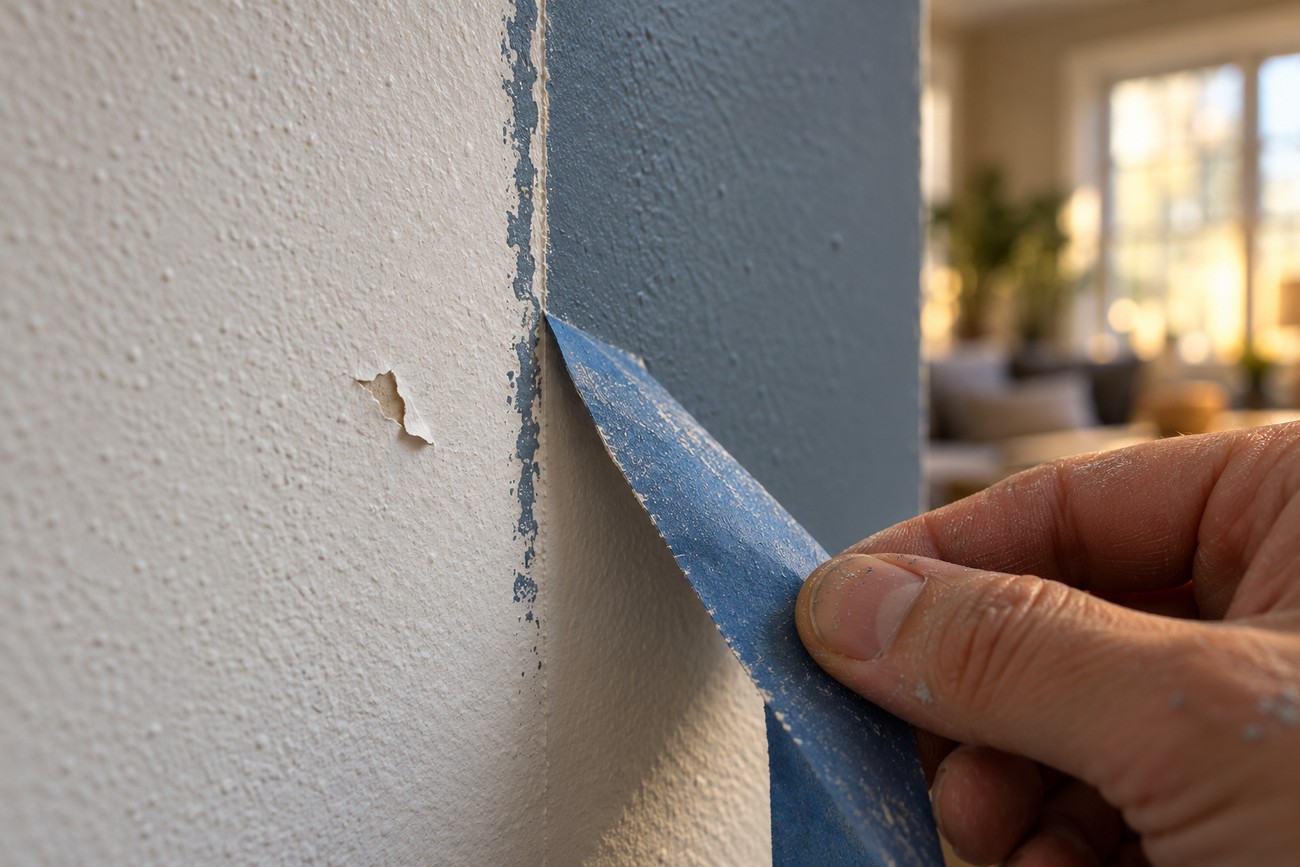
Paint bleed starts at the edge. Dust, surface texture, or an edge that was laid down without firm contact can leave channels for wet paint, even if the rest of the tape holds securely. On a textured or porous surface, press the edge before painting; work in manageable lengths so you can see where contact is incomplete. No paper tape can promise a perfectly sealed line across every rough substrate.
Coating lift is a different failure. Fresh paint may feel dry while it is still insufficiently cured for masking, and an older coating may be weakly bonded to what lies beneath it. Pulling off either coating does not, by itself, prove the tape was defective. Stronger adhesion is not automatically better: it can increase the risk of finish lift or residue.
A strip that tears during removal creates another problem. Instead of one controlled pull, you have to pick away short pieces, adding handling around a vulnerable paint edge. Check whether the backing comes away intact during a trial, particularly if removal will be awkward around trim or corners.
Adhesive residue has its own causes, including time left in place and working conditions outside the product’s guidance. Heat and sunlight can make a tape behave differently from the same roll used briefly indoors. A “no-residue” or “all-surfaces” claim remains conditional on the surface, conditions, and removal timing; it cannot settle how the tape will behave on your wall.
Match the roll to the surface and removal window
A sound, fully cured painted wall offers a different starting point from fresh or weak paint. Confirm that the coating is ready to be masked under the paint manufacturer’s instructions, then test the tape where a lifted patch would be inconspicuous. Even a high-quality tape can lift a coating that has not cured sufficiently or has poor adhesion underneath.
Plaster and unfinished wood can be dusty or porous, making edge contact and predictable removal harder. Painted wood also needs an assessment of the finish itself. Clean away loose dust, and avoid applying tape to a damp surface; pressing harder will not correct a surface that cannot hold its own coating.
Plastic and metal call for separate checks. A tape that holds on a painted wall may have weak initial grip on a smooth plastic part, while a coated metal surface may be sensitive to the adhesive chosen. Clean the area by a method suitable for that material, and follow the tape manufacturer’s surface guidance rather than assuming that one roll covers them all.
Temperature matters during application and while the tape remains in place. Cold can reduce initial tack; heat can soften adhesive, and sunlight can add exposure the product was not intended to withstand. Check the stated limits and removal window before masking an area that may sit in the sun or stay covered between work sessions.
For removal, follow both the tape and paint instructions on timing. Pull steadily at an angle, keeping the force controlled rather than jerking the strip away from the finish. There is no universal deadline that makes every paint-and-tape combination safe, so a small trial on the actual surface is more useful than a generic removal promise.
Run a small test before masking the whole job
Choose an inconspicuous area made of the same material and finish as the area you plan to mask. Make sure it is dry and free of loose dust, then apply a short strip under the conditions you expect during the job. Press the edge as you would for the full run, especially where the surface is textured or porous.
If the job involves a painted edge, paint a short section using the intended paint and application method. Let it reach the stage at which you expect to remove the tape, following the relevant product instructions. A trial without paint can show whether the tape grips and unwinds, but it cannot reveal paint bleed.
Test removal after a representative time on the surface, not only immediately after application. An instant peel can miss residue or coating-lift problems that appear later.
Pull the strip off in a controlled motion and inspect the edge, coating, and surface beneath it. Look for bleed, lifted paint, adhesive residue, and a backing that tears or leaves fibers. Check how the roll unwinds, too: uneven width or winding has been reported for some budget rolls, but that is a possibility to inspect, not an established Sellerio-wide defect.
If the test lifts the finish, leaves residue, or gives an unacceptable edge, stop before masking the whole room. Check preparation and removal conditions, then try a tape whose stated limits better suit the surface. Repeating the same failed setup over a larger area only increases the repair work.
The verdict: which tape earns its place on the job?
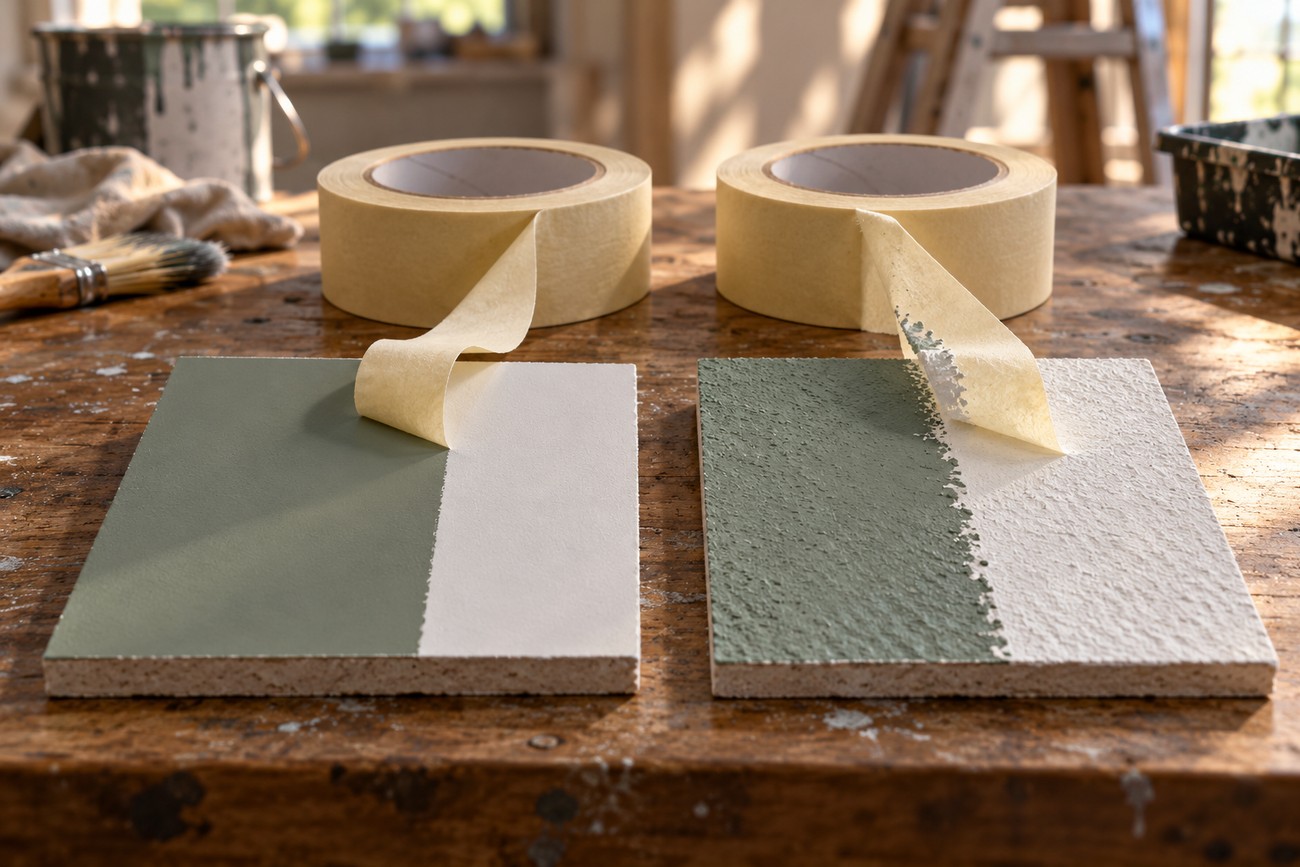
Favor a documented, job-matched tape when damage to the finish would be costly to repair. An identifiable 3M product may make that decision easier because its documentation is generally easier to find, but you still need to check the specifications for that product and test it on the surface. The 3M name alone does not guarantee clean removal.
A Sellerio roll is reasonable to consider when its stated surface, application, and removal limits fit the work, and a representative test passes. Where the listing leaves those limits unclear, you are accepting more uncertainty. A “no-residue” label cannot replace the missing conditions or the result of a trial.
Upfront price is only one part of the job cost. Touching up a lifted finish, cleaning adhesive, or repainting a bled edge can outweigh a saving on the roll, although the outcome cannot be predicted from brand names alone. Buy for the surface and schedule in front of you, then let the tested roll—not a broad brand claim—earn the larger masking run.
Frequently asked questions
Problems can also arise after painting or between jobs. The answers below address cleanup, roll care, and broader brand choices without assuming that one tape suits every surface.
What should you do if masking tape has already left adhesive residue?
First check what surface and coating are under the residue, and avoid scraping or applying a solvent straight away. Try the least aggressive cleaning method suitable for that finish in a hidden spot, following the coating manufacturer’s care guidance where available. If the test softens, dulls, or lifts the finish, stop and seek a method approved for that surface; a solvent that removes adhesive can also damage paint or plastic.
How should you store an opened roll between painting jobs?
Keep the roll clean, dry, and away from heat and direct sunlight. Protect the exposed edge from dust and debris so the next strip can make even contact with the surface. Before reusing an older opened roll on a visible finish, check that it unwinds cleanly and passes a small adhesion-and-removal test.
Which brand of masking tape is considered the best?
No single brand is best for every masking job. A clearly identified product with suitable surface guidance, working conditions, and a removal window is a stronger choice than an unspecified roll with a broad claim, regardless of the name on the package. For a delicate finish, give particular weight to a successful test on that finish.
What masking tape do professionals use?
Professionals use tapes selected for the task, including options intended for general painting, delicate surfaces, or demanding edge work. They also consider how long the tape will remain in place and whether the coating is ready for masking. The useful lesson is their selection method: check the product instructions and verify the result on the job surface.
Who are 3M’s main competitors in tape manufacturing?
Competitors in tape manufacturing include tesa, Nitto, and Shurtape, among others. The relevant competitor for a painting project depends on the tape category and local availability: a manufacturer’s full range is less useful to compare than the specific masking rolls offered for your surface and working conditions.