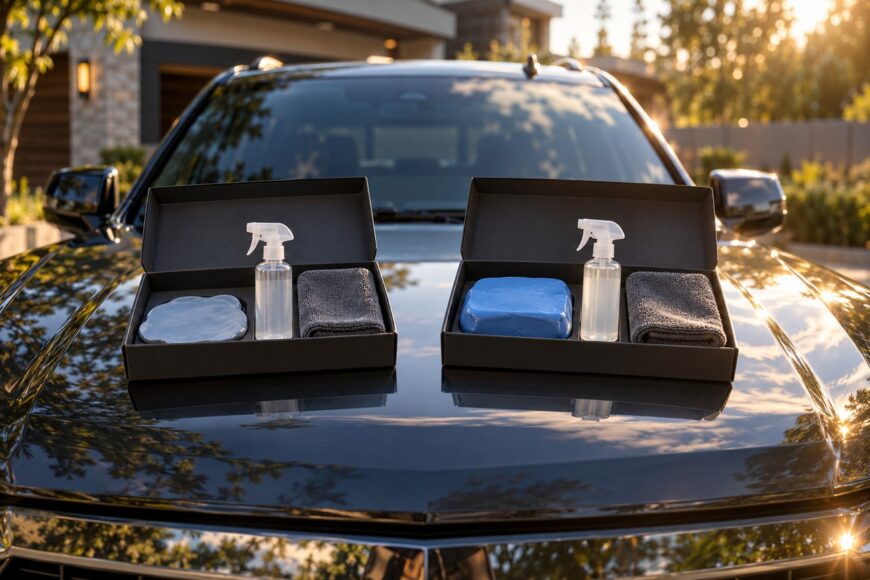
The choice between Mothers California Gold and Meguiar’s Smooth Surface often comes down to how the clay feels in your hand and how much usable clay the kit contains. Some drivers prefer a softer, more pliable bar; others want a firmer one and enough material for a large vehicle or several cars. Neither choice prevents marks if you work on dirty paint, run short of lubricant, or trap grit in the clay.
Paint condition and clay type matter more than brand loyalty. A mild bar is the sensible starting point for routine bonded contamination, while an aggressive bar calls for a more selective approach. The useful verdict, then, depends on what you need to remove, what comes in the exact kit you are buying, and which handling feel helps you maintain light, controlled contact.
- The short verdict: which clay bar should you buy?
- Mothers vs Meguiar’s: clay feel, kit contents, and best fit
- How each bar feels once it touches the paint
- What the larger kit actually gets you
- The mistakes that make either clay bar seem unsafe
- What to expect after laying
- Frequently asked questions
- How do I know when to fold or discard a piece of clay?
- How should I store an opened clay bar?
- What is the best clay bar for auto detailing?
The short verdict: which clay bar should you buy?
Choose Meguiar’s Smooth Surface if you prefer clay that feels softer and easier to shape. Users often describe it as more pliable than Mothers California Gold, though handling impressions vary. That feel may suit your technique, but it does not make the bar inherently safer or more effective.
Choose Mothers California Gold if a firmer, more rubbery feel gives you better control, or if you need enough clay for a large SUV or multiple vehicles. Mothers kits are often listed with more total clay than Smooth Surface kits. Check the exact SKU before treating that as a buying advantage.
For ordinary decontamination, compare these mild kits rather than assuming every clay product from either brand behaves alike. Meguiar’s C2100 is labeled an aggressive clay variant and is distinct from Smooth Surface. Its greater bite is intended for stubborn contamination, with a greater need to manage possible paint marks.
Neither mild kit earns a blanket recommendation for beginners. A supplied lubricant and towel can make a first session easier to organize, while a bar you can knead and guide comfortably may make careful technique easier to maintain. The better purchase is the one whose contents and feel fit the job in front of you.
Mothers vs Meguiar’s: clay feel, kit contents, and best fit
These are commonly listed configurations and reported handling traits, not guarantees for every package. Confirm the exact SKU and contents before buying.
| Comparison point | Meguiar’s Smooth Surface | Mothers California Gold |
|---|---|---|
| Reported bar feel | Often described as softer or more pliable | Often described as firmer or more rubbery |
| Commonly listed clay quantity | Often listed as 3 × 60 g | Often listed as 3 × 80 g |
| Accessories to verify | Check the listing for lubricant, a towel, and storage provisions | Some kits include lubricant or quick detailer and a microfiber towel; confirm the SKU |
| Likely best fit | Someone who prefers a softer-feeling bar for routine decontamination | Someone who prefers a firmer feel or wants to check for more clay for larger jobs |
| Reported drawback | Some users report smearing | Some report resistance to kneading, sticking, or crumbling |
The quantity difference can matter when you plan to work across several panels or vehicles. It tells you how much material a listed kit supplies, though it does not establish which clay cleans better or makes safer contact with paint.
Likewise, a reported complaint is a handling possibility rather than a predictable defect. Lubrication, contamination, and how often you expose a clean clay face all affect what happens on the panel.
How each bar feels once it touches the paint
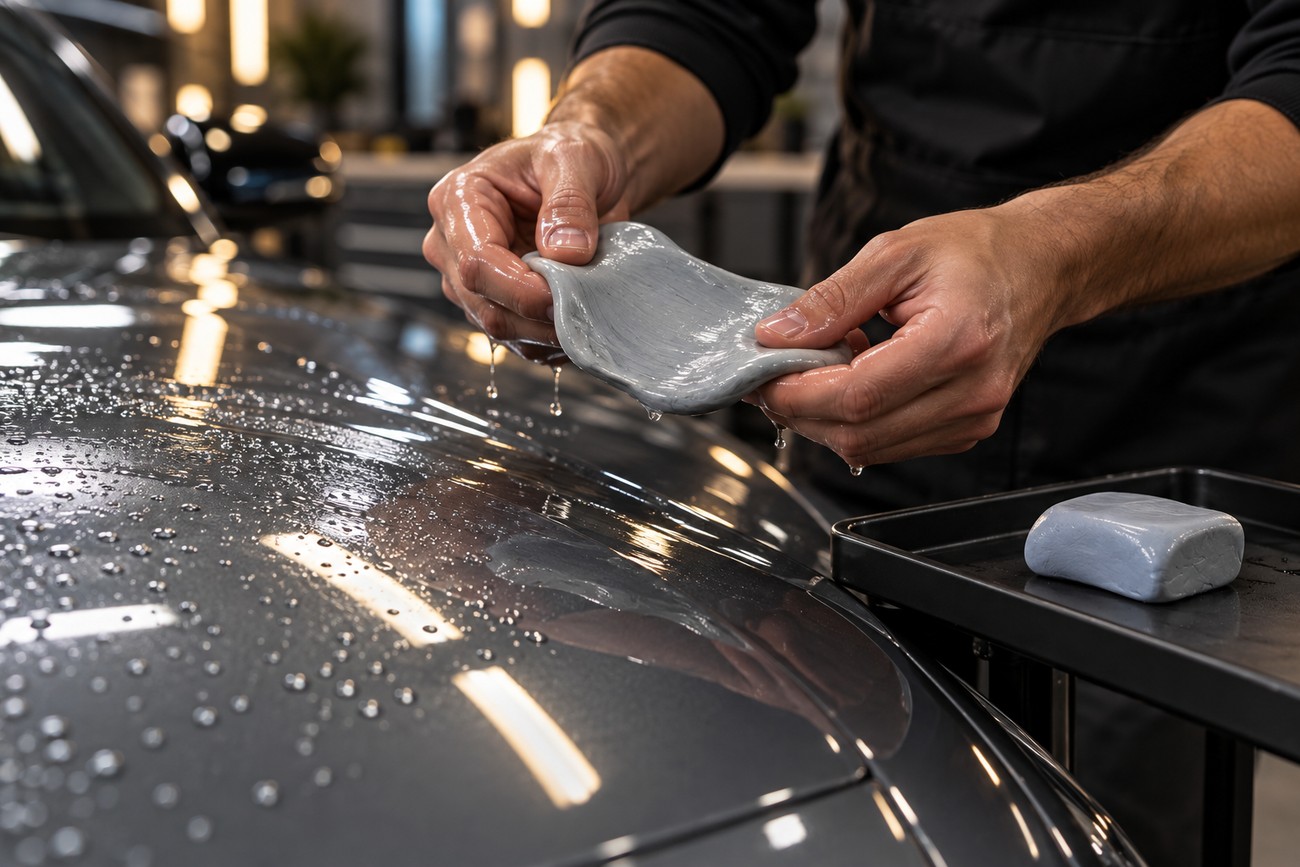
Meguiar’s Smooth Surface is often described as softer or more pliable. Some users find that easy to shape into a working face; others dislike the tacky feel or report that the clay smears and needs extra wiping. A smear is a reason to check your lubrication and handling before pressing harder.
Mothers California Gold is often described as firmer or more rubbery. That resistance can feel controlled in the hand, yet some users say the bar takes more effort to knead. Reports of sticking or crumbling also exist, though they should not be treated as inevitable behavior from every kit.
Hand feel is a useful preference test, not a measure of cleaning power. A softer bar is not automatically gentler on paint, and a firmer one is not necessarily better at lifting contamination. Both depend on clean working conditions, adequate lubrication, and the condition of the clay face.
If a bar is awkward for you to fold or guide with light pressure, that matters more than an abstract ranking. Choose the feel that helps you keep a clean face against the panel and stop promptly when movement changes. Greater total clay mass does not remove the need for that control.
What the larger kit actually gets you
Meguiar’s Smooth Surface is often listed as 3 × 60 g, while Mothers California Gold is often listed as 3 × 80 g. These are examples from listings, so verify the exact SKU rather than assuming every version has the same quantity. More clay can give you more usable material across a large SUV or several vehicles.
Accessories may change the practical value of a kit. Some Mothers California Gold kits include lubricant or quick detailer and a microfiber towel, allowing you to start with products intended to be used together. Confirm the contents of the specific package; a photo or product name alone may not settle what is included.
An easily missed detail is storage for an opened piece. A kit can supply several bars without giving you a dedicated container for the one you have started using. Plan to keep unused and opened clay clean and separate so a piece does not collect debris between jobs.
Compare the current price, clay quantity, accessories, and storage provisions on the listings available to you. Extra weight can extend a kit’s usefulness, but it does not prove better cleaning or lower paint risk. The worthwhile kit is the one that supplies what you will use without forcing you to improvise the essentials.
The mistakes that make either clay bar seem unsafe
Wash the vehicle before laying. Loose sand and road dirt should be removed before a clay bar touches the panel; otherwise, grit can become trapped in the working face. Begin on a clean area and inspect the clay as you work.
Apply enough product-compatible lubricant to keep the bar moving freely, and use light pressure. If it begins to grab, stop and check the panel and clay rather than trying to force a pass. Too little lubricant can cause dragging or smearing, while grit in the clay can mark the finish.
A bar that moves freely again after fresh lubricant may have been running on a dry patch. If its face feels gritty or shows embedded particles, stop using that face on paint; added pressure or lubricant will not make trapped grit harmless.
Fold the clay to expose a clean face when the working surface collects contamination. Work in manageable areas so you can keep each pass lubricated and see when the bar needs attention. Even mild clay can leave marring on a dirty panel, with insufficient lubrication, or with grit trapped in the clay.
Keep the clay grade matched to the job. Meguiar’s C2100 is an aggressive variant, separate from the Smooth Surface bar in this mild-kit comparison; reaching for it to address routine contamination can mean unnecessary paint marks and follow-up work. Claims such as “non-abrasive” or “safe for clear coat” do not guarantee a mark-free result under poor working conditions.
What to expect after laying
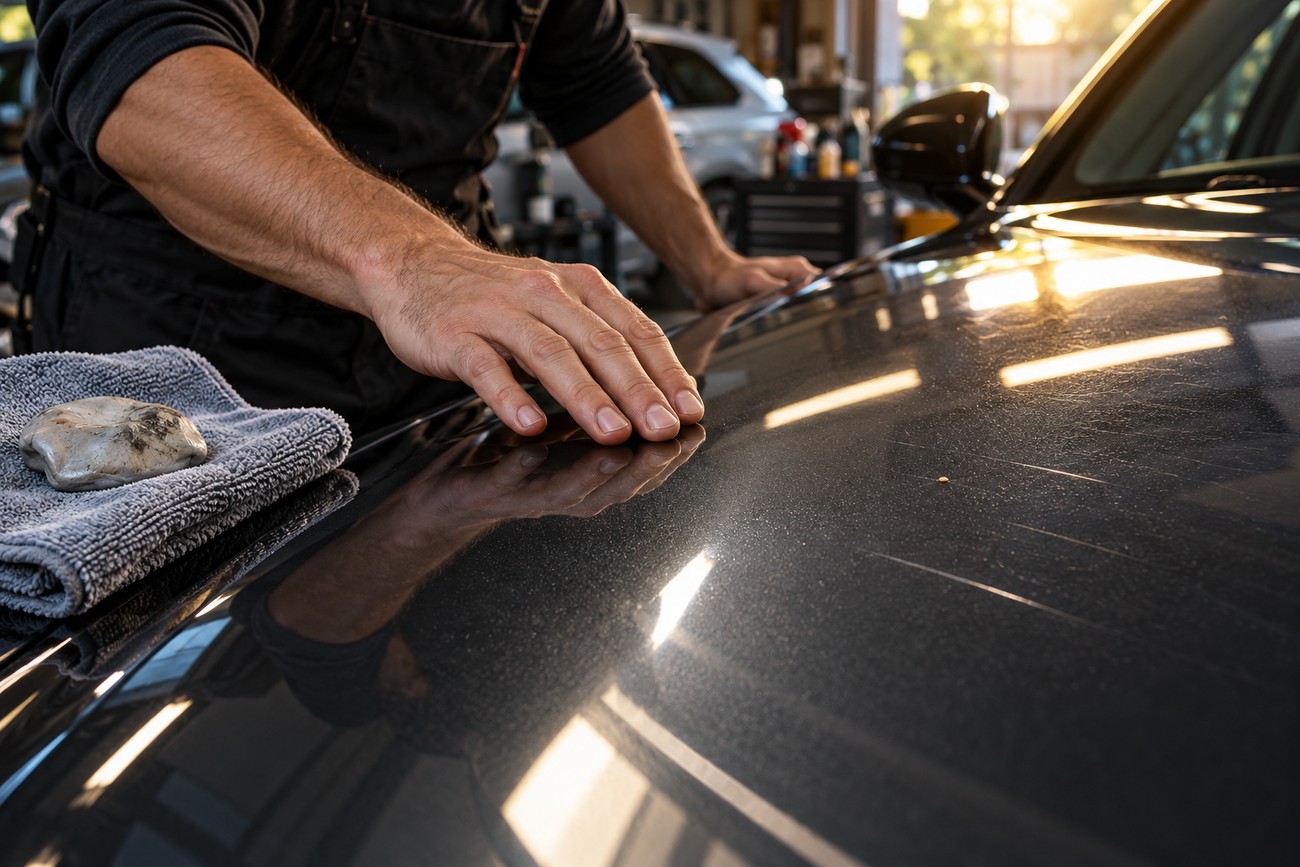
Clay removes bonded surface contamination, so a cleaned panel should generally feel smoother. It does not correct scratches, restore gloss by polishing, or make every visible paint defect disappear. Judging it solely by whether the finish looks polished sets the wrong expectation.
Inspect and feel a cleaned, dry panel before deciding on another pass. If a small area still has bonded deposits, reassess that area and the clay face rather than repeatedly working the entire vehicle. An imperfect feel can also reflect something clay is not suited to correct, so more passes are not automatically the answer.
Look at the finish under suitable light for any marring, including marks that may arise from poor technique or conditions even with mild clay. Polish if the inspected finish needs correction and that step suits your paint-care plan. Apply protection separately afterward; decontamination alone is not a protective finish.
Frequently asked questions
Day-to-day clay care affects the result as much as the kit label. A clean working face, clean storage, and the right lubricant help you use the material you bought without carrying contamination onto another panel. Follow the product instructions, especially before using clay on surfaces other than paint.
How do I know when to fold or discard a piece of clay?
Fold it when the exposed face shows collected dirt or begins to feel contaminated, then check that the new face is clean before it touches paint. Discard a piece if you can see or feel embedded grit that you cannot isolate, or if it falls onto a dirty surface. A dropped, contaminated piece should not go back onto painted panels just because the panel still feels rough.
How should I store an opened clay bar?
Keep an opened piece in a clean, closed container or clean packaging that prevents it from collecting dust and grit; check the kit instructions for any specific storage guidance. Some kits do not include a dedicated container, so arrange storage before you start. Keep the clay away from loose towels, dirty tools, and other surfaces that could contaminate its working face.
What is the best clay bar for auto detailing?
For routine work, start with a mild clay bar whose instructions suit the surface and whose handling lets you use light pressure. Choose a kit with a product-compatible lubricant, or obtain one separately, and check the exact package contents rather than relying on the brand name. Clay can also be used on glass, metal, and suitable plastic when the product instructions permit it; test and follow those directions for each surface.