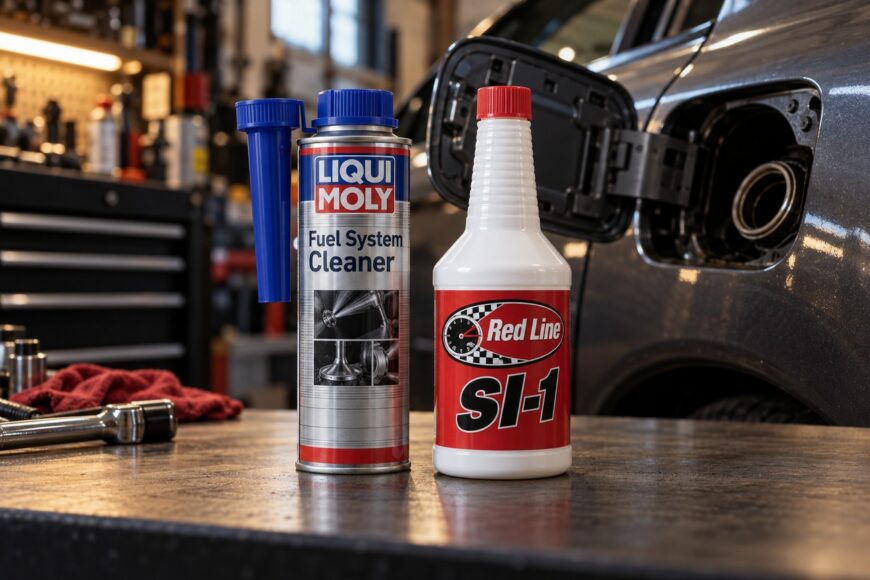
Liqui Moly and Red Line SI-1 are both available as bottle-in-tank fuel-system cleaners, but Liqui Moly also offers a separate professional cleaning process. That distinction matters if you are weighing the price of a bottle against a workshop service: they use different application methods and should not be expected to produce the same result.
Owners report no noticeable change, an improvement that fades, or a high cost for one tank of fuel. Those experiences are hard to interpret without knowing whether deposits caused the symptom in the first place. A cleaner may address chemical buildup; it cannot repair an ignition fault, low fuel pressure, an intake-air leak, or mechanical wear.
- What You Are Actually Comparing
- Liqui Moly vs Red Line SI-1: What Actually Differs
- Where Liqui Moly Makes the Stronger Case
- Where Red Line SI-1 May Be the More Practical Choice
- How to Choose Without Overpaying or Expecting a Miracle
- The Mistakes That Make Fuel Cleaners Look Ineffective
- Claims, Caveats, and Maintenance Myths
- Frequently asked questions
- Which is better, Liqui Moly fuel system cleaner or Techron?
- What is the top-of-the-line fuel injector cleaner?
- How long should I wait before deciding that a fuel-system cleaner did not work?
What You Are Actually Comparing
A bottle-in-tank fuel-system cleaner travels with the fuel. It primarily affects areas the fuel reaches and does not automatically clean every engine component. The areas it can contact depend partly on the engine’s fuel-delivery design, so a broad claim to “clean the whole engine” deserves caution.
Liqui Moly sells consumer treatments and concentrates, alongside a separate professional cleaning line. Red Line SI-1 is commonly discussed as a consumer treatment added to the tank. Comparing SI-1 with a Liqui Moly bottle is a different decision from comparing it with an equipment-based workshop flush.
Professional cleaning uses a controlled service process rather than leaving the treatment to circulate through a normal tank of fuel. Equipment gives the operator more control over application, but it does not make the service a universal remedy. The workshop still needs to identify the likely source of poor starting, rough running, or reduced responsiveness.
The useful dividing line is deposits versus faults. Resin or carbon deposits may respond to an appropriate cleaning method; worn components, ignition problems, air leaks, and fuel-pressure faults require diagnosis and repair. Choosing a stronger-sounding product will not change that distinction.
Liqui Moly vs Red Line SI-1: What Actually Differs
The practical differences concern product format, application, and the evidence available for each approach. Neither choice guarantees a repair when deposits are not the cause.
| Consideration | Liqui Moly | Red Line SI-1 |
|---|---|---|
| Product format | Ready-to-use fluids, concentrates, and a separate professional cleaning line. | A bottle-in-tank fuel-system cleaner. |
| Application | Follow the specific bottle’s directions; concentrates require accurate mixing. Professional cleaning uses service equipment. | One bottle per tank is commonly repeated in practical discussions and user guides; check the product directions for your tank and application. |
| Intended cleaning scope | Consumer treatments work through areas the fuel reaches; professional cleaning is a distinct process. | Works through the fuel path and does not automatically clean every engine component. |
| Evidence transparency | Publicly described professional equipment and process details, plus a published test that is not a head-to-head comparison with SI-1. | Official technical detail in the available material is more limited; claims of stronger cleaning on older engines come from user reports. |
| Professional-service option | Separate Jet Clean Great plus equipment-based process. | No comparable SI-1 professional process established in the available material. |
| Cost-related trade-off | A bottle avoids service equipment; concentrates demand careful mixing, while professional work adds service cost and complexity. | Simple bottle purchase and application, though the cost can feel high for one tank if the car already runs well. |
| Best fit | Owners who want a choice between a consumer treatment and a separately assessed professional service. | Owners who want a straightforward in-tank treatment and accept the limits of the available comparative evidence. |
Where Liqui Moly Makes the Stronger Case
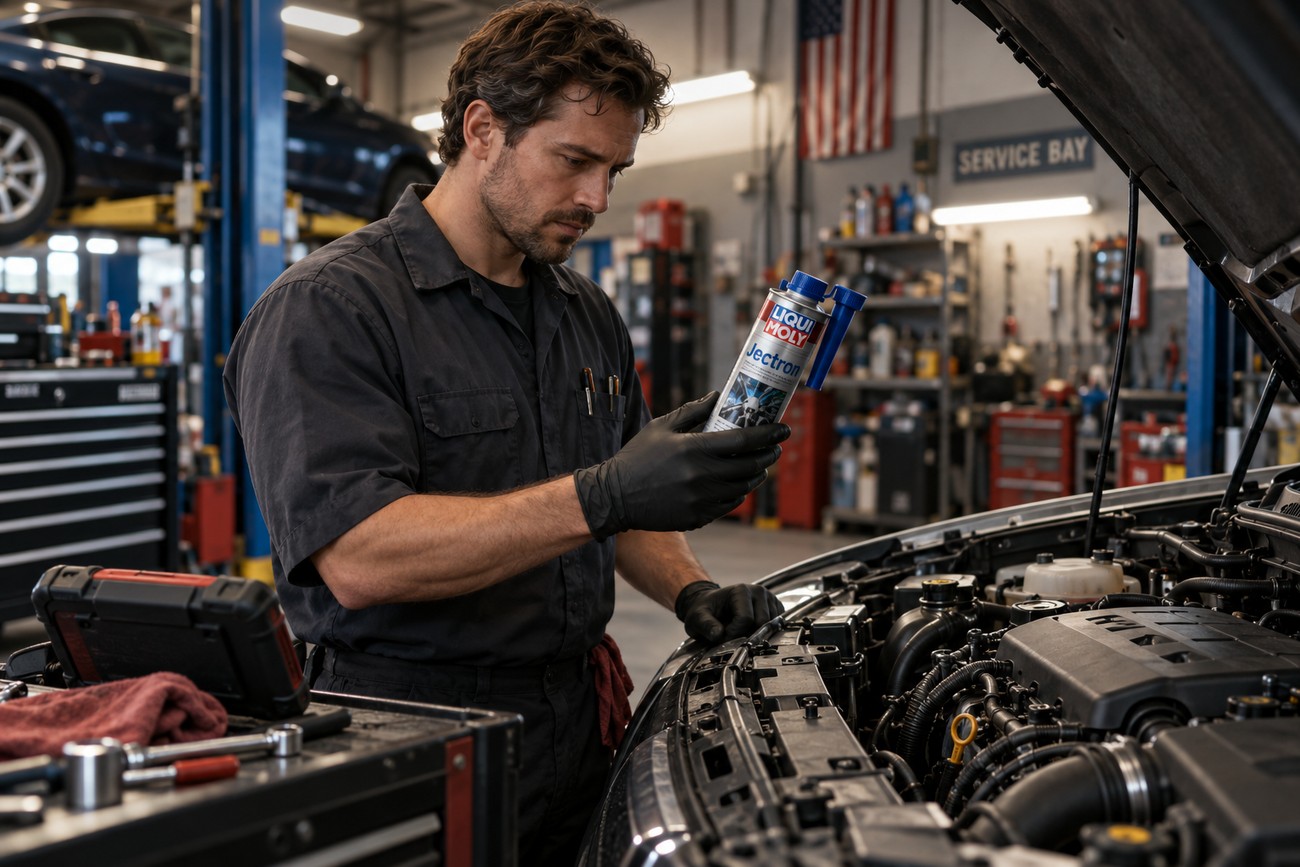
Liqui Moly positions its cleaners around poor starting, uneven idle, smoky exhaust, resin deposits, and carbon deposits. That symptom-led framing is useful if contamination is plausible, although each symptom can have other causes. A persistent misfire, for example, warrants fault-finding rather than repeated cleaner treatments.
The range gives owners different application routes. Ready-to-use products suit a straightforward bottle-in-tank treatment, while concentrates require accurate mixing according to the particular product instructions. The professional line is a separate decision, especially for an owner considering a workshop visit for suspected deposits.
Liqui Moly describes Jet Clean Great plus with a 7-liter tank, manual pneumatic pump, pressure gauge, and pressure-release valve. Those details show how the professional process is controlled; they do not establish that every deposit in every engine is reachable. Liqui Moly also states that its fluids are non-aggressive toward hoses, seals, gaskets, and plastic parts. Treat that as a manufacturer claim and still follow the instructions for the chosen fluid and vehicle.
A Liqui Moly-published test citing Za Rulom reported average fuel-consumption reductions of 3.5–4% under load and 7–8% at idle. The same published material reported reduced deposit mass and lower residual hydrocarbons in exhaust. Those are results from the reported test, not a forecast for your vehicle or proof that Liqui Moly outperforms Red Line SI-1.
Where Red Line SI-1 May Be the More Practical Choice
Red Line SI-1 appeals to an owner who wants a consumer treatment without arranging a workshop cleaning. Practical discussions and user guides commonly describe using one bottle per tank. That convention is easy to understand, but the label directions and the amount of fuel being treated should govern the actual application.
Some users describe SI-1 as more “hard-hitting” on older or heavily contaminated engines. This is user experience, not an officially verified comparative result in the available material. A report of smoother idle after treatment can be useful feedback, but it cannot identify which deposits changed or establish that another cleaner would have performed differently.
Official technical detail for Red Line is more limited in the available material than Liqui Moly’s description of its professional process. That limits claims about relative cleaning strength. It does not mean SI-1 is ineffective; it means a confident product ranking would need better matched test evidence.
A single secondary source describes SI-1 as suitable for gasoline engines with catalytic converters and oxygen sensors, but official confirmation is not available in the material reviewed. If compatibility is decisive for your vehicle, check current manufacturer documentation rather than relying on that isolated claim.
How to Choose Without Overpaying or Expecting a Miracle
For mild, plausible deposit-related symptoms, start with a correctly dosed consumer treatment and note the exact behavior you hope to change, such as uneven idle after a warm start. An already well-running engine may show little perceptible difference. That does not, by itself, prove the bottle failed: there may have been little buildup affecting performance.
For preventive use, follow the product’s stated interval and dose rather than adding extra cleaner because a bottle seems inexpensive compared with a repair. Tank volume matters to concentration, while mileage, driving conditions, and contamination level influence whether a change is likely to be noticeable. Liqui Moly concentrates need accurate mixing; the commonly repeated SI-1 practice is one bottle per tank, subject to the product directions.
Before repeating a treatment, check whether the original symptom returns under the same driving conditions. If it does, verify ignition, intake air, fuel pressure, and mechanical condition rather than treating a brief improvement as a confirmed deposit diagnosis.
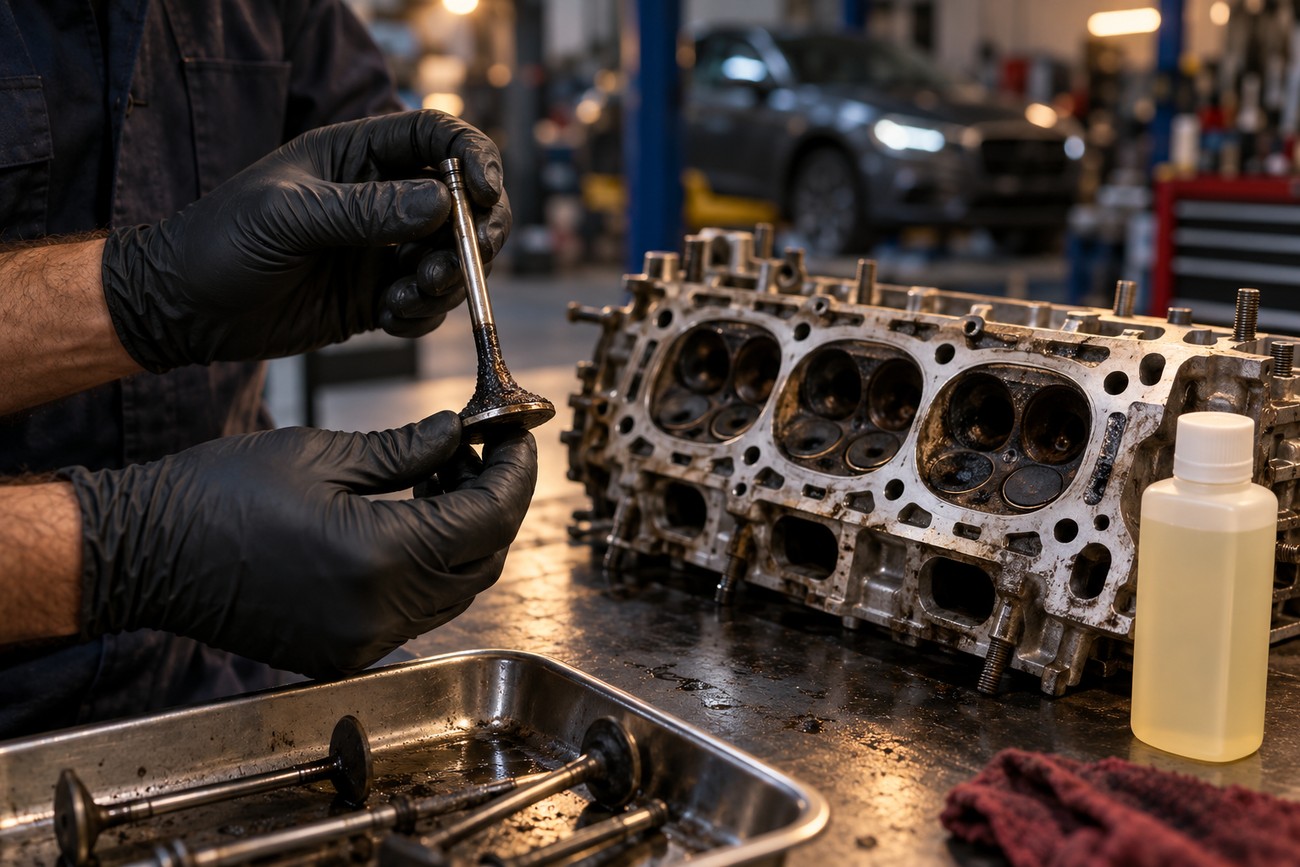
Suspected heavy deposits may justify discussing a professional cleaning process, particularly when a technician can first assess whether that process reaches the likely problem area. Fuel-delivery design matters here: in some direct-injection engines, fuel-borne cleaner does not wash over the intake valves. Paying for a tank additive specifically to clean those valves would therefore be a poor match for the task.
A vehicle with hard starting, a recurring misfire, or symptoms that quickly return needs diagnosis before another purchase. Temporary improvement may mean deposits were only part of the problem, or that an underlying fault remains. Premium pricing cannot guarantee a dramatic outcome; the published Liqui Moly test describes measured changes under its test conditions, not a complete performance transformation.
The Mistakes That Make Fuel Cleaners Look Ineffective
The most costly mistake is substituting an additive for basic checks. Poor starting or rough idle can arise from ignition faults, intake-air leaks, fuel-pressure problems, or mechanical wear. Cleaning deposits will not correct those conditions, even if the symptom resembles one listed on a cleaner’s packaging.
Dosing by eye creates a second problem. Too little product for the fuel volume may weaken the treatment; using more than directed can waste money without establishing a better result. Read the instructions for the specific Liqui Moly product or SI-1 bottle rather than transferring a dosing rule from another cleaner.
One application is also a poor test of whether a severely contaminated system can be fully restored. Give the treatment its intended driving cycle, then judge the original symptom rather than searching for a vague feeling of extra power. If the symptom persists, further diagnosis is more informative than repeatedly buying bottles.
Finally, a bottle-in-tank fuel-system cleaner and an equipment-based flush are different interventions. Neither reverses mechanical wear, and neither cleans every part of the engine simply because its name includes “fuel system.” Match the method to the suspected deposit location before paying for a more intensive treatment.
Claims, Caveats, and Maintenance Myths
Manufacturer information can explain intended use and application, but it should not be mistaken for an independent comparison. Liqui Moly provides specific details about its professional equipment and has published test results citing Za Rulom. Those materials do not establish a controlled Liqui Moly–Red Line winner.
The claim that any tank additive cleans the entire engine is misleading. Fuel-borne products primarily affect areas the fuel reaches, and access varies by engine design. Liqui Moly’s symptom-led positioning is most relevant where contamination is suspected, rather than every possible cause of poor starting or uneven running.
Liqui Moly states that forced ventilation, spark-plug replacement, and a mandatory oil change are not required after its professional cleaning process. That is a claim about its stated procedure, not a rule for every service method or a reason to skip maintenance otherwise due. Comparable independent confirmation of these post-treatment claims is not established in the available material.
A higher bottle or service price does not prove greater cleaning power. Compare the procedure, correct dose, likely deposit location, and quality of supporting evidence. If those factors do not match your vehicle’s problem, paying more mainly raises the cost of an uncertain trial.
Frequently asked questions
These answers focus on comparisons and evaluation decisions that product descriptions alone cannot settle.
Which is better, Liqui Moly fuel system cleaner or Techron?
There is no supported universal winner between Liqui Moly and Techron in the available evidence: it does not include a controlled comparison of the two. Compare the exact products’ documented intended use, dosing instructions, and evidence for the deposit you suspect, rather than treating either brand name as a performance result.
If you are considering Liqui Moly’s professional service, compare that procedure separately from any bottle-in-tank product. A workshop process and a retail bottle do not answer the same buying question, regardless of brand.
What is the top-of-the-line fuel injector cleaner?
“Top of the line” is not a reliable technical category for injector cleaners. The better choice is a product with clear instructions that suits the suspected deposit severity and gives you enough control over dosing and application to assess the result.
For a mild concern, a documented bottle-in-tank treatment may be a reasonable first step. For persistent symptoms or suspected heavy deposits, diagnosis should determine whether professional equipment is warranted before you pay for a more intensive service.
How long should I wait before deciding that a fuel-system cleaner did not work?
Evaluate it over the tank or driving cycle specified by the product instructions, then compare the original symptom under similar conditions. Record something observable, such as whether warm idle remains uneven, instead of relying on a general impression of smoother driving.
There is no universal mileage threshold that proves success or failure for every cleaner and vehicle. If the symptom remains or returns shortly afterward, check for faults and confirm that the treatment could reach the suspected deposits before repeating it.