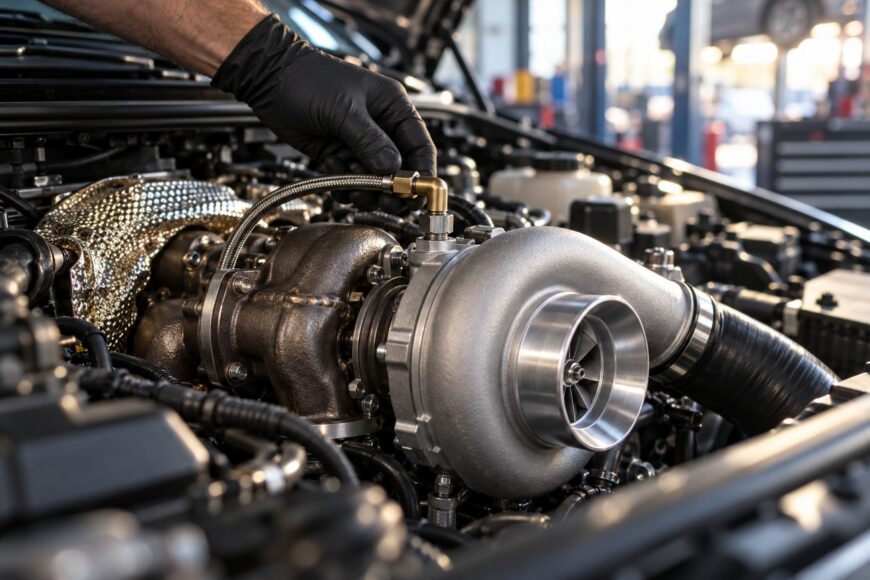
A turbocharger can fail after months of apparently normal commuting. A whistle, blue smoke, rising oil use, or an oil film in the intake may point to a turbocharger problem, yet none of those signs proves that the turbocharger itself is defective. A leaking charge-air hose, restricted oil drain, crankcase-ventilation fault, or engine problem can produce a similar complaint.
Simple driving folklore often focuses on letting the engine idle after every trip. The less visible risks usually matter more: oil starvation, contaminated oil, excessive crankcase pressure, air leaks, and incorrect replacement work. Good turbocharger care therefore means looking at the complete lubrication, intake, exhaust, and engine systems, then matching maintenance and driving habits to the vehicle manufacturer’s instructions.
- Why Turbocharger Care Is Different on a Daily Driver
- Oil, Filters, and Crankcase Ventilation: The Core Maintenance
- How to Drive a Turbocharged Car Without Adding Unnecessary Stress
- Whistles, Smoke, and Oil Use: What the Symptoms Really Mean
- What Must Be Checked After a Turbocharger Fails
- A Practical Turbocharger Care Routine for Daily Use
- Frequently asked questions
- How can I tell whether oil consumption comes from the turbocharger or the engine?
- When is oil in the intercooler more than a normal film?
- What maintenance does a turbocharger need?
- How should I drive a turbocharged car properly?
Why Turbocharger Care Is Different on a Daily Driver
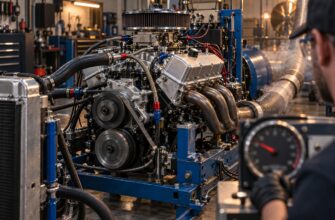
A turbocharger uses exhaust energy to drive a turbine, which turns a compressor on the same shaft. That shaft operates at very high rotational speed, so its bearings depend on a stable supply of clean oil. The oil also helps carry heat away. A low oil level can therefore damage both lubrication and cooling, even if the engine still appears to run normally.
Oil starvation is one of the most common causes of turbocharger failure. Bearing damage can occur within seconds because the shaft speed is so high. The driver may hear no warning noise before the damage begins, particularly if a feed line becomes restricted or the oil pump cannot maintain the required flow.
The turbocharger is only one part of a working system. Its condition depends on the oil level, oil pump, filter, feed line, drain line, crankcase ventilation, and the sealing of the intake and charge-air system. The exhaust system, engine condition, and boost-control hardware also affect the loads placed on the unit.
Routine care has a different purpose from diagnosis. Regular oil checks and correct servicing reduce avoidable risk; they cannot confirm the cause of a new whistle or loss of power. A technician may need to test the complete intake, exhaust, lubrication, engine, and crankcase systems before deciding that a turbocharger needs repair or replacement.
Oil, Filters, and Crankcase Ventilation: The Core Maintenance
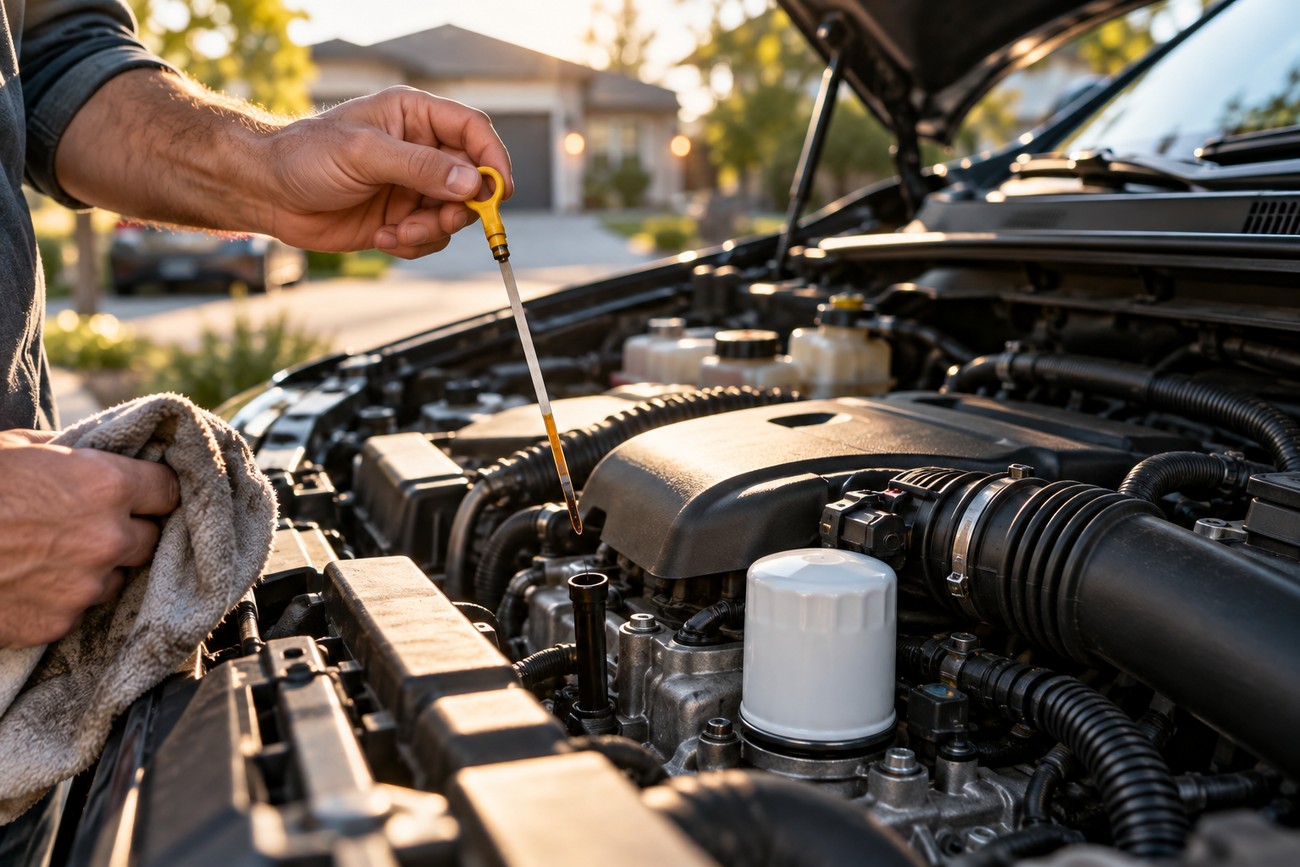
Check the oil on level ground, after preparing the engine according to the vehicle manufacturer’s instructions. Keep the level within the marked range and investigate repeated loss rather than treating top-ups as a permanent solution. A low level reduces the oil available for turbocharger lubrication and cooling, while an unexplained increase can also indicate fuel dilution or another engine fault.
Use oil that meets the manufacturer’s required engine specification. Viscosity alone is not sufficient: an oil with a familiar grade can still lack the approval or performance characteristics required by that engine and its turbocharger. Follow the specified service interval, and use a suitable-quality filter designed for the vehicle.
Contaminated oil accelerates shaft and bearing wear. Soot, fuel, water, combustion products, and metal particles can change the oil’s protective properties or carry abrasive material through the turbocharger. A filter that is restricted, poorly made, or unable to retain particles can also reduce protection and disturb oil flow.
Oil flow must be checked beyond the turbocharger housing. A blocked feed line, poor drainage, oil-pump fault, or excessive crankcase pressure can remain after the original turbocharger fails and quickly damage its replacement. Crankcase ventilation affects both pressure and oil movement. A faulty thermostat that leaves the engine running cold can also worsen operating conditions, even though the symptom may first appear as ordinary fuel use or slow warm-up.
How to Drive a Turbocharged Car Without Adding Unnecessary Stress
After starting, give the engine time to establish oil flow and begin warming before demanding strong acceleration. Cold oil moves differently from warm oil, and the lubrication system is still stabilizing. Gentle driving for the first part of a trip places less abrupt load on the turbocharger than immediate hard acceleration.
A similar principle applies before stopping. After ordinary, calm commuting, a fixed period of idling is not a universal requirement. Reduce the load during the final part of the journey and follow the vehicle manufacturer’s specific guidance rather than applying a blanket one-to-five-minute rule.
Sustained high load, towing, long climbs, and high ambient or engine temperatures deserve more care. If conditions have kept the turbocharger working hard, a gradual reduction in load gives heat and oil flow time to settle before shutdown. This matters more than performing the same idle ritual after every short trip.
Idling for a long time is not a substitute for sensible driving. It can create a different operating pattern from driving under load, and smoke after extended idling needs diagnosis rather than an automatic conclusion about turbocharger failure. The useful habit is to avoid abrupt changes in load and use the manufacturer’s instructions as the final reference.
Whistles, Smoke, and Oil Use: What the Symptoms Really Mean

A whistle followed by lost power may come from a split hose, loose connection, or leaking intercooler. Vacuum faults, intake leaks, and exhaust leaks can produce similar sounds or alter boost behavior. Cold oil can also change the sound of a healthy turbocharger, so diagnosis based on noise alone is unreliable.
Blue smoke and rising oil consumption deserve prompt investigation, but they do not identify one failed component by themselves. Possible causes include turbocharger oil-path or seal problems, restricted drainage, crankcase ventilation, engine wear, and excessive crankcase pressure. Smoke after extended idling can also involve the engine or ventilation system.
A light oil film in the intake can come from crankcase ventilation and does not automatically mean the turbocharger is defective. The useful clues are the amount, whether it is increasing, the trend in oil consumption, smoke under different conditions, and changes in boost. Shaft play, if found, must also be assessed in context because a basic visual check does not replace a proper inspection.
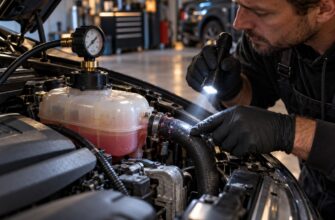
Inspect the air filter and the intake connections, especially the section after the airflow or pressure sensor. An air leak in that area can alter the measured or calculated air quantity and affect boost control. The charge-air path, intercooler, vacuum lines, and exhaust should be tested alongside the turbocharger.
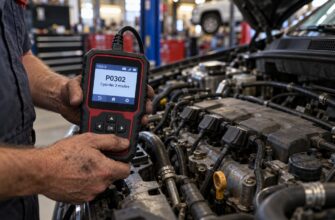
Stop driving and seek professional assessment if the vehicle develops heavy smoke, rapidly worsening oil loss, severe power changes, unusual mechanical noise, or signs that the engine is running on its own oil. Continuing to operate a vehicle with a suspected lubrication failure can turn a repairable fault into extensive engine damage. A warning light or fault code can help direct testing, yet it should be interpreted with physical inspection rather than used as a complete diagnosis.
What Must Be Checked After a Turbocharger Fails
Replacing the turbocharger alone often leaves the original failure cause in place. Before approving a replacement, the repair process should establish whether oil starvation, contamination, restricted drainage, excessive crankcase pressure, an intake fault, or a control problem caused the damage. Otherwise, the new unit may fail soon after installation and appear to be the problem.
Replace the engine oil and filter after the failure. Inspect the oil-feed and oil-drain lines for restriction, damage, incorrect routing, and deposits, then clean or replace them as required. The oil pump and crankcase-ventilation system also need checking because a new turbocharger cannot compensate for poor supply or excessive pressure.
Oil-feed restrictions and contamination in the intercooler are often more important to trace than the brand of replacement turbocharger. A replacement should be approved only after the system that damaged the original unit has been checked.
Metal debris and oil can remain in the intercooler and intake after a turbocharger breaks. Clean those areas appropriately and check the air filter, intake ducting, charge-air hoses, and connections. Debris left in the system can be drawn into the engine or compressor, while pooled oil can complicate the first start and obscure later diagnosis.
The replacement turbocharger’s oil passage must be filled, and the lubrication system must be primed before the first start. A dry start is dangerous because the shaft and bearings may run before oil reaches them. Follow the installation procedure for the specific unit, and confirm that the engine receives the correct oil flow before applying load.
Match the exact OEM number, actuator type, VNT or wastegate configuration, and control calibration to the vehicle. A unit described as “stronger” or a direct replacement may still have the wrong actuator or calibration. Electronic actuators and variable-nozzle systems require correct setup; casual adjustment can create overboost or underboost and may damage the replacement.
A Practical Turbocharger Care Routine for Daily Use

Build the routine around simple checks. Verify the oil level correctly, use the specified oil and a suitable filter, and pay attention to new oil consumption, smoke, boost changes, or a change in engine response. A small symptom noticed early gives a technician more useful evidence than a failed turbocharger after continued driving.
Keep the air filter serviceable and inspect intake and charge-air connections if the car develops a whistle, poor acceleration, or an underboost complaint. The system after the airflow or pressure sensor must remain sealed. A leak there can affect boost control even when the turbocharger itself is healthy.
Avoid four common mistakes:
- Driving with the oil level below the specified range.
- Using a cheap, incorrect, or unsuitable oil filter.
- Applying heavy load immediately after startup while the oil is cold and flow is stabilizing.
- Adding unverified chip tuning that changes boost, fueling, or VNT or wastegate control.
After tuning, overboost or underboost may reflect calibration, actuator, or control issues rather than a worn turbocharger. VNT systems, wastegates, and electronic actuators require proper diagnostic procedures, measured data, and correct calibration. Mechanical adjustment without that information can disrupt factory settings and create a new fault.
If a replacement fails again, investigate oil flow, contamination, oil-pump operation, drainage, and crankcase pressure before automatically buying a more expensive unit. Repeated failure usually points to an unresolved restriction, contamination, or system fault. Correcting that cause protects the next turbocharger more effectively than choosing a part based only on marketing language.
Frequently asked questions
Turbocharger symptoms overlap with faults in the engine, intake, exhaust, and crankcase systems. These answers focus on the additional checks that help separate similar complaints.
How can I tell whether oil consumption comes from the turbocharger or the engine?
Start with the timing and pattern of the smoke. Smoke after extended idling, on acceleration, during overrun, or under sustained load can point toward different oil-entry paths, so one observation is rarely decisive. Check crankcase ventilation and pressure, inspect the intake and compressor-side oil path, and examine the turbocharger’s oil feed and drain arrangements.
If the engine itself is suspected, compression or leak-down testing can help assess cylinder and ring sealing. A technician may also compare intake evidence with exhaust smoke, oil-use trends, and boost behavior. The presence of oil in the intake does not settle the issue because crankcase ventilation can leave a light film there. A complete diagnosis should separate engine oil entry from turbocharger leakage before parts are replaced.
When is oil in the intercooler more than a normal film?
A light coating can result from crankcase ventilation and is not automatically a failure. Concern increases when oil is pooling, the amount is growing, oil consumption is rising, smoke appears, or boost behavior changes. Those signs deserve inspection of the compressor side of the turbocharger, its oil drainage, crankcase pressure, and the intake system.
The condition should be assessed after the system is cleaned or measured, rather than by judging one oily hose in isolation. A technician can check whether the oil is entering progressively and whether there is supporting evidence such as compressor-side leakage, shaft damage, or abnormal pressure. Do not assume that every trace requires a turbocharger replacement.
What maintenance does a turbocharger need?
A turbocharger has no separate routine oil change. Its protection comes from the engine’s lubrication and air systems: correct oil meeting the manufacturer’s specification, a suitable filter, proper oil level, clear feed and drain lines, effective crankcase ventilation, and a sealed intake. The air filter and charge-air connections also deserve attention during normal servicing.
Maintenance intervals and procedures remain vehicle-specific. Investigate new oil use, smoke, boost changes, or unusual noise rather than waiting for a complete failure. If the turbocharger is replaced, the oil and filter should be changed, contamination removed, the cause of failure corrected, and the lubrication system primed before the first start.
How should I drive a turbocharged car properly?
Use gentle acceleration after startup until the oil begins to warm and flow stabilizes. During normal driving, avoid repeated abrupt load changes when the engine is cold. After towing, sustained high load, or extreme heat, reduce the load gradually before stopping and follow the vehicle manufacturer’s cooldown guidance.
There is no universal requirement to idle for a fixed one-to-five-minute period after every journey. Calmly reducing load is generally more useful after demanding driving than following a ritual on short trips. If the car smokes after idling, loses power, or uses oil, treat that as a diagnostic symptom rather than trying to cure it with longer idle periods.