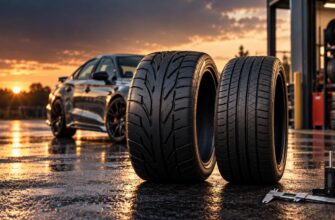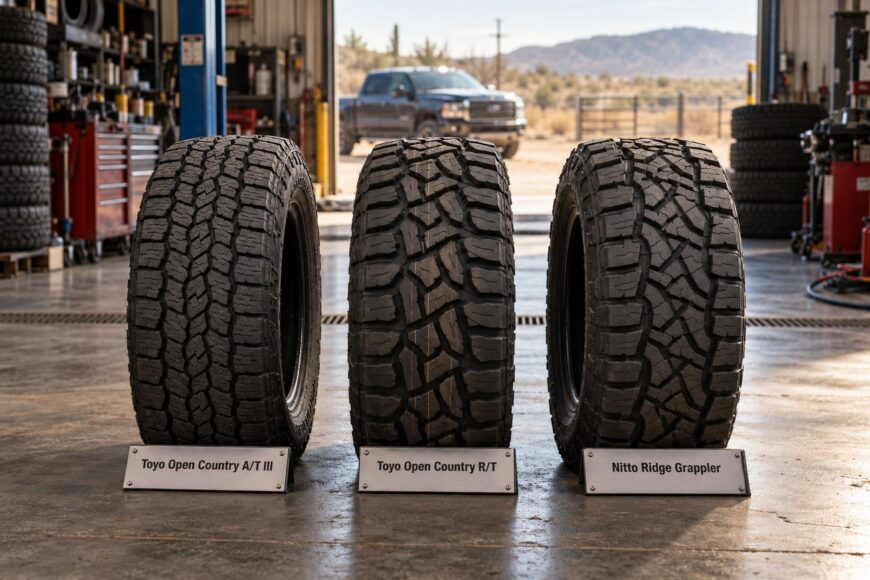
A daily-driven truck and a trail-focused truck ask different things of a tire. “Toyo Open Country” names a family, not a single rival to the Nitto Ridge Grappler: the Open Country A/T III, R/T, and M/T serve different purposes. A useful comparison starts with the Toyo model that fits your driving, then moves to the exact size your truck can use.
Wet-road confidence and ride comfort deserve as much attention as tread appearance. An aggressive tire may help on loose ground while adding noise or firmness during the commute, and owner reports about rain performance are mixed. The right choice depends on how often you need that extra off-road capability, how much weight the truck carries, and which load range fits the job.
- Which tire is better for your truck?
- Open Country A/T III, R/T, and Ridge Grappler at a glance
- Rain, noise, and ride comfort: where the trade-offs show
- Dirt, rocks, and mud: when aggressive tread earns its keep
- Check the exact size before choosing a load range
- The ownership costs a tread photo cannot show
- Frequently asked questions
- What should I inspect before buying a used set of either tire?
- What paperwork should I keep for a treadwear-warranty claim?
- How can I tell whether a particular size has a severe-snow rating?
Which tire is better for your truck?
For a road-heavy daily driver with occasional dirt-road use, start with the Toyo Open Country A/T III. Its all-terrain focus makes more sense when most miles are on pavement and you have limited need for a more open, aggressive tread. Compare its price and specifications in your required size before treating it as the default.
If rough trails are a regular part of the truck’s work, consider the Open Country R/T and Nitto Ridge Grappler. The Ridge Grappler is positioned as an A/T–M/T hybrid, while the R/T is another more aggressive step beyond the A/T III. The extra trail-oriented tread is easier to justify when dirt, rocks, or mud are recurring conditions rather than occasional detours.
The truck’s load can change the answer. A heavy LT fitment may meet a towing or carrying requirement, yet feel unnecessarily firm on an unloaded pickup. Check the load capacity and pressure requirements of the exact size instead of assuming the same model will ride alike on every vehicle.
Owner reports do not establish a reliable, across-the-board wet-road advantage for either brand. Some Ridge Grappler owners praise its rain behavior; others report weak grip, particularly on a thin film of water. Some Open Country owners also report declining wet grip as tread wears, so frequent wet-highway driving warrants a cautious choice and attention to tire condition over time.
Open Country A/T III, R/T, and Ridge Grappler at a glance
These are model-level distinctions, not guarantees for every fitment. Confirm specifications, warranty eligibility, and approved sizes for the exact tire you intend to buy.
| Model | Best-fit use | Road and trail compromise | Published treadwear-warranty information |
|---|---|---|---|
| Toyo Open Country A/T III | Road-heavy driving with occasional trail use | All-terrain option for drivers who do not regularly need a more aggressive hybrid or R/T tread | Up to 65,000 miles for eligible P/Euro-Metric sizes; up to 50,000 miles for eligible LT/Flotation sizes, subject to conditions |
| Toyo Open Country R/T | Regular rough-ground use | More aggressive tread; LT and Flotation sizes have a stated three-ply sidewall construction | 45,000-mile treadwear warranty, subject to conditions |
| Nitto Ridge Grappler | Drivers seeking an A/T–M/T hybrid | Trail-oriented tread with road noise and ride that depend on fitment and use | No mileage-warranty figure established here; check the current warranty for the exact tire |
The Open Country M/T is a separate, more specialized mud-terrain model. Substituting it for the A/T III or R/T would change the comparison rather than clarify a choice between those tires and the Ridge Grappler.
Rain, noise, and ride comfort: where the trade-offs show
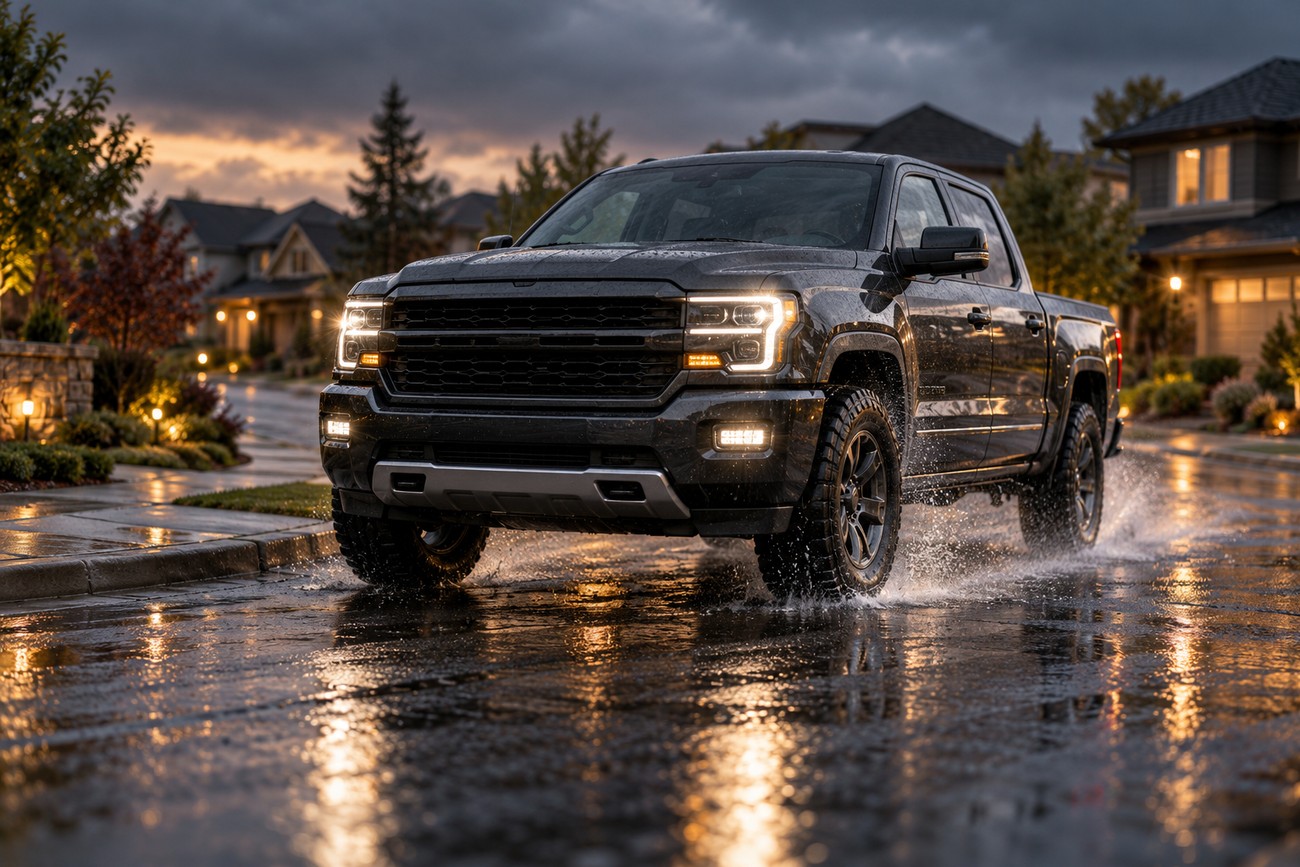
On a truck that spends most of its time on pavement, wet braking and steering feel matter on every rainy commute. An aggressive tread pattern does not establish better wet-road grip. Ridge Grappler reports conflict: some owners describe reassuring rain performance, while others describe weak traction, including at the start of a shower or on a thin water film.
Tread condition matters after the purchase. Some Open Country owners report that wet behavior worsens as their tires wear, and individual Ridge Grappler accounts also differ over time. Those observations are useful cautions, though they are not controlled comparisons of the same sizes on the same truck.
A Ridge Grappler may sound moderate for a tire with an aggressive pattern and still be noticeably louder than a conventional all-terrain tire. Moving from a highway tire to any of these more aggressive choices can also change steering response. If you drive long paved distances, judge “quiet” against the tire currently on your truck, rather than against a mud-terrain benchmark.
Ride firmness is partly a specification choice. Heavy LT, E-range, and F-range fitments can feel stiff, especially when the truck carries little cargo; inflation pressure, vehicle weight, and actual load all influence the result. A load range selected for capacity you never use can impose a comfort penalty you notice every day.
Alignment, rotation, inflation pressure, vehicle weight, and road surface can materially change noise and wear. Before attributing a developing hum to the model alone, check for uneven tread and a rotation or alignment issue. An isolated owner mileage report cannot predict what the same tire will do on a different truck.
Dirt, rocks, and mud: when aggressive tread earns its keep
The Ridge Grappler’s A/T–M/T hybrid positioning makes sense for drivers who repeatedly leave pavement. Owners commonly report good performance on dirt, gravel, and sand, although those reports do not guarantee the same result in every size or condition. The Open Country R/T belongs on the same shortlist when rough-ground use is frequent enough to justify its road compromises.
For mud and uneven tracks, inspect the tread and shoulders of the exact tire rather than relying on an A/T, R/T, or hybrid label. Shoulder openings can matter when a tire needs to find purchase away from the center tread. On rocky routes, sidewall construction and clearance become more consequential than a tread photo alone.
Toyo states that Open Country R/T LT and Flotation sizes have a three-ply sidewall construction. That is a specific construction claim, not a promise that a sharp rock cannot damage the tire. Likewise, a higher load range or ply rating describes load capability rather than puncture immunity.
Lower off-road pressure may improve how an appropriate tire works on loose or uneven ground, provided it suits the tire, wheel, load, and conditions; reinflate appropriately for road travel. If sustained deep-mud use is the priority, assess the Open Country M/T as its own specialized option. None of these all-terrain or hybrid labels makes a tire a dedicated ice tire.
Check the exact size before choosing a load range
Start with the complete tire size and specific product listing, then compare the load index, load capacity, approved wheel fitment, mounted dimensions, maximum pressure, and revolutions per mile. These figures vary by size within a model. A shared nominal marking such as 35×12.50 does not ensure identical mounted height or width.
Match those figures to the truck’s required load capacity, wheels, and available clearance. Check clearance through steering and suspension movement rather than judging the tire only while the truck is parked. A change in revolutions per mile can also affect speedometer accuracy, so it deserves attention when upsizing.
The pressure molded on a tire’s sidewall is its maximum, not an everyday target after upsizing. Start with the vehicle placard and check appropriate load-and-inflation guidance for the replacement tire and the truck’s actual load.
Load ranges C, D, E, and F correspond to 6-, 8-, 10-, and 12-ply ratings, respectively; they do not state the literal number of physical plies. An F-range option generally supports more load at a higher required pressure than a suitable lower-range option, subject to its exact specification. Choosing E or F solely for perceived toughness can leave a lightly loaded truck riding firmly without solving a puncture concern.
Finally, confirm the approved wheel width and the vehicle’s load requirements before ordering. Two tires with the same printed size can occupy different amounts of space once mounted, and the load index on the tire you receive must suit the vehicle. This check is particularly important when comparing an LT or Flotation size with a P/Euro-Metric option.
The ownership costs a tread photo cannot show
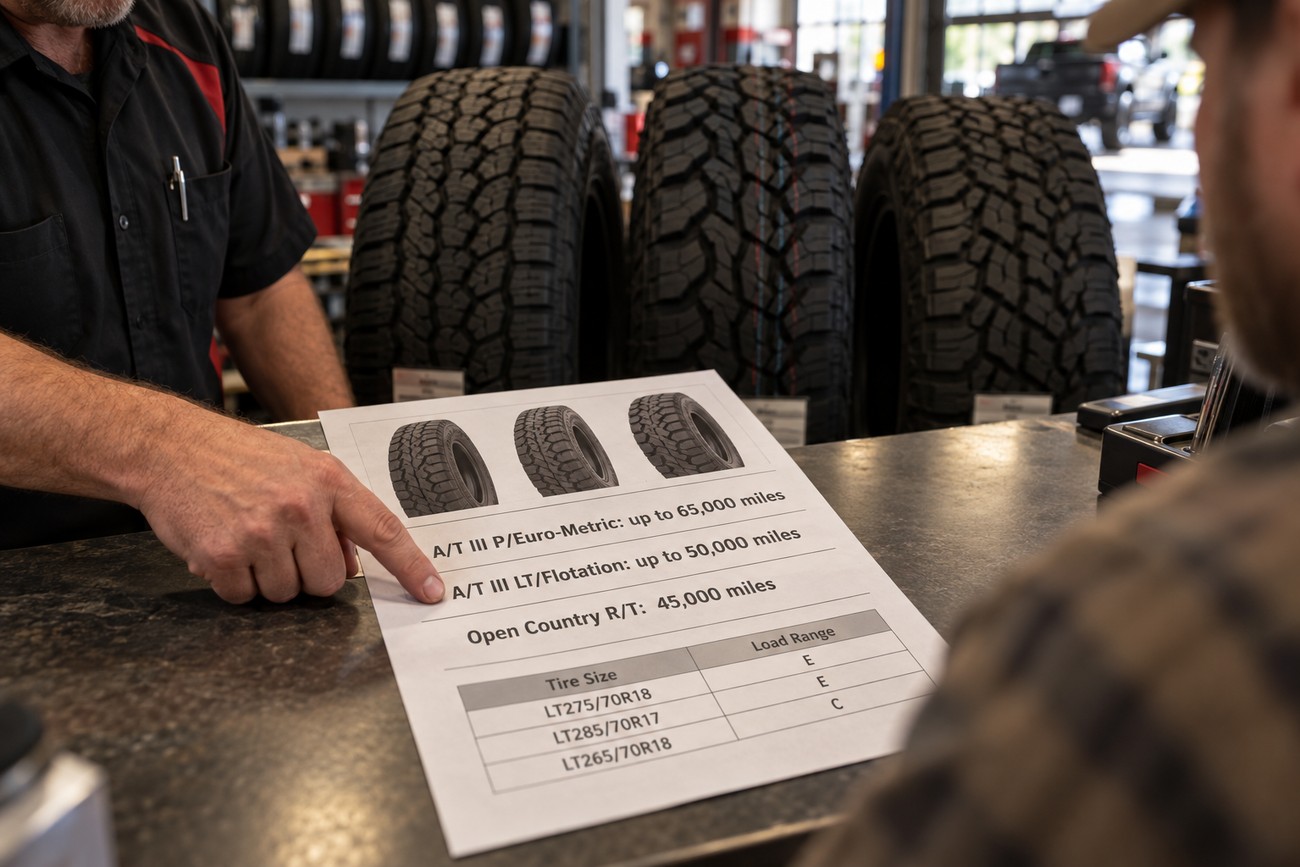
A mileage warranty is worth reading by model and size. Open Country A/T III coverage is up to 65,000 miles for eligible P/Euro-Metric sizes and up to 50,000 miles for eligible LT/Flotation sizes; the Open Country R/T has a 45,000-mile treadwear warranty. All are subject to warranty conditions, so the A/T III’s higher P/Euro-Metric figure should never be assumed for an LT fitment.
A higher load-range tire can add wheel-and-tire weight and ride firmness even when the truck rarely carries a heavy load. That makes the intended load a more useful buying criterion than an appearance-focused upgrade. Check the exact specifications before paying for capacity your application does not require.
Wear costs also depend on upkeep. Alignment, rotation, inflation pressure, vehicle weight, and road surface can materially change how either tire wears or sounds. A report of unusually long mileage—or a set that needed little balancing—is one owner’s outcome, not a model specification.
Upsizing may call for wheel-offset and clearance checks, balancing, and speedometer verification; none is automatically a problem on every installation. Because matching nominal sizes need not have identical mounted dimensions, obtain the measurements for the intended tire and wheel combination before assuming an existing fitment will carry over.
Frequently asked questions
Before buying a used set, inspect its condition and confirm that its markings suit your vehicle. For a new set, keep the records you may need for a treadwear-warranty claim. If severe-snow capability matters, check the marking on the exact size you intend to buy.
What should I inspect before buying a used set of either tire?
Check each tire’s date code, measure tread depth across the width, and look for uneven wear, sidewall cuts, bulges, or visible repairs. Confirm that all tires have matching sizes and appropriate load markings for your vehicle, rather than assuming a set offered together is identical.
Ask where any repair was made and have a qualified tire shop assess damage or a questionable repair before mounting. Remaining tread depth alone cannot establish that a used tire is sound.
What paperwork should I keep for a treadwear-warranty claim?
Keep the purchase receipt, installation details, and records of maintenance and rotations. The current written warranty determines eligibility and what evidence a claim requires, so check its terms for your model and size when you buy.
Retain records in a form that identifies the tires and vehicle. Clear documentation makes it easier to establish both the purchase and the care the warranty requires.
How can I tell whether a particular size has a severe-snow rating?
Look for the three-peak mountain snowflake marking on the exact tire’s sidewall, or confirm it in the manufacturer’s listing for that specific size. Do not assume every size in a model line carries the same marking.
The marking identifies a severe-snow rating; it does not make an all-terrain or hybrid tire a dedicated ice tire. If packed snow and ice are routine, evaluate tires specifically for those conditions and your vehicle’s requirements.