A timing belt can fail without obvious warning, while a supposedly lifetime timing chain may begin rattling and lead to an expensive repair. The right maintenance decision depends on the specific engine, its service history, and its symptoms—not simply on whether it uses a belt or a chain.
Belts usually have a clear replacement schedule, but age matters as much as mileage. Chains often have no scheduled replacement interval, yet their tensioners, guides, and sprockets still wear. Treating either system as maintenance-free can turn a manageable service job into engine damage.
- Timing belt vs. timing chain: maintenance at a glance
- When to service a timing belt—and what the interval misses
- How to spot a timing chain problem before it jumps
- What a complete timing repair quote should include
- The maintenance mistakes that turn wear into engine damage
- Frequently asked questions
- Which cars have the worst timing chain problems?
- How can I tell whether my car has a timing belt, chain, or both?
- What is the average lifespan of a timing chain?
Timing belt vs. timing chain: maintenance at a glance
General ranges help with planning, but engine-specific service information takes priority. The owner’s manual, service records, and repair procedure should determine the final decision.
| Maintenance factor | Timing belt | Timing chain |
|---|---|---|
| Scheduled service | Typical belt guidance is 60,000–120,000 km or 5–7 years; the engine-specific schedule takes priority. | A chain is often listed without a scheduled replacement interval, but symptoms and diagnostic findings still warrant investigation. |
| Warning signs | Often none before failure. Visible condition cannot reliably confirm remaining service life. | Cold-start rattle, persistent timing noise, fault codes, or camshaft timing deviations can indicate a problem. |
| Oil dependence | Usually less dependent on engine oil, except for oil-bath designs, which require the specified oil and inspection guidance. | Strongly dependent on correct oil quality, level, and change intervals because the chain needs lubrication and many tensioners rely on oil pressure. |
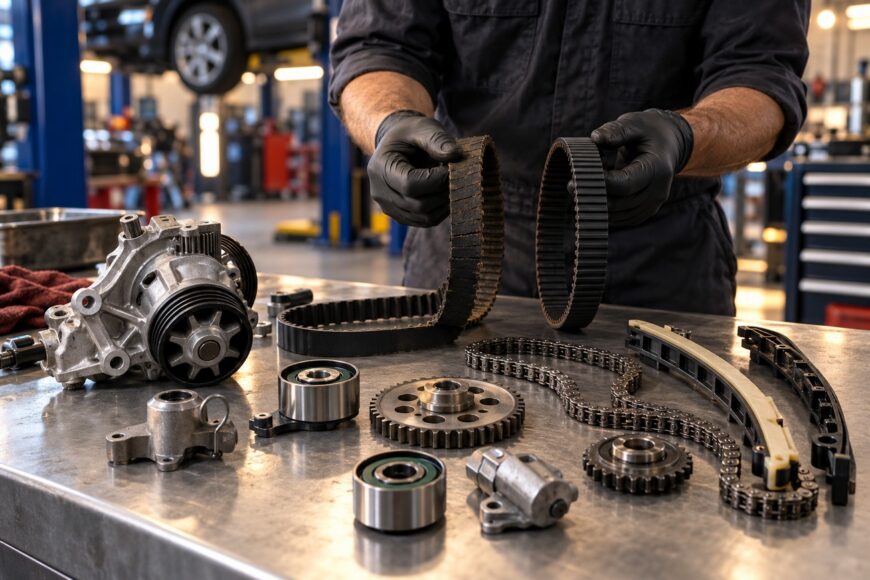
| Typical repair scope | Belt, tensioner, idlers, and, where applicable, a water pump. | Chain, tensioner, guides, and sometimes sprockets, with access work that can be extensive. |
| Failure consequence | On an interference engine, belt failure can cause valve-to-piston contact. | On an interference engine, a jumped chain can cause valve-to-piston contact. |
When to service a timing belt—and what the interval misses
Use both mileage and age when assessing a timing belt. Typical belt guidance is 60,000–120,000 km or 5–7 years; the engine-specific schedule takes priority. A vehicle that has traveled little distance may still need the belt replaced because rubber, reinforcement fibers, and bonded layers age over time.
If service records are incomplete, treat the belt’s history as unknown rather than assuming it was replaced. Confirm the engine code and applicable schedule, then arrange an inspection or replacement through a workshop that can document the work. Waiting for visible cracking or fraying is unsafe because internal fatigue may not show on the exposed surface.
Some belt makers advertise up to 240,000 km, while many engine-specific schedules and workshop recommendations are nearer 90,000–120,000 km; neither figure overrides the applicable manual. Long-life claims may describe controlled conditions or a particular belt design, whereas the vehicle schedule accounts for the complete engine system and operating requirements.
Some engines use a timing-belt-driven water pump; pump seizure can damage the belt. For that reason, the repair plan may include the pump, tensioner, and idlers, especially when access would otherwise require repeating much of the same labor. Other engines use a separate pump, so the repair procedure must be checked rather than assumed.
Oil-bath belts are a separate configuration. They require particular attention to the specified oil and the engine maker’s inspection guidance. The wrong oil, contamination, overheating, or unsuitable service practices can affect the belt even when the advertised design life appears generous.
How to spot a timing chain problem before it jumps
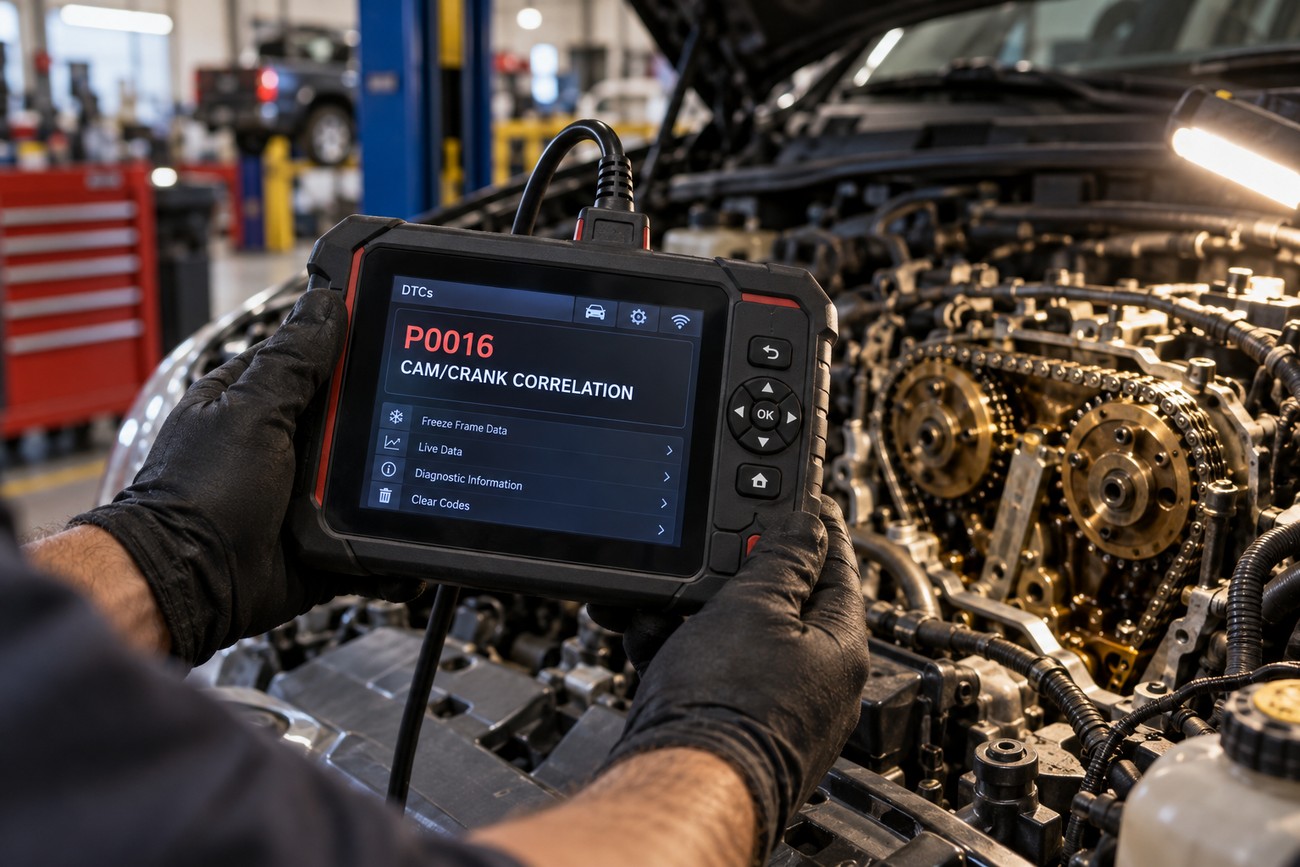
A chain is often listed without a scheduled replacement interval, but symptoms and diagnostic findings still warrant investigation. Brief noise at a cold start deserves attention, particularly if it becomes more frequent, lasts longer, or is accompanied by rough running or a warning light.
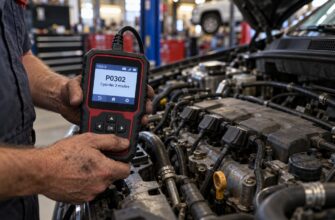
Persistent rattling, timing-related fault codes, and deviations in camshaft timing are more useful than noise alone. A scan tool can reveal correlation or phase errors, while a mechanical assessment can check the tensioner, guides, chain condition, and timing position. Noise may also come from an accessory, an oil-pressure problem, or a tensioner fault, so it is not a diagnosis by itself.
Chains may be designed for roughly 200,000–300,000+ km, yet some engines require timing-system work around 120,000–200,000 km; neither range predicts an individual engine’s lifespan. Oil quality, service intervals, cold starts, heat, engine design, and previous repairs all affect the result.
Chain-system wear can involve the tensioner, guides, and sprockets as well as the chain. Replacing only a visibly worn chain may leave damaged guides or a weak tensioner in service. If the chain jumps on an interference engine, valve-to-piston contact can occur, so unexplained timing faults should be investigated before continued driving where practical.
What a complete timing repair quote should include
A belt quote should identify the belt, tensioner, idlers, and any other components required by the engine’s repair procedure. It should also state whether the water pump is belt-driven or whether replacing it is sensible because access overlaps. The cheapest belt-only quote may exclude a component that could damage the new belt later.
A chain quote should show whether it includes the chain, guides, tensioner, and sprockets. The correct replacement scope depends on inspection findings and the manufacturer’s procedure.
Compare two quotes by matching every included tensioner, guide, idler, relevant water pump, and access-related labor item. A headline parts price cannot represent a chain repair when substantial disassembly is required.
Chain replacement may require extensive disassembly, sometimes involving the engine, transmission, subframe, or surrounding components. Labor access can therefore dominate the final price, while the listed chain itself may be a relatively small part of the total.
Ask the workshop to separate parts, labor, seals, fluids, timing verification, and any recommended related work. Check that the proposed parts and procedure match the engine code. One drive type is not always cheaper over the vehicle’s life: scheduled belt service costs money, while a neglected chain can create a much larger repair bill.
The maintenance mistakes that turn wear into engine damage
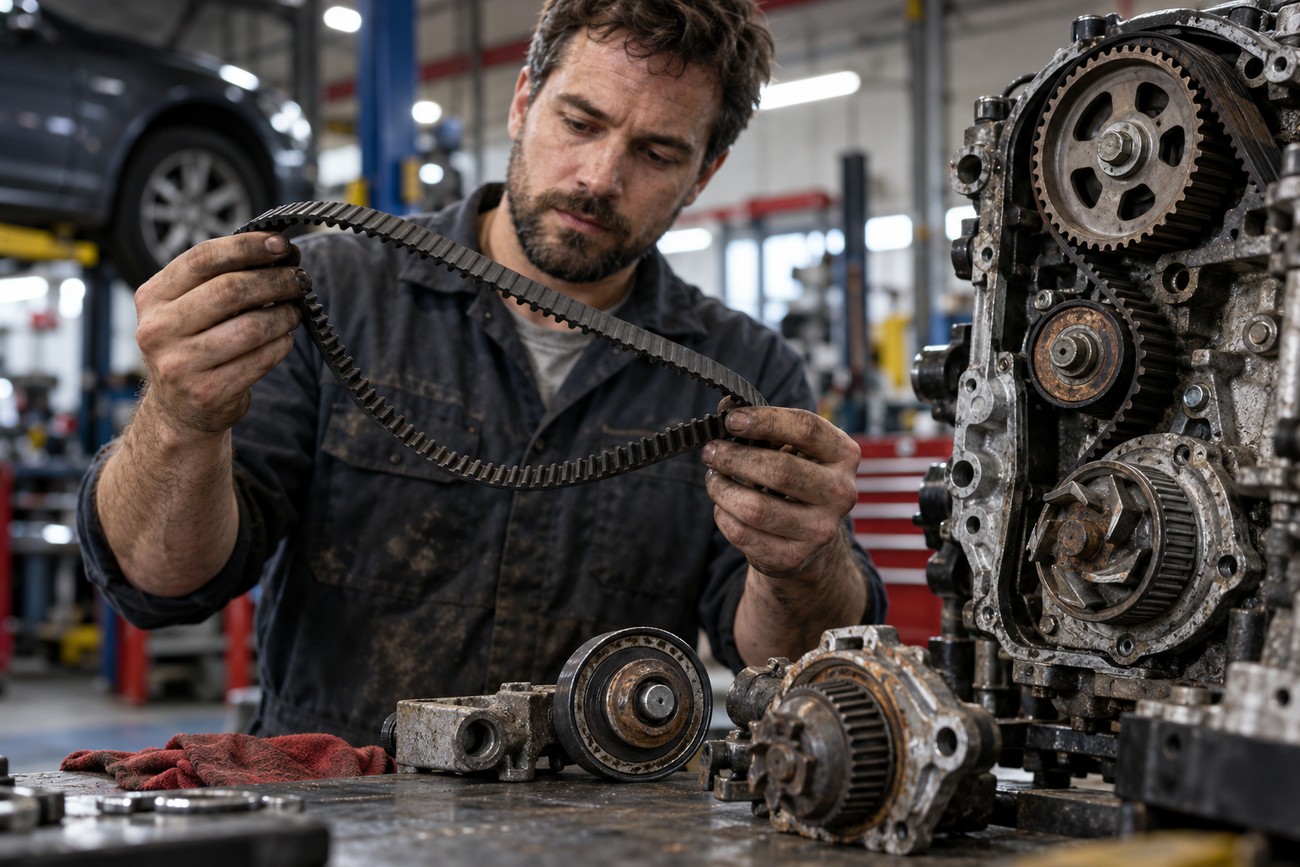
A common mistake is delaying belt replacement because the exposed belt looks clean and intact. Appearance is not a reliable substitute for the schedule, since internal fatigue and age-related deterioration may develop without an obvious external defect. Mileage and time limits should both be recorded and followed.
Another mistake is installing a new belt while leaving worn tensioners, idlers, or a belt-driven water pump in place. A seized or misaligned component can damage the replacement belt. The correct scope should follow the engine repair procedure and the condition of the complete drive system.
Calling a chain “lifetime” does not make it immune to wear. Symptoms and diagnostic findings still warrant investigation. Cold-start rattle, persistent noise, fault codes, or timing deviations should be assessed before the chain jumps.
Oil matters for chain systems and oil-bath belts. Use the specified oil, maintain the stated change interval, and investigate low oil pressure or repeated oil contamination. Oil-bath belts require particular attention to the specified oil and the engine maker’s inspection guidance.
Timing work also depends on correct locking tools, torque settings, alignment, and cleanliness during installation. A belt or chain fitted one tooth out of position can cause unstable running or valve damage. Cold climates, frequent short trips, and repeated cold starts may increase stress, but they justify checking the applicable severe-service guidance rather than inventing a universal shorter interval.
Frequently asked questions
Which cars have the worst timing chain problems?
There is no reliable make-wide ranking that applies to every model and engine. Chain reliability can differ by engine code, model year, calibration, oiling system, service history, and updated repair parts.
For a specific vehicle, check the engine code, model year, manufacturer service bulletins, recall information, and documented repair history. A vehicle inspection should also include scan data, cold-start behavior, oil-service records, and evidence of previous timing-system work.
How can I tell whether my car has a timing belt, chain, or both?
Use the VIN and engine code to identify the exact engine, then confirm the drive type in the owner’s service information or the manufacturer’s repair documentation. A reliable parts diagram can provide a second check, but generic parts listings may combine several engine variants.
Some engines have more than one timing drive, such as a primary chain or belt combined with a smaller camshaft or balance-shaft drive. Ask the workshop to identify every timing component that requires inspection or service rather than accepting a simple belt-or-chain label.
What is the average lifespan of a timing chain?
There is no dependable average that predicts when every timing chain needs replacement. Chains may be designed for roughly 200,000–300,000+ km, yet some engines require timing-system work around 120,000–200,000 km; neither range predicts an individual engine’s lifespan.
Use symptoms, scan results, oil-service history, and the condition of the tensioner, guides, and sprockets to make the decision. If a cold-start rattle or timing fault appears, arrange a diagnosis instead of waiting for a mileage threshold.