
A car can run reliably every morning while quietly developing a thirst for oil, uneven tire wear, or a battery that struggles to start it. Those changes are frustrating because there may be no obvious failure to repair. Meanwhile, brake fluid, coolant, and a timing belt can age with little warning from the driver’s seat.
Long service life comes from noticing small changes and keeping up with work that has no immediate payoff. The owner’s manual is the starting point: it sets the specifications and time or mileage limits for your vehicle, while your driving conditions determine which parts of its schedule apply. A few checks are easy to do at home; others call for a technician before a minor concern becomes an expensive one.
- Habits 1–2: Choose the right oil and change it for your driving
- Habits 3–4: Protect the cooling system and replace the timing belt on time
- Habits 5–6: Check tire pressure and investigate uneven wear
- Habits 7–8: Service brake fluid and replace filters before they cause trouble
- Habit 9: Keep the battery charged—and diagnose the cause of a weak start
- Habit 10: Drive gently, and plan for periods when you do not drive
- Frequently asked questions
- What is the 30-60-90 rule for cars?
- Where should I start if I bought a used car with no service records?
- What should I keep in my car for a breakdown?
Habits 1–2: Choose the right oil and change it for your driving
First, check the owner’s manual before buying oil. Use the specified viscosity and the required manufacturer approval or industry performance specification; a matching viscosity alone is insufficient. API SP, ILSAC GF-6, and ACEA classifications matter where the vehicle calls for them, and they are not interchangeable requirements for every engine.
Second, follow the manufacturer’s applicable normal- or severe-service oil-change schedule. Frequent short trips, cold starts, and stop-and-go traffic can put a car in the severe-service category because the oil may spend more time exposed to fuel and moisture before reaching full operating temperature. A mileage interval copied from another vehicle cannot account for that use.
After changing service shops, compare the oil’s exact approval or performance specification on the invoice with the owner’s manual. A brand name and viscosity on their own may not explain whether the correct oil went in.
Check the level as the manual directs, and record how much oil you add between services. A rising need for top-ups deserves an inspection for leaks or consumption rather than an assumption that an older engine simply uses oil. Also, a correct dipstick level does not show whether the oil’s additives and protective properties remain intact.
If engine noise changes after an oil service, verify what was installed and have the cause assessed rather than switching oils by guesswork. Keeping receipts with the exact specification and service date makes that conversation more useful. Consistent, correctly specified maintenance matters more than choosing a premium-sounding product with the wrong approval.
Habits 3–4: Protect the cooling system and replace the timing belt on time

Third, watch the cooling system between scheduled services. With the engine cool, check the reservoir as your manual instructs and look for fresh stains, damp hoses, or a change in the temperature display. An unchanged coolant level does not establish that the coolant is still serviceable; follow the vehicle’s replacement requirements and have suspected leaks checked.
Top up only with coolant that meets the vehicle’s specification. Similar colors or labels do not prove that two formulations can be mixed, and incompatible mixtures can raise the risk of corrosion and deposits. If you do not know what is in the system, ask a technician to identify the appropriate service rather than repeatedly adding a convenient bottle.
Heat transfer deserves attention too. Debris around a radiator or condenser can restrict airflow, a concern during hot-weather driving, towing, and prolonged traffic. You can look for obvious blockage without opening a hot cooling system; a technician can investigate persistent high temperatures and clean the cooling stack without damaging its fins.
Fourth, if your engine has a timing belt, record its age and mileage limits and replace it when the first limit is reached. Rubber ages even on a low-mileage car, and the belt may give little useful warning before failure. If its service history is uncertain, establish what can be verified before relying on the odometer alone.
Habits 5–6: Check tire pressure and investigate uneven wear
Fifth, measure tire pressure when the tires are cold, using the vehicle’s specified pressure on its placard or in the manual. The maximum pressure molded into a tire’s sidewall is not the vehicle’s routine inflation target. A tire can look normal while underinflated, so use a gauge rather than judging it by eye.
Low pressure can accelerate wear and adversely affect handling. Adding extra pressure as an economy shortcut is unreliable too: deliberate overinflation may reduce comfort and produce uneven wear. Check the spare as well if your car carries one, and follow the manual’s instructions when loads or tire sizes change.
Sixth, look across each tread for wear concentrated on an edge, in the center, or in irregular patches. Uneven wear, pulling, or a new vibration can justify a suspension and alignment inspection; adjusting alignment without checking worn parts may leave the underlying problem in place. Ask the technician to show you the wear pattern and any play found.
Rough roads can make earlier inspections of suspension components, protective boots, and fasteners worthwhile. A new squeak or vibration may not mean an immediate breakdown, yet recording when it happens helps a workshop reproduce it. Catching a damaged boot or loose component early can also prevent further wear.
Habits 7–8: Service brake fluid and replace filters before they cause trouble
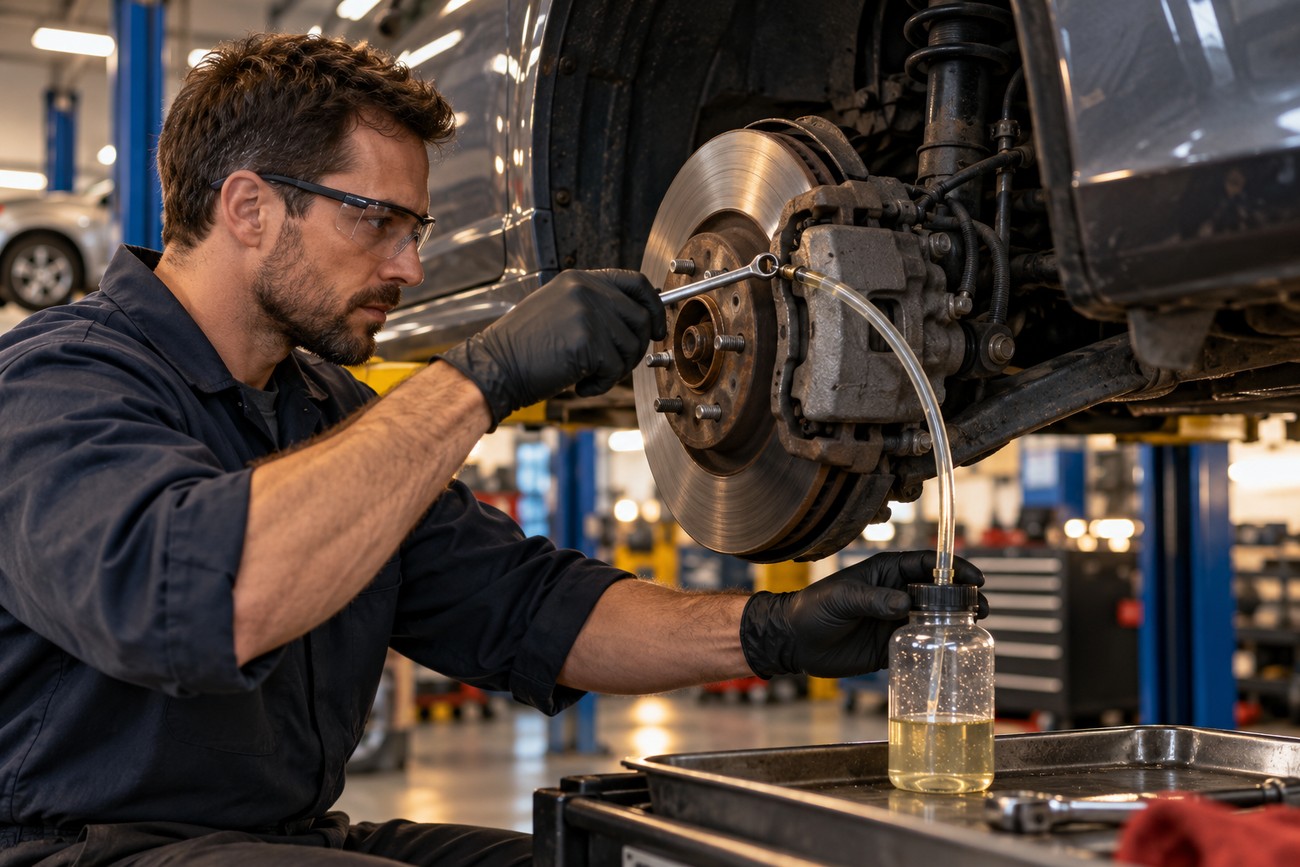
Seventh, follow the manufacturer’s brake-fluid replacement requirement, including its time limit where specified. Brake fluid absorbs moisture, which can lower its boiling point even when the reservoir level looks normal. This is one of the services that can become overdue without providing an obvious everyday symptom.
A soft pedal or a change in braking response needs prompt professional assessment, particularly if it appears after repeated braking or a long descent. Moisture is one possible concern, though leaks, worn parts, and other faults also need to be ruled out. Do not treat a fluid top-up as a repair for an unexplained change in pedal feel.
Eighth, inspect the engine and cabin air filters on the vehicle’s schedule, and consider earlier inspection if you regularly drive on dusty roads. A restricted cabin filter primarily reduces airflow through the heating and air-conditioning system. Weak airflow may have other causes, so replacing a clean filter without checking further can miss the fault.
An engine air filter should be fitted correctly and replaced when its condition or schedule calls for it. The effects of restriction vary by vehicle and by how dirty the filter is; a dirty filter does not mean the engine is about to fail. If fuel use or response changes noticeably, have the full cause assessed rather than assuming the filter is responsible.
Habit 9: Keep the battery charged—and diagnose the cause of a weak start
Ninth, pay attention to how readily the engine starts. Repeated short trips can leave the battery undercharged because the vehicle may not have enough running time to recover energy used at startup. Heat and electrical demand can also shorten battery life, even if the car still starts most days.
You can look for visible corrosion, loose-looking connections, or damage around the battery, following the manual’s safety guidance. Keep the case and accessible terminals clean only if the procedure is appropriate for your vehicle; some battery locations and electrical systems call for workshop attention. Do not disconnect components simply to clear an electrical warning.
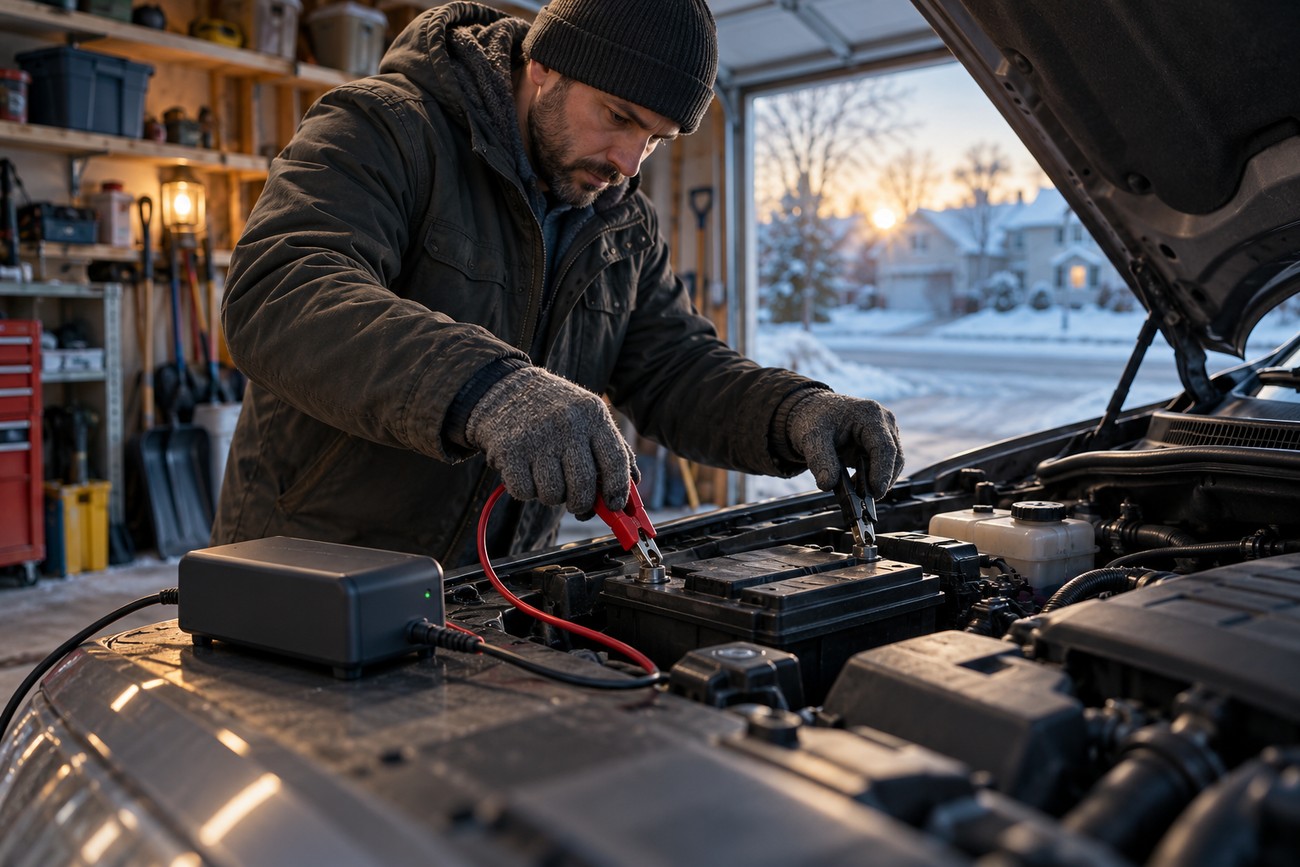
If starting slows or electrical faults recur, request a battery and charging-system test. A worn battery, inadequate charging, and an electrical drain while the car is parked call for different repairs. Replacing the battery without checking the cause can leave you with the same problem a few days later.
An inactive start-stop system alone does not prove the battery needs replacement. Such systems can suspend operation for several reasons, so note any accompanying warnings and whether the change followed a spell of short journeys. That information helps a technician test the relevant system instead of guessing from one symptom.
Habit 10: Drive gently, and plan for periods when you do not drive
Tenth, drive smoothly after a cold start and avoid heavy acceleration while the vehicle warms up. Prolonged idling is generally a poor substitute for gentle driving; use the procedure in your owner’s manual, especially in unusual temperatures. A calm start reduces demand on a cold engine without requiring you to wait for every component to warm up while parked.
A pattern of very short journeys can prevent oil from reaching full operating temperature, allowing moisture and fuel dilution to persist. The battery may also finish those trips less charged than it began them. An occasional longer drive can help a car reach normal operating conditions, but it does not replace an oil change or other scheduled service.
Plan for extended parking as deliberately as you plan for frequent driving. The battery can discharge, and tires left in one position can be affected over time. Check the manual for storage guidance, maintain tire pressure, and ask about an appropriate battery-maintenance method if the car will remain unused.
Keep a record of service dates, mileage, fluid specifications, and new symptoms. It prevents age-based work from disappearing behind a low odometer reading and helps a technician trace a change that appeared after a service. The ten habits work best together: routine checks catch changes, while the vehicle-specific schedule covers items you cannot judge by sight.
Frequently asked questions
Generic maintenance lists can help you prepare for a service visit, but they cannot establish what your particular car needs. Use the vehicle’s schedule and documented service history to turn a checklist into a decision.
What is the 30-60-90 rule for cars?
The 30-60-90 rule is informal shorthand for service checkpoints at 30,000, 60,000, and 90,000 miles, not a universal replacement schedule. If a checklist recommends work at one of those points, compare it with your vehicle’s time- and mileage-based requirements and the work already recorded. Ask the shop to identify the specific requirement or inspection finding behind a proposed replacement.
Where should I start if I bought a used car with no service records?
Get the vehicle-specific maintenance schedule, then arrange a first inspection focused on safety-critical items such as tires, brakes, and visible leaks. Ask the technician which age-sensitive services can be verified through records or markings and which remain unknown. Agree on priorities before authorizing replacements; an unknown history warrants a plan, not an assumption that every belt, fluid, and filter is overdue.
What should I keep in my car for a breakdown?
Keep a small kit suited to your climate and route: a charged phone or charging lead, a flashlight, a warning device where appropriate, basic first-aid supplies, and water. Add warm clothing or sun protection when conditions call for it, and check that you know how to use any tire-repair equipment supplied with the car. A useful kit is one you can reach and maintain, rather than an arbitrary list of items stored out of sight.