A used car can look freshly detailed, carry a clean title, and still develop costly electrical problems months after purchase. Water can reach wiring and materials that a seller can clean around or cover with new carpet. A clean title or a single history report does not rule out prior flooding.
Spotting flood damage takes several independent checks. An odor or a rusty fastener gives you a reason to look closer; residue in sheltered areas, corroded interior hardware, and a conflicting history together make a stronger case. Start with what you can observe without taking the car apart, then decide whether it merits an independent inspection.
- Screen the car before a detailed inspection
- Look where cleaning and new carpets cannot reach
- Check for damage that may appear after the test drive
- Trace the VIN beyond the title and one history report
- Decide when to inspect further—and when to walk away
- Frequently asked questions
- What should I do if I discover possible flood damage after buying the car?
- How can I spot a flooded used car?
Screen the car before a detailed inspection
Open the doors before the climate system is running and notice how the cabin smells. A musty smell or a strong fragrance that seems intended to mask one warrants further investigation, but neither proves flooding. Ordinary spills, leaks, and cleaning products can produce similar clues.
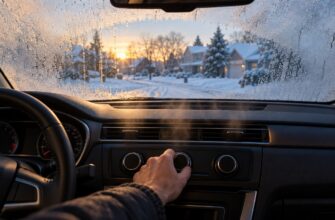
Check for dampness at accessible carpet edges and in the trunk, and note unusually persistent window fogging. Recurring moisture matters more than a single damp spot because it may indicate water trapped beneath the visible trim. A clean-looking interior does not rule out hidden water damage, especially if harder-to-clean areas look neglected.
Compare the polished surfaces with door openings, seat hardware, and the spare-wheel area. Fresh upholstery beside dirty recesses is a reason to inspect further, not a diagnosis: parts may have been replaced for unrelated reasons. Avoid accepting either a spotless cabin or a seller’s assurance as the whole account of the car’s condition.
Ask where the car was previously registered and sold. Cars can be resold outside the region where flooding occurred, so a recent move from a flood-affected area warrants a closer look at records and physical evidence. Location alone says nothing conclusive about an individual car.
Look where cleaning and new carpets cannot reach
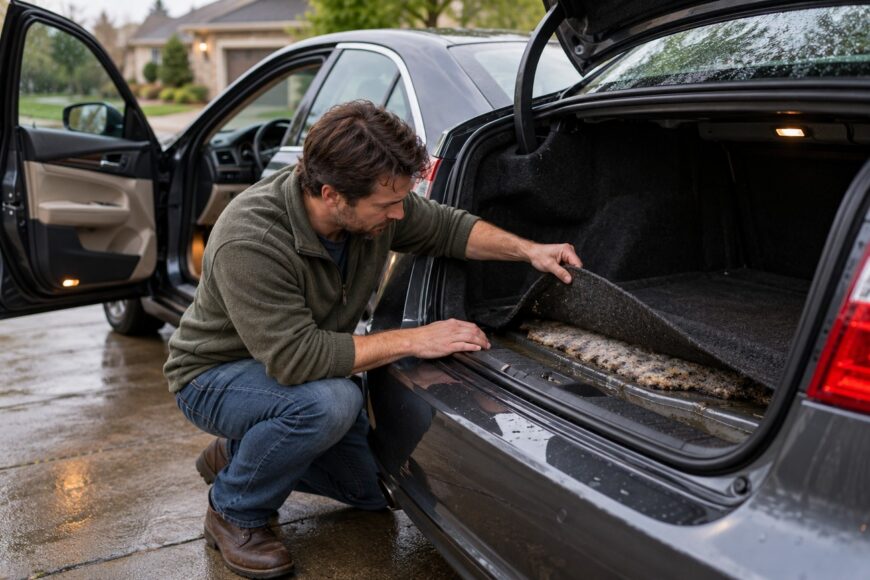
Lift the spare-wheel cover and inspect the well, its seams, and accessible storage pockets. Silt, sand, dried mud, or a tide-like residue in sheltered cavities can indicate prior water intrusion, particularly when the visible trunk trim is clean. Check whether similar material appears in door openings and along accessible carpet edges without prying trim loose.
Look at seat mounts and visible seat-belt hardware for unusual corrosion. These metal parts can retain evidence after carpets or upholstery have been replaced. A patch of rust alone has other possible causes, so compare several locations rather than judging the car by one fastener.
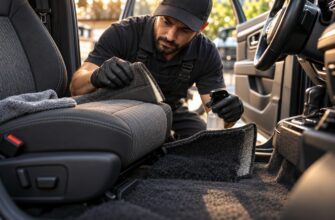
Where you can safely lift an existing carpet edge, check for damp underlay, staining, or a lingering odor beneath it. Replacing carpets or upholstery does not necessarily remove moisture or contamination from the materials below. Do not pull up fitted flooring or dismantle trim without the seller’s permission and appropriate help.
Use a light to view accessible connectors beneath the seats and visible wiring under the dashboard. Deposits or corrosion there deserve professional assessment because those areas may include airbag and seat-occupancy components. Do not unplug airbag-related connectors or probe them yourself.
Check for damage that may appear after the test drive

A car can drive normally while corrosion develops in wiring, connectors, and control modules. The resulting faults may be intermittent and may first appear months after water exposure, making the original cause difficult to establish. A successful short drive therefore cannot settle a credible concern raised by physical evidence.
Before and during the drive, watch the dashboard for warnings and check that windows, locks, climate controls, and other powered features work consistently. Note a feature that fails, recovers, or behaves differently after the cabin warms up. Such behavior has many possible causes, but it gives an inspector a specific fault to investigate.
Water exposure can also compromise airbag-related components without an obvious cabin warning. That possibility deserves particular care because a visual check cannot establish whether a restraint system will perform correctly. Avoid treating the absence of warning lights, or a brief fault-code scan, as clearance for suspected water damage.
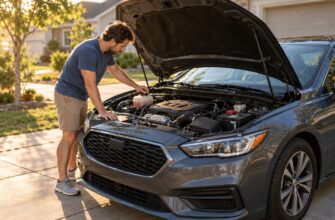
Ask an independent mechanic to assess suspected intrusion with attention to wiring, safety systems, and fluids. Water-contaminated transmission or differential fluid can accelerate wear even when the vehicle currently drives normally. The mechanic can judge which checks are appropriate for that vehicle and document findings you can use before deciding to buy.
Trace the VIN beyond the title and one history report
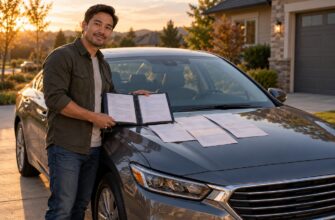
Match the vehicle identification number, or VIN, on the car with the title and the records you obtain. Review more than one available vehicle-history source, then look for accessible auction listings or images associated with that VIN. An earlier photograph or damage description may add context that a current listing omits.
Compare dates, locations, and descriptions rather than searching only for a flood label. If an auction record describes water damage while the seller’s account does not, ask for an explanation and supporting repair documents before proceeding. Save copies of conflicting records so an independent inspector can assess them alongside the car.
Flood or salvage branding and reporting vary by jurisdiction and circumstance. A clean title or a single history report does not rule out prior flooding; an incident may never have been reported to the source you checked. Cars can also be resold outside the region where flooding occurred, which makes the vehicle’s sequence of locations useful context, not proof by itself.
Decide when to inspect further—and when to walk away
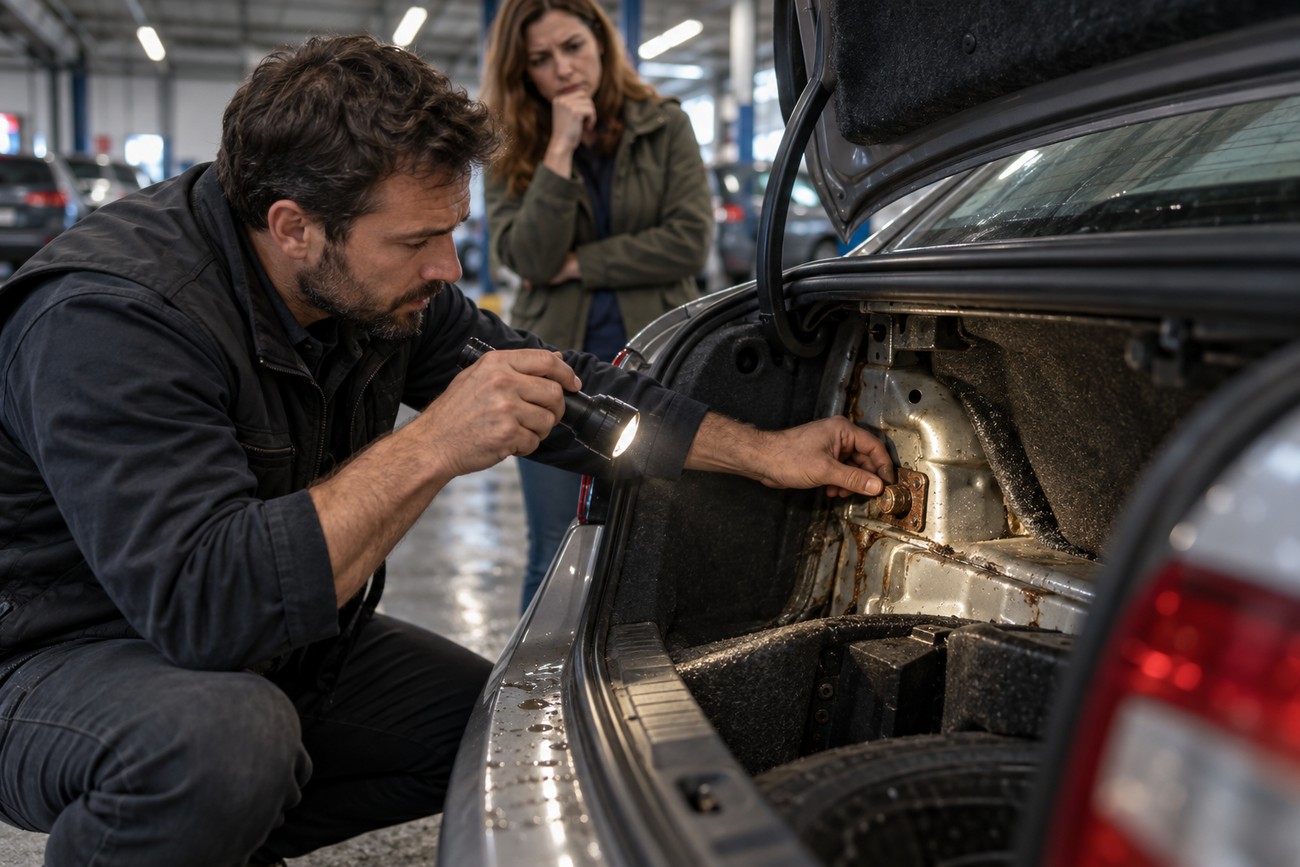
Treat one ambiguous clue as a prompt to investigate. An isolated stain could come from a spill, and one rusty fastener could reflect a local leak or ordinary exposure. Several independent signs are more persuasive than an odor, stain, or patch of rust alone.
Pause the purchase if sheltered silt, corroded interior hardware, and an inconsistent vehicle history converge. Request an independent pre-purchase inspection focused on hidden moisture, electrical and safety systems, and relevant drivetrain fluids. If the seller will not allow a reasonable inspection or cannot address material discrepancies, walking away may be the safer choice.
A claim that the damage was “only a wet carpet” needs detail: where did the water reach, what was removed, and what was checked beneath it? Replacing carpets or upholstery does not necessarily remove moisture or contamination beneath them. Water that reached concealed wiring or materials can leave delayed faults and corrosion, although a minor, contained spill is not automatically evidence of a flooded car.
Base your decision on documented findings and the uncertainty that remains, rather than on the title alone. If the seller’s records and an independent assessment cannot account for a convincing pattern of water evidence, you do not need to accept that risk.
Frequently asked questions
These questions cover what to do after a purchase and how to make a quick first assessment. In either situation, keep observations separate from a confirmed finding of flood damage. Records and a qualified inspection can help resolve uncertainty.
What should I do if I discover possible flood damage after buying the car?
Document what you found before cleaning or repairing the affected areas. Photograph the residue or corrosion, record any recurring moisture or electrical symptoms, and obtain a written assessment from an independent mechanic. Keep the listing, sale agreement, messages, title documents, and any history reports together.
Review locally applicable disclosure rules and consumer remedies before approaching the seller or arranging major work. Flood or salvage branding and reporting vary by jurisdiction and circumstance, so the available options depend on where and how the car was sold.
How can I spot a flooded used car?
Look for a pattern across places that are difficult to clean: residue in the spare-wheel well or beneath accessible carpet edges, corrosion on interior hardware, persistent moisture, and records that do not fit the seller’s account. No single smell, stain, or clean title settles the question. If the clues converge, have an independent mechanic assess the car before you commit to buying it.