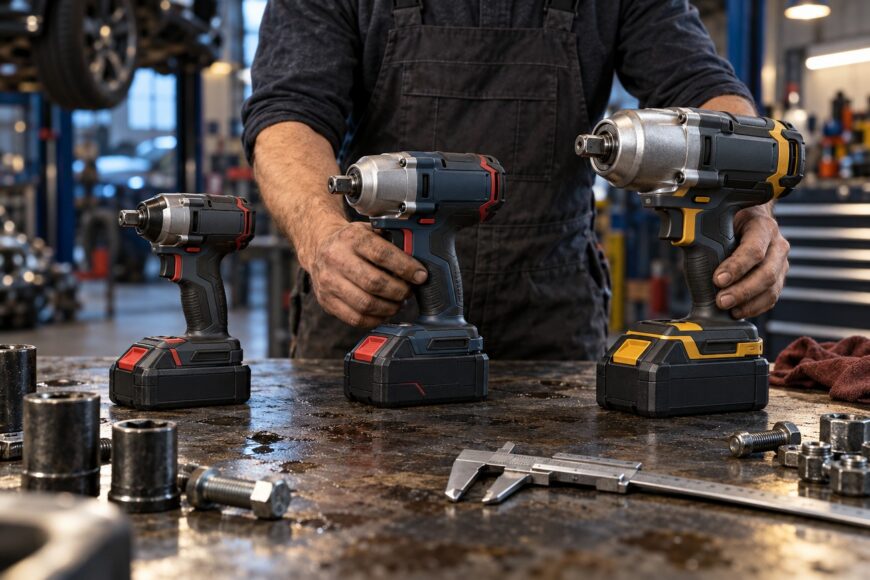
Snap-on carries a premium reputation, while Milwaukee combines strong published specifications with a broad M18 ecosystem and generally lower ownership friction. That makes the choice less straightforward than a brand-versus-brand verdict. A Snap-on may offer the balance and service relationship a professional values, while a Milwaukee may deliver comparable working performance with easier battery access and a lower total cost.
Published torque figures do not provide a clean comparison. Fastening torque, nut-busting torque, and breakaway torque are different labels, and there is no single universal industry method that makes every brand’s figure directly comparable. The useful decision therefore depends on your workload, access to batteries and service, tolerance for tool weight, and the cost of downtime—not on brand prestige alone.
- The real choice: a specific model, not just a brand
- Snap-on vs. Milwaukee: the buying factors that matter
- Why headline torque does not guarantee a stubborn bolt will move
- Weight, control, and access: where daily comfort changes the verdict
- Battery ecosystem, service, and total cost of ownership
- Which one fits your workload: Snap-on, Milwaukee, or a two-tool setup?
- Frequently asked questions
- How can I tell whether a used cordless impact wrench battery is worn out?
- Which torque wrench is better, Snap-on or Milwaukee?
- Who makes the best cordless impact wrenches?
The real choice: a specific model, not just a brand
Both product lines include different generations, drive sizes, and torque classes. A compact 3/8-inch tool, a mid-torque 1/2-inch wrench, and a full-size high-torque model serve different jobs, even when their brand names appear in the same comparison. A brand-level conclusion can therefore mislead you before the first fastener is touched.
Milwaukee M18 FUEL One-Key High Torque is commonly rated at up to 1,400 ft-lb of fastening torque and 1,500 ft-lb of nut-busting torque. Some Snap-on 1/2-inch cordless high-torque listings show approximately 1,200–1,300 ft-lb of breakaway torque, with the exact figure varying by series and model year. Those numbers indicate the intended class of tool, but they do not establish a direct winner.
Fastening torque describes torque applied while tightening. Nut-busting or breakaway torque describes the torque claimed when starting a resistant fastener, although manufacturers may use different test procedures and conditions. Treating these labels as one standardized measurement is a common buying error.
Compare the exact model, battery, drive size, socket, and operating mode instead. A newer high-torque tool may outperform an older one from the same brand, while a mid-torque model can be the better choice for wheels, brackets, and routine suspension work because it is easier to control and carry.
Snap-on vs. Milwaukee: the buying factors that matter
The table below describes broad tendencies, not universal properties. Check the specifications and physical dimensions of the particular model before buying.
| Buying factor | Milwaukee | Snap-on | What it means in the shop |
|---|---|---|---|
| Advertised power | M18 FUEL One-Key High Torque is commonly rated at up to 1,400 ft-lb of fastening torque and 1,500 ft-lb of nut-busting torque. | Some 1/2-inch cordless high-torque listings show approximately 1,200–1,300 ft-lb of breakaway torque, depending on the series and model year. | Compare the torque label and test conditions before comparing the numbers. |
| Battery ecosystem | Broad M18 compatibility across many cordless tools. | Compatibility is generally more limited and tied to particular battery series. | Milwaukee is often easier to expand or replace within an existing tool collection. |
| Sales and service | Broad retail availability and many replacement sources. | Commonly supported through truck or franchise service networks. | Snap-on support can be valuable when a local representative is accessible; retail access reduces Milwaukee replacement friction. |
| Ergonomics | High-torque models are often heavier or larger in real measurements. | Some compact models may offer better balance or trigger feel. | Balance, grip shape, and battery position matter more than reputation. |
| Access | Body length and head thickness vary widely by model and can limit access. | Compact models may fit some restricted areas better, but dimensions still vary. | Measure tight wheel wells, suspension spaces, and engine bays against the tool drawing. |
| Ownership value | Usually easier to buy batteries, chargers, and replacement tools through retail channels. | Tools, batteries, chargers, and service can produce a higher total ownership cost. | A premium is easier to justify when service access and reduced downtime have real value. |
Milwaukee’s main practical advantage is breadth. If you already own M18 lights, saws, drills, or grinders, another bare tool can fit an established battery system. Replacement batteries and chargers are also easier to source through a broad retail channel, which matters when a working tool fails during a busy week.
Snap-on’s value is more dependent on the purchase relationship. A truck or franchise representative can simplify product selection, service, warranty handling, and professional credit. That advantage weakens if the representative is difficult to reach or if your shop operates far from the relevant service network.
Independent discussions often praise Milwaukee for raw power and value and Snap-on for feel and balance, but this is a non-universal, model-dependent pattern. A technician who uses a wrench for repeated wheel work may value low fatigue more than peak output, while a mobile mechanic facing unknown seized fasteners may place greater value on battery availability and maximum reserve.
Why headline torque does not guarantee a stubborn bolt will move
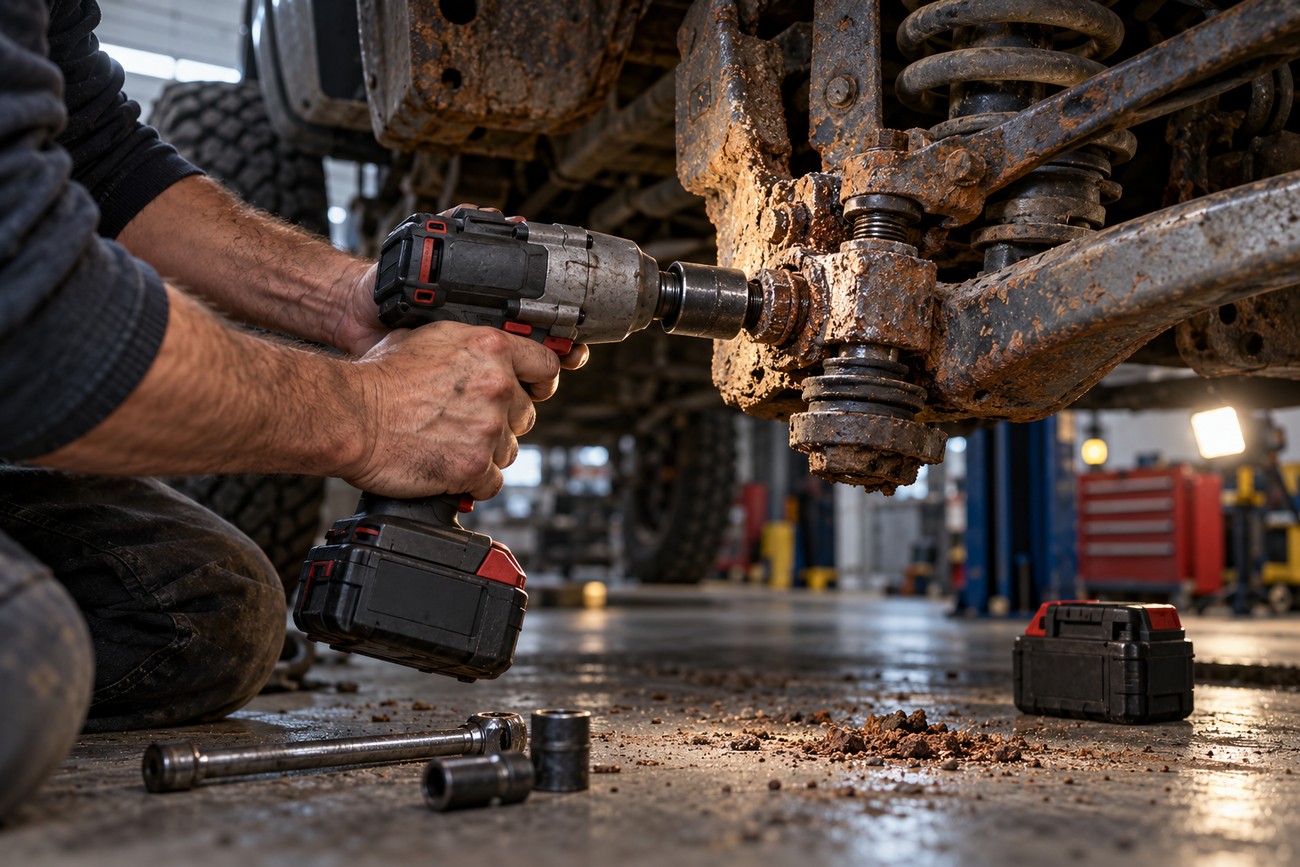
Catalog torque is produced under defined test conditions, while a corroded fastener presents a changing mechanical problem. Rust can bind the threads, increase the required starting force, and make the joint behave differently from a clean test fixture. Thread length, damaged threads, joint preload, and access angle also affect whether the tool starts the fastener.
Actual breakaway performance on corroded fasteners can be lower than published figures for either brand. A fresh, warm battery generally performs better under load than a cold or aging battery, and the difference becomes more noticeable during long bursts of impact. Repeated attempts can also heat the tool and battery, reducing consistency before the fastener moves.
A stubborn fastener should be tested first with a fresh battery and the correct short impact socket. That simple check often separates a tool limitation from power loss, socket flex, or poor force transfer.
Socket geometry matters more than many buyers expect. A short, high-quality impact socket usually introduces less flex than a long extension or unsuitable adapter, helping more of the impact reach the fastener. Correct impact-rated sockets and adapters are also essential for safe operation; ordinary chrome sockets can crack under impact loading.
Breakaway force and removal speed are separate characteristics. A wrench may eventually start a seized nut with sustained impacts yet remove a freely moving nut slowly, while another model may start it less dramatically and then spin it off quickly. For shop productivity, both starting ability and speed after movement deserve attention.
Use penetrating fluid, heat, mechanical support, or a breaker bar where the repair procedure allows it. An impact wrench is not a guarantee against severe corrosion, and repeated impacts on a rounded fastener can make later removal harder. Once the fastener is removed, use a measured torque wrench for final tightening where the specification requires controlled torque.
Weight, control, and access: where daily comfort changes the verdict
High-torque cordless tools trade portability for reserve capacity. Milwaukee high-torque models are often heavier or larger in real-world measurements, especially with a high-capacity battery attached. That extra mass may be acceptable for occasional seized bolts, yet it becomes tiring during repeated wheel or suspension work.
Some compact Snap-on models may feel better balanced, and some practitioners associate Snap-on tools with smoother trigger modulation. Milwaukee tools are often praised for raw output, but a sharp start, kickback, or firm vibration can make a high-torque model tiring during repetitive work. These are model-dependent and subjective tendencies, so handling the exact tool remains more useful than relying on a brand label.
Access can overturn a power decision. Head thickness and body length may prevent either brand from fitting between a wheel and suspension component, around an engine bay, or inside a narrow frame rail. A tool that cannot align squarely with the fastener may deliver less useful force than a smaller, lower-rated wrench that fits correctly.
Look at battery position, trigger reach, forward-and-reverse controls, work-light coverage, and reaction control. A balanced tool lets you keep the socket aligned without supporting the full weight with your wrist. For repeated work, reduced fatigue and predictable control can save more time than a small advantage in peak torque.
Battery ecosystem, service, and total cost of ownership
Milwaukee broadly uses the M18 platform across many cordless tools. That compatibility can reduce the practical cost of ownership when you already have serviceable batteries and chargers, although high-torque work still benefits from a suitable, healthy battery rather than the oldest pack in the drawer.
Snap-on cordless compatibility is generally more limited and tied to particular battery series. The initial purchase may therefore require a dedicated battery and charger, and replacement access may depend on the local truck or franchise network. Snap-on’s total ownership cost can be higher because the tool, batteries, chargers, and service are typically more expensive.
Service access has real operational value. A local Snap-on representative may make warranty handling, replacement, and professional credit more convenient, particularly for a shop that depends on daily tool availability. That benefit depends strongly on the purchase channel and local representative; the same model is less attractive if service requires long delays or difficult shipping.
Milwaukee’s retail availability reduces replacement friction. You can usually source batteries, chargers, and another tool through more than one channel, which helps mobile mechanics and small shops avoid extended downtime. Compare that access with the value of truck support, financing, and on-site service rather than comparing tool prices alone.
Which one fits your workload: Snap-on, Milwaukee, or a two-tool setup?
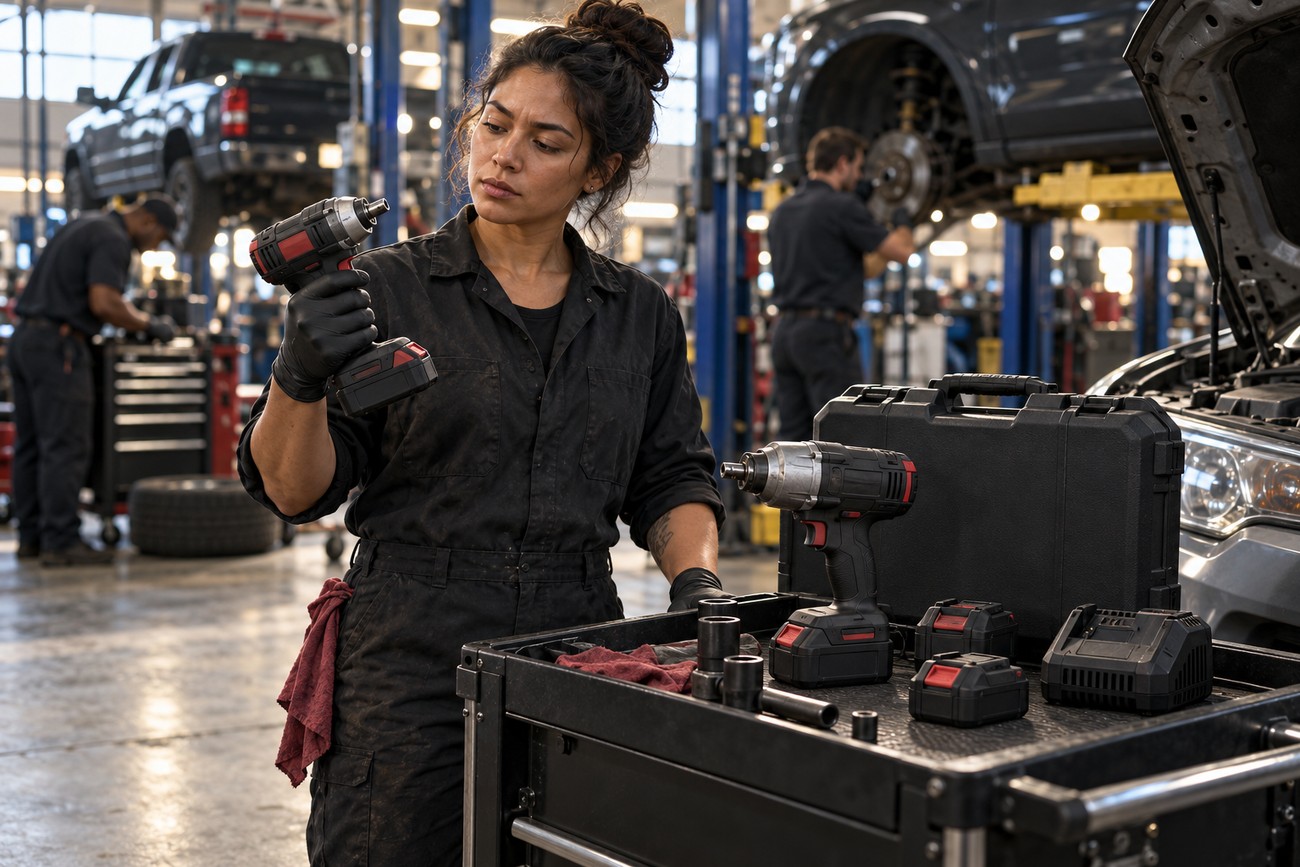
Milwaukee is usually the more rational choice when you already own M18 tools, need easy battery replacement, or want strong specifications without committing to a narrower service ecosystem. It also suits users who can tolerate a larger high-torque body or who value raw output and retail availability. Select the model by access and working weight rather than choosing the largest number in the catalog.
Snap-on can justify its premium when a local representative provides meaningful support, professional credit, and quick service, or when a particular model’s balance and controls reduce fatigue in your specific workflow. The name alone is not a sufficient reason to pay more. The premium should correspond to better access, less downtime, or a measurable ergonomic advantage for the work you actually perform.
A mid-torque impact wrench often covers about 80% of routine work with less weight and fatigue. High-torque tools are most valuable for seized, corroded, or unusually resistant fasteners rather than every tire job. Using a full-size high-torque wrench for ordinary wheel removal can add bulk, reaction force, and battery consumption without improving the finished repair.
Many professionals use a compact or mid-torque tool for routine work and a high-torque tool for the hardest fasteners. This two-tool setup keeps the lighter wrench in hand for most of the day and reserves the larger tool for jobs where its additional capacity matters. It can also reduce wear on the high-torque tool and avoid carrying its weight into tight spaces.
Before buying, verify the torque label, use a fresh battery for comparisons, and budget for proper impact sockets. Do not compare one tool at full charge with another fitted with a worn pack. A premium brand should be justified by workload, ergonomics, service access, and downtime—not by name recognition alone.
Frequently asked questions
How can I tell whether a used cordless impact wrench battery is worn out?
Inspect the pack for swelling, cracks, damaged terminals, corrosion, or a case that no longer locks securely into the tool. Charge it fully with the correct charger, then check whether it reaches a normal charge promptly and remains cool during charging. A battery that becomes unusually hot, refuses a full charge, or drops from full to empty quickly should be treated cautiously.
Test runtime consistency under load rather than judging the battery from a single unloaded display. Fit the same socket and perform several comparable fastener operations, watching for an early power reduction, abrupt shutdown, or major voltage sag. If possible, compare it with a known-good battery on the same tool. A used battery with inconsistent runtime or excessive heat may cost more in interruptions than its purchase price suggests.
Which torque wrench is better, Snap-on or Milwaukee?
Snap-on and Milwaukee primarily make cordless impact wrenches in this comparison, not interchangeable torque wrenches. An impact wrench removes or drives fasteners quickly; a measured torque wrench applies controlled final torque and is the appropriate tool for specification-critical tightening.
Use the impact wrench for loosening and initial snugging when the procedure permits, then finish with a calibrated torque wrench. Choose between Snap-on and Milwaukee based on impact-tool access, battery system, control, and service. For final tightening, calibration status and the correct range matter more than the impact brand.
Who makes the best cordless impact wrenches?
No single brand makes the best cordless impact wrench for every workshop. Milwaukee is often the stronger practical choice for broad battery compatibility, retail access, and value, while a suitable Snap-on model may be preferable when balance, trigger feel, and local truck support matter more.
The best choice is the exact model that fits your fasteners, working spaces, battery supply, and service needs. For many users, a lighter mid-torque wrench plus a high-torque backup is more useful than one premium high-torque tool used for every task.