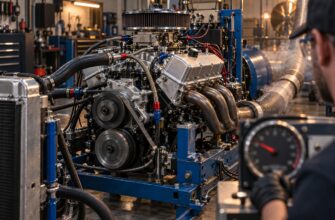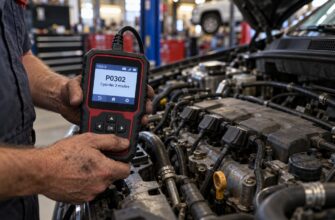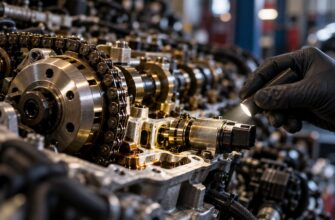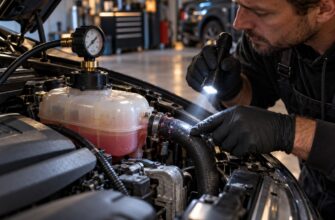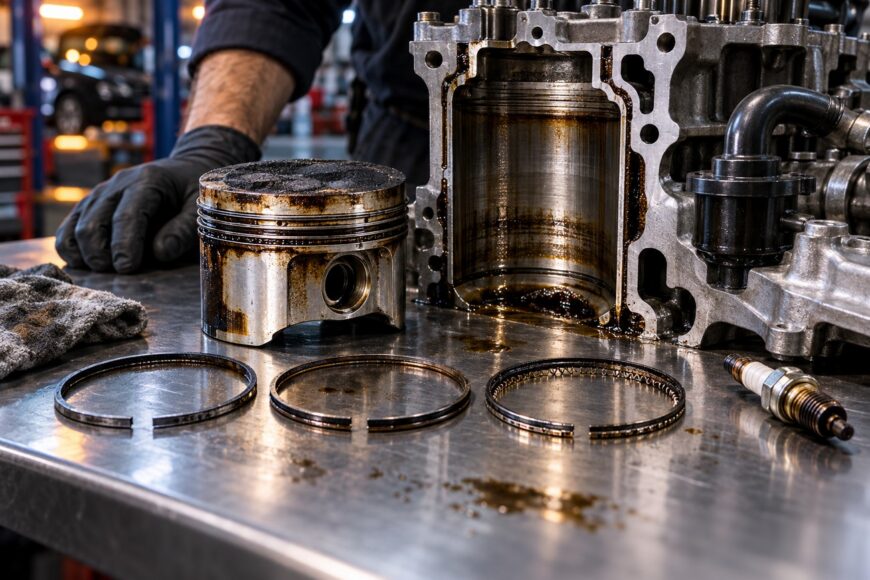
The engine needs oil between services, leaves blue-gray smoke behind it, or feels weaker than it used to. It may also idle unevenly. Worn piston rings can cause this combination, but valve seals, crankcase ventilation, a turbocharger, and other faults can produce similar complaints. Smoke or a falling oil level is a reason to investigate, not a diagnosis.
Piston rings seal combustion gases, control oil on the cylinder wall, and transfer heat from the piston to the cylinder. A problem with the rings can therefore affect oil use, compression, and power together. The most reliable assessment combines the pattern of symptoms with oil-consumption records, compression and leak-down tests, and evidence of crankcase blow-by. Neither smoke nor one compression reading settles the question alone.
- What Piston Rings Do—and Why Their Failure Causes So Many Symptoms
- The Most Common Signs of Worn Piston Rings
- When Blue Smoke or Low Compression Does Not Mean Bad Rings
- How to Diagnose Piston Ring Wear Without Guessing
- Stuck Rings, Worn Rings, and the Damage Behind Them
- What to Do Next: Repair Choices and Mistakes to Avoid
- Frequently asked questions
- How much does it usually cost to replace piston rings?
- How can I tell whether a ring-cleaning treatment is worth trying?
- How do I know if my piston rings are bad?
What Piston Rings Do—and Why Their Failure Causes So Many Symptoms
Compression rings limit the escape of combustion gases past the piston. If that seal weakens, less pressure is available to push the piston down, and more gas enters the crankcase. You may notice poor acceleration, difficult starting, or pressure and oil mist at the crankcase breather.
The oil-control ring manages the film of oil on the cylinder wall. When it cannot do that effectively, oil can reach the combustion chamber and burn. The result may be a falling oil level, blue or blue-gray exhaust smoke, and deposits on spark plugs. A worn oil-control ring can cause noticeable oil use even while a routine compression reading remains within the expected range.
Rings also help move heat from the piston into the cylinder. Poor contact can add to the heat stress in an engine that already has ring or cylinder damage. These functions overlap: escaping combustion gases, burning oil, and reduced power can appear together, while the engine may use more fuel to do the same work.
Early wear or rings sticking in their grooves may produce only occasional symptoms. A car might idle acceptably in the workshop yet feel weak under load, or show more smoke when cold. An absence of constant smoke should not close the investigation if oil use and other clues are developing.
The Most Common Signs of Worn Piston Rings
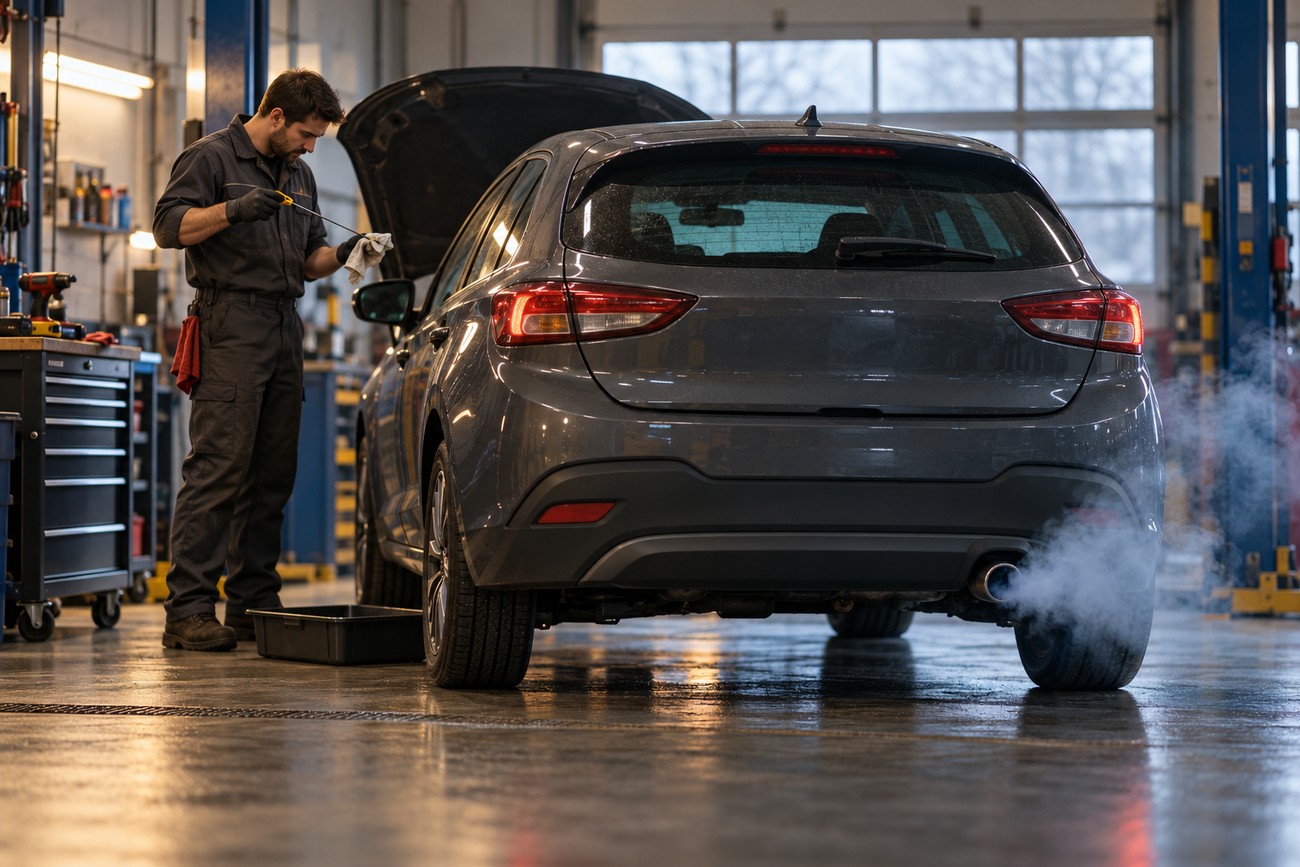
Repeatedly topping up oil without seeing a puddle is a useful warning sign. First check for leaks that only appear while the engine is running or leave oil on the underside of the vehicle. If the outside is dry, internal oil consumption becomes more likely, although the rings are only one possible route for oil into the engine.
Blue or blue-gray smoke suggests burning oil. It may be easier to see at a cold start, during a throttle blip or acceleration, after a long idle, or when you accelerate following a downhill overrun. Note exactly when it appears. That timing gives a technician more to work with than the statement that the car “sometimes smokes,” but it cannot identify the failed part by itself.
A weaker seal can make an engine slow to gain speed, particularly when asked to pull under load. Rough idle, a difficult cold start, and increased fuel use may follow as combustion becomes less consistent. These complaints are less specific than measured oil loss: ignition, fueling, and valve faults can also make an engine shake or feel flat.
Oil-fouled spark plugs add another clue. Oil deposits can contribute to misfires, so a driver may notice uneven running before seeing smoke in the mirror. Where one cylinder behaves differently from the others, its plug condition and test results deserve separate attention rather than an assumption that every ring is equally worn.
The strongest pattern is several related findings developing together: rising oil consumption, oil smoke, crankcase blow-by, and a measurable change in cylinder sealing. Each clue narrows the search. None, on its own, proves piston ring wear.
When Blue Smoke or Low Compression Does Not Mean Bad Rings
Oil can enter the combustion chamber past worn valve-stem seals or guides. A fault in the positive crankcase ventilation (PCV) system can draw oil into the intake, while a turbocharged engine may leak oil through the turbocharger. Cylinder scoring can also cause oil burning, even if the rings themselves are not the only damaged parts. An external leak remains possible until the engine and its underside have been inspected.
Smoke after a long idle or downhill overrun can fit more than one of these faults. Its timing is a clue about the conditions under which oil enters the engine, rather than a ring-specific signature. Looking for oil in the intake and checking ventilation operation can prevent an unnecessary engine teardown.
Low compression means a cylinder is failing to hold pressure under the test conditions. Leaking valves, a head-gasket problem, or cracks can be responsible as well as rings or cylinder damage. Conversely, normal compression does not completely rule out early ring wear or sticking, particularly when oil control is the main problem.
Keep oil sealing and gas sealing separate in your reasoning. An engine can burn oil before its compression falls noticeably, while a valve fault can lower compression without causing the same oil-consumption pattern. Matching test results to the symptoms is more useful than treating either smoke color or a compression number as a verdict.
How to Diagnose Piston Ring Wear Without Guessing
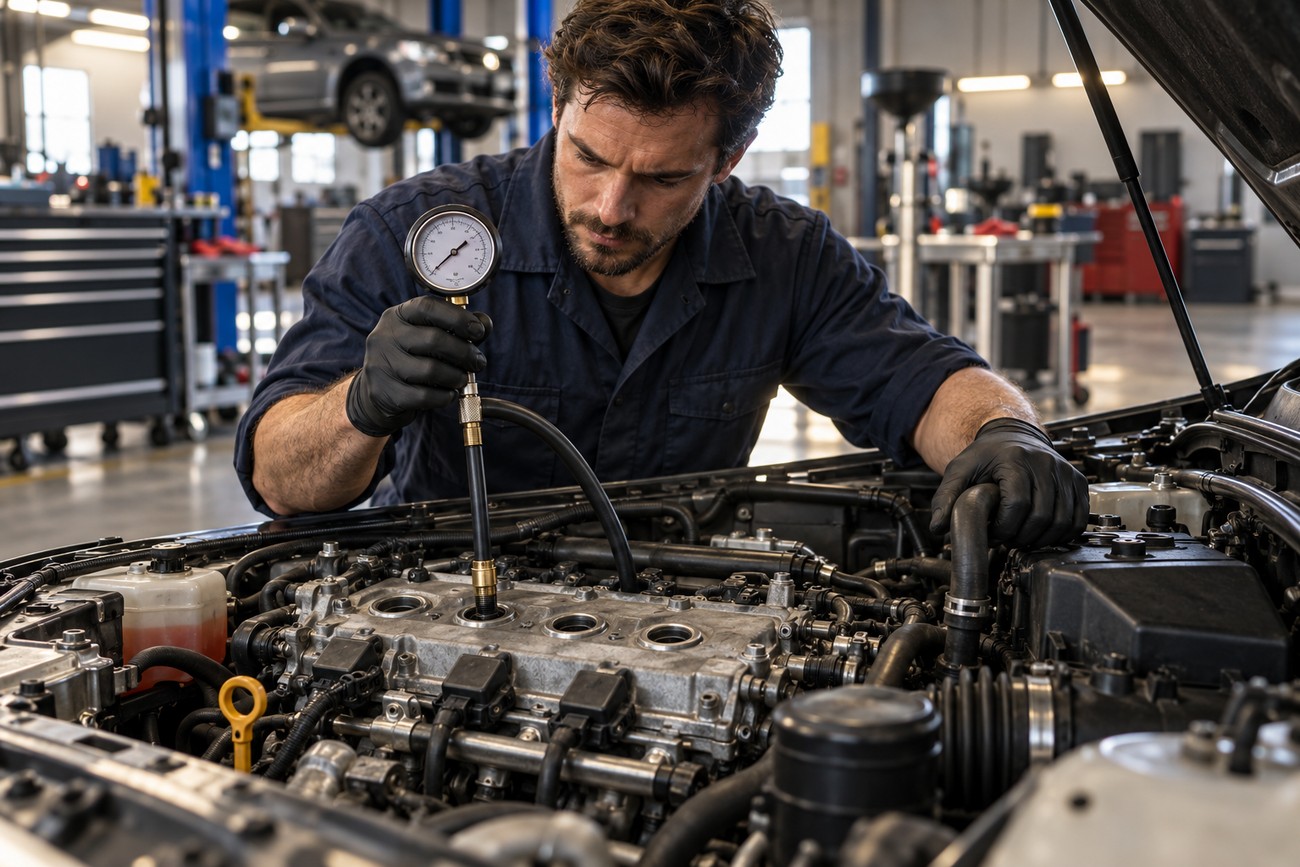
Start with the basics: check the oil level using a consistent method, record how much oil is added and over what distance, and inspect for external leaks. Look at the crankcase ventilation system before assuming oil has passed the rings. A record of a rising consumption rate is more informative than a single low reading on the dipstick.
Next, observe the exhaust during a cold start, after idling, and when the engine is driven under load where it is safe to do so. Check the breather for unusual smoke, oil mist, or pressure. Abnormal crankcase pressure can indicate combustion gases passing the rings, though ventilation faults must also be considered when interpreting what comes from the breather.
During a leak-down test, air heard at the crankcase points toward leakage past the piston and cylinder; air at the intake or exhaust points toward the corresponding valves. Compare that finding with compression, smoke behavior, and crankcase pressure before deciding what needs repair.
A compression test screens for cylinders that seal poorly. If a low reading rises during a wet compression test, oil temporarily improving the seal makes ring or cylinder leakage more plausible; the result is not definitive. Test conditions and the pattern across cylinders matter, so an isolated reading should be checked against the engine’s specified procedure.
A leak-down test helps locate where a cylinder loses pressure, including through the rings, intake valves, exhaust valves, or head gasket. Even that test cannot always distinguish a worn ring from a scored cylinder or damaged piston groove. If the findings point inside the engine, cylinder inspection and measurements may be needed before a repair can be specified.
Stuck Rings, Worn Rings, and the Damage Behind Them
A ring stuck by deposits cannot move freely in its piston groove. A mechanically worn ring may still move but fail to seal properly. Cleaning or decarbonizing may sometimes help with sticking; it cannot restore metal worn from a ring or repair a damaged cylinder wall.
The cylinder and piston matter as much as the ring. Scoring can prevent a new ring from sealing, and excess clearance in a piston-ring groove can undermine a ring-only repair. Rings that look intact when removed are not necessarily serviceable: their movement, groove fit, and the condition of the cylinder still need checking.
Overheating, infrequent oil changes, dusty intake air, and detonation can contribute to ring or cylinder damage. Finding and correcting a contributing cause matters before fitting parts, or the repair may face the same conditions that caused the original failure. An engine with signs of dust entry, for example, needs its intake sealing investigated alongside the internal wear.
There is no universal factory limit for acceptable oil consumption. More than 1 L per 1,000 km is sometimes cited as a serious warning, but manufacturer limits vary by engine, and that figure does not diagnose bad rings. A clear increase from the engine’s previous pattern is worth investigating even below a commonly quoted threshold.
What to Do Next: Repair Choices and Mistakes to Avoid
If the evidence suggests rings stuck by deposits and testing shows no clear mechanical damage, a controlled cleaning attempt may be reasonable. Set a way to judge the result beforehand, such as tracking oil additions and repeating relevant tests. Persisting oil use, poor sealing, or evidence of scoring calls for mechanical inspection rather than repeated treatments.
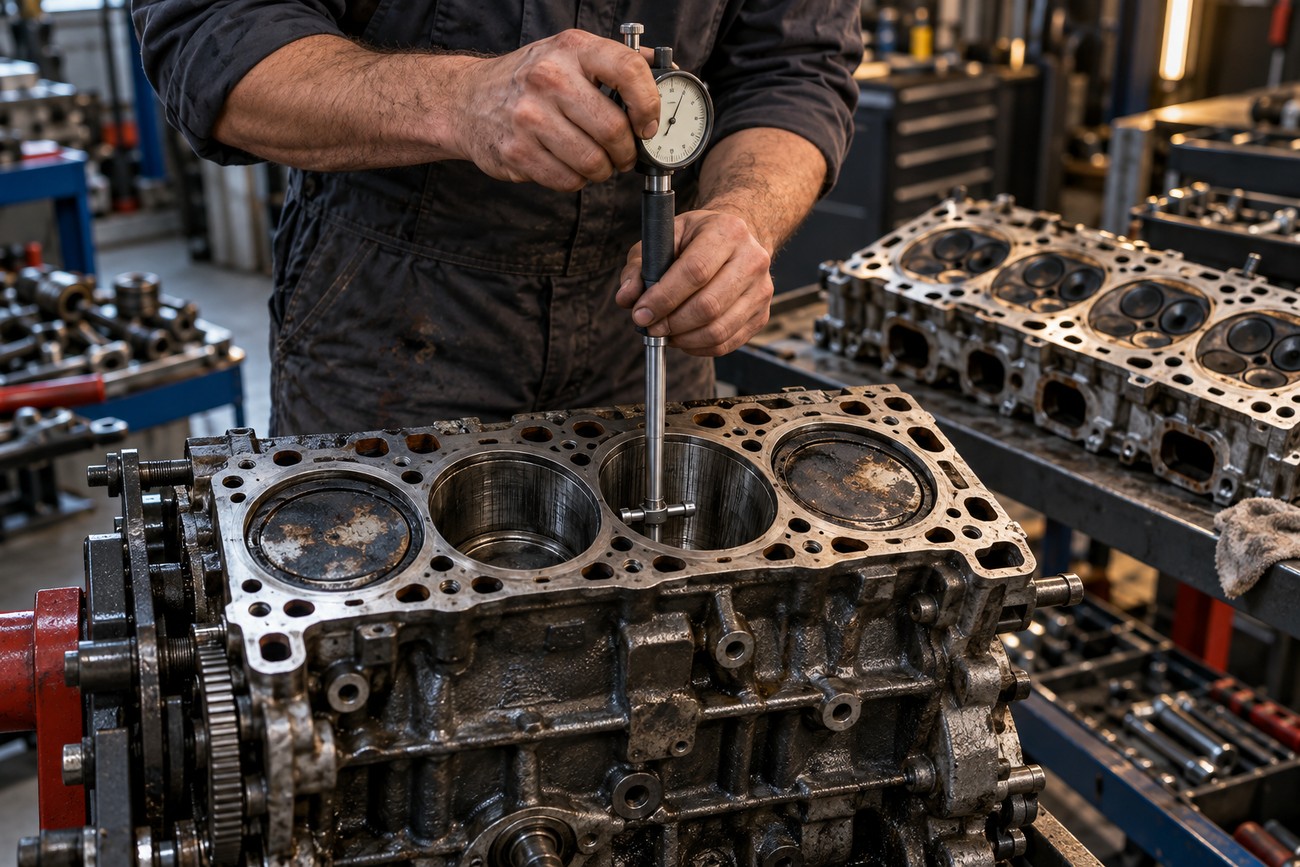
Confirmed mechanical wear usually means opening the engine and measuring the cylinders, pistons, and ring grooves. The work may extend beyond replacing rings if surfaces are scored or dimensions are outside specification. The repair decision should include the cause of the wear, the engine’s overall condition, and whether machining or replacement parts are available.
Thicker oil and additives may alter a symptom without repairing its cause. Likewise, blue smoke alone is too weak a basis for ordering rings, and an unstable idle after a fixed number of hours on the oil is not an established standalone sign of ring wear. Testing first reduces the risk of paying for a repair that leaves the original fault in place.
Until the cause is known, keep the oil at the correct level and avoid treating frequent top-ups as routine maintenance. Continued heavy oil burning can foul plugs, cause misfires, and contaminate the catalytic converter. Prompt diagnosis is especially sensible if oil use is accelerating, the engine misfires, or performance is deteriorating.
Frequently asked questions
Repair decisions depend on what the tests reveal and what inspection finds inside the engine. These answers can help you assess an estimate or a proposed temporary measure without assuming the rings are at fault.
How much does it usually cost to replace piston rings?
There is no useful universal price because replacing rings requires substantial labor, and access varies by engine and vehicle. An estimate based on rings alone may change once the engine is opened and the cylinders and pistons can be measured.
Ask whether the quote allows for machining, pistons, cylinder repair, and other work that may be needed if wear extends beyond the rings. A proper comparison between repair and engine replacement depends on those findings, the engine’s overall condition, and what each option includes.
How can I tell whether a ring-cleaning treatment is worth trying?
Cleaning is most plausible when the engine’s history suggests deposits, symptoms are relatively mild, and tests do not show clear evidence of damaged cylinders or severe sealing loss. Discuss what evidence supports stuck rings and how oil use and test results will be checked afterward.
If consumption remains high, compression or leak-down results are poor, or inspection suggests scoring, stop treating cleaning as a substitute for diagnosis. A treatment cannot rebuild worn rings, loose grooves, or damaged cylinder walls.
How do I know if my piston rings are bad?
You need converging evidence rather than a single telltale sign. Record oil additions and smoke conditions, then have leaks and crankcase ventilation checked alongside compression, leak-down, and breather findings. That sequence helps separate an internal sealing problem from faults elsewhere.
If tests point to leakage past a piston, ask whether the suspected fault is a stuck ring, mechanical ring wear, or cylinder damage. The distinction may require internal inspection, and it determines whether cleaning has a reasonable chance or a mechanical repair is needed.