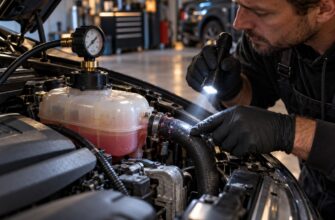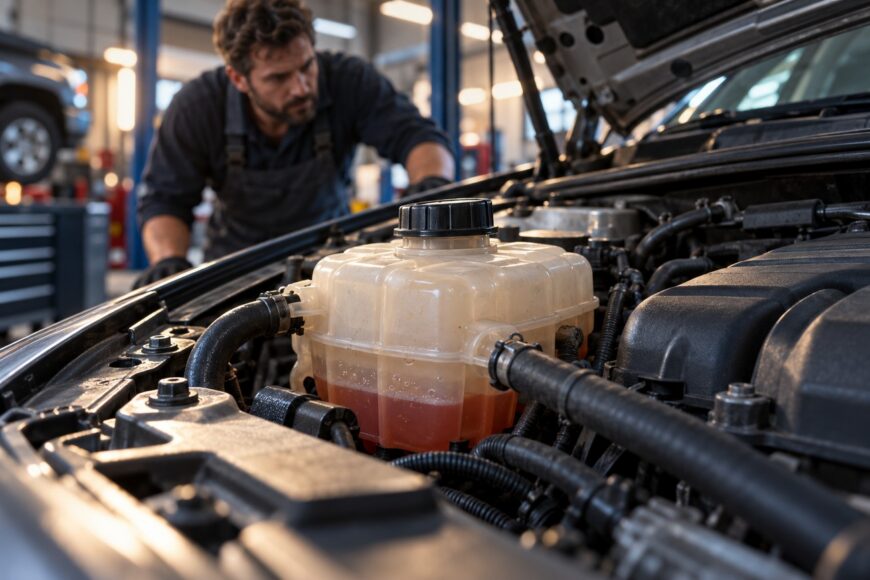
Coolant keeps disappearing, the temperature rises on a climb, or the engine misfires briefly after sitting overnight. Yet the ground beneath the car stays dry. A head-gasket leak can move combustion gases into the cooling system, coolant into a cylinder or crankcase, or oil into the coolant, so an external puddle may never appear.
Persistent white exhaust vapor, bubbles in the expansion tank, and milky oil can all raise suspicion. None proves that the gasket has failed, and normal-looking oil does not clear it. The useful approach is to connect each symptom to when it occurs, then test for a leak while checking other plausible causes, including the cap, thermostat, fan, trapped air, and cracks in the cylinder head or block.
- The Most Common Signs of a Blown Head Gasket
- How the Symptom Pattern Helps Narrow the Fault
- What Can Be Mistaken for a Blown Head Gasket?
- Tests That Confirm an Internal Coolant Leak
- Can You Keep Driving With a Blown Head Gasket?
- Repair Decisions and Preventing a Repeat Failure
- Frequently asked questions
- What are the first signs of a blown head gasket?
- What can be mistaken for a blown head gasket?
- How long will a car run with a blown head gasket?
The Most Common Signs of a Blown Head Gasket
Overheating and coolant loss are often the first signs you notice. The temperature may climb mainly under load, while the coolant level falls between checks without an obvious drip. Combustion gases entering the coolant can disrupt cooling and raise system pressure; coolant entering a cylinder may instead leave through the exhaust.
White vapor that continues after the engine is fully warm deserves attention, particularly if coolant is disappearing. A small amount of coolant entering a cylinder can also cause a rough start or misfire after the car has sat, then seem to clear as the engine runs. Neither symptom identifies the failed part on its own.
Bubbles in the expansion tank and pressure building unusually soon after a cold start are further clues. A hose becoming firm only once the engine is hot can reflect normal thermal expansion. Pressure appearing promptly while the coolant is still cold is more suspicious, although the system still needs proper testing.
The leak path determines what you see. Oil may enter the cooling system, or coolant may reach the crankcase and contaminate the oil. A leak confined to the cylinder and coolant passage, however, can leave the oil looking normal. The absence of milky oil or a puddle therefore cannot rule out a head-gasket problem.
How the Symptom Pattern Helps Narrow the Fault
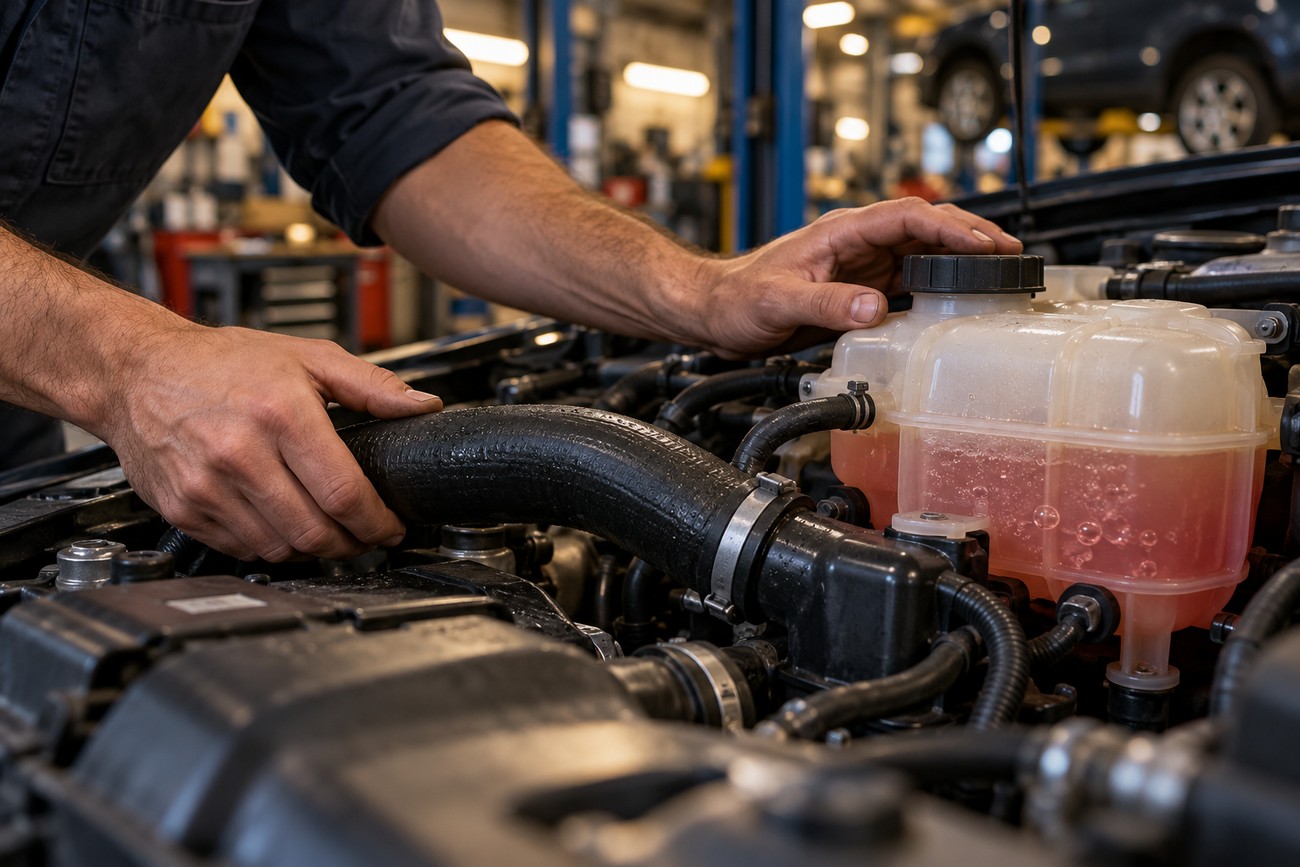
The conditions around a symptom matter as much as the symptom itself. A temperature spike during acceleration or a sustained climb, followed by a near-normal reading at idle, can fit a leak that opens under higher cylinder pressure. It can also fit inadequate cooling under load, so a calm idle test alone settles little.
Watch how cooling-system pressure develops rather than treating every firm hose as abnormal. Steady pressure as coolant warms is expected. Pressure arriving soon after a cold start, especially if it pulses in step with engine cycles, is more suggestive of combustion gases entering the system. Keep clear of moving parts and leave pressure measurements to suitable equipment.
A brief misfire after an overnight stop may mean coolant collected in one cylinder and affected its first firing strokes. Ignition or fueling faults can produce a similar start, so the clue gains value when coolant is also being lost. Similar compression readings across cylinders do not exclude a small, localized leak; a leak-down test may expose a path that a quick compression check misses.
What Can Be Mistaken for a Blown Head Gasket?
Visible white vapor on a cold start is often condensation in the exhaust. If it fades as the exhaust warms and the coolant level remains stable, it offers little evidence of a gasket leak. Vapor that persists after warm-up, particularly alongside coolant loss, warrants investigation, though other engine faults and a cracked head can produce similar signs.
Bubbles are equally easy to overhead. Air trapped after cooling-system service, low coolant, a faulty radiator or expansion-tank cap, and boiling can all disturb the reservoir. A weak cap can also allow coolant loss or overheating without any combustion leak. The timing and pressure pattern help guide the next test; bubbles alone are no verdict.
Overheating may start with a sticking thermostat, failed cooling fan, restricted radiator, or water-pump fault. Coolant can escape through a radiator, hose, pump, or intake-side leak, then evaporate on hot parts before it reaches the ground. Inspection while the system is cold may reveal traces that a parking-space check misses.
A misfire without coolant loss may point toward ignition or fueling instead. If a combustion-gas test is positive, it provides stronger evidence: combustion products are entering the coolant. It still cannot identify whether the path is through the gasket, a cracked cylinder head, or the block. That distinction matters before approving a repair.
Tests That Confirm an Internal Coolant Leak
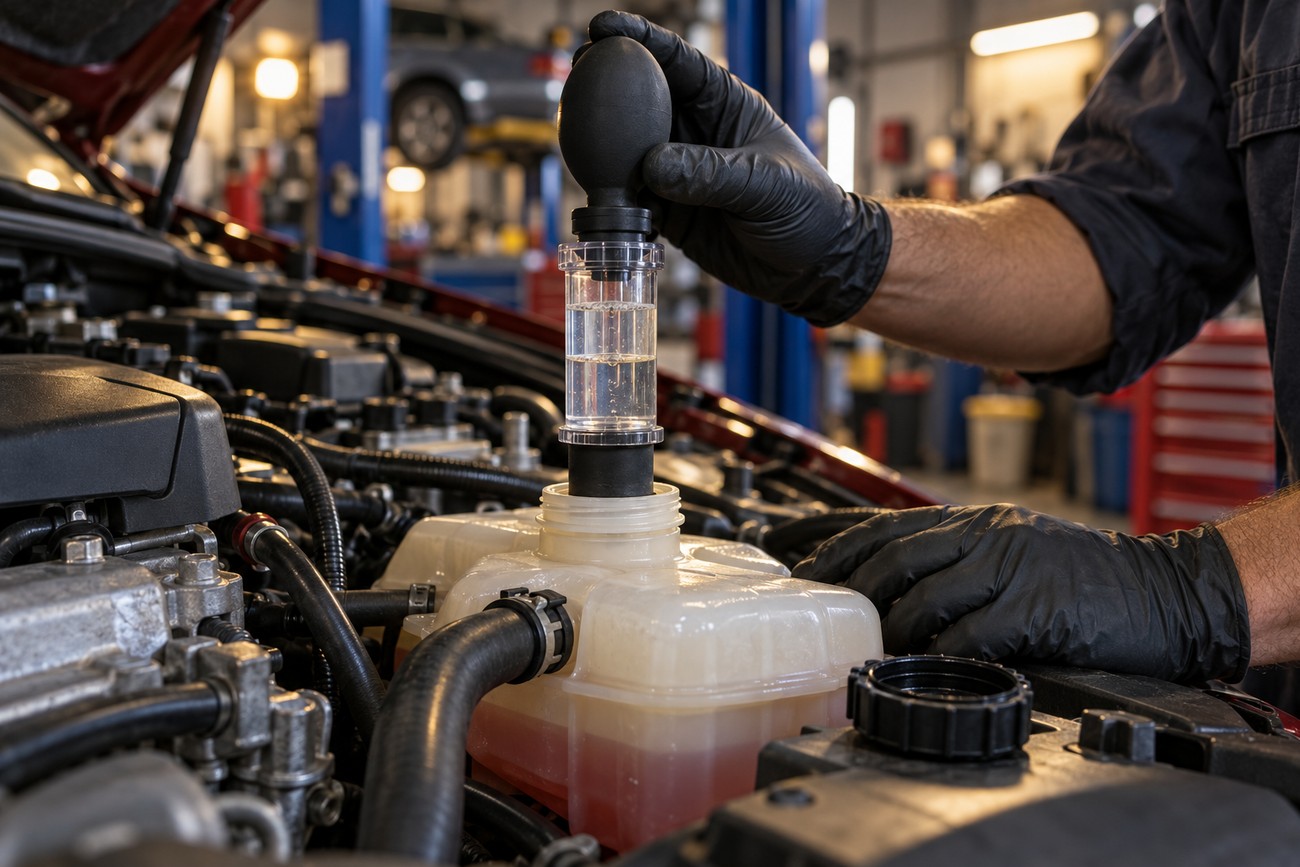
Start with a cold visual inspection of the coolant level, cap, hoses, radiator, pump area, and any dried residue. Note whether the oil or coolant appears contaminated, while remembering that either fluid can look normal. Never remove a hot radiator or expansion-tank cap; pressurized coolant and steam can cause serious burns.
A technician can pressure-test the cold cooling system and look for external leaks or pressure loss. Test pressure must follow the radiator-cap rating or vehicle specification. Common values are approximately 12–16 psi, but there is no universal setting. Falling pressure shows a leak needs tracing; it does not, by itself, prove a head-gasket failure.
A combustion-gas test, sometimes called a block test, checks for CO₂ or other combustion products in the cooling system. A positive result confirms an internal combustion-to-coolant leak, without locating the failed component. A negative result does not fully exclude a small or intermittent leak, especially if the engine was insufficiently warm or the sample drew liquid coolant instead of gas from above it.
During a cylinder leak-down test, controlled air is applied to an individual cylinder while the cooling system is observed. Bubbles at the radiator neck or expansion tank can link that cylinder to the leak. The tests work best together: pressure testing finds losses, gas testing identifies combustion products, and leak-down helps narrow the route before parts are removed.
Can You Keep Driving With a Blown Head Gasket?
There is no reliable distance or time for driving with a suspected blown head gasket. Risk depends on where the leak goes, how quickly coolant is lost, engine load, and whether the oil is contaminated. A car that idles normally can still overheat on the next climb.
Avoid driving if the temperature is rising, coolant is dropping rapidly, the engine is misfiring, or the cooling system pressurizes unusually soon after startup. Repeated overheating can distort or crack the head or block. Coolant diluted into engine oil can damage bearings, and an oil change may not undo damage already done. Continued misfiring can also harm the catalytic converter.
A tow is the sensible choice when those symptoms are present. Moving the vehicle only as needed for a controlled diagnostic check is different from continuing a commute. Let the system cool before anyone checks the coolant level, and never open a hot cap to top it up.
Repair Decisions and Preventing a Repeat Failure
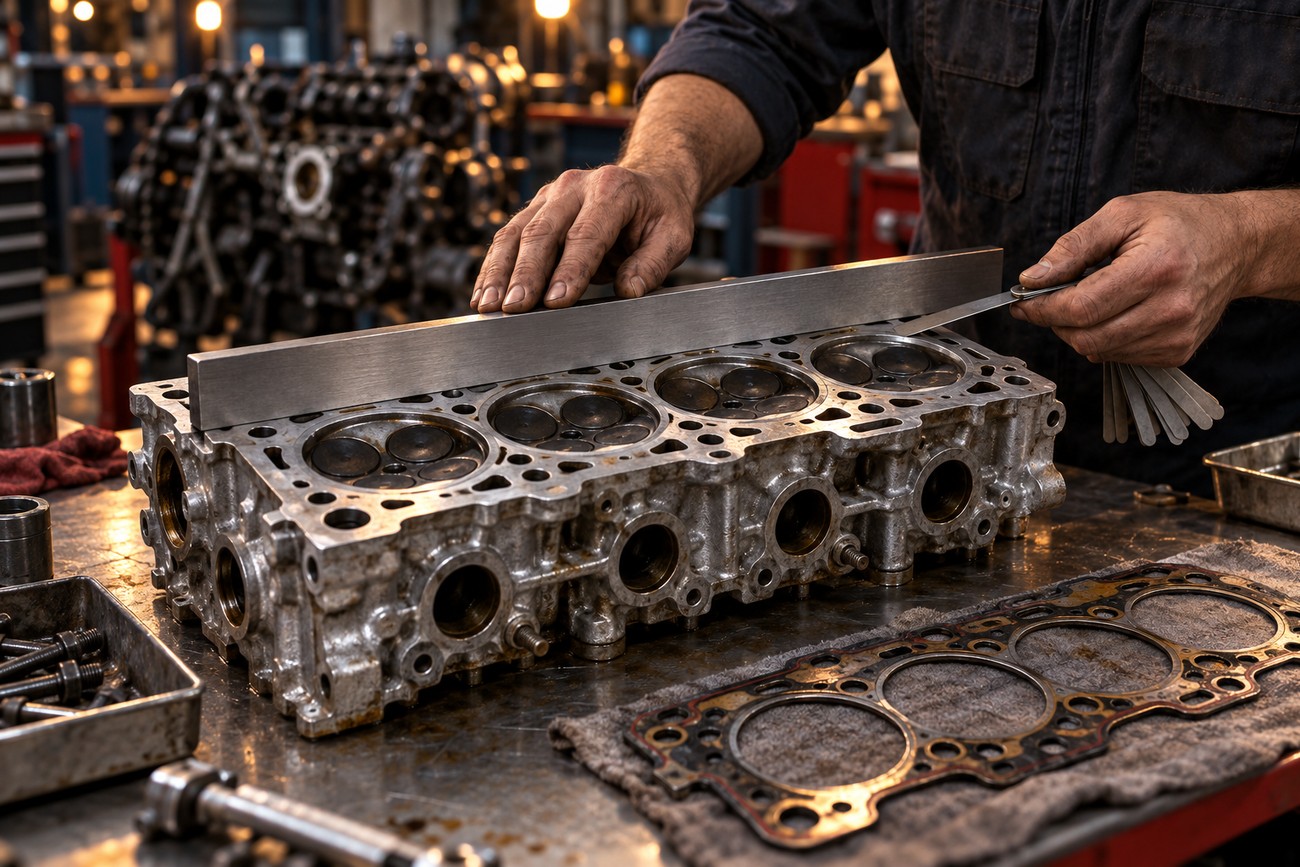
Replacing the gasket is only part of a sound repair. Once the engine is opened, the cylinder head and block need inspection for flatness and cracks where appropriate. A new gasket fitted against a distorted surface may fail again, even if it initially stops the leak.
The reason the engine overheated also needs to be found. A faulty thermostat, fan, cap, pump, radiator, or another cooling-system problem can damage the replacement gasket. Depending on the findings, related engine and cooling-system faults may need attention before the vehicle returns to service.
Reassembly should use the specified fasteners and torque procedure, including new head bolts where required. Contaminated oil and coolant must be replaced, and the cooling system flushed as needed. These steps explain why the repair scope may include inspection or machining, bolts, fluids, cleaning, and cooling-system work rather than the gasket alone.
A chemical sealer is not a dependable permanent substitute. It may temporarily change the symptoms while leaving the underlying damage in place, and it can contaminate the radiator, thermostat, or coolant passages. Confirming the leak and its cause first gives you a clearer basis for deciding whether repair is worthwhile.
Frequently asked questions
Early signs are most useful when they appear together. Several cooling-system faults can resemble a gasket leak, so one symptom is not enough to identify the cause. Continued driving also carries risks that depend on where the leak goes and how quickly coolant is lost.
What are the first signs of a blown head gasket?
Unexplained coolant loss, a rough start after the car has sat, and unusually early cooling-system pressure are useful early clues, especially when they appear together. Record when each occurs and whether the coolant level continues to fall. That pattern gives a technician more to test than a single episode of white vapor or overheating; one isolated symptom should not prompt a gasket replacement.
What can be mistaken for a blown head gasket?
Normal exhaust condensation and faults in the cap, thermostat, fan, radiator, or pump can look similar. First check whether vapor disappears after warm-up and whether coolant is actually being lost. If cooling faults do not explain the pattern, testing for combustion gases can establish an internal leak, although further work is needed to identify the gasket, head, or block as the cause.
How long will a car run with a blown head gasket?
Remaining running time is unpredictable: a leak into a cylinder, a leak that pressurizes the coolant, and coolant contamination of the oil carry different immediate risks. Load and coolant level can change the situation quickly. If the engine overheats, misfires, loses coolant rapidly, or shows contaminated oil, arrange a tow rather than trying to reach a mileage target.