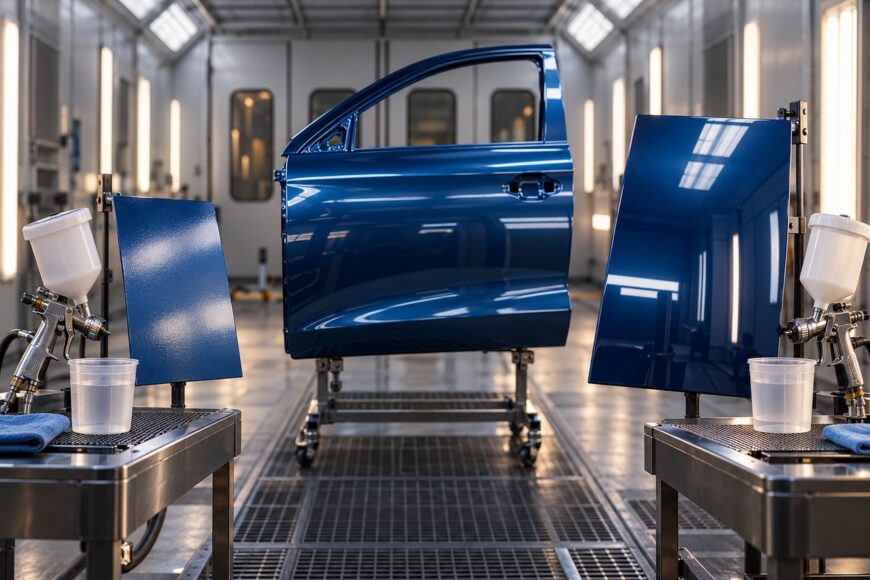
Choosing between Sherwin-Williams Automotive and PPG clear coats is a decision about the whole repair process, not brand prestige. Sherwin-Williams often appeals to shops managing cycle time, application efficiency, and material cost. PPG offers a broader range of specialized finishes and premium durability options. Either can produce an excellent finish when the specific clear matches the basecoat, equipment, and cure schedule.
The expensive mistakes tend to happen around the can: selecting a product that does not meet local VOC rules, spraying a high-solids clear like a conventional one, mixing brands without verified compatibility, or underestimating the labor needed to polish a hard premium finish. There is no universal winner. A quick panel repair and a long-term restoration place different demands on the same glossy surface.
- What Actually Differs Between Sherwin-Williams and PPG Clear Coats
- Sherwin-Williams vs PPG: Clear-Coat Comparison by Shop Priority
- Application, Flash Time, and Cure: Where Results Are Won
- Durability, Gloss, and Long-Term Repairability
- The Compatibility Trap: Why Mixing Brands Can Fail
- Hidden Costs, Availability, and Color-Matching Support
- Which Clear Coat Fits Your Shop or Repair?
- Frequently asked questions
- Who makes the best automotive clear coat: Sherwin-Williams or PPG?
- What should be checked before using a clear coat over another brand’s base?
- Who makes the best automotive clear coat?
What Actually Differs Between Sherwin-Williams and PPG Clear Coats
Start with product type rather than the name on the label. PPG has a broad 1K and 2K range, including high-solids, matte, scratch-resistant, and chemical-resistant options. A 1K product may suit a limited task, but it should not be assumed to deliver the durability of a specified 2K refinish system on a large exterior panel. Sherwin-Williams also spans different cure speeds and performance levels, so neither catalog can be reduced to a single clear coat.
Sherwin-Williams offers National Rule and Low VOC lines. Its applicable Low VOC products declare compliance with a 2.1 lb/gal VOC limit and use high-solids polyurethane-based clear-coat technology. That declared limit is product-specific; a shop must still check its local rules and the technical data sheet for the exact clear, hardener, and reducer combination it intends to spray.
Both manufacturers offer high-solids clears that can provide improved film build and potentially fewer coats within technical data sheet limits. Higher solids also change how the material atomizes, levels, and releases solvent. Cure method, temperature range, durability target, and the availability of local technical support often matter more to the finished job than a broad claim about which brand sprays better.
In refinish discussions, Sherwin-Williams product families such as AWX, ATX, and Ultra 7000 are commonly regarded as mid-premium, while PPG systems including Envirobase and Deltron are commonly regarded as premium. Those are market positions, not performance ratings for every product. Comparing a mid-tier Sherwin-Williams clear with a specialized premium PPG clear tells you little about how similarly specified products would perform on your repair.
Sherwin-Williams vs PPG: Clear-Coat Comparison by Shop Priority
These are portfolio tendencies; confirm the requirements and capabilities of the exact products on your shortlist.
| Shop priority | Sherwin-Williams Automotive | PPG Refinish |
|---|---|---|
| Product range | National Rule and Low VOC lines, with fast air-dry and bake options | Broad 1K and 2K range, including high-solids, matte, scratch-resistant, chemical-resistant, and non-isocyanate 2K NCT options |
| VOC positioning | Applicable Low VOC products declare compliance with a 2.1 lb/gal VOC limit | VOC status varies by product and market; check the complete spray-ready system |
| Cure speed | Fast air-dry and short/full-bake choices can support shorter cycles | Product-specific schedules range from production-oriented to more demanding premium cures |
| Durability focus | Depends on tier and exposure requirements | Broader choice of specialized wash, scratch, chemical, and low-gloss finishes |
| Application demands | High-solids Low VOC clears require controlled setup and technique | Flash time, temperature, and film build are particularly important with some premium clears |
| Future repair | Polishing effort depends on the selected clear and its cure | Some fully cured premium clears take more abrasive work to correct |
| Color-system support | Check local formula, tinting, and distributor access | Generally regarded as slightly stronger for difficult OEM metallic matching where formula and spectrophotometer support are available |
| Typical clear-coat price | $150–$280 for a comparable refinish quart/gallon set | $180–$320 for a comparable refinish quart/gallon set |
| Best-fit shop | Often attractive where throughput, air-dry capability, and value drive the job | Often attractive where specialized finish requirements and maximum-exposure durability take priority |
Application, Flash Time, and Cure: Where Results Are Won
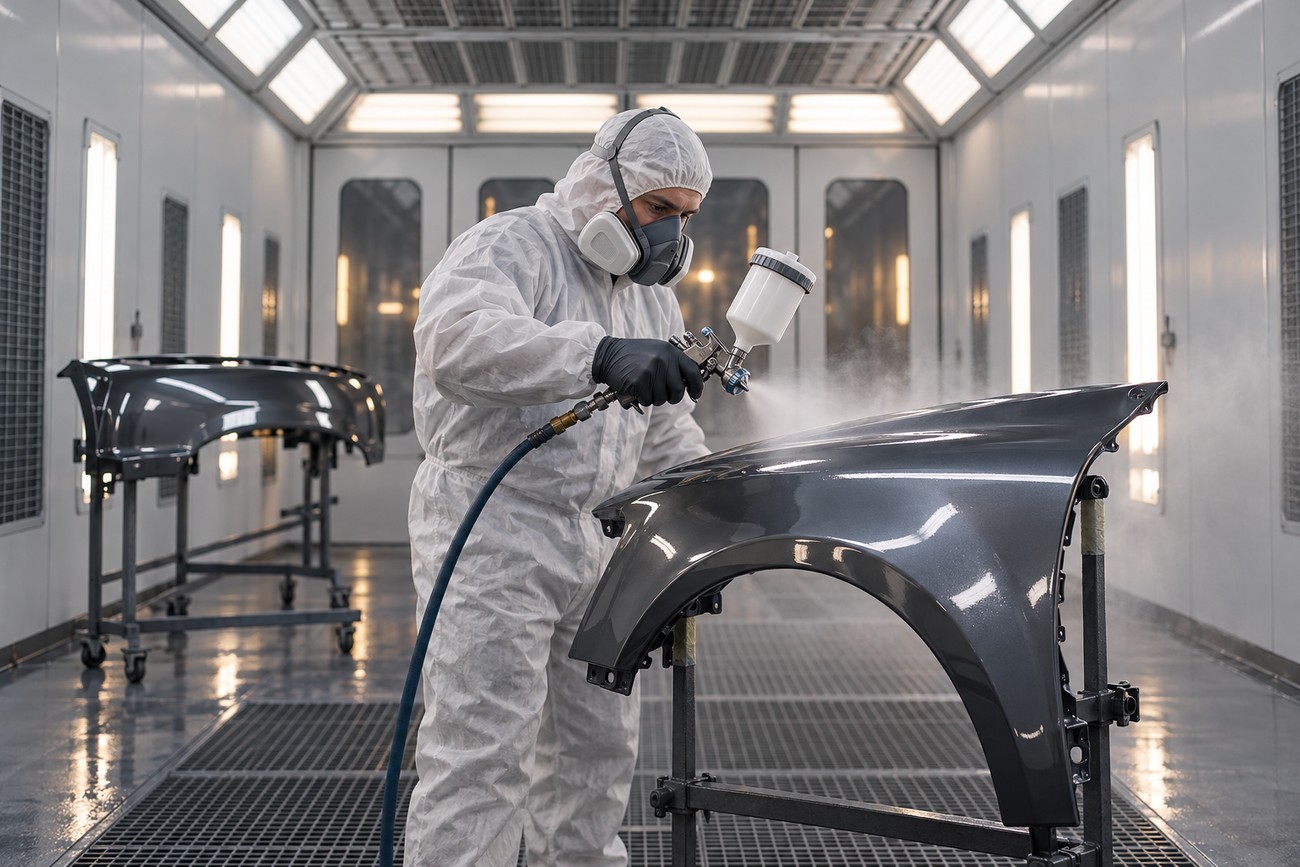
The technical data sheet determines mixing ratios, compatible components, coat count, flash time, and cure conditions. Sherwin-Williams offers fast air-dry and short/full-bake options designed to reduce cycle time and energy use. Some National Rule clears may let a shop turn off the bake cycle and air-dry without an apparent gloss penalty when conditions and application are correct. That possibility cannot be extended to every clear carrying the brand.
High-solids Low VOC material generally needs more deliberate gun setup and application control than a conventional National Rule product. Poor atomization or an overly heavy pass can leave orange peel; an unsuitable reducer or a rushed flash can leave trapped solvent or weak gloss. Booth temperature and humidity matter during the early cure, particularly when a shop is relying on air drying rather than a controlled bake.
PPG premium clears are equally dependent on their specified process. Spraying outside the stated temperature range or shortening intercoat flash can contribute to linkage or orange peel, while skipping a required bake can lengthen the cycle and leave chemical resistance less predictable. A clear that appears dry to handle may still be progressing toward its specified cure.
Excessive film build is a common failure route with either brand. Heavy coats can skin over while solvent remains below, causing solvent pop, extended drying, and potentially a greater risk of later cracking. More clear also means more material to sand if dirt lands in the finish. Staying within the sheet’s thickness limits is usually a better route to gloss than trying to create depth with an extra wet coat.
Durability, Gloss, and Long-Term Repairability
Initial gloss shows how a clear laid down and was finished; it does not establish how it will hold up to washing, sunlight, and contaminants. Product tier and chemistry matter within both brands. Economy and mid-tier clears may show weaker UV, color, and gloss retention than premium counterparts after 3–5 years, although exposure, maintenance, and application quality can change the outcome substantially.
PPG CERAMICLEAR 2K is an abrasion- and acid-resistant clear with a ceramic-like surface, intended for resistance to frequent washing and environmental exposure such as acid rain and tree sap. That makes it relevant to a vehicle whose owner prioritizes long-term surface resistance. It does not make every PPG clear equivalent to CERAMICLEAR or remove the need to follow the product’s repair procedure.
Hardness has a cost after delivery. Some premium PPG clears become harder to polish after full cure, calling for more aggressive abrasives, additional labor, and sound correction technique. A finish that resists wash marring may therefore take longer to correct if it picks up booth dirt or later needs a localized repair. Shops estimating a premium job should account for finishing work alongside the material price.
Practitioner reports cited in comparisons suggest premium systems may provide 50–100% longer service life than lower-tier alternatives. That is a reported possibility, not a universal brand-level guarantee or a reliable prediction for an individual car. For a daily driver exposed to strong sun or frequent washing, paying for a suitable premium system may be worthwhile; for a less exposed repair, correct preparation and application may deliver more value than moving to the hardest available clear.
The Compatibility Trap: Why Mixing Brands Can Fail
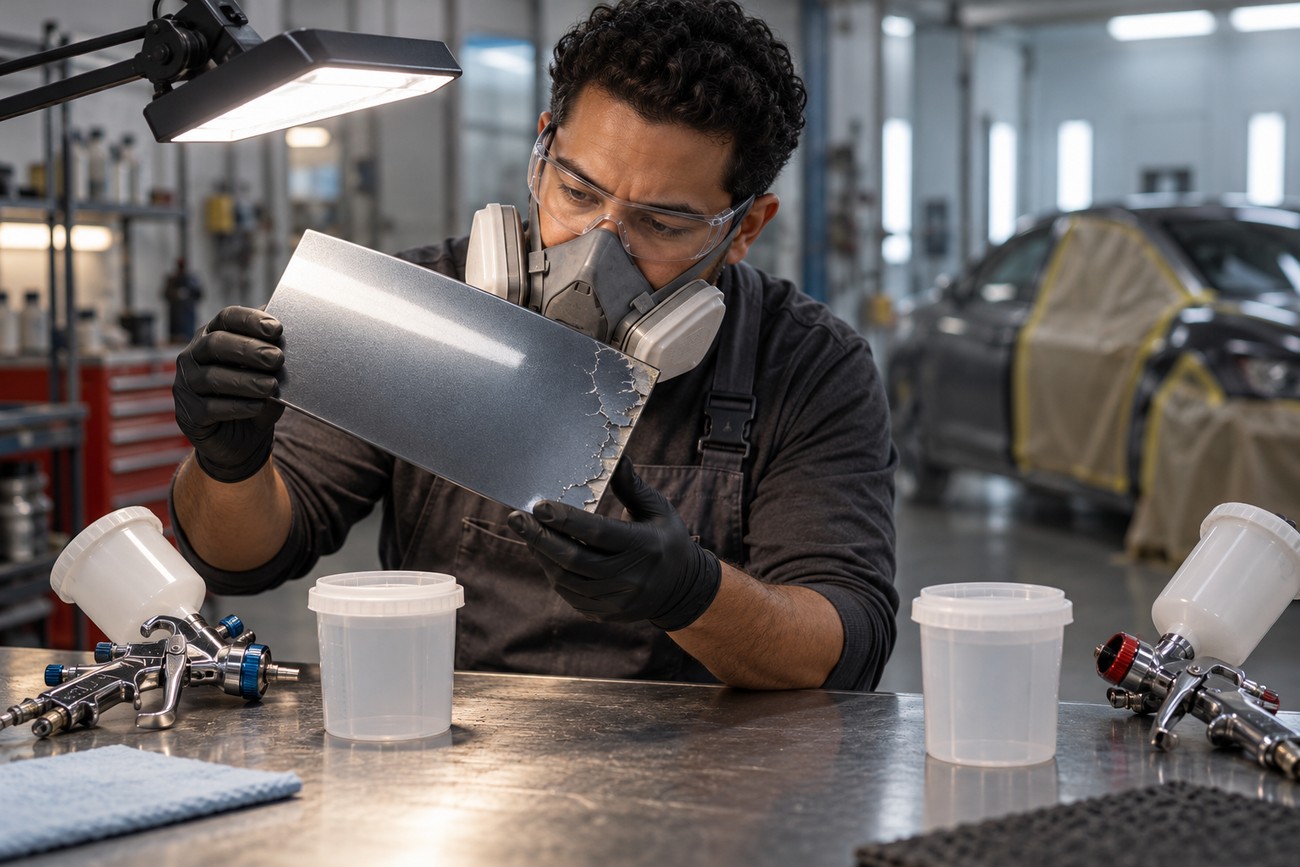
A lower-priced clear can be tempting when a shop already has another manufacturer’s basecoat on the shelf. Pairing a PPG base such as Envirobase with a Sherwin-Williams clear without verified compatibility increases the risk of weak intercoat adhesion and eventual delamination. Cracking is another possible outcome of an unsuitable material or process combination. Both products can be high quality and still make an unapproved pairing.
Basecoat-to-clear adhesion depends on details that the initial shine cannot reveal: the base’s required flash, permitted clear-coat window, solvent or water release, and the chemistry of the next layer. A mismatch may look sound at delivery and fail after weathering or a later repair. Substituting a hardener or reducer is similarly risky because it changes the clear’s intended mix and cure, even if the substitute seems familiar.
Use a documented complete system—primer, basecoat, clear, and specified mixing components—where possible. That gives the painter one set of process instructions and a clearer route to manufacturer support if a defect develops. It also makes troubleshooting less speculative: the shop can examine preparation, film thickness, and cure conditions before trying to untangle an undocumented material combination.
If a cross-brand combination is unavoidable, consult both manufacturers’ technical documentation rather than relying on a general assurance that the products are compatible. Make a representative test panel using the planned base, flash, clear, and cure schedule, then observe the finish and assess adhesion after the appropriate cure. A successful panel reduces uncertainty; it does not create a manufacturer warranty for an unapproved system.
Hidden Costs, Availability, and Color-Matching Support
Typical estimates place Sherwin-Williams clear coats at $150–$280 and PPG clears at $180–$320 for a comparable refinish quart/gallon set. Those ranges overlap, and a container-price comparison can mislead if pack size, activator, reducer, or usable mixed volume differs. Price the specified spray-ready system for the actual repair, then include the coats and cure method required by its technical data sheet.
Labor and booth time can reverse an apparent saving. A suitable Sherwin-Williams fast air-dry or short-bake clear may reduce energy use and free a booth sooner in a production shop. Conversely, rework from orange peel, solvent pop, or an incompatible base-and-clear pairing can consume far more time than a modest material saving. A hard PPG premium clear may also require extra polishing time and abrasives if the finish needs correction.
Supply matters at the moment a repair is scheduled. Some shops find it harder to obtain the exact Sherwin-Williams components or color support they need locally, while established PPG colorists and formulas may be easier to access in their area. PPG is generally regarded as slightly stronger for difficult OEM metallic matching where broad formula databases and spectrophotometer support are available. Neither advantage is useful if the local supplier cannot provide timely help with the vehicle in front of you.
There is also a distinction between clear-coat choice and color-match quality. The basecoat formula, variant selection, spray technique, and blending plan drive the visible match; a premium clear cannot correct an unsuitable metallic variant. Before changing systems to save on clear, check whether the shop can source every component and repeat the color and finish consistently on a later repair.
Which Clear Coat Fits Your Shop or Repair?
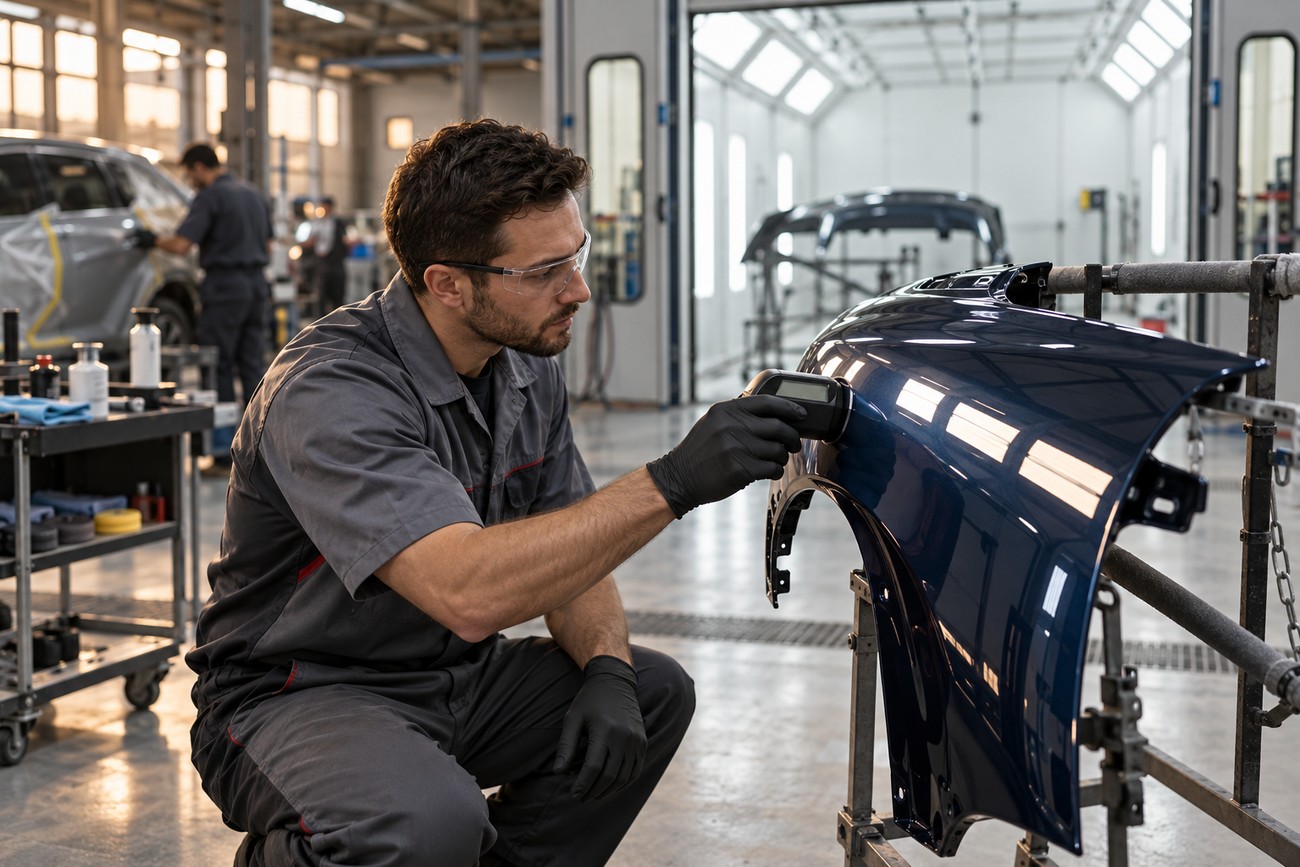
For fast insurance repairs, Sherwin-Williams is often a practical shortlist choice. Its fast air-dry products can suit a shop that needs to move panels through without relying on a full bake, provided the selected clear meets local VOC rules and the booth can maintain the required conditions. The benefit is a workable production schedule, not permission to shorten the product’s specified flash or cure.
For a restoration or a vehicle facing frequent washing, chemical contamination, or demanding outdoor exposure, a suitable premium PPG clear deserves consideration. PPG’s broader specialization also helps when the job calls for matte, scratch-resistant, chemical-resistant, or non-isocyanate 2K NCT technology. Those products have different procedures and costs; select one for a defined requirement rather than assuming the most specialized can is the best general-purpose clear.
A shop already equipped and supported for Sherwin-Williams should not dismiss it solely because PPG carries a premium reputation. Some practitioners report strong coverage and flow-out from the Ultra 7000 family compared with certain competing premium systems, potentially saving layers and working time. That is a limited practitioner observation, not a universal test result, and coverage also depends on the basecoat and color being sprayed.
For a difficult OEM metallic, inspect the available color formulas and local tinting support before deciding which full system to use. For a repair likely to need extensive denibbing and polishing, consider the clear’s correction behavior before choosing maximum hardness. These decisions put the owner’s expected finish and the shop’s actual capabilities ahead of a brand ranking.
The sound purchase is an exact product within a documented system that the shop can obtain, spray, cure, and support. Confirm VOC compliance, equipment fit, technical data, and the repair objective before ordering. Sherwin-Williams often makes sense when cycle time and value are central; premium PPG often makes sense when specialized performance or maximum-exposure durability leads the brief.
Frequently asked questions
A clear-coat recommendation is most useful when it describes the repair and the shop’s process. The answers below provide a decision rule, a verification sequence for an unusual material pairing, and a way to judge broad “best clear” claims.
Who makes the best automotive clear coat: Sherwin-Williams or PPG?
Neither manufacturer wins every repair. If the priority is predictable throughput using an approved air-dry system, start with the Sherwin-Williams products your shop can source and spray consistently. If the owner needs a specialized finish or places a higher priority on demanding long-term exposure, start with the relevant premium PPG system. Choose only after confirming that the exact clear suits the basecoat, local VOC rules, and available cure equipment.
What should be checked before using a clear coat over another brand’s base?
First, read the basecoat and clear-coat technical data sheets for explicit compatibility information, flash and recoat windows, permitted components, and cure requirements; seek manufacturer guidance if the pairing is undocumented. Next, spray a test panel with the intended materials and conditions. Let it reach the appropriate cure, inspect it for defects or soft areas, and assess adhesion using a method appropriate to the products. Do not treat an attractive wet finish as proof that the combination will remain bonded.
Who makes the best automotive clear coat?
The best automotive clear coat is the one specified for the job’s exposure, finish, and repair process—and applied as part of a compatible system. Ask a shop to identify the exact product and explain its VOC status, cure schedule, and approach to future correction. An answer based only on brand reputation leaves out the details most likely to determine how the finish looks and lasts.