Trying to save fuel in traffic can feel like a losing exercise. Lights turn red, queues form without warning, and the driver behind you may expect a brisk start. You cannot choose the pace of every journey, but you can avoid some of the braking, acceleration, and waiting that make it more wasteful.
Hills, congestion, wind, and the way your vehicle is loaded also affect fuel use. That is why an economical technique that works on a clear highway may make little difference on a crowded commute. The useful approach is to make practical choices where you have room to do so, while keeping your driving safe and predictable.
- Drive smoothly without holding up traffic
- Make stop-and-go journeys less wasteful
- Find a steady highway pace, not a magic speed
- Check tires, luggage, and roof gear
- Check whether a change saves fuel on your routes
- Skip the fuel-saving tricks that backfire
- Frequently asked questions
- How should I compare a short route with a longer route that has fewer stops?
- What is the best speed to drive at to save fuel?
- What is the most effective way to save fuel while driving?
Drive smoothly without holding up traffic
Look well ahead for slowing vehicles, intersections, and changing lights. If traffic is clearly stopping, easing off the accelerator early may let you slow gradually instead of accelerating toward the queue and braking hard. Leave enough following distance to make that adjustment without surprising the driver behind you. Smooth acceleration and avoiding unnecessary hard braking are core principles of economical driving.
Build speed progressively when the road opens, using enough acceleration to join traffic safely. Flooring the accelerator for every gap tends to waste fuel, particularly if you soon have to brake. The aim is fewer unnecessary changes in speed, rather than the slowest possible start or an unusually low cruising speed.
Space is harder to preserve in dense traffic. If another driver moves into your gap, restore a safe following distance gradually instead of braking abruptly or accelerating to close it. At a busy merge, match the flow and take a safe opening; saving a little fuel is no reason to delay a necessary maneuver or hold up other vehicles.
Driving style can materially affect fuel consumption, but each trip sets limits on what you can achieve. A clear road gives you more opportunity to coast toward a visible slowdown than a queue that stops suddenly. Judge a smoother drive by whether you avoided needless speed changes while remaining predictable, rather than by how gently you pressed the pedals at every moment.
Make stop-and-go journeys less wasteful
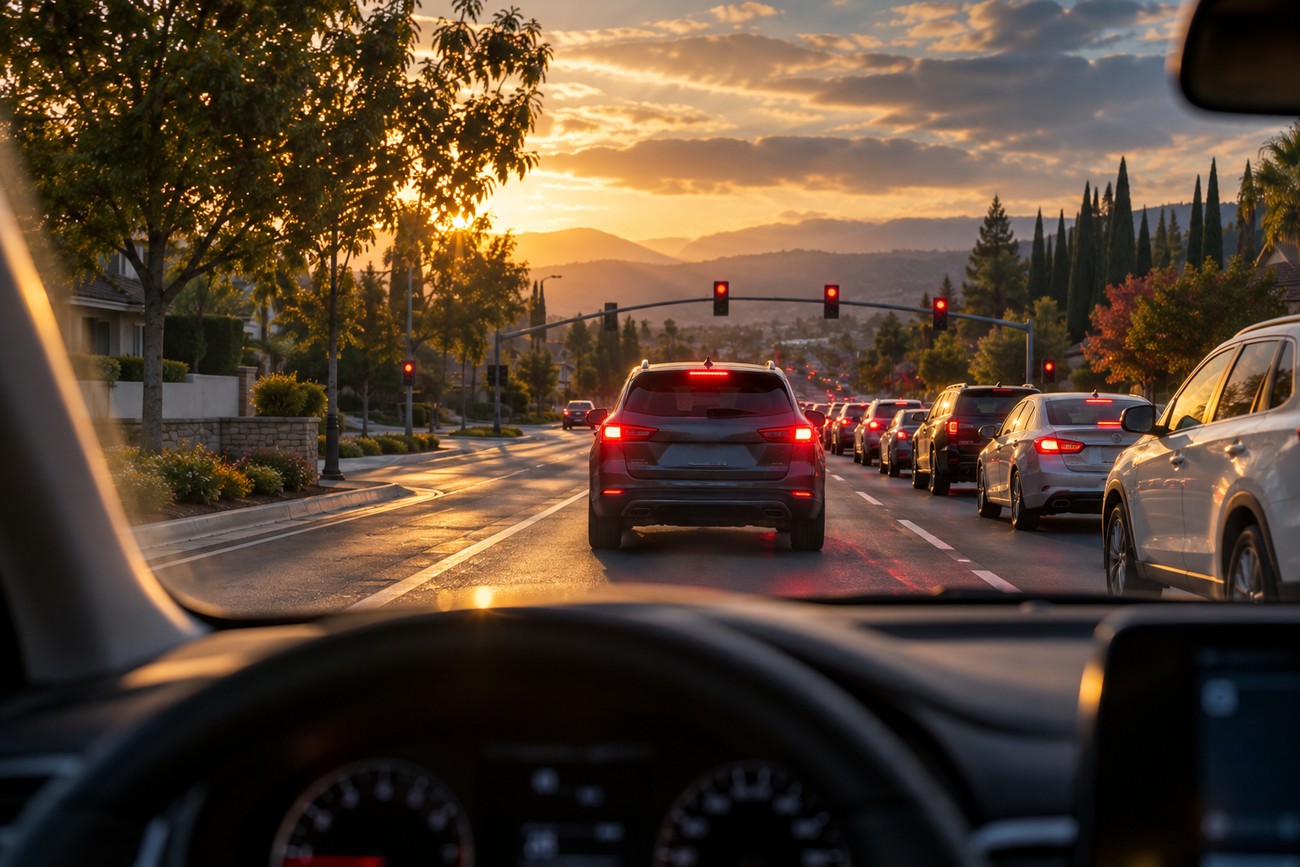
City driving can offset the benefits of smooth acceleration at the next red light. Where visibility and traffic allow, approach an obvious queue at a measured pace instead of rushing to its tail. Keep enough distance to roll smoothly when it moves, but do not leave such a large gap that you obstruct traffic or invite an unsafe maneuver.
A route with fewer interruptions may use less fuel even when it is longer. Compare your usual drive with an alternative that avoids a troublesome intersection or recurring queue, while allowing for the extra distance and time. Leaving at a different time can help too, if it replaces repeated stops with a reasonably steady trip rather than merely shifting the delay elsewhere.
Prolonged idling burns fuel without moving the car. If you face a clearly extended wait and it is safe and appropriate to do so, switching off the engine may be sensible; follow the vehicle’s instructions and local rules. A queue that advances every few moments is different. Repeatedly switching off at each brief pause can be distracting and is not the goal.
On some journeys, traffic leaves little scope for a smoother technique. Once you are safely in a queue, trying to create an ideal gap or speed may achieve less than choosing a less interrupted route next time. This is a useful limit to recognize: economical driving should fit the road you have, rather than demand that other drivers adapt to you.
Find a steady highway pace, not a magic speed
There is no universal fuel-saving road speed. The best practical pace depends on the vehicle, gearing, terrain, wind, traffic, and speed limits, so familiar claims about one ideal city or highway speed are too simple. Choose a legal speed that suits the conditions and lets you travel steadily without impeding others.
At highway speeds, aerodynamic drag becomes increasingly important. Driving faster to make up time can therefore cost fuel, even when the engine sounds relaxed. On an open road, holding a sensible pace and avoiding repeated surges is usually a more useful habit than chasing a particular number on the speedometer.
On rolling roads, watch whether cruise control repeatedly adds throttle to hold speed uphill. A safe, steady pace managed by the driver may be more economical there than insisting on the same speed over every rise.
Cruise control can help prevent unintentional speeding on a fairly level highway, but it is not invariably the most economical choice on hills or during overtakes. Keep your attention on the road and take control when conditions change. Never coast in neutral or compromise your ability to respond simply to preserve momentum.
An excessively slow pace can also be counterproductive if it leads to repeated gear changes or puts you out of step with traffic. The economical choice is a speed the vehicle can maintain comfortably under the conditions, with a safe following distance and room to adjust. That will vary from one road, and one car, to the next.
Check tires, luggage, and roof gear
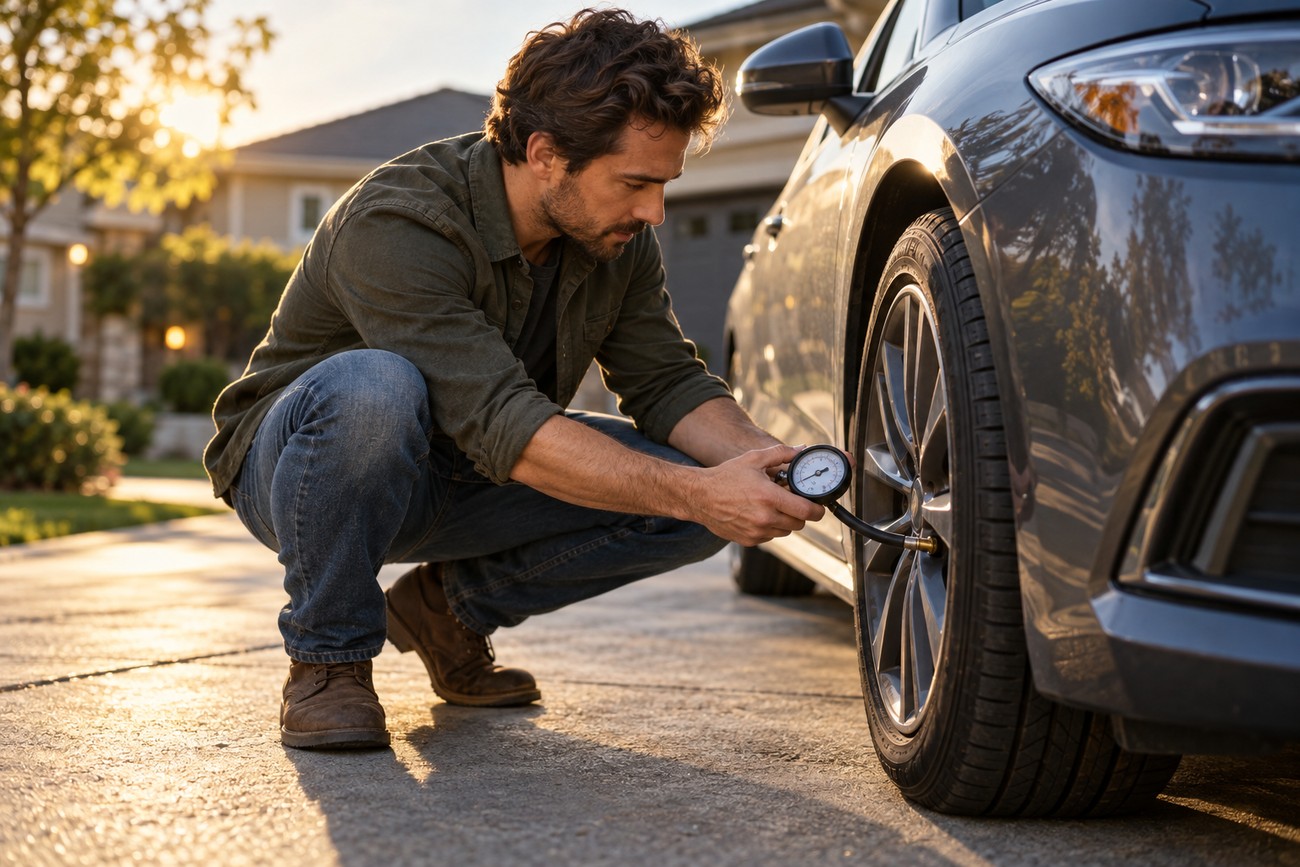
Driving technique cannot fully compensate for underinflated tires, avoidable weight, or equipment creating drag. Check tire pressure against the vehicle manufacturer’s specification, using the guidance for your load and checking the tires as directed in the vehicle manual. The figure printed on a tire’s sidewall is not a substitute for the vehicle’s recommended pressure.
At 50 kPa below the manufacturer’s specified pressure, fuel use can rise by up to 6% in the city and up to 4% on the highway. Those figures describe a substantial pressure shortfall, not the likely reward for a small routine adjustment. Correct pressure matters for tire condition and handling as well, making it worth checking even when any fuel saving is hard to notice.
Weight has an effect too: an extra 100 kg in the trunk of an average sedan can reduce fuel economy by up to 6%. Remove equipment you no longer need, while keeping essential items and properly securing what remains. The impact of a lighter everyday load will depend on the vehicle and route, so do not expect each cleared-out item to produce a visible change on the fuel display.
A roof rack can increase fuel use by up to 20% because of added aerodynamic drag, although the effect varies with the setup and conditions. Take off unused roof gear after a trip if it can be removed safely. Roof equipment is particularly worth reviewing before a long highway drive, where drag matters more than it does during slow travel.
Check whether a change saves fuel on your routes
To assess a new habit, compare journeys you make regularly rather than relying on a single impressive reading. Record distance and fuel used consistently, then compare trips on similar routes and at roughly similar times. If you use the trip computer, apply the same method each time and treat its result as a guide, not proof.
Traffic, weather, passengers, and vehicle load can hide a small improvement or make an unchanged technique appear better. A single tankful can also include several kinds of driving. Looking across repeated, comparable journeys gives you a fairer picture than crediting one smooth commute or blaming one slow one.
Practical eco-driving sources report fuel-use reductions around 10–15% or more after a shift to calmer driving; actual results vary. A driver who previously accelerated hard into every queue may see more scope to improve than one who already drives steadily. No reported range is a target worth pursuing through an unsafe merge, delayed braking, or an impractically slow pace.
Keep different influences separate when interpreting your results. The figures for underinflated tires, extra cargo, and a roof rack describe different scenarios; adding them together would not predict your saving. A useful result is one you can repeat on your own routes without making the journey less safe or dependable.
Skip the fuel-saving tricks that backfire
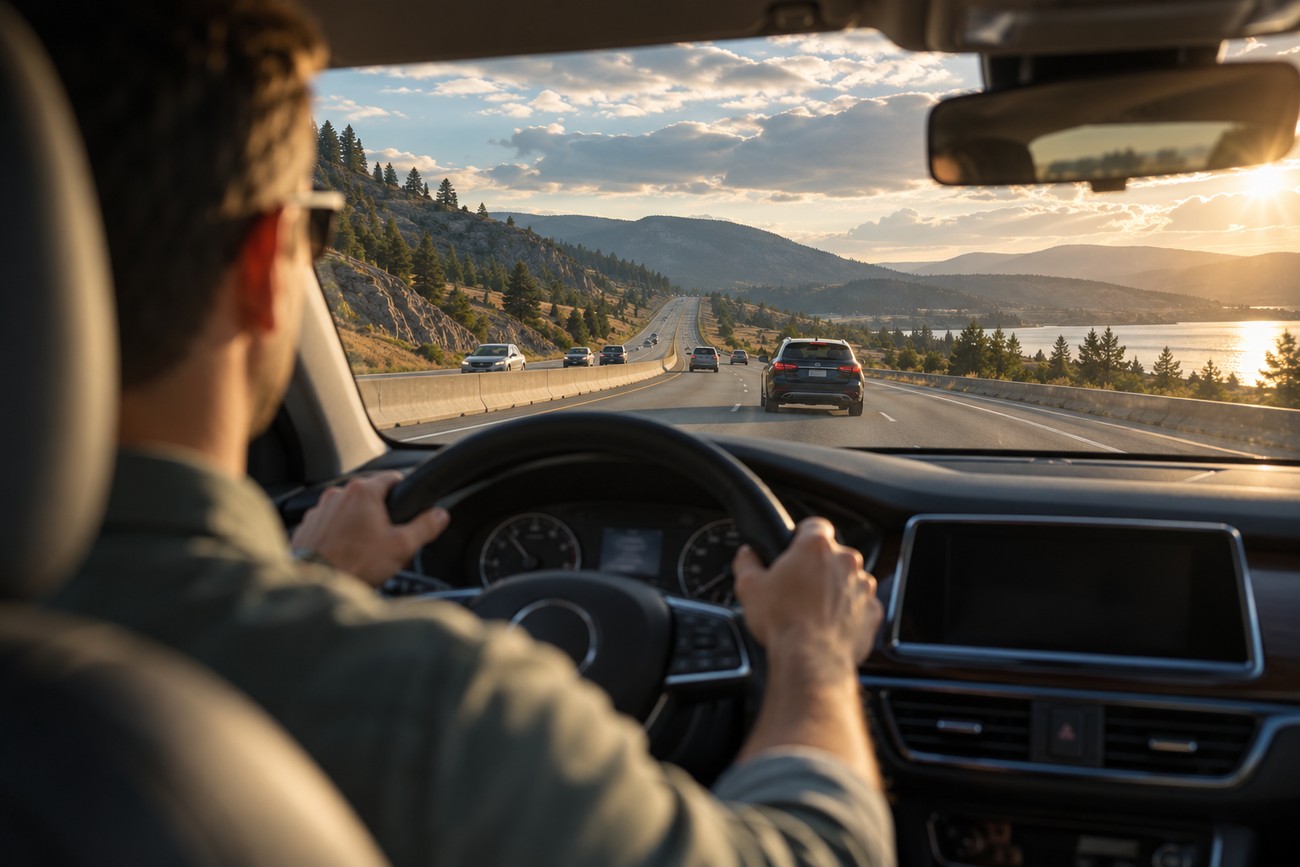
Slower does not always mean cheaper. An impractically low speed can leave the engine struggling, require repeated gear changes, or disrupt surrounding traffic. Equally, a sharp burst of acceleration is unlikely to help if you immediately slow for the next intersection. Aim for a suitable gear and an even, responsive pace rather than either extreme.
About 1,500–2,000 rpm is sometimes cited as an economical range for many engines, but it is not a universal target. Different engines and transmissions respond differently, and a hill or safe overtake may call for more power. Avoid making the engine labor merely to keep the rev counter within a suggested band; use the vehicle’s guidance and pay attention to how it responds under load.
Fuel-line magnets have no reliable engineering evidence of fuel savings. Be similarly cautious about headline claims of up to 40% savings solely from gentle accelerator use: that figure appears in one source and should not be treated as independently verified. Traffic, route, load, and the driver’s starting habits all influence the outcome.
The most dependable approach is less dramatic: maintain the vehicle, remove unnecessary drag and weight, anticipate traffic, and drive at a safe pace. Hypermiling tactics that reduce control, obstruct others, or demand constant attention to a fuel display are poor trade-offs. Fuel economy matters, but safe, predictable driving comes first.
Frequently asked questions
The best choice depends on the route and the vehicle. These rules of thumb can help you decide what to try, then check whether it works on journeys you actually make.
How should I compare a short route with a longer route that has fewer stops?
Compare total fuel used and journey time over several trips in similar conditions, rather than judging by distance or fuel consumption per unit of distance alone. A longer route may run more smoothly yet still use more fuel overall. Try each option at comparable times, and note unusual congestion or a heavier load before drawing a conclusion.
What is the best speed to drive at to save fuel?
There is no single best speed for every car or road. Choose a legal, traffic-appropriate pace that your vehicle can hold steadily, then avoid needless acceleration and braking. If a lower speed would obstruct traffic, or a higher one would require frequent hard acceleration, neither is a useful fuel-saving target.
What is the most effective way to save fuel while driving?
Anticipate what is happening ahead so you can avoid unnecessary braking and accelerate smoothly when you need to regain speed. On a commute full of unavoidable stops, changing your departure time or route may help more than refining each pedal movement. Start with the choices you can make safely, and use comparable trips to see which ones reduce your fuel use.